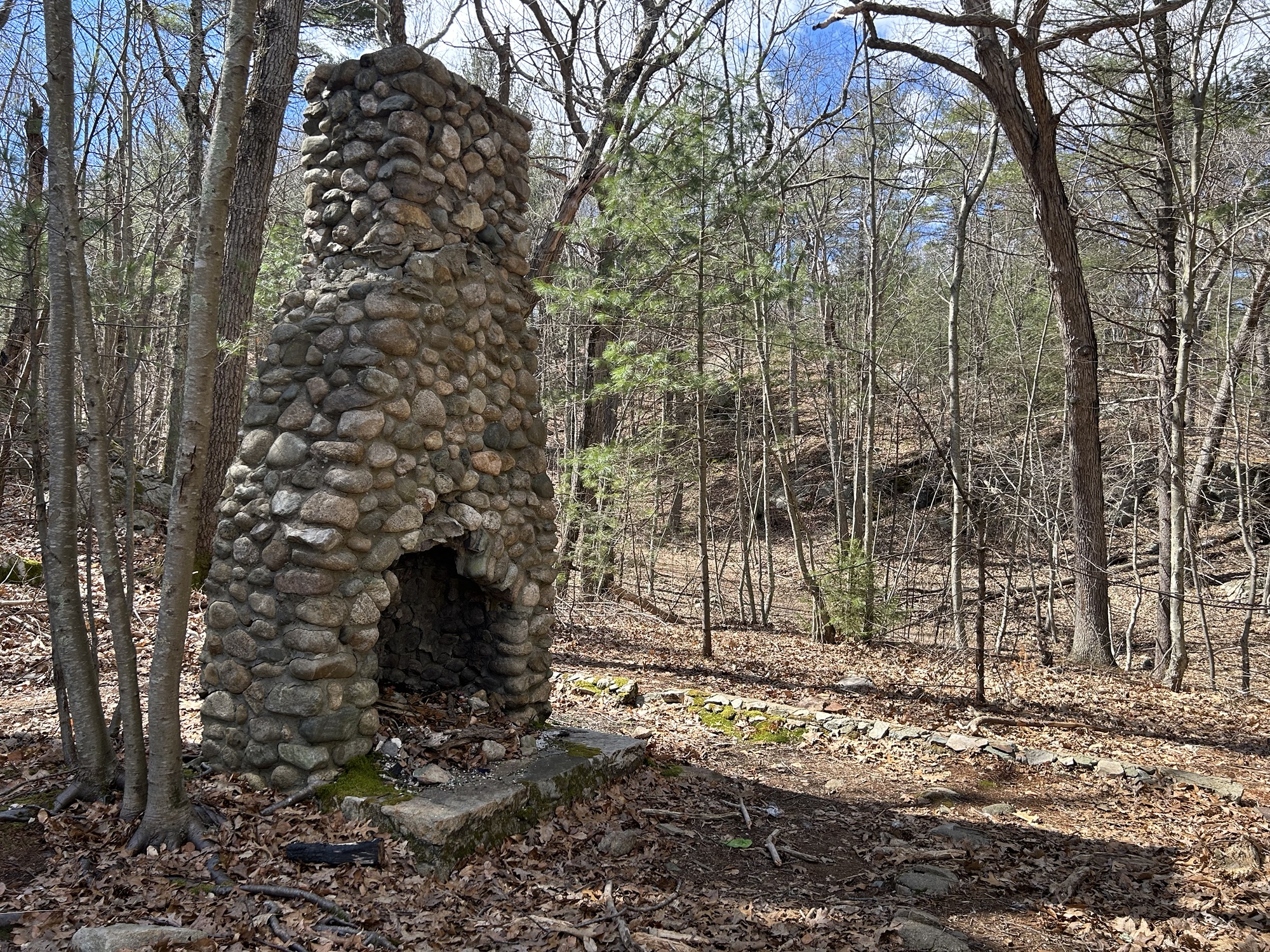
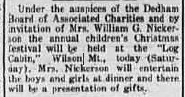
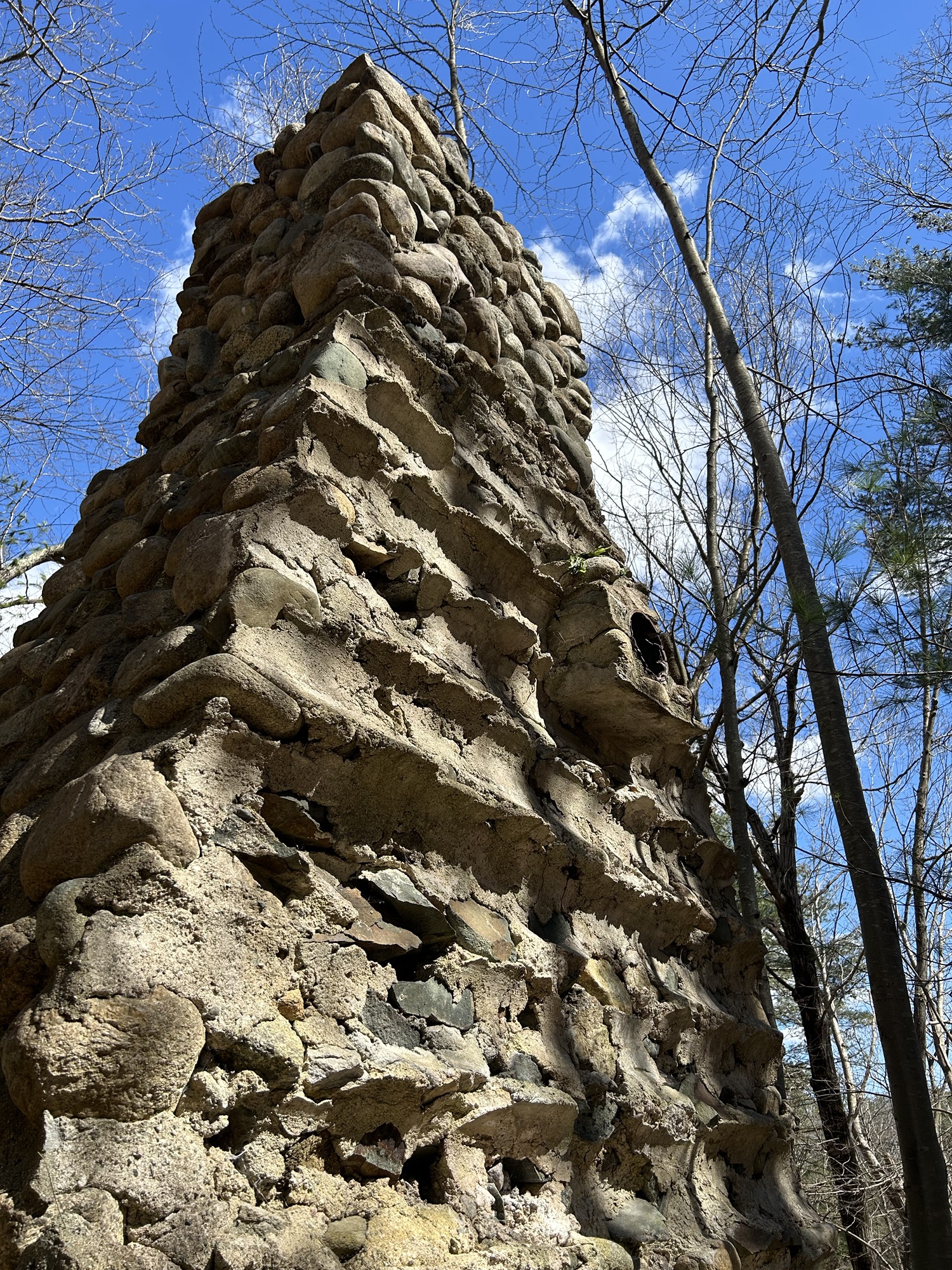
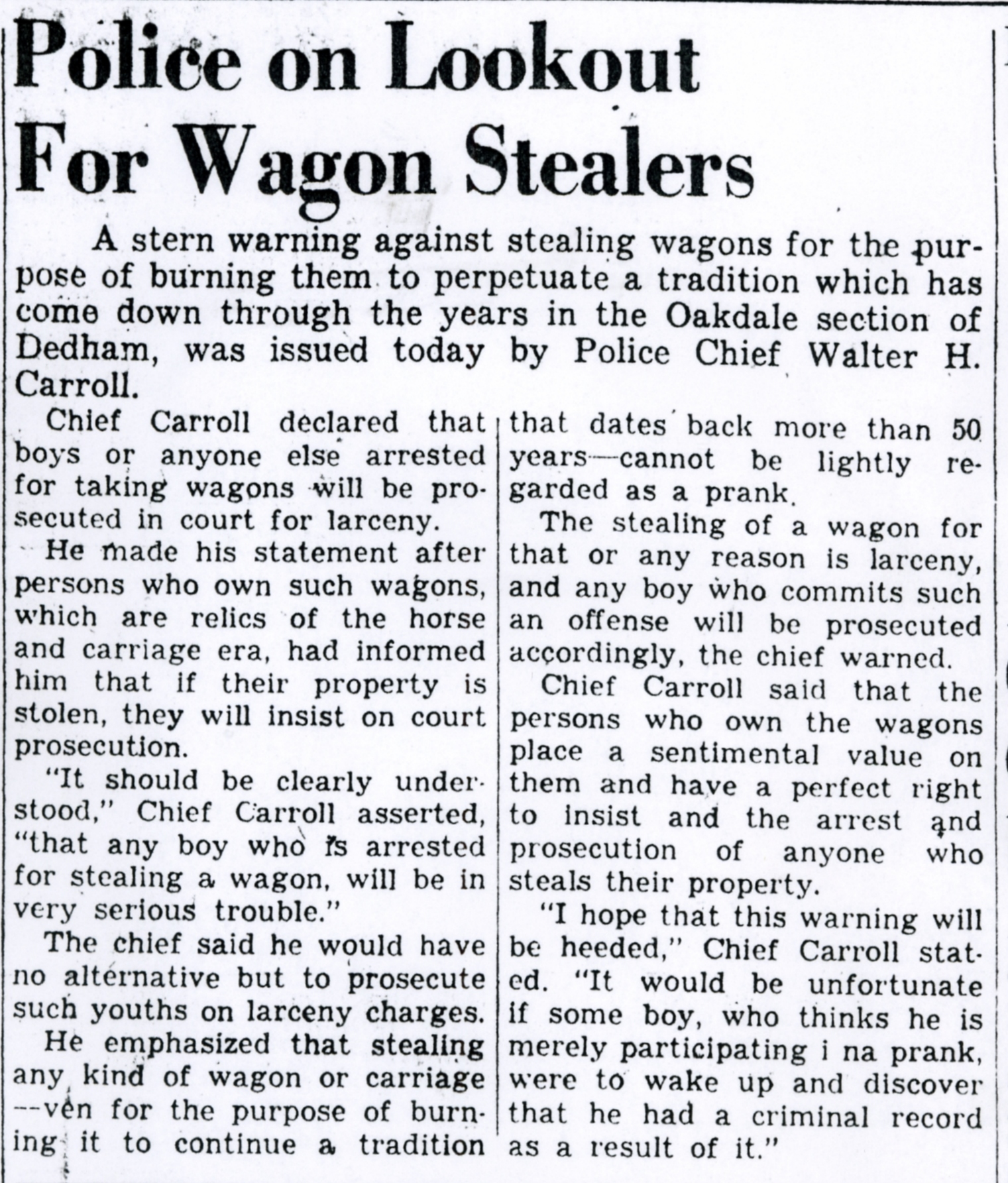
Anyone who has spent any time walking the paths of Wilson Mountain off Route 135 will recognize this forlorn chimney standing on a small hill a short distance from the parking area. Some of you (myself included) will remember a time when a log cabin stood on the site, and you may have even had some nighttime adventures here. I’ve been researching this part of Dedham recently, and have discovered some amazing facts, the first of which I’ll share in the form of this short item from the Dedham Transcript of December 27, 1924.
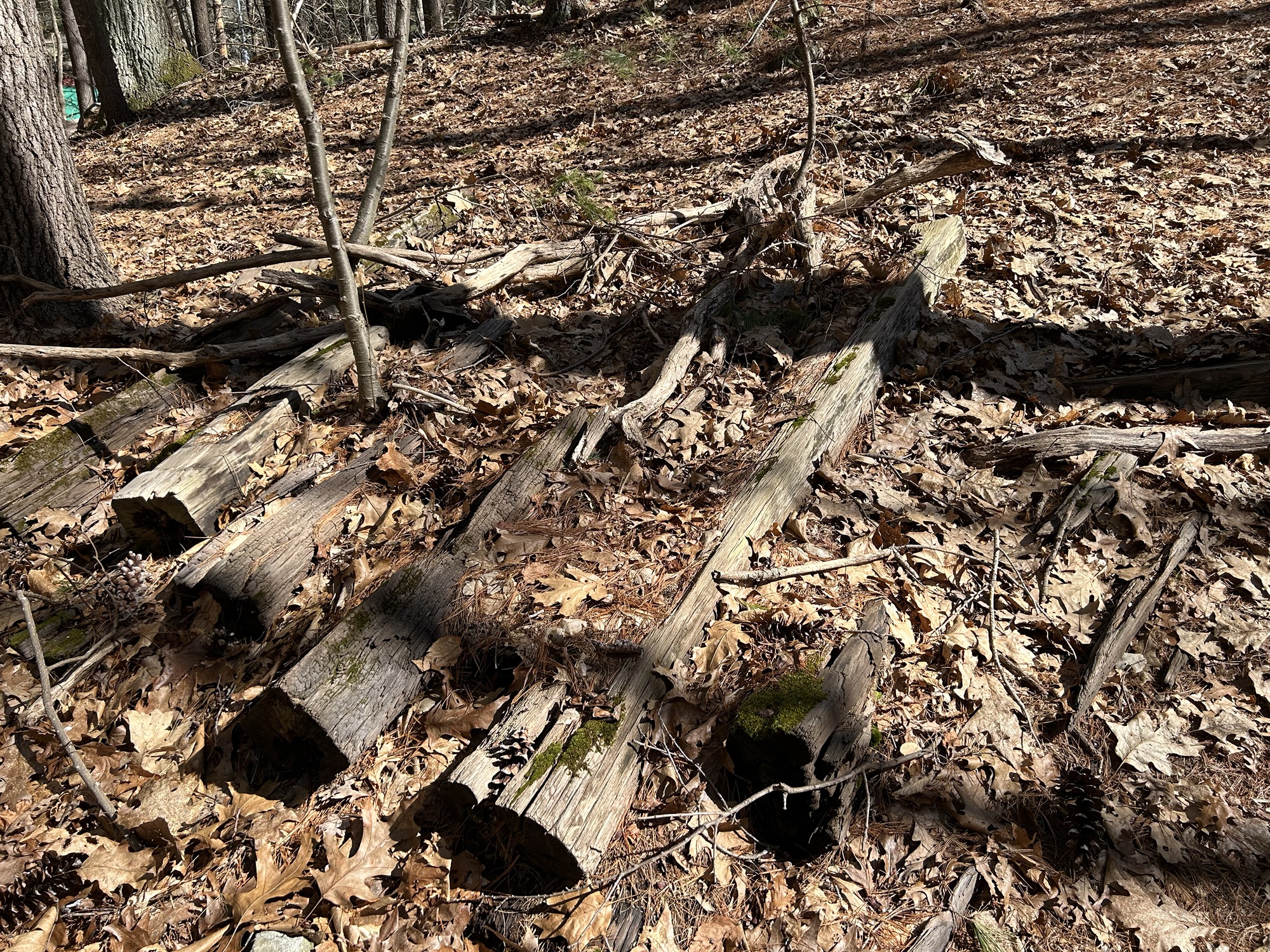
Some of the logs still remain on the groundYou can see the impressions of the logs that once made up the walls of the cabin
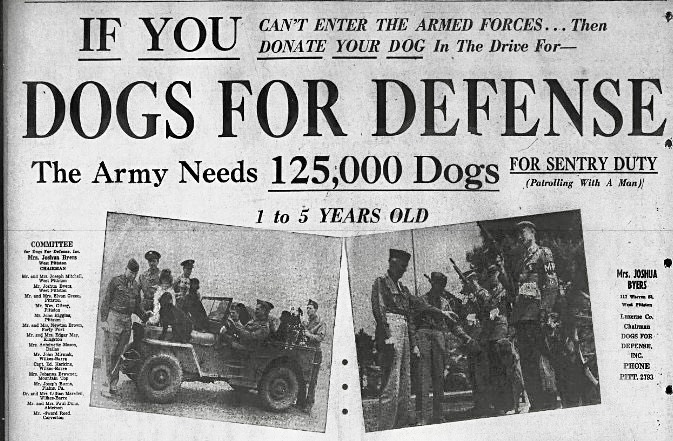
Shortly after the start of World War II, Harry I. Caesar, a New York businessman and president of the American Kennel Club came up with a unique plan to help the US war effort. Noting that dogs, with their superior senses of hearing, vision and scent, had long been in use by both enemy and ally armies, Caesar outlined a program that would call for the recruitment, training and deployment of at least 125,000 of the nation’s pet dogs for civilian defense and military guard duty. By the spring of 1942, the Dogs for Defense program was well under way, with regional centers (including one in Dedham) set up for the intake and training of “volunteers.” Those Fidos and Rovers who passed their initial training (many were sent back home for being too friendly) were assigned guard duty at military installations across the country; some were even sent overseas to serve in combat zones.
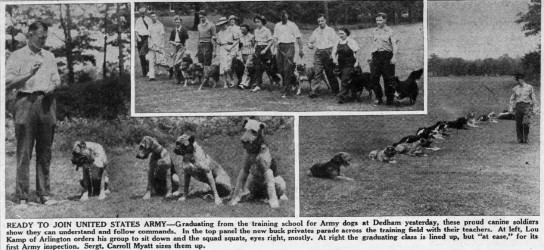
Boston Globe/July 20. 1942
A kennel was established in Newton as the New England intake center, and a training school was conducted in Dedham on the old Karlstein polo grounds (near the present Rashi School) on the banks of the Charles River. The first class of thirty-five pooches graduated in July after eight weeks of training and was sent off to undisclosed assignments following emotional farewells with their owners.
It is inconceivable that families today would willingly put the family pet in harm’s way for periods of up to two years or more with the possibility that their beloved doggo might not return at all. But in 1942, the response was overwhelming, with families and even children sending letters and photos to the program’s directors vouching for their dog’s ability. Initially, volunteers were required to be well behaved purebreds between one and five years old, weighing at least fifty pounds and standing eighteen inches high. As the need increased, mixed breeds were accepted (although chows were found to be unreliable and rejected).
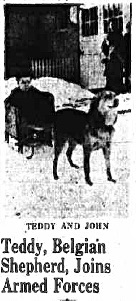
from the Dedham Transcript
Dedham boasted at least 2 dogs who served: Teddy, a Belgian shepherd owned by the John Allgaier family and Bessie, owned by the Ford and Josephine Friend family. Bessie was assigned to a coast guard station, and coincidentally, Ford was eventually able to serve in the Coast Guard Reserve as a machinist’s mate. Bessie was returned to the Fords after the war’s end, displaying one behavior quirk from her time in the service: every Fourth of July when the local fireworks displays began booming and banging, Bessie would hit the ground and run for cover under the nearest table, as she had been trained. After a long, happy life with her family in Dedham, Bessie passed on and was buried in the backyard wrapped in her favorite blanket.
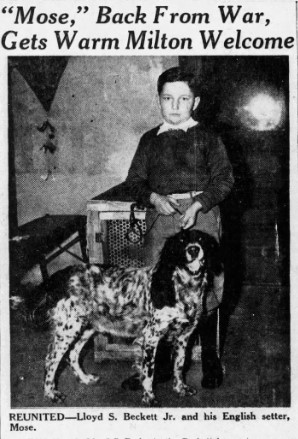
Globe/ November 8, 1943
Six-year-old English setter Mose of Milton was returned by the army due to his friendly nature. Fourth-grader Lloyd Beckett Jr. happily greeted the dog after removing the blue star service flag that had hung in the window during Mose’s absence.
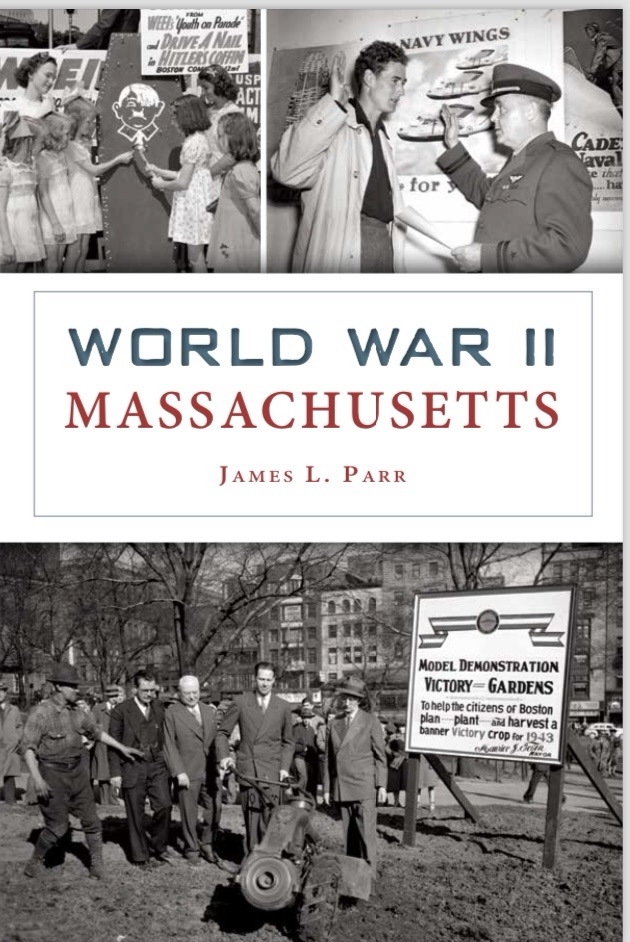
You can read about more hero dogs and view Bessie’s honorable discharge in my new book World War II Massachusetts, available online, in bookstores or directly from me.
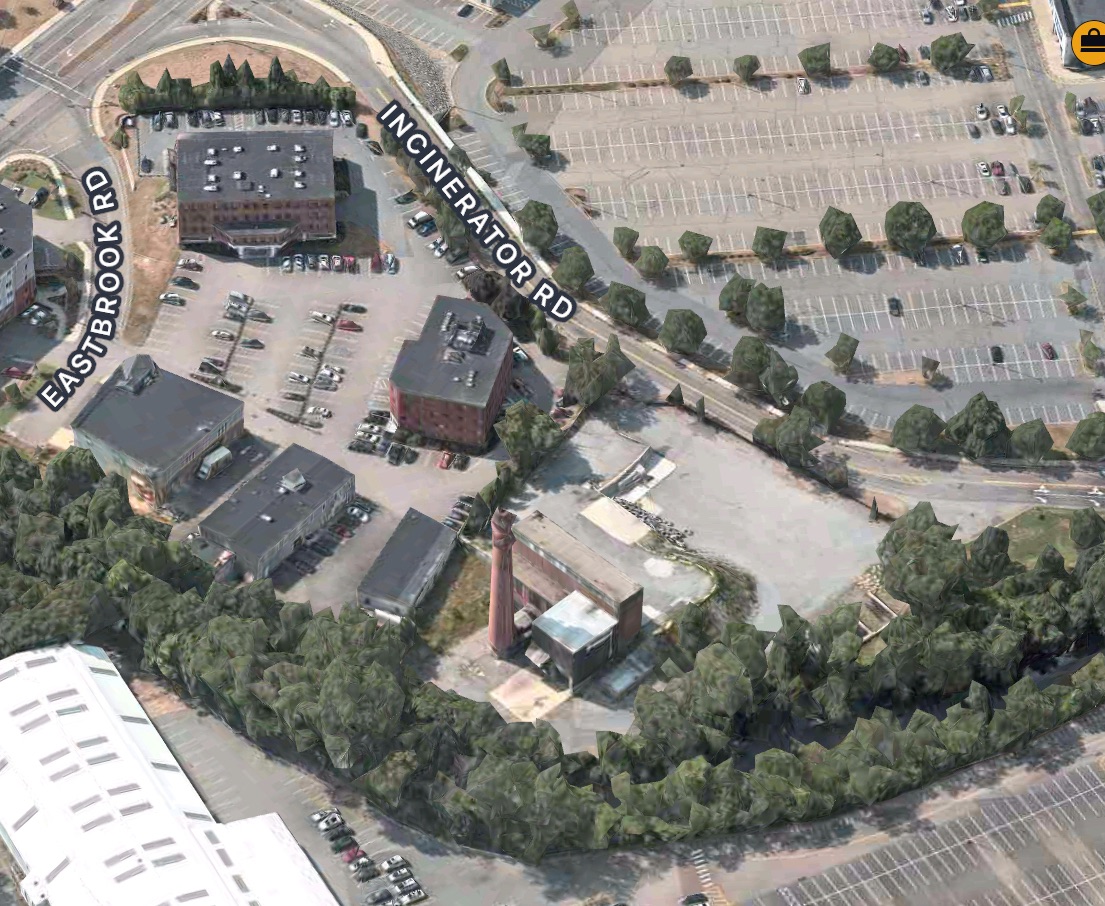
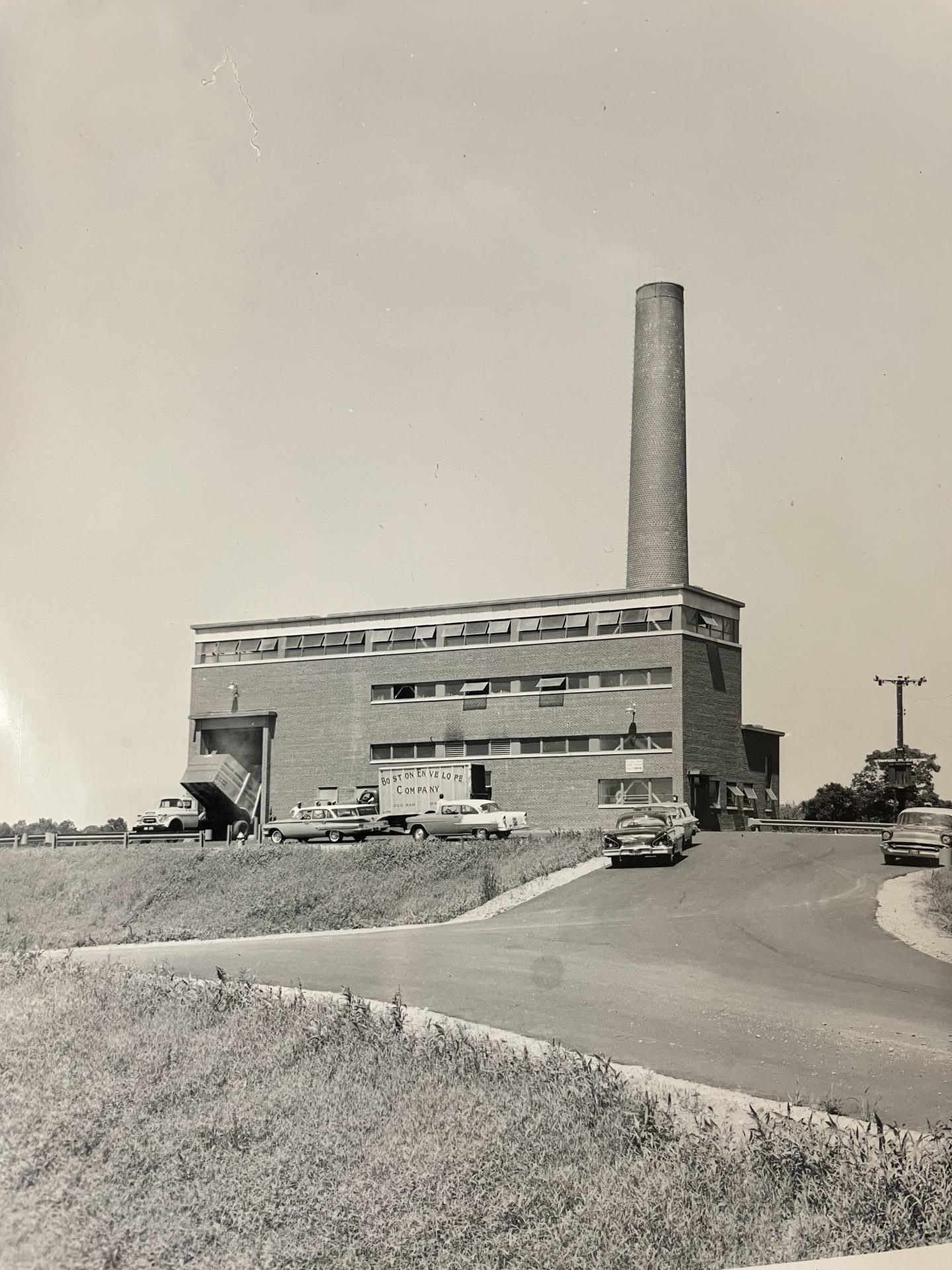
The Town of Dedham is currently conducting a survey of residents to gather ideas for the future use of the transfer station site off Washington Street. Built as an incinerator in 1961, the facility was closed in 2019 and currently serves as DPW storage. But did you know it was built on land that once served a much different purpose?
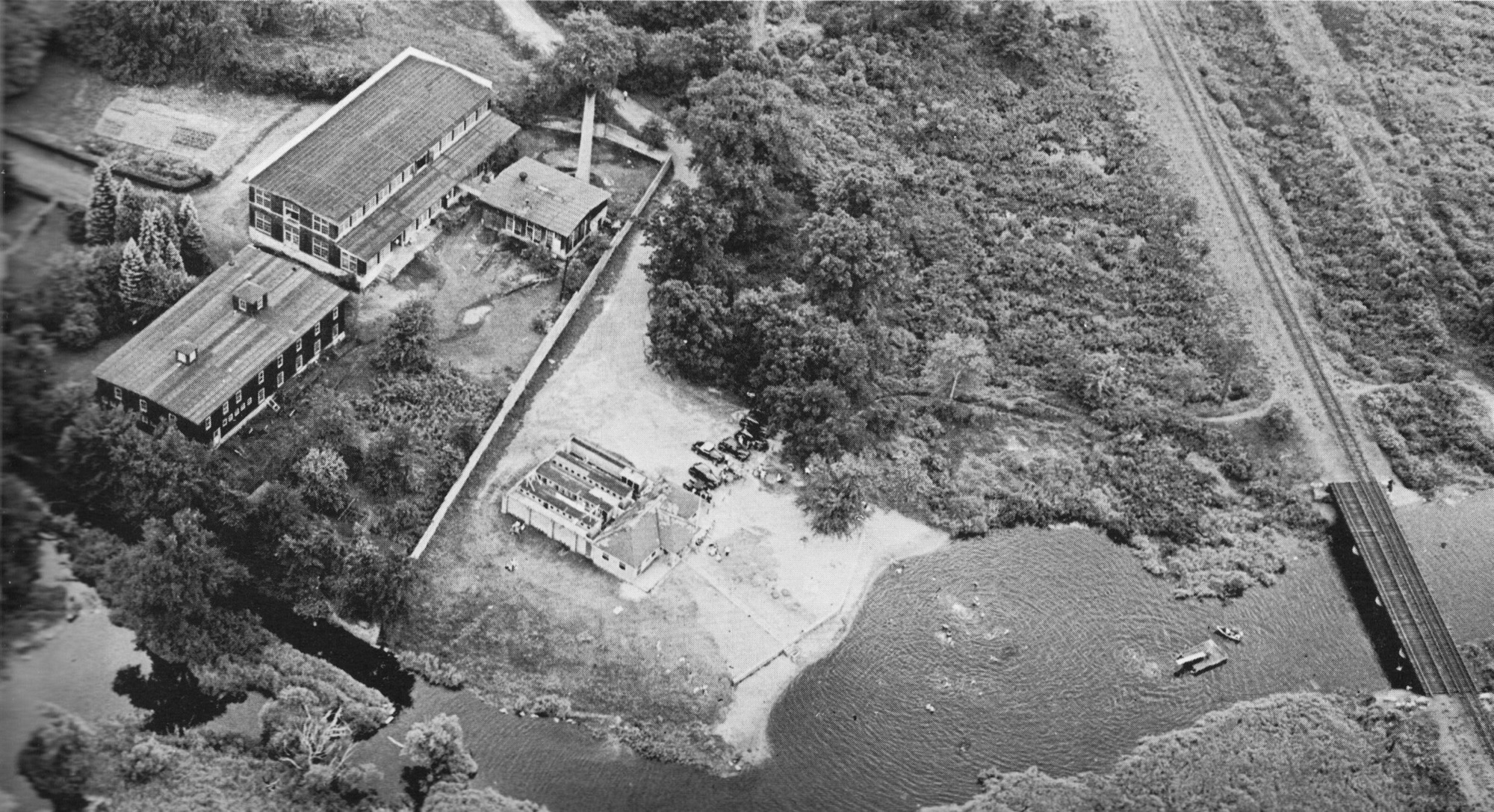
2024 View1947 View from Town of Dedham Master Plan Report
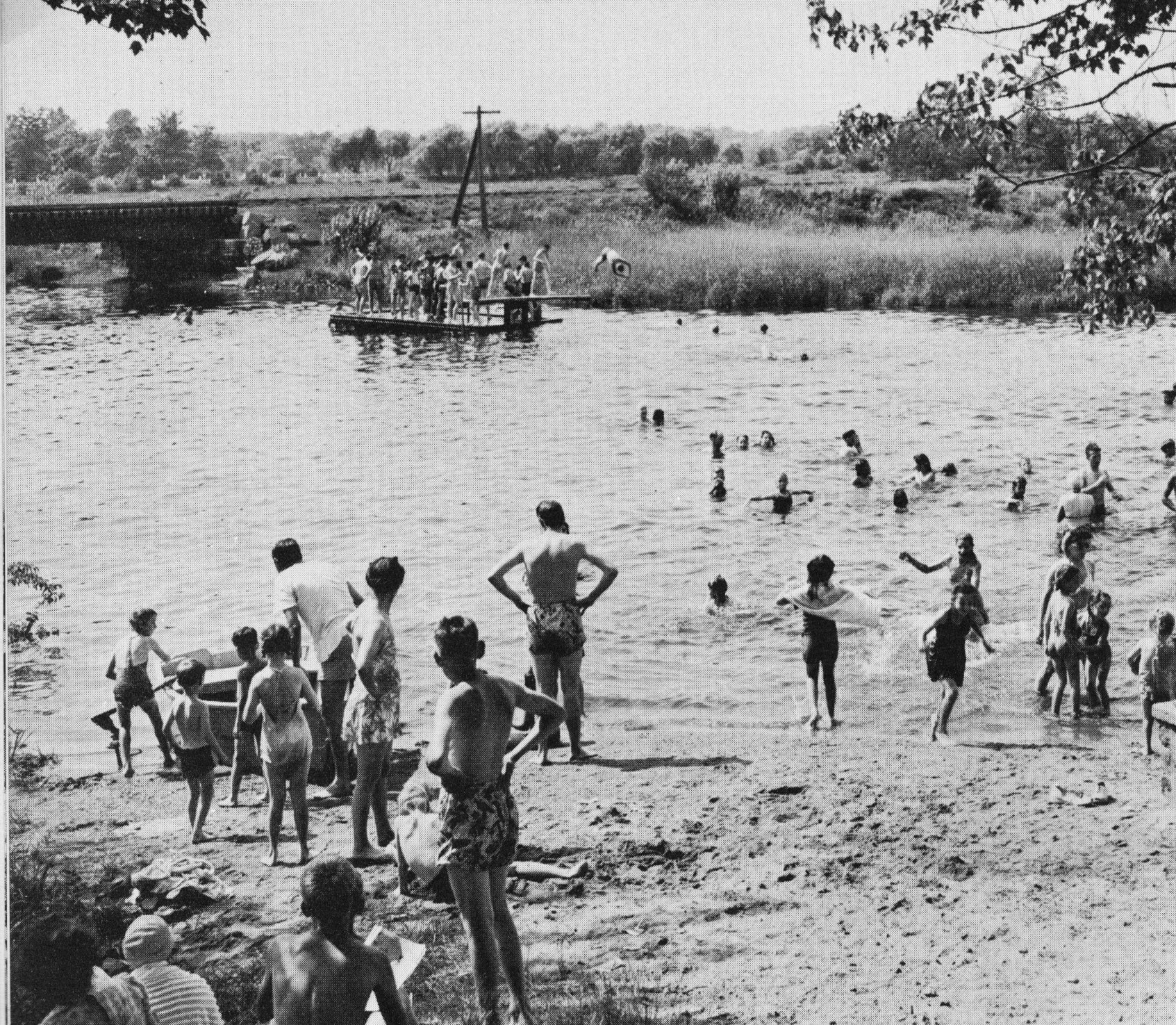
As you can see, a bath house once stood on the site and Dedhamites flocked there for over half a century to cool off in the waters of Mother Brook. The 1947 view shows the bath house built in 1925 after the original one from 1898 burned down two years earlier. The popular spot was staffed with lifeguards and swim instructors, and swim meets and games capped the season at summer’s end. The swimming area was occasionally dredged to create a real old- fashioned swimming hole, and the beach area was regularly maintained. The NY, NH & H railroad tracks ran northwesterly from Dedham Square under Washington Street across what is now the Dedham Mall parking lot. Brave (also reckless) swimmers would sometimes dive off the railroad bridge, despite the diving platform supplied by the town (see below).
“One of the most popular places in Dedham during the recent hot spells is the bath house at Mother Brook where hundreds of boys and girls have been enjoying themselves daily.” Transcript/July, 1941
Rumors began circulating in the late 40s that the water had become polluted, and the beach and bath house closed for good after the summer of 1952. The town sold a portion of the land in 1955, and the incinerator was approved in April 1960, with construction beginning the following year. While the days of swimming in local waterways are well past, it was a cherished summer activity until the mid-twentieth century, best summed up in this transcript column from July, 1925:
“Every normal child just naturally seeks the water, and swimming is the art that should be acquired by all…And just as long as we support our bath house and just as long as we see these young people sporting in the water, we are sure we have done something, locally, that childhood may be made happy.“
The incinerator at the time of its opening/Courtesy of Dedham Museum and Archive
If you are a Dedham resident, you have until Friday March 15 to take the survey. Here is the link:
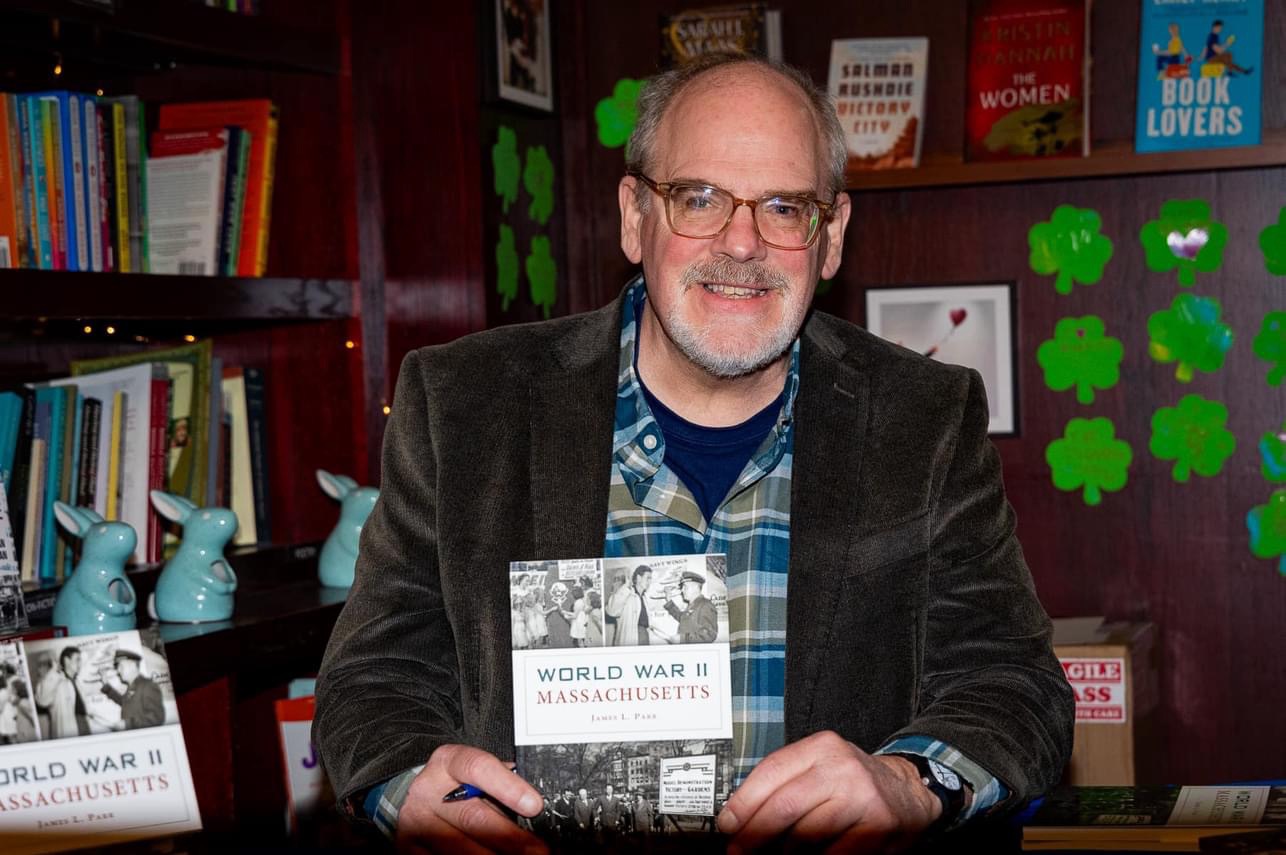
Thanks to everyone who came out to the Blue Bunny last night for the release of my latest book World War II Massachusetts. If you missed this event, I will be speaking at two upcoming events in March in Taunton and Framingham. You can always stop in at the Blue Bunny and pick up your copy or contact me directly. Here are links to the March events:
Old Colony History Museum/Taunton- Thursday, March 21
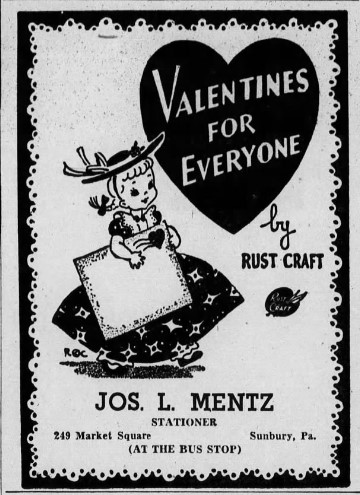
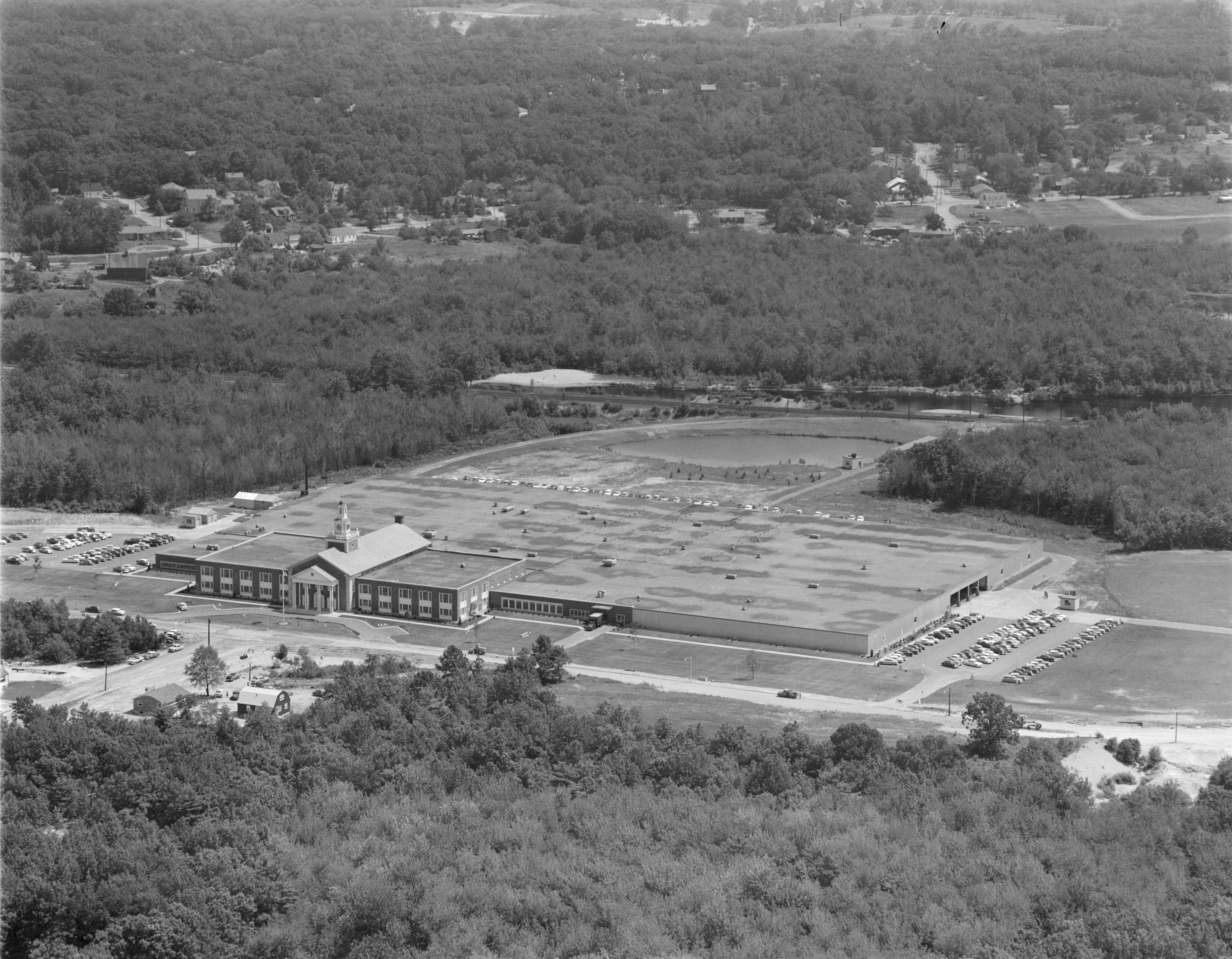
Happy Valentine’s Day from Rust Craft Publishers, which made its home in Dedham from 1955-1980. I plan on doing a more detailed post on this company in the future, but for now just enjoy these vintage valentines and ads from the 50s-60s!
An aerial view of the Rust Craft plant from the late 50s
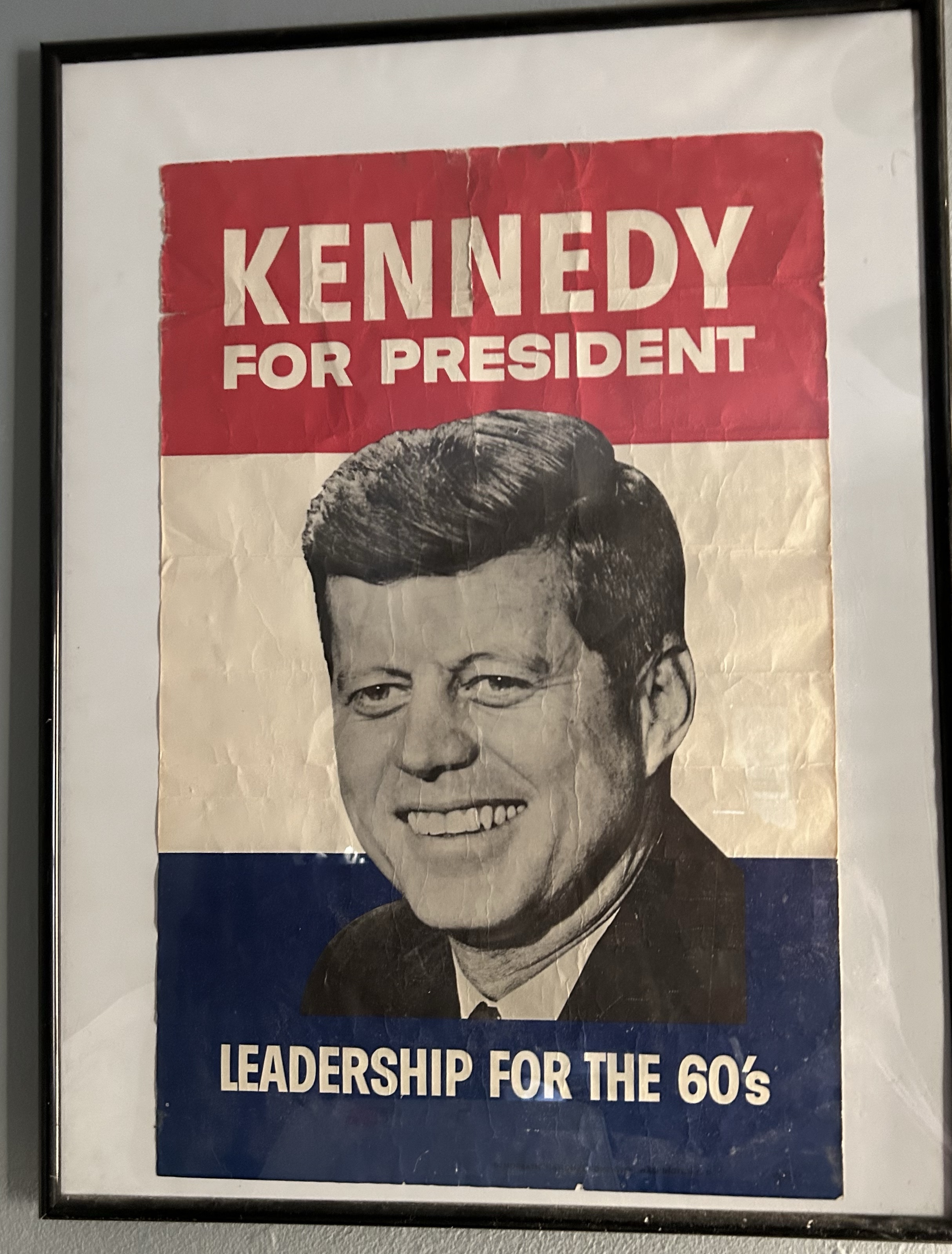
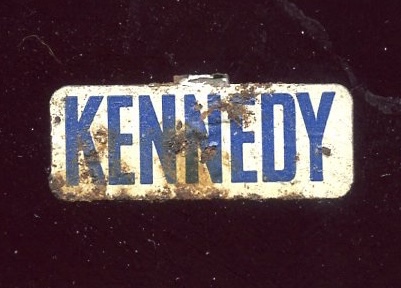
November 22 marks the 60th anniversary of the assassination of President John F. Kennedy. For those who are old enough to remember, it was a time of overwhelming shock, grief and uncertainty. I recall watching the funeral at four years old with my mother and being fascinated by the riderless horse with the backwards facing boots in the stirrups. For residents of Massachusetts, the loss of President Kennedy hit especially hard; he was one of “ours.” He was also a hero to Irish Catholic families like mine- the only political items I ever saw in my house were from Kennedy’s 1960 presidential campaign.
Kennedy campaign poster- it was a popular show and tell item for me and my siblings, hence the many wrinkles.
The response in Dedham to Kennedy’s death was much like that in cities and towns across the state and country. Flags were flown at half-staff, public buildings were closed and draped in black bunting. On Monday November 25, the nation observed a National Day of Mourning, and Dedham’s memorial service began at noon just as the president’s funeral was commencing in Washington. Starting at Memorial Park, town leaders and veteran’s groups marched to the square accompanied by a solemn drumbeat provided by members of the DHS band. Other groups in the procession included the Knights of Columbus, police and fire departments, and the Women’s Auxiliary. The procession ended in front of the police station on High Street where clergy from local churches gave brief remarks. A traditional volley of gunfire was followed by the singing of “America” and the national anthem. The ceremony ended with a bugler playing “Taps.”
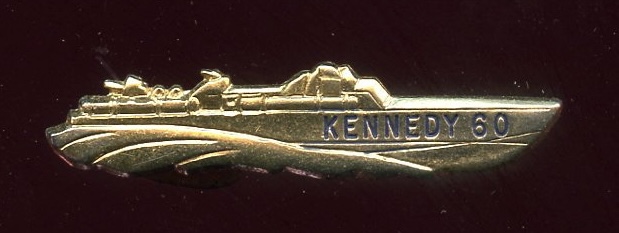
This PT-109 tie clip belonged to my grandfather.
With the Thanksgiving and Christmas holidays occurring so soon after this national tragedy, residents tried to carry on as best they could, but clearly there was an underlying sadness present in all of the festivities. Out of respect for the president’s memory, the 5th annual torchlight parade and football rally which was to be held the night before Thanksgiving was canceled, but the traditional game against Norwood continued, with the Marauders crushing the Mustangs at home, 30-0. On Friday the 29th, a busy Santa arrived by helicopter at the Dedham Plaza in the morning, then flew over to Mal’s Department Store in Norwood for an afternoon visit. On December 10, at the 153rd annual meeting of the Society in Dedham for Apprehending Horse Thieves, a moment of silence was observed for Kennedy, who had become a member following his election (it is the custom of the Society to bestow membership on presidents and other politicians). Newly sworn-in President Lyndon B. Johnson was then accepted for membership.
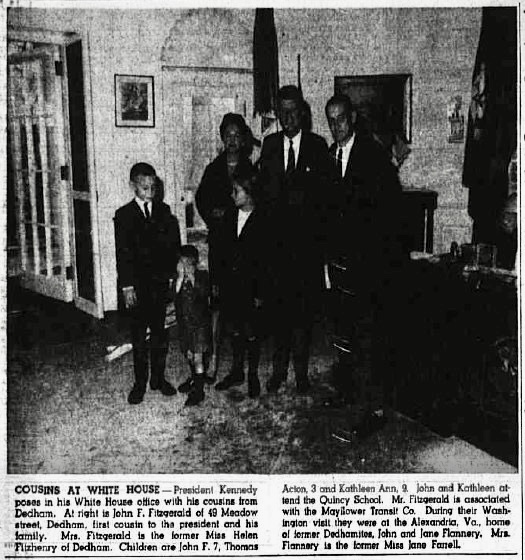
The president had a direct connection to Dedham through his cousin John Fitzgerald, who lived on Meadow Street with his wife Helen and their three children. Kennedy had also visited the town on several occasions during his senatorial campaigns.
This photo of Kennedy’s cousin John Fitzgerald and his family appeared on the front page of the Transcript on November 7, just two weeks before the president’s assassination.
JFK first came to Dedham in 1952 as the Democratic candidate for the senate, appearing at a reception and campaign rally at the Ames Junior High in September and at the Oakdale School in October. In November he would defeat the incumbent republican Henry Cabot Lodge Jr for the senate seat. In 1953 the senator was the featured speaker at the annual meeting of St. Mary’s Holy Name Society, addressing a crowd of 800 in the school hall. Kennedy’s final visit to Dedham was another campaign stop in October 1958, when he and Jackie attended a dinner in their honor at the Hotel 128, followed by a reception at the old Dedham High on Whiting Ave. On November 4, Kennedy won reelection with a whopping 73% of the vote over Republican attorney Vincent Celeste.
A clip-on campaign pin from my grandfather’s collection
In the weeks following the assassination, town leaders began discussing the best way to memorialize the president. Originally selectmen considered erecting a standing memorial somewhere on town property, but that idea was abandoned in favor of something that would, according to the Transcript “embody some of the warmth of the late president for people, some of his love for athletics and his interest in literature.” In the end it was decided that a scholarship in the president’s name would be established at Dedham High. The scholarship was given every year at least through 1973, but does not appear on the list of scholarships awarded to the Class of 2021.
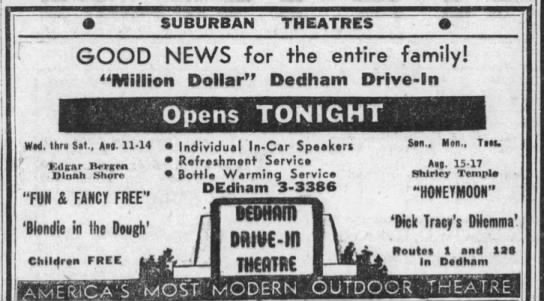
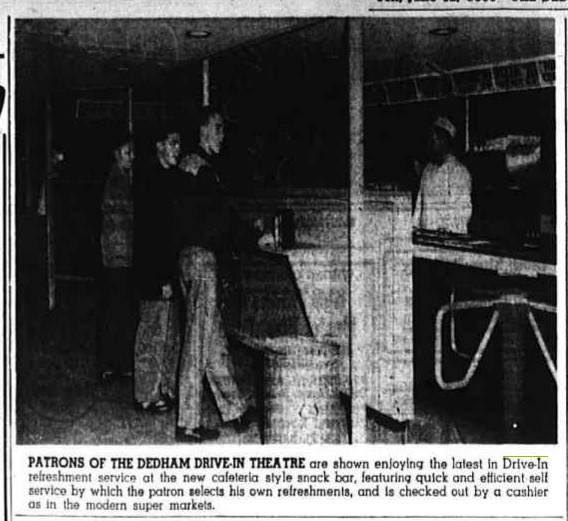
It’s the summer of 1948. Athletes from around the world are gathering in London for the first Olympics in 12 years. In the White House, Harry Truman is gearing up for a presidential run in the fall. The Boston Braves are a few months away from their first National League pennant, (and just a few years away from abandoning the city for Milwaukee). Here in Dedham kids are beating the heat at Mother Brook, East Dedham’s Mill Pond, Cox’s Cove on the Charles or down the river at the new day camp at Noble and Greenough School (still going strong after 76 summers!). Midget auto racing is featured at Norwood Arena which just opened on Rte. 1. You can get a new Motorola television set for $49.95 at Henry’s Radio and Electronics (but you’ll only have programming from WBZ-TV, which commenced broadcasting in early June). Movies and quiz contests are being offered at the 21-year-old Community Theater in the square, and, starting on August 11, movie fans will have a second option for viewing as the Dedham Drive-in opens just off the Providence Pike.
Hundreds of cars are lined up along Elm St as selectmen and local business leaders gather with owner and operator Michael Redstone to cut the ceremonial length of movie film stretched across the drive-in’s entrance. Tonight, a double feature of Disney’s Fun and Fancy Free along with the comedy Blondie in the Dough are shown on the “million dollar” drive-in’s 60′ x 42′ screen.
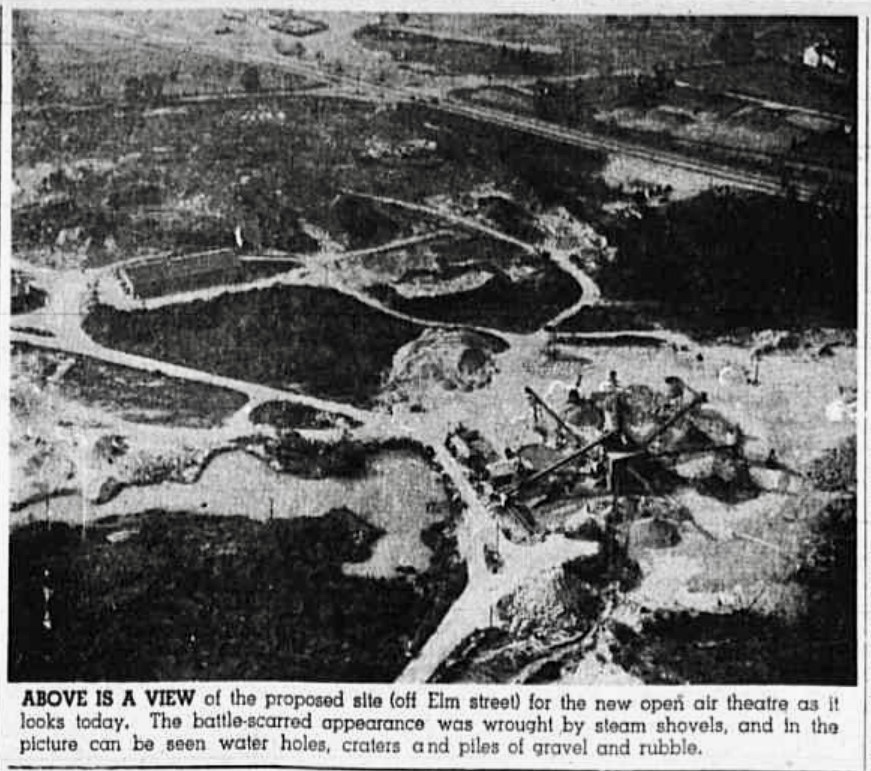
In the fall of 1947, the Board of Selectmen granted Michael Redstone a permit to build an “open air theatre” on 23 acres of land that had at one time been the site of Farquhar’s Nursery, but in recent years had become an eyesore, after gravel and loam was repeatedly removed, creating an unattractive and unsafe moonscape. Redstone, a Boston native, had been successfully operating an outdoor theater on Long Island for ten years, and the Dedham location would be an exact copy.
The drive-in concept was introduced to the world in Camden, New Jersey in 1933 by entrepreneur Richard Hollingshead. Since then, some 800 theaters had been built across the country with the first Massachusetts location opening in Weymouth in 1936. Dedham was about the 20th drive-in theater to be built in the state.
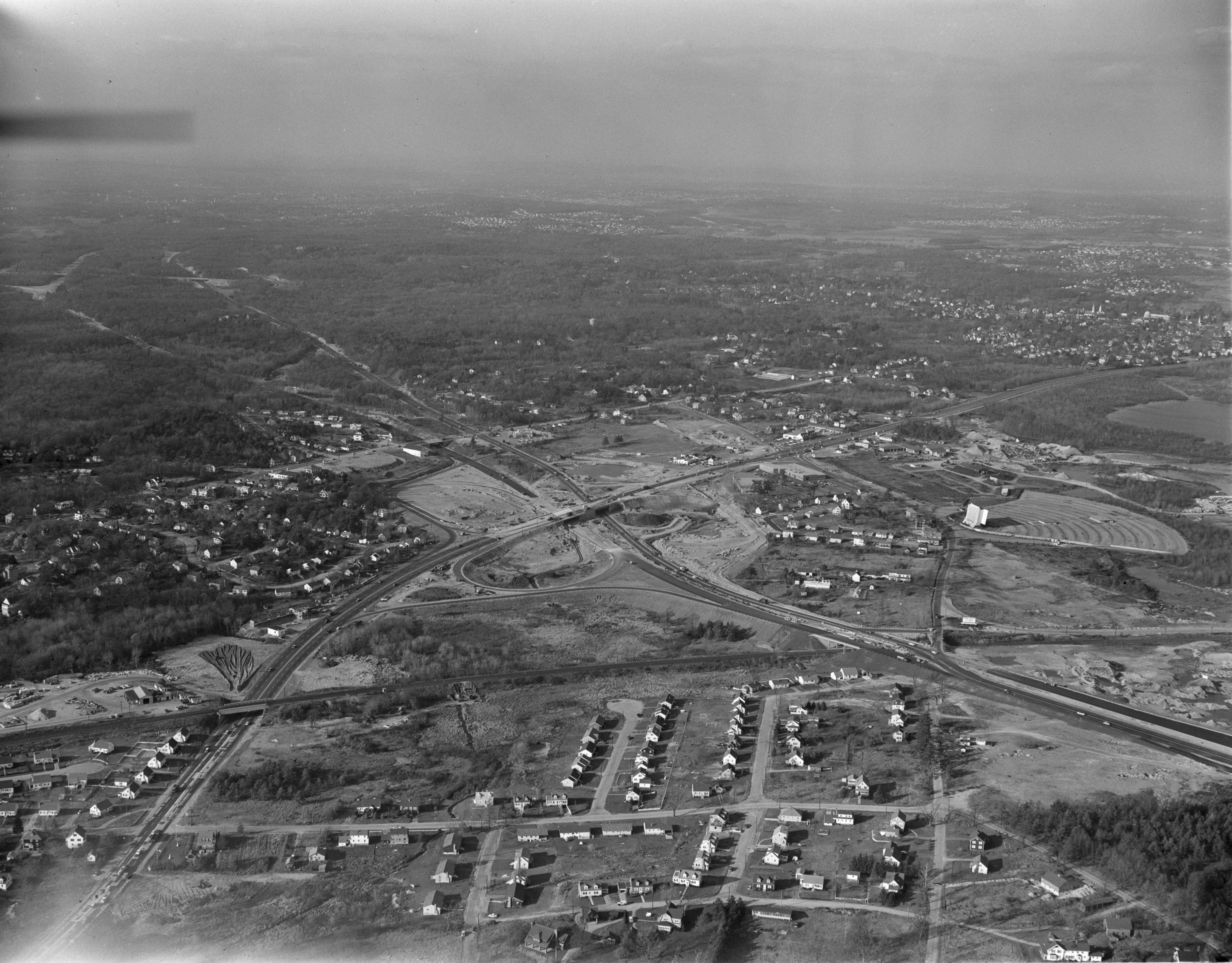
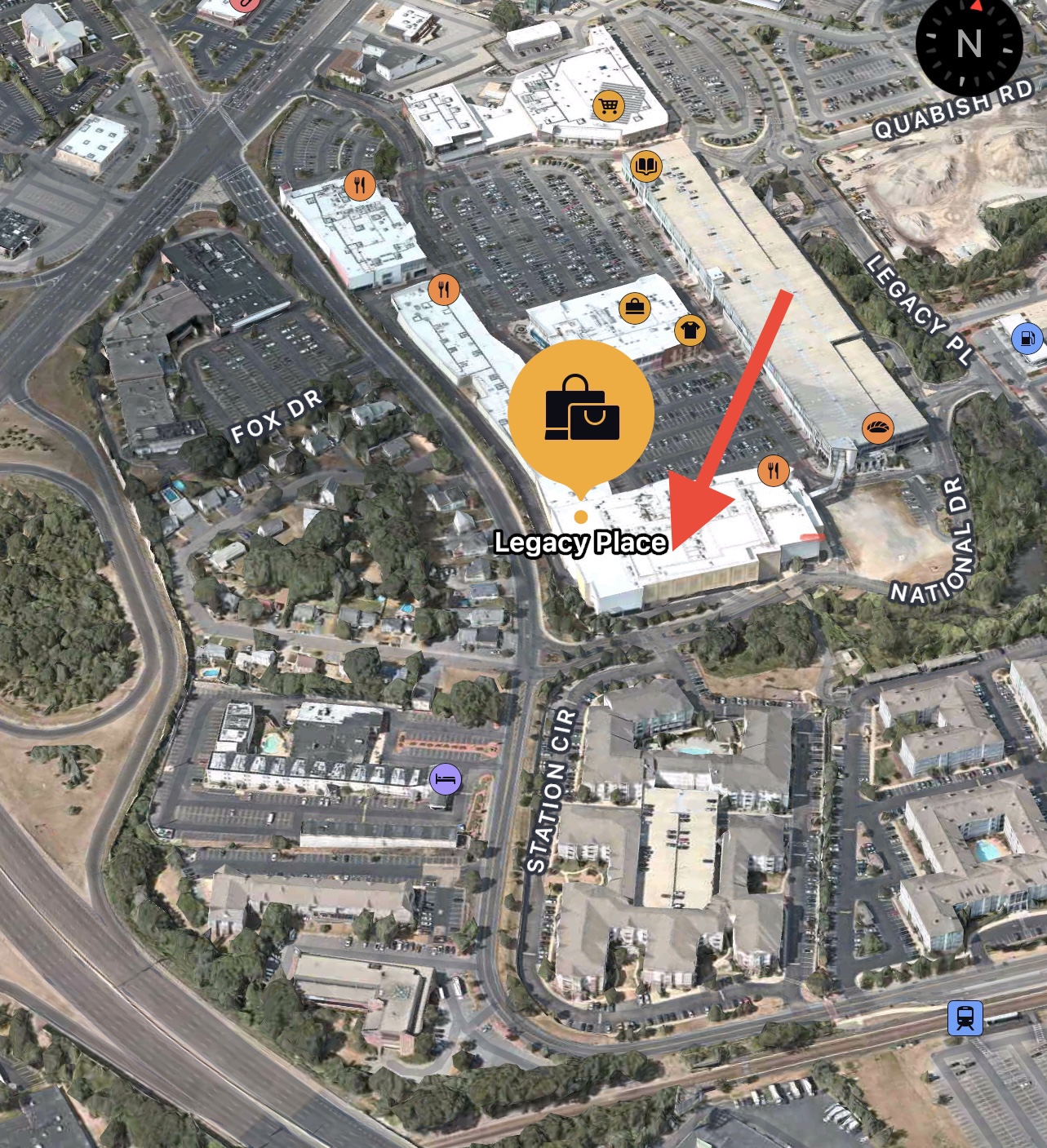
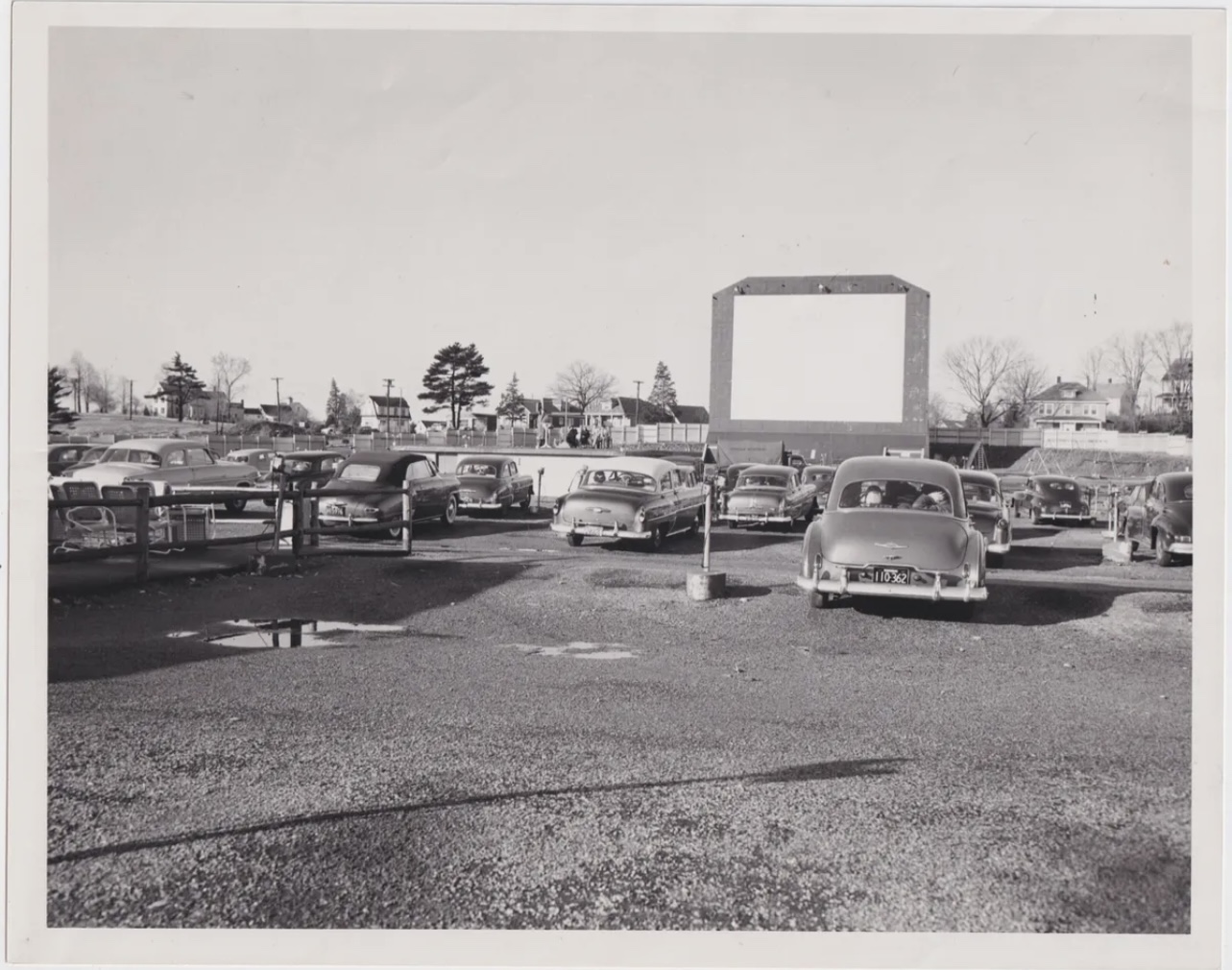
The Drive-in, as seen in this mid-fifties view, was located on Elm Street, the screen standing in nearly the exact same location where the Showcase Cinema de Luxe at Legacy Place now stands.
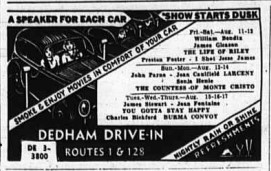
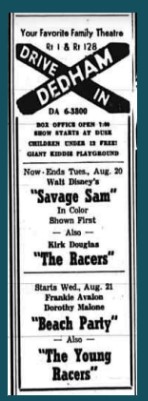
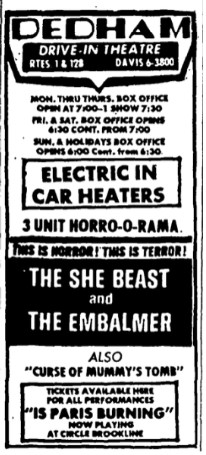
Initially, the drive-in was marketed as a family-friendly place you could take the kids in their pajamas to watch a movie, eat a meal, play on the playground, and enjoy a smoke. Over time, first run movies were replaced by “B” movies that were popular with teens, who probably didn’t really care what movie was playing. Throughout its history, Dedham offered a mix of wholesome entertainment and schlocky horror/beach flicks, as evidenced by the ads below:
19501963January 1967- there were some years that the drive-in was open year-round!
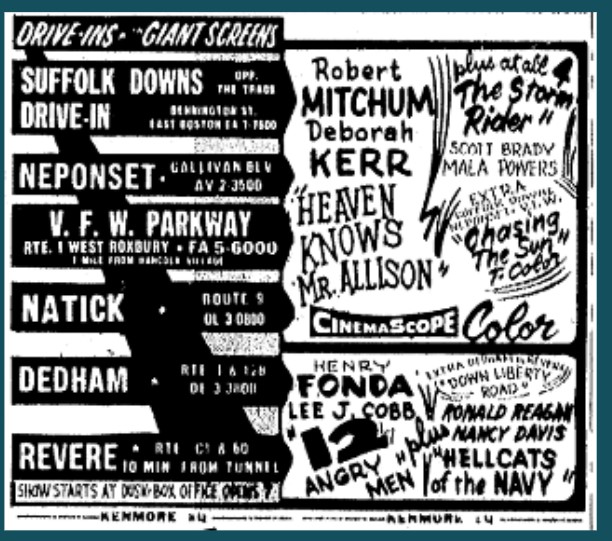
The Dedham Drive-in was the first theater in Redstone’s Massachusetts Drive-in empire. The Revere location opened 2 weeks later, followed by Neponset Circle, VFW in West Roxbury, Suffolk Downs, and Natick (a joint venture with another company). Redstone’s sons Edward and Sumner eventually took over management of the company, and Sumner Redstone transformed it from a regional theater operation to a multi-billion-dollar company when he purchased Viacom, Inc. (CBS, Paramount, Nickelodeon, MTV) in the 1980s. Today National Amusements is headquartered in Norwood and operates about 1,500 theaters across the US and Canada. Sumner Redstone passed away on this date in 2020 at the age of 97 leaving an estimated $2.6 billion estate.
The Redstone Drive-in Empire in 1957
One of the traditions at the theater was the annual sunrise Easter service, which began in 1954. The first service was sponsored by the United Christian Youth Movement with 500 in attendance. St. Luke’s Church on East St. began hosting the services in 1961 and continued to do so through at least 1977.
Easter Sunday, April 18, 1954. Note the large cross to the left of the screen on the roof of the projection booth. The screen was enlarged at some time before the fall of 1955. Photo by Frank Van Pelt/Parkway Photo Service
The drive-in was in operation until about 1979; although some sources state it closed in 1982. The Showcase Cinema 1-3 (a Redstone operation) opened next door in 1973. In part 2 of this tale, I will share the one and only time I went to the Dedham drive-in, as well as the controversy that nearly cost the theater its license in 1970. Here are a few more images. Please feel free to share your stories in the comments section!
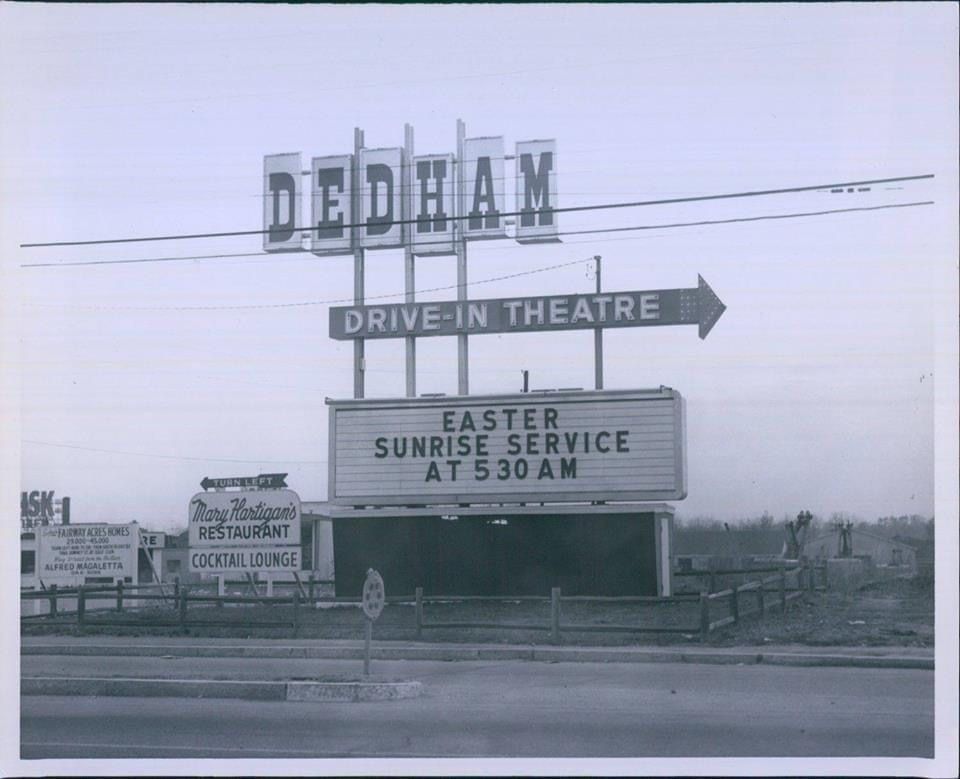
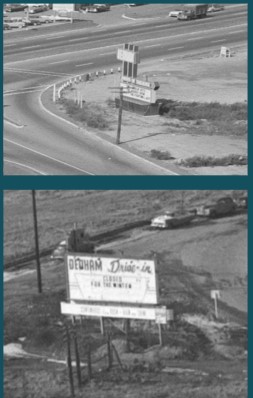
Mid-fifties signs at Rte 1 and Elm Street (top) and Elm St facing 128 (bottom)
I’m pretty sure that Dedham is the only town in the U.S. with a town ordinance that reads like this:
“No person shall set fire to or burn, or cause to be moved through any way or street of the Town, any waste material, paper, wood or any inflammable substance on any wagon, cart, buggy, push–cart or on any vehicle, with the intention of setting fire to or burning same on any way or street of the Town.”
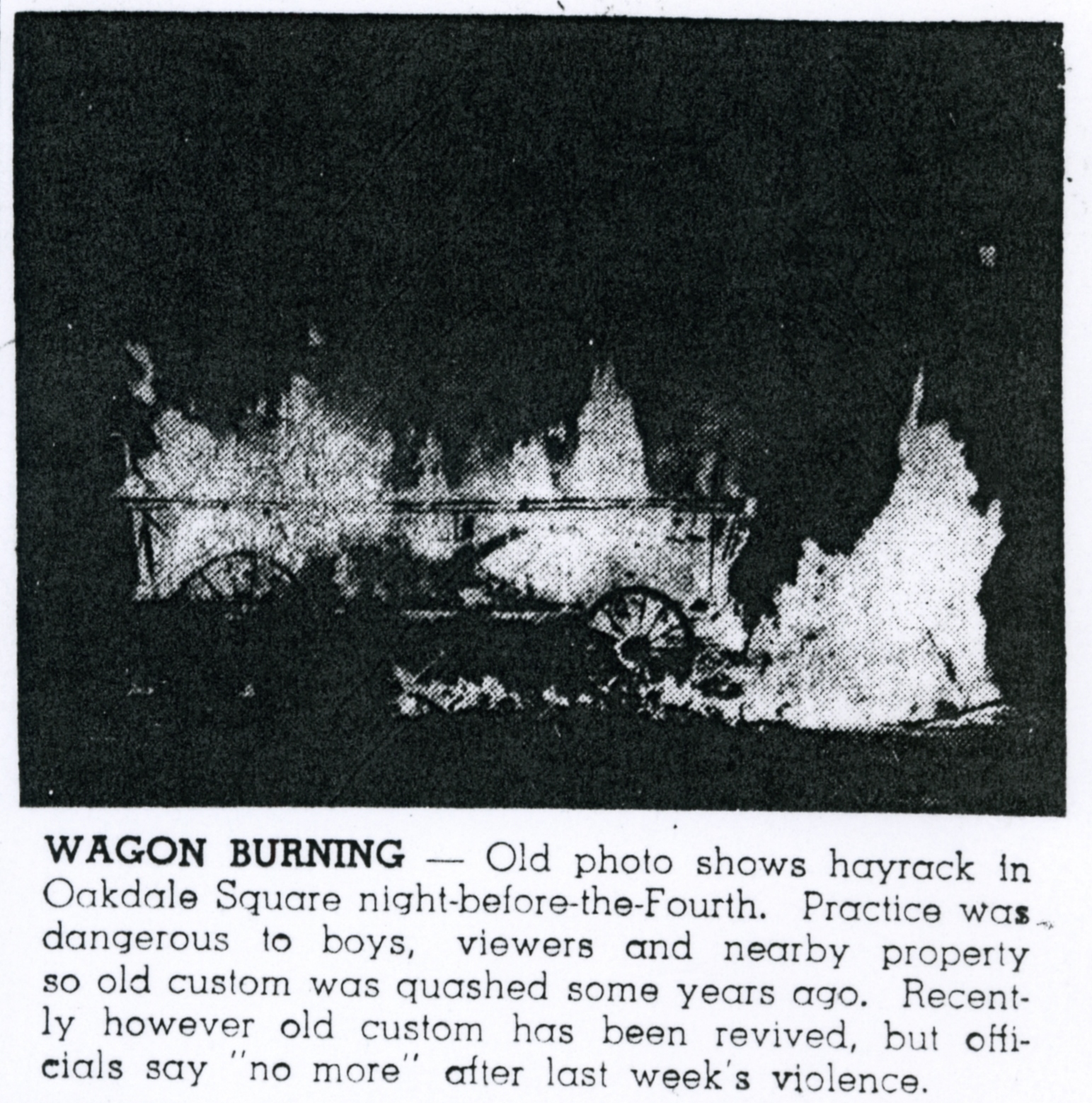
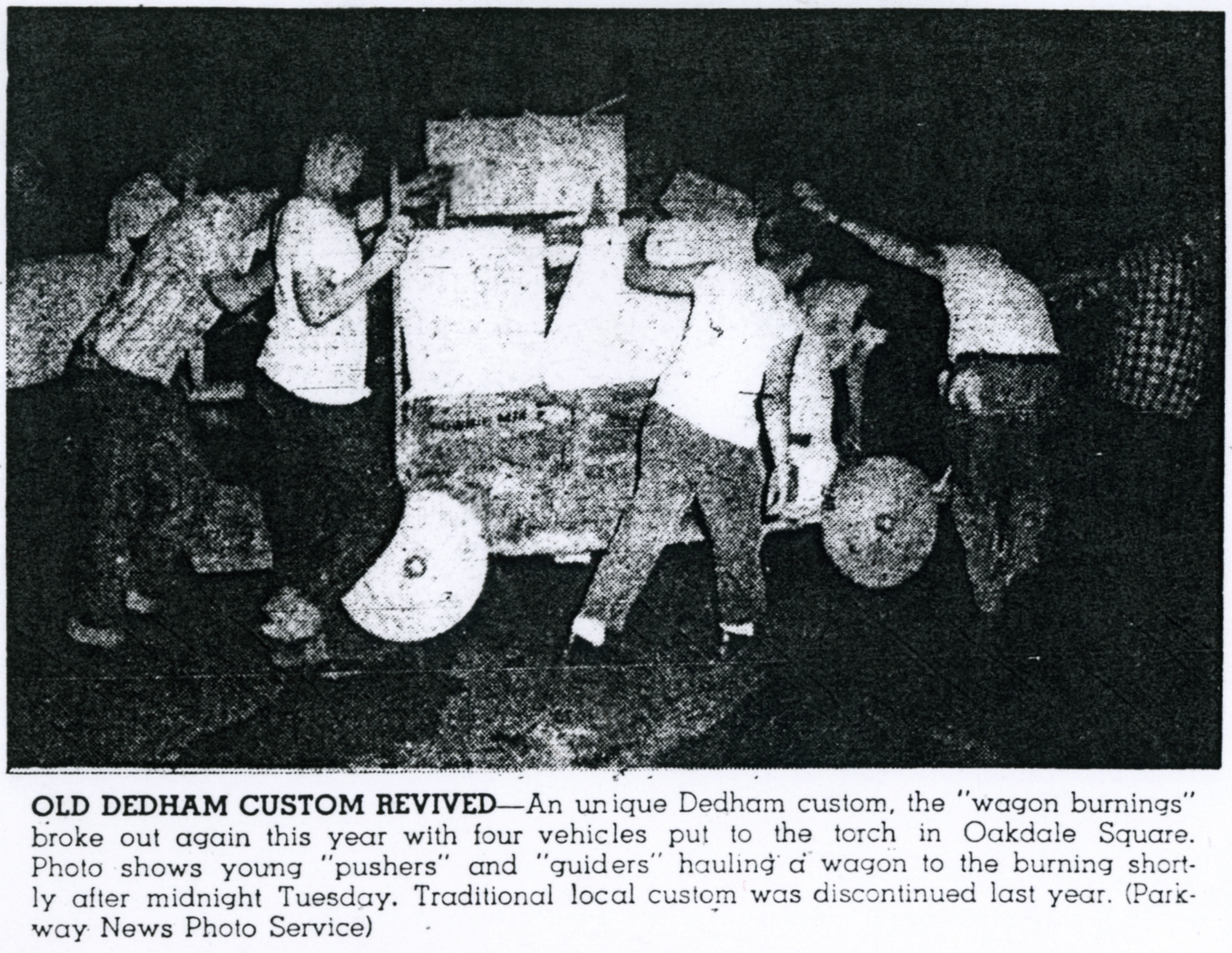
The bylaw was adopted in 1959 in response to the resurrection of a dangerous, unique, and beloved Dedham tradition- the burning of old farm wagons in Oakdale Square on either “the night before” of July 3rd, or the night of the 4th itself. Beginning some time in the early 20th century (my research found the oldest recorded reference to be 1922) thousands of people would gather in the square to witness the event. In the 20’s and 30’s, police and fire officials merely watched and made sure nobody got hurt. The spectacle usually began at midnight when some brave youth would climb the roof of the Good Shepherd Church and ring the bell.
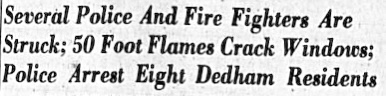
The wagons came from local farms in Dedham and surrounding towns. As authentic farm wagons became scarcer, teenagers would make their own and hide them in back yards and garages until the big night. In 1938, no wagons were found or made, so an old outhouse had to do. Usually the fires got so intense the windows of the stores in the square would crack and the tar underneath would melt. The last Oakdale Square burning was in 1963, when revellers threw rocks and full cans of beer at police and firefighters when they arrived on the scene. After that the burnings disappeared for a few years before the tradition was revived in the Manor. After an explosion and the melting a vinyl-sided house in 1990, police chief Dennis Teehan finally put an end to the burnings.
1963 was a pretty memorable 4th of July in Dedham. On the positive side, 40.000 people turned out for the annual parade which featured 20 bands and some 5,000 marchers. The town’s fireworks display was described as “the best ever.” However, the rowdy element put a damper on the festivities with their actions; hurling rocks and bottles at firemen, ignoring police directions, and tossing cherry bombs into the crowd, one of which landed on the parade float carrying Miss Massachusetts, who abandoned the float for the safety of a car for the remainder of the parade. Ah, the good old days.
I remember hearing about the wagon burnings when I was a kid, but I never witnessed one. After the publication of my Dedham book, the wagon burnings was the most popular topic brought up at book signings and talks. Maybe you have some more tales to add to the collection? Pass them along and have a Glorious Fourth!
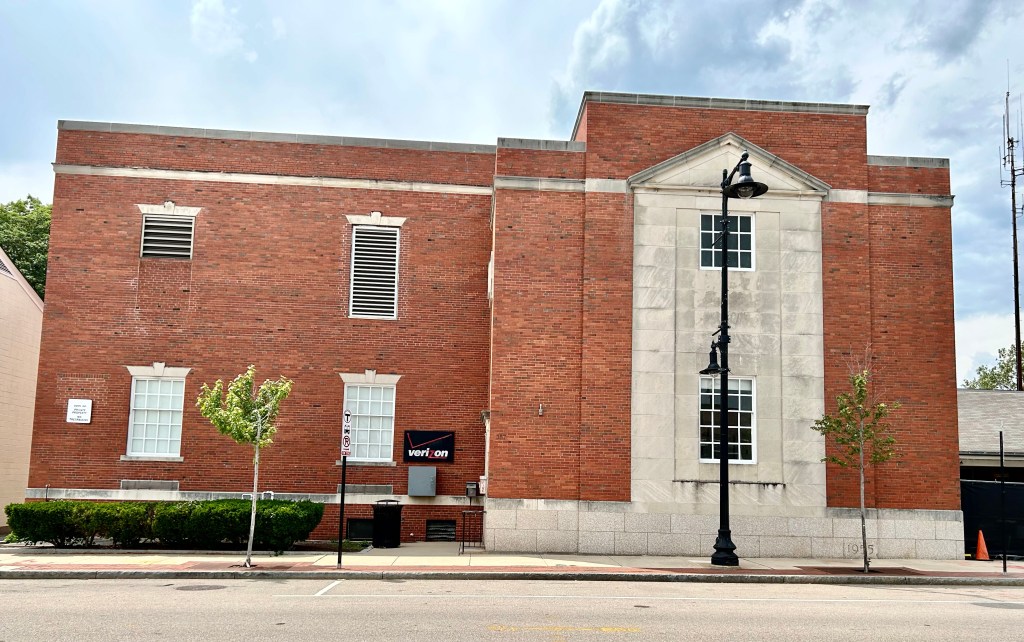
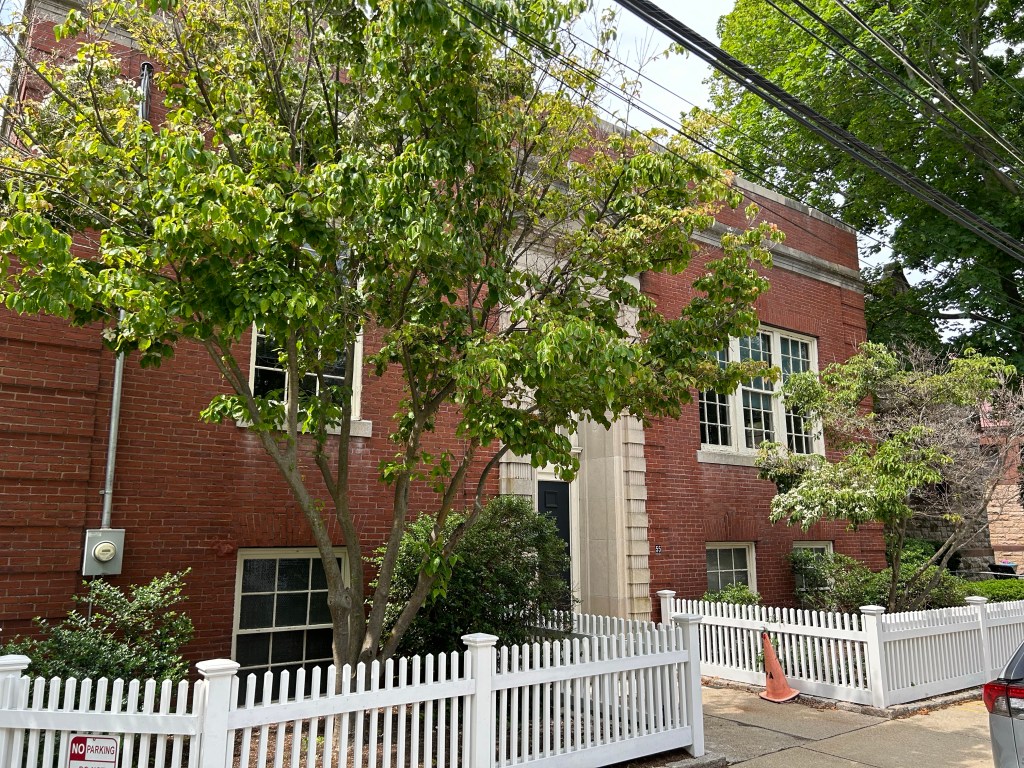
Brian Keaney correctly identified the Verizon building on Washington Street. I remember in 6th or 7th grade scrounging thin multi/colored wire from their trash so I could give it to the girls in my class to make rings out of. I bet most of us have never been inside this building. Here’s a little history:
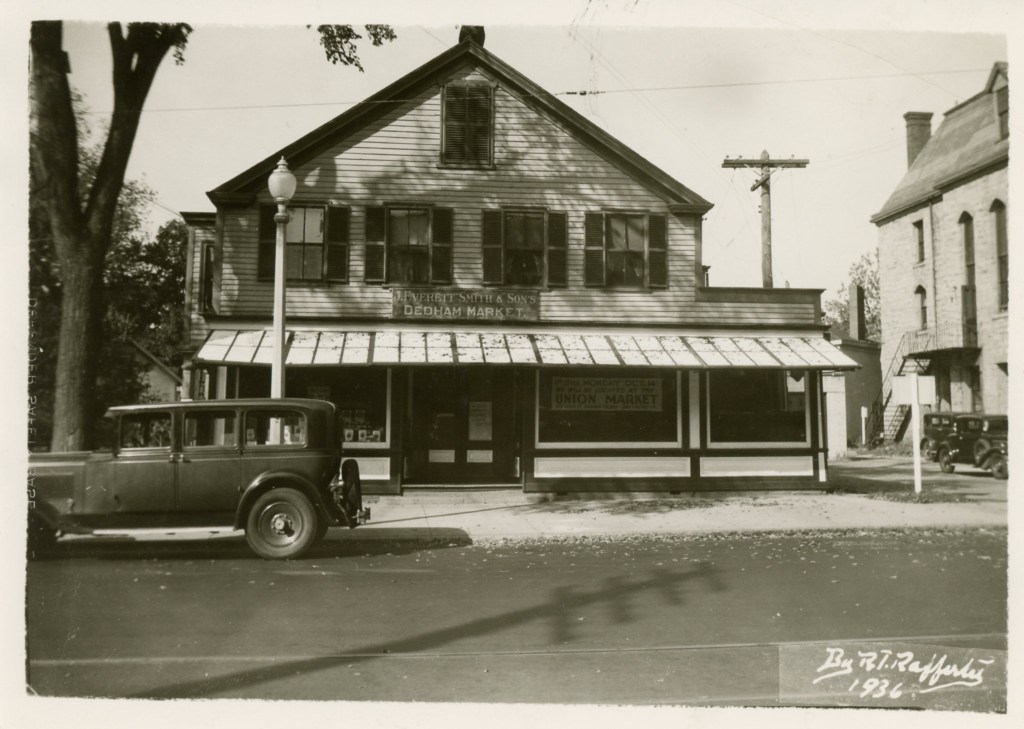
387 Washington Street. The cornerstone is visible on the right behind the tree.Smith Market on Washington Street, 1936. Memorial Hall (future site of the new Town Green) is to the right Image courtesy of the Dedham Museum and Archive
In July of 1954 the 88-year-old wooden J. Everett Smith Market building on Washington Street next to Memorial Hall was knocked down to make way for the New England Telephone and Telegraph Company’s new telephone exchange building. Construction began on the buildig in late 1955 and the cornerstone was laid on April 4, 1956. Inside the cornerstone a metal receptacle was placed which held “records and memoranda which describe fully and graphically the town of Dedham as it exists today” (Dedham Transcript)The gathered crowd included selectmen, telephone company officials, the town’s postmaster, police chief Walter Carroll, State Representative Francis Harding, Father William Kennedy of St. Mary’s Parish who delivered an invocation, and Reverend Leland Maxfield of the Westwood Baptist Church who delivered a benediction.
The old telephone exchange building on Church St, built around 1920.
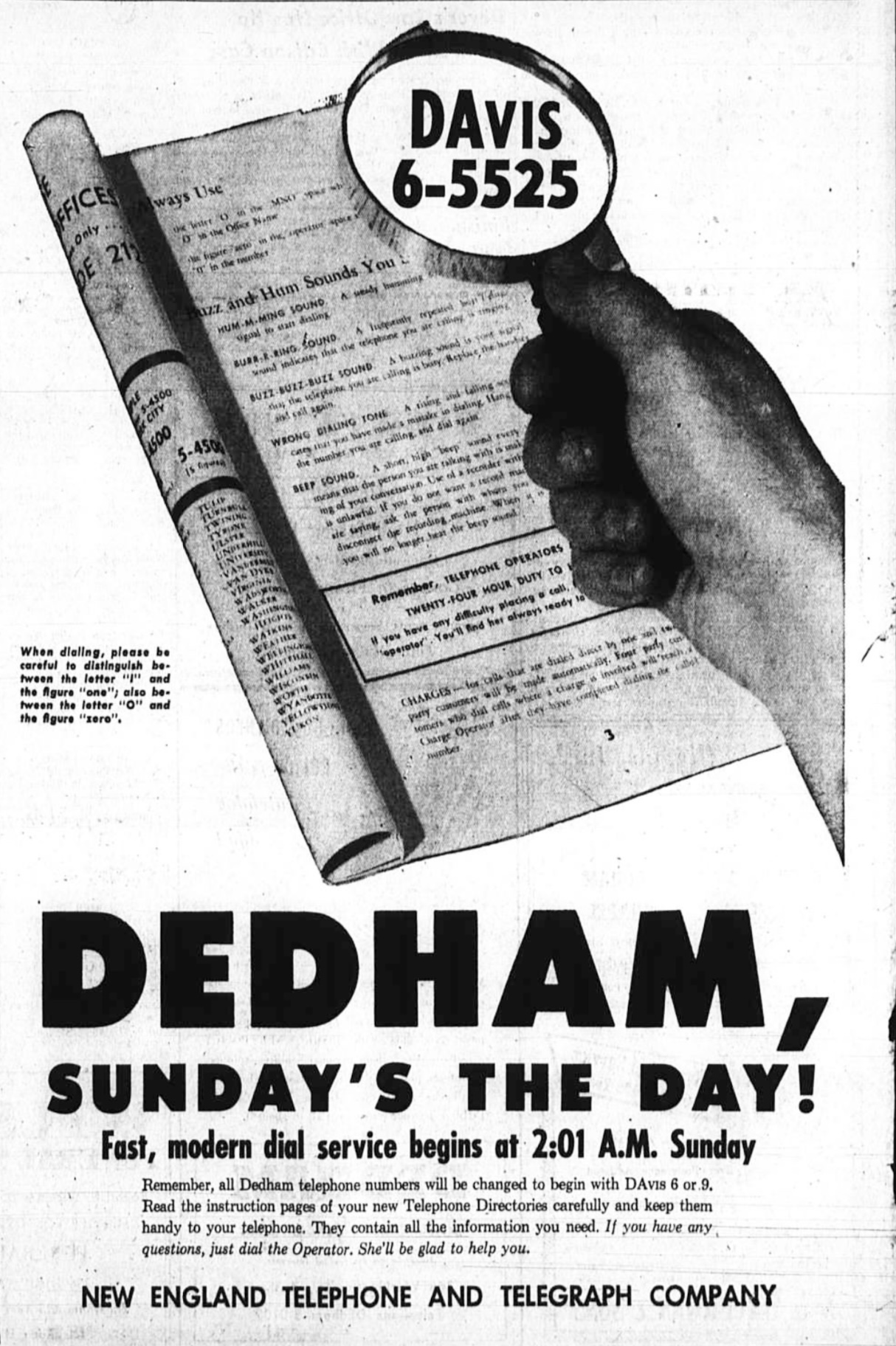
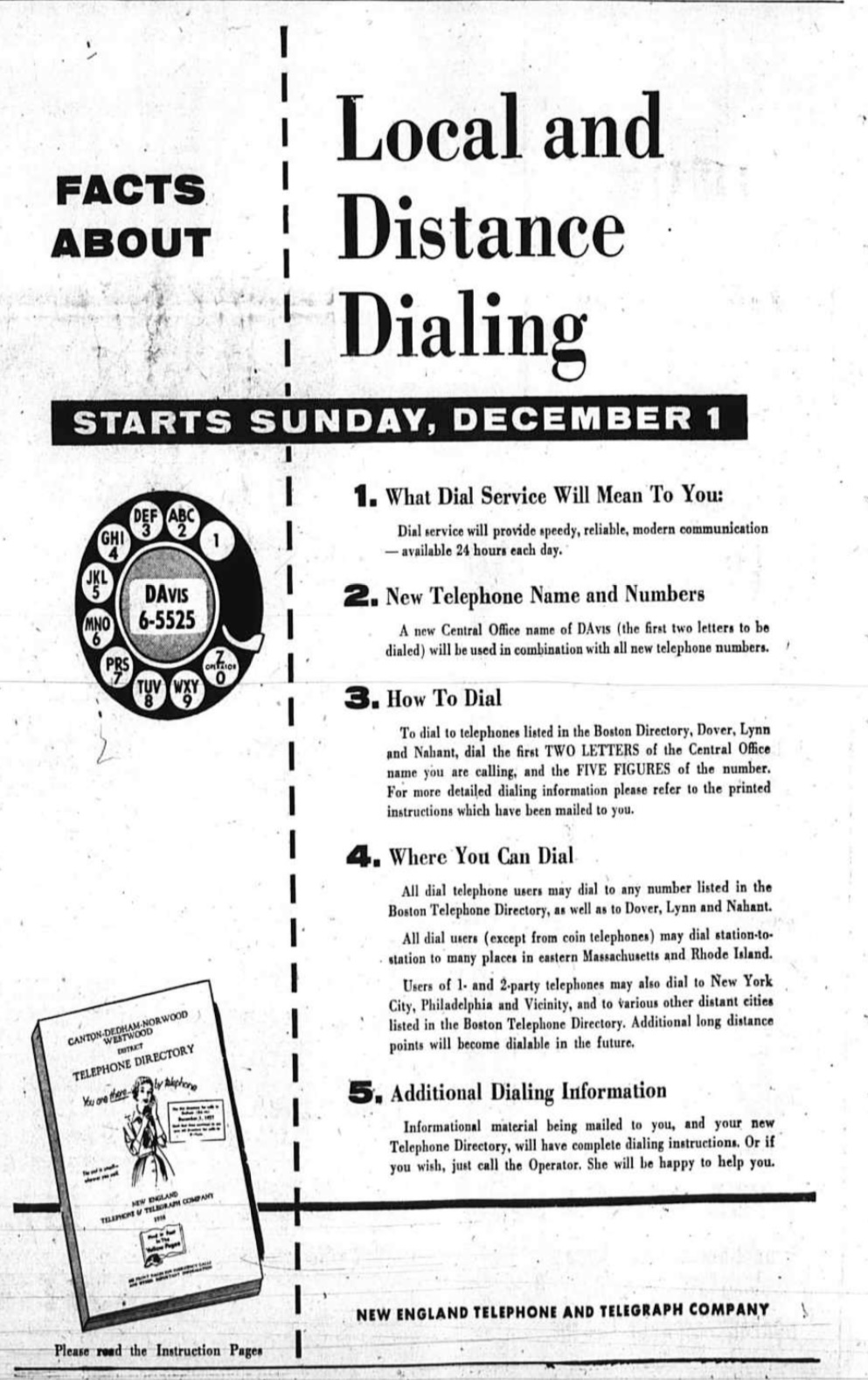
The construction of this building brought about a significant change for Dedham residents: the introduction of direct dialing. For years residents could only make operator assisted calls; the Dedham telephone exchange was DEdham 3. Calls were forwarded by operators at the telephone building on Church St. next to the library. Beginning at 2:01 AM on Sunday, December 1, 1957, customers could dial directly and had their numbers switched over to the new Dedham exchange of either DAvis 6 or DAvis 9. Ads began appearing in the Transcript in the fall informing customers of the change and instructing them how to use dial servce. The Avery School PTO even had a workshop for telephone users complete with an instructional film.
Workers had been busy since the beginning of the year, installing wires and cables, and attaching dial inserts to the older phones of customers. Residents also had the opportunity at this time to obtain a new phone in a variety of colors other than the usual black. The changeover to the new service caused the layoff of 176 operators who worked out of the Church St. building.
To commemorate this historic achievement, a long-distance call was made to Dedham, England. The call was placed by Dedham Historical Society president-emeritus Dr. Arthur Worthington from the society’s headquarters on High Street and included members of the society, telephone company executives, and Dedham Country Day 6th grader Sally Reed who got to speak with her English pen-pal. Also on-hand were Selectman Arthur Lee and Miss Margaret Dooley, who had been the chief operator at the Church St. facility for 39 years.
Telephone exchange names were phased out in the 1960s, but live on in popular culture, as in the Glen Miller song Pennsylvania 6-5000 and the book and movie Butterfield-8.
While there are still some customers with land lines who are connected through the building, today it is mainly a switching center for FIOS internet/telephone/television users.
I am James L. Parr. I grew up on Tower St. and went to St. Mary's and Dedham High (Class of 1977). I teach school in Framingham and co-wrote a book of Framingham history, which led me to write a book of weird Dedham history called Dedham: Historic and Heroic Tales from Shiretown. That book led to this blog. To order your own copy of the book, e-mail me at jameslparr@yahoo.com






 Jim Parr
 Dedham Tales