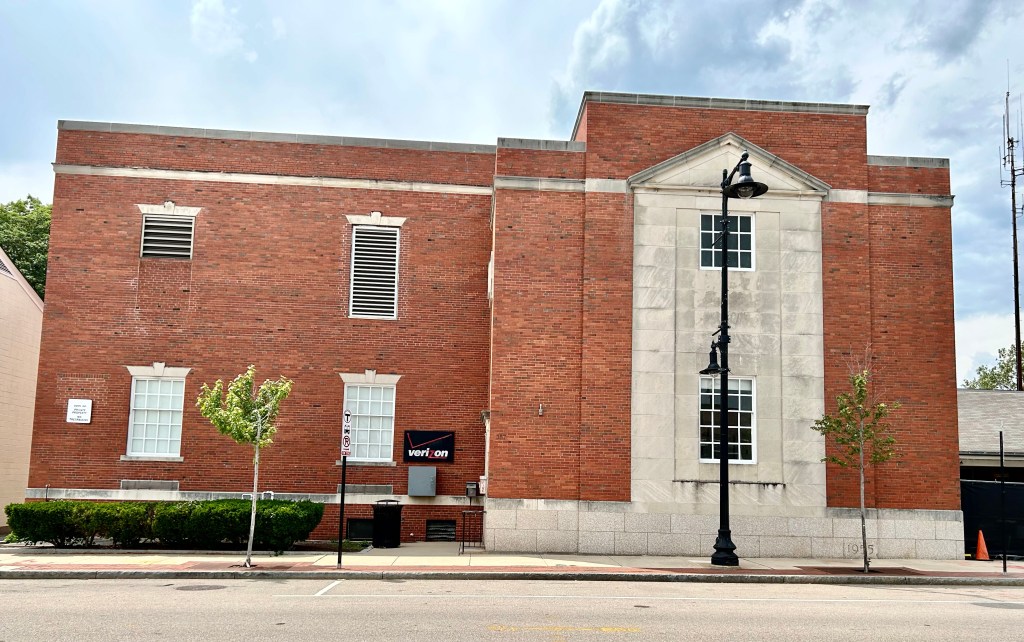
Brian Keaney correctly identified the Verizon building on Washington Street. I remember in 6th or 7th grade scrounging thin multi/colored wire from their trash so I could give it to the girls in my class to make rings out of. I bet most of us have never been inside this building. Here’s a little history:
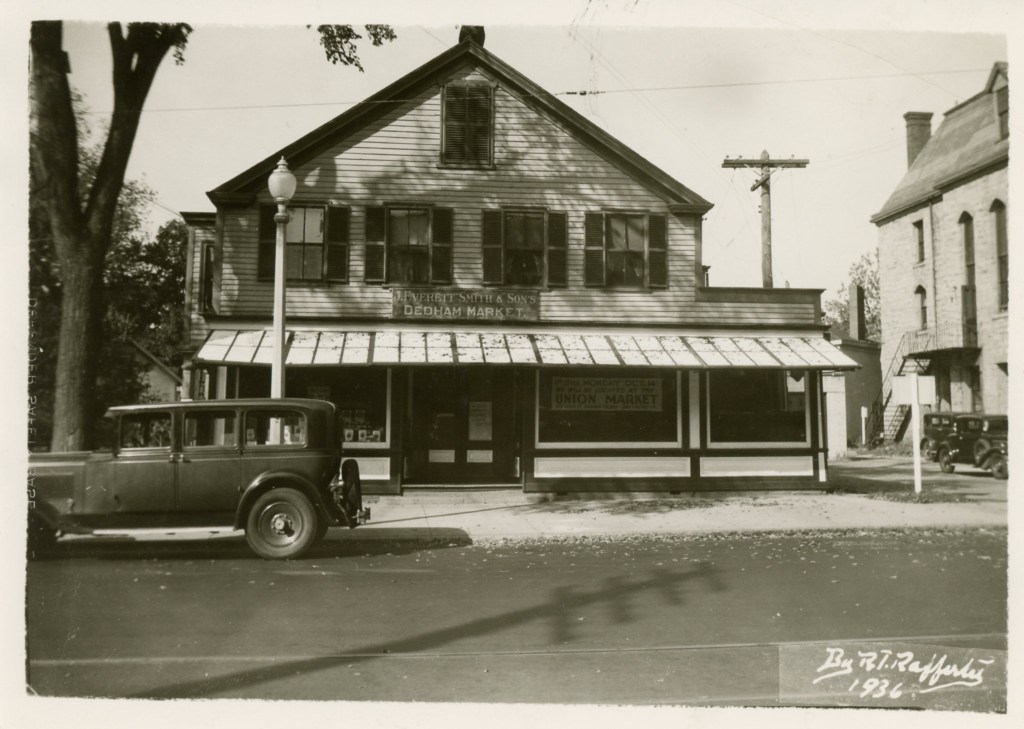
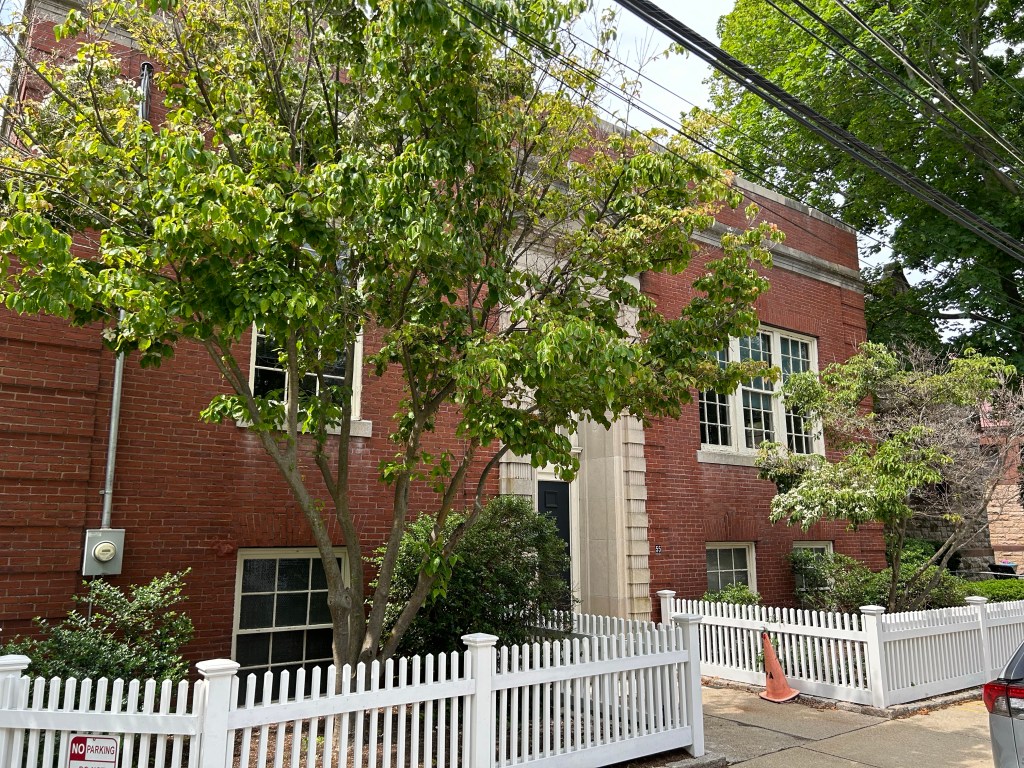
387 Washington Street. The cornerstone is visible on the right behind the tree.Smith Market on Washington Street, 1936. Memorial Hall (future site of the new Town Green) is to the right Image courtesy of the Dedham Museum and Archive
In July of 1954 the 88-year-old wooden J. Everett Smith Market building on Washington Street next to Memorial Hall was knocked down to make way for the New England Telephone and Telegraph Company’s new telephone exchange building. Construction began on the buildig in late 1955 and the cornerstone was laid on April 4, 1956. Inside the cornerstone a metal receptacle was placed which held “records and memoranda which describe fully and graphically the town of Dedham as it exists today” (Dedham Transcript)The gathered crowd included selectmen, telephone company officials, the town’s postmaster, police chief Walter Carroll, State Representative Francis Harding, Father William Kennedy of St. Mary’s Parish who delivered an invocation, and Reverend Leland Maxfield of the Westwood Baptist Church who delivered a benediction.
The old telephone exchange building on Church St, built around 1920.
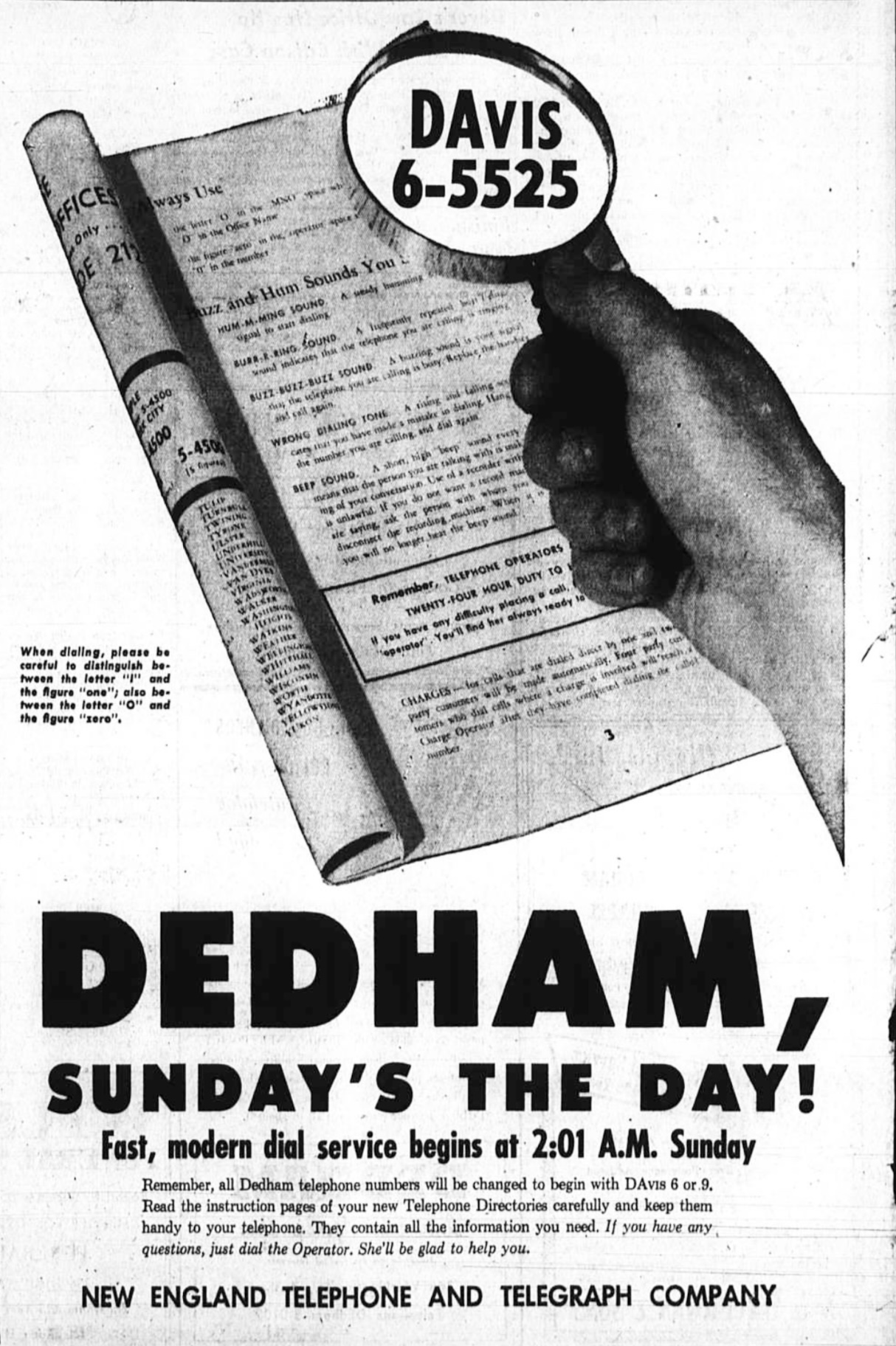
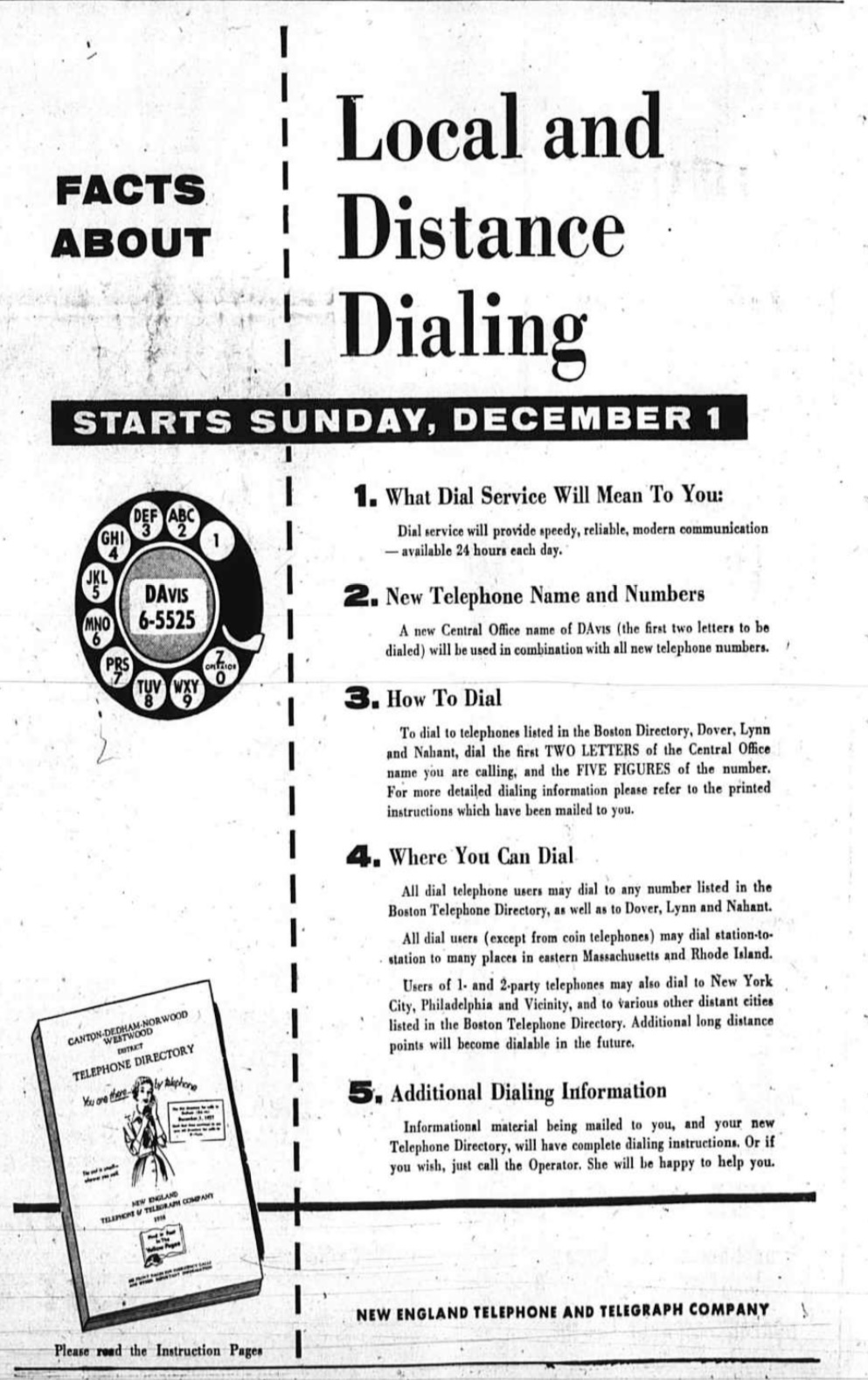
The construction of this building brought about a significant change for Dedham residents: the introduction of direct dialing. For years residents could only make operator assisted calls; the Dedham telephone exchange was DEdham 3. Calls were forwarded by operators at the telephone building on Church St. next to the library. Beginning at 2:01 AM on Sunday, December 1, 1957, customers could dial directly and had their numbers switched over to the new Dedham exchange of either DAvis 6 or DAvis 9. Ads began appearing in the Transcript in the fall informing customers of the change and instructing them how to use dial servce. The Avery School PTO even had a workshop for telephone users complete with an instructional film.
Workers had been busy since the beginning of the year, installing wires and cables, and attaching dial inserts to the older phones of customers. Residents also had the opportunity at this time to obtain a new phone in a variety of colors other than the usual black. The changeover to the new service caused the layoff of 176 operators who worked out of the Church St. building.
To commemorate this historic achievement, a long-distance call was made to Dedham, England. The call was placed by Dedham Historical Society president-emeritus Dr. Arthur Worthington from the society’s headquarters on High Street and included members of the society, telephone company executives, and Dedham Country Day 6th grader Sally Reed who got to speak with her English pen-pal. Also on-hand were Selectman Arthur Lee and Miss Margaret Dooley, who had been the chief operator at the Church St. facility for 39 years.
Telephone exchange names were phased out in the 1960s, but live on in popular culture, as in the Glen Miller song Pennsylvania 6-5000 and the book and movie Butterfield-8.
While there are still some customers with land lines who are connected through the building, today it is mainly a switching center for FIOS internet/telephone/television users.
Be the first to identify the location in the picture below and win a copy of my book Dedham: Historic and Heroic Tales from Shiretown! You must post your answer in the comments below, not on Facebook. I will announce the winner and identify the location in another post. Good luck!
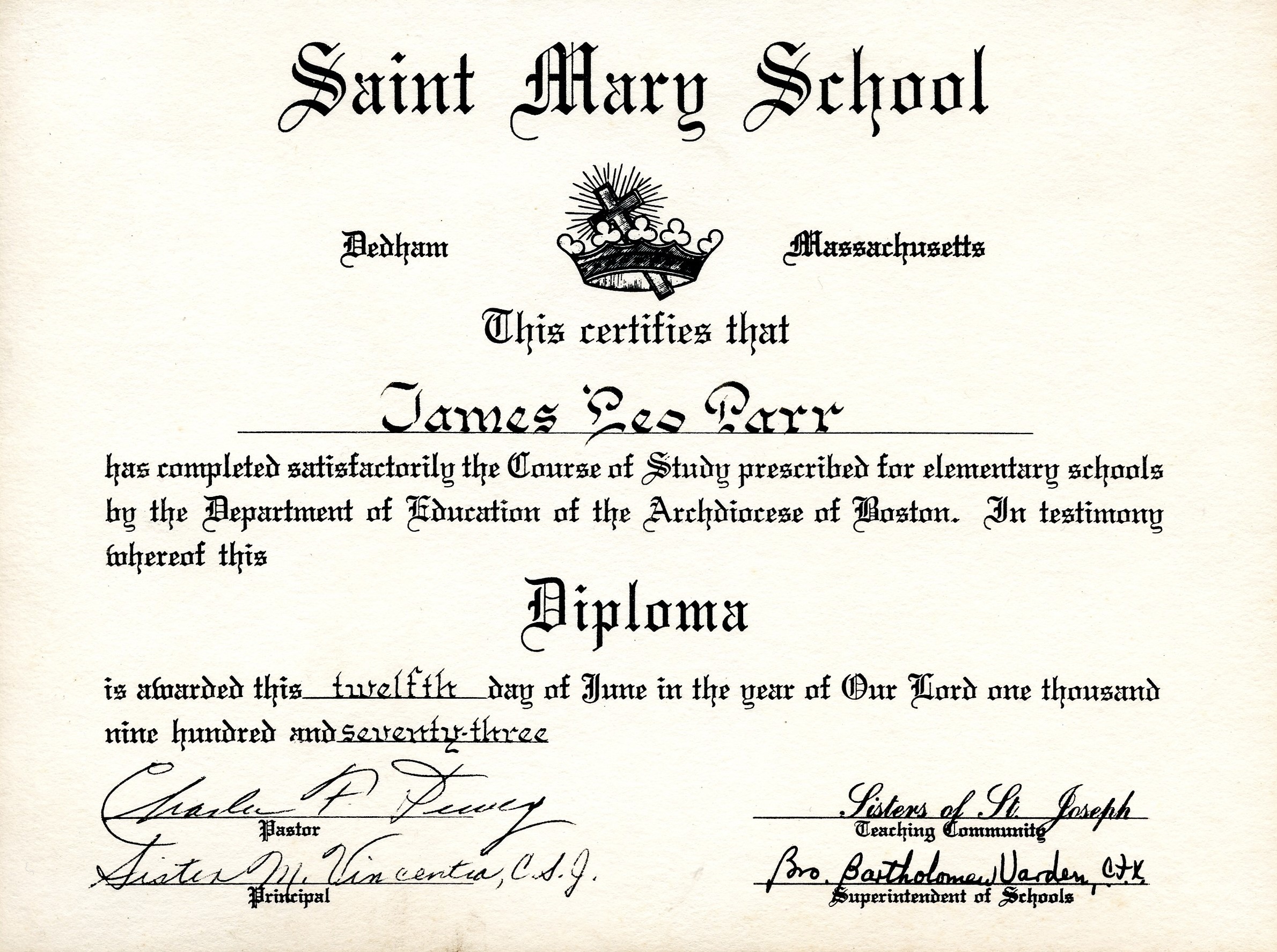
On June 12, 1973, I ended my 8 years at Saint Mary’s when I received this diploma in a graduation ceremony in the upper church on High Street. I was the last of 5 siblings to graduate from St. Mary’s; the school would close permanently in June 1975 before my younger brother was old enough to attend (despite having been enrolled at his christening in 1969).
In December 1972, Monsignor Charles Dewey, pastor, announced that the Sisters of St. Joseph would no longer be staffing the school effective June 1975. At the time there were 9 nuns teaching the 16 classes of approximately 525 students. The possibility of continuing the school with lay faculty was discussed, but in the end the decision was made to close. The school served as home to several other educational institutions including the British School of Boston and the Rashi School, before being torn down in 2010.
The cornerstone for the original building (we called it “the old school”) was laid on June 16, 1935, with 500 people attending the ceremony. The “new school” opened in the fall of 1958 and increased the school’s capacity to 650 students. My 1st, 2nd and 4th grade classrooms were all in the “old school,” where the desks still had holes for ink bottles and were bolted to the floor. There were about 85 graduates in the Class of ’73, which means there were over 40 students in each classroom with just one teacher. Some of those classmates are still good friends, and I hope to see many of them as we gather for a reunion in August.
My grandparents sent me this card for my graduation
On Sunday, May 28, a statue will be unveiled in East Dedham to honor the memory and service of William B. Gould. The ceremony will take place at Gould Park on Milton St., just down the street from where Gould, along with his wife Cornelia, raised his family. Red Sox announcer Joe Castiglione will emcee the event and the keynote speaker will be Princeton University’s Professor Tera Hunter. For more information on the ceremony, you can visit the Gould Park website: https://gouldmemorial.org/ The following is an excerpt from my book Dedham: Historic and Heroic Tales from Shiretown which summarizes Gould’s extraordinary story.
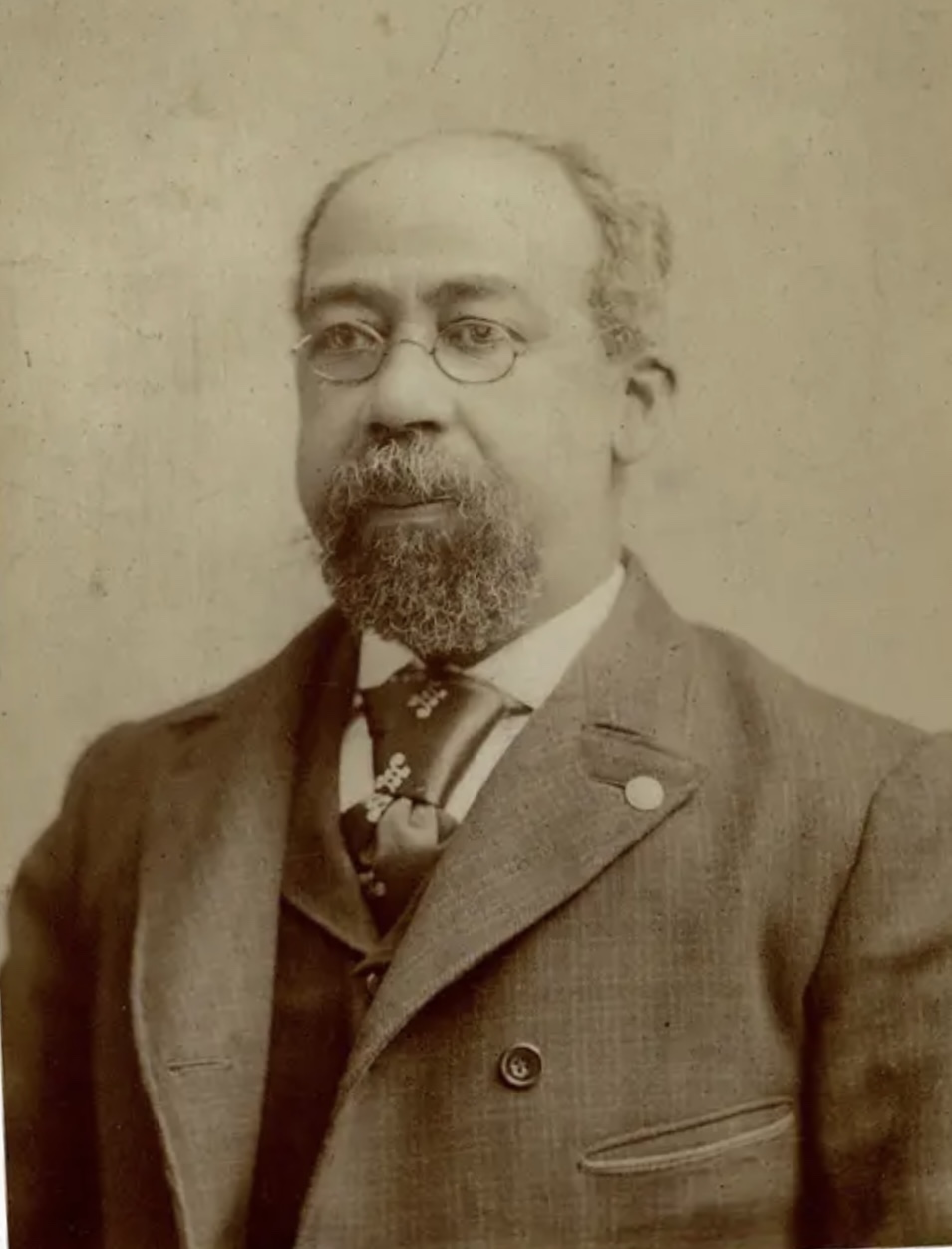
An obituary appearing in the Boston Globe on May 24, 1923 describes the accomplishments of 86-year old William Gould of Dedham, including command of the local GAR post, and his service on the Union ships Cambridge, Ohio and Niagara. The notice states that Mr. Gould enlisted in the navy in 1863, which while is a true fact, does not tell the complete story. What is not stated is that Mr. Gould was born enslaved in North Carolina and escaped to the Navy in a daring move with seven other slaves.
On the night of September 21, 1862, twenty-four-year-old Gould and his seven companions set their plan into action. After darkness had descended, the men boarded a small boat in Wilmington, North Carolina and began rowing south on the Cape Fear River, heading for the open sea. If they could manage to maneuver their boat downriver twenty-eight miles, slip past the Confederate held Fort Caswell and get picked up by a Union ship, they would have their freedom. Such escapees were considered “contraband” of war, property seized by the Union forces.
Gould and his mates reached the Atlantic Ocean in the morning hours of September 22, and hoisted their sail. They were soon spotted by crew members of the U.S.S. Cambridge and taken aboard. A few days later they took an oath of service and were made crew members.
William Gould was an extraordinary man. He was educated and literate as evidenced by the diary he began shortly after his escape and continued through most of his naval service. Amidst the many passages describing the routine life of a sailor, Gould expressed his passionate insights against the southern way of life and the institution of slavery. Gould served until the end of the war and eventually made his way to Dedham in 1871, where he and his wife Cornelia raised a large family on Milton Street.
Gould was a master plasterer, and in the 1880s was awarded a contract to do the interiors of St. Mary’s Church on High St. He was a respected and honored citizen of the town, serving as the commander of the Grand Army of the Republic post and writing for various publications. Gould was also a founding member of the Church of the Good Shepherd in Oakdale Square. In the late 1950s, his grandson William Gould III discovered a diary kept by the original Gould. This diary was annotated and published by Gould’s great-grandson William Gould IV. It is an important document of American and African American history, being one of only a few diaries written by black sailors.
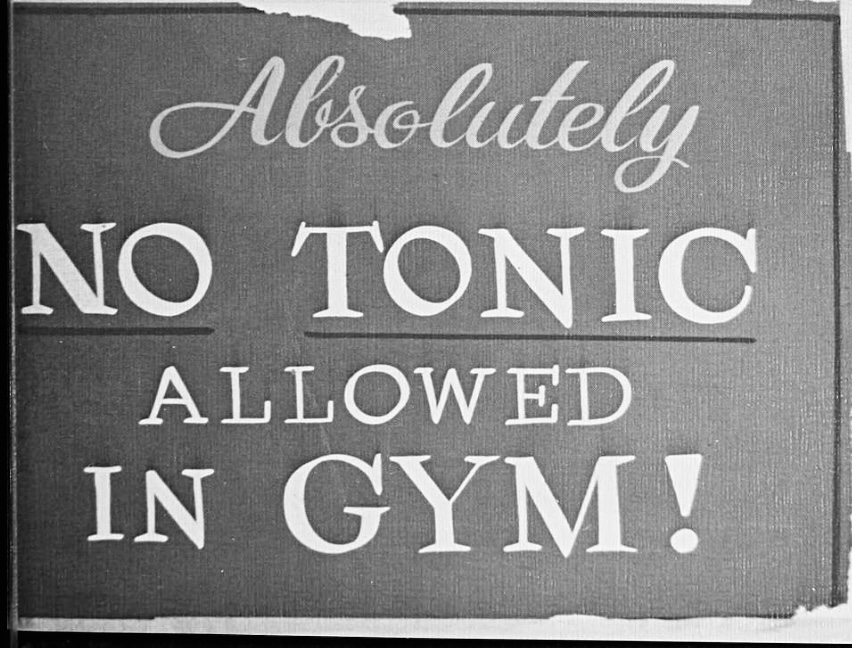
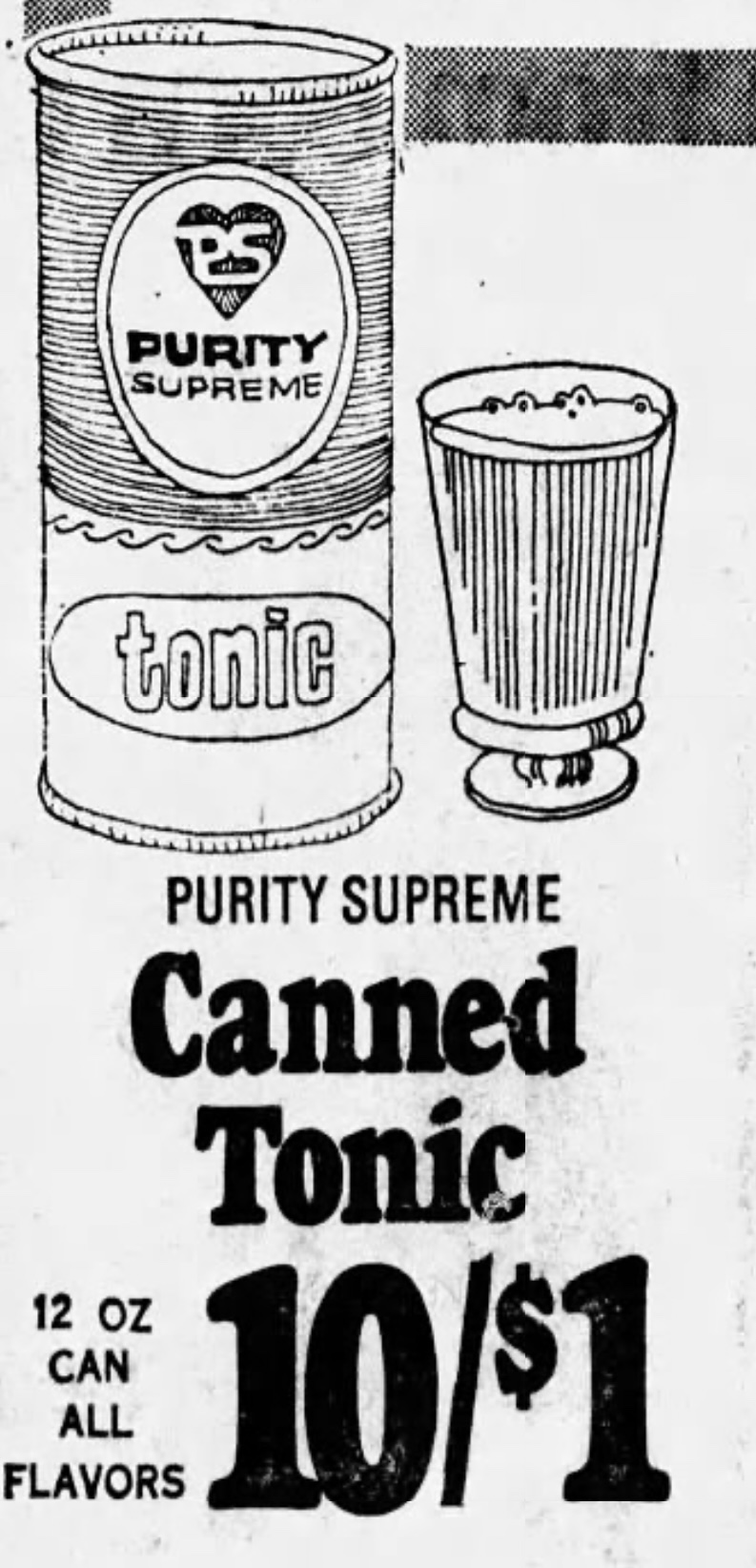
This sign hung on the door to the Dedham High gym 50 years ago, and there’s no doubt that every one of the 2,000 or so students in the school knew exactly what it meant. Hang that sign on the gym door today and you’ll get a lot of confused looks and questions…Hair tonic? Gin and tonic? Those of us who grew up in the 60s and 70s know that “tonic” was another word for soda. Orange ade, root beer, ginger ale, even Coke were referred to collectively as tonic. It was a common and widespread term around here back then, as seen in this ad from the Globe in 1972:
According to the Globe, the first printed instance of the word to describe carbonated beverages was in 1888 in an article describing the theft of ’10 bottles of tonic’ from a Boston store. For close to a century, folks in Massachusetts and other parts of New England could be assured of getting served a carbonated soda when asking for a tonic. The term has been pretty much abandoned these days (Wikipedia called it “antiquated!” Boy that makes me feel old). It joins these other words from my youth that have faded from modern day usage:
Hassock (ottoman)
Divan (couch- this was my father’s word, not mine)
Dungarees (jeans- see my February 2023 post about Dungaree Day)
Supper (dinner)
Cellar (basement)
Crueler (a horizontal donut, now called a stick)
Feel free to share your own “antiquated” words or phrases from back in the day. And keep that tonic out of the gym!
to the Blue Bunny and pick up a copy of my Dedham book; also available are Framingham Legends and Lore, Murder and Mayhem in Metrowest Boston and 2 books of fun family poetry- perfect for National Poetry Month!
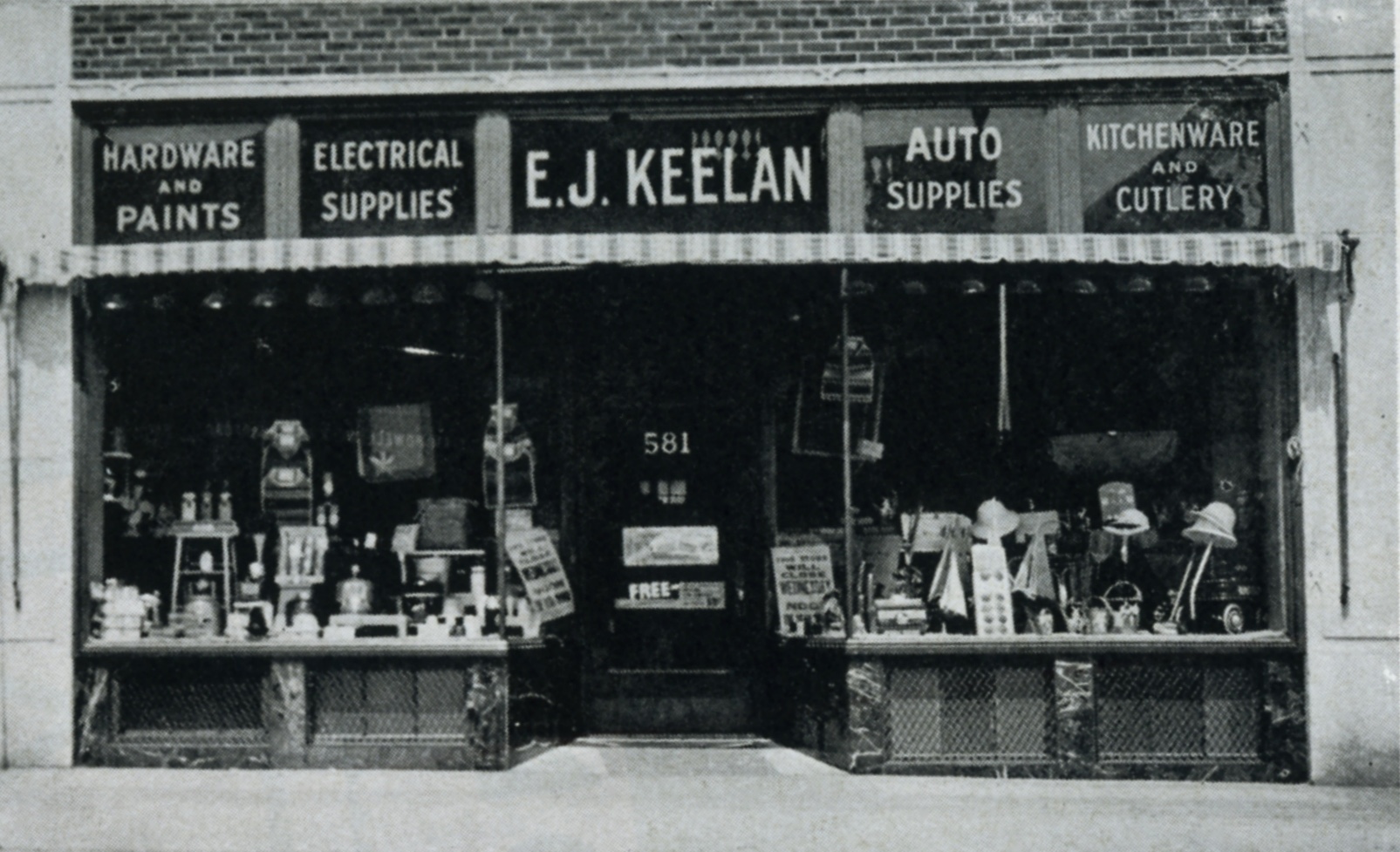
From the Dedham Times 3/31/2023The Blue Bunny is located at 577 High Street- if you haven’t been to the Square in a while, head for Keelan’s Hardware (same spot, updated address).
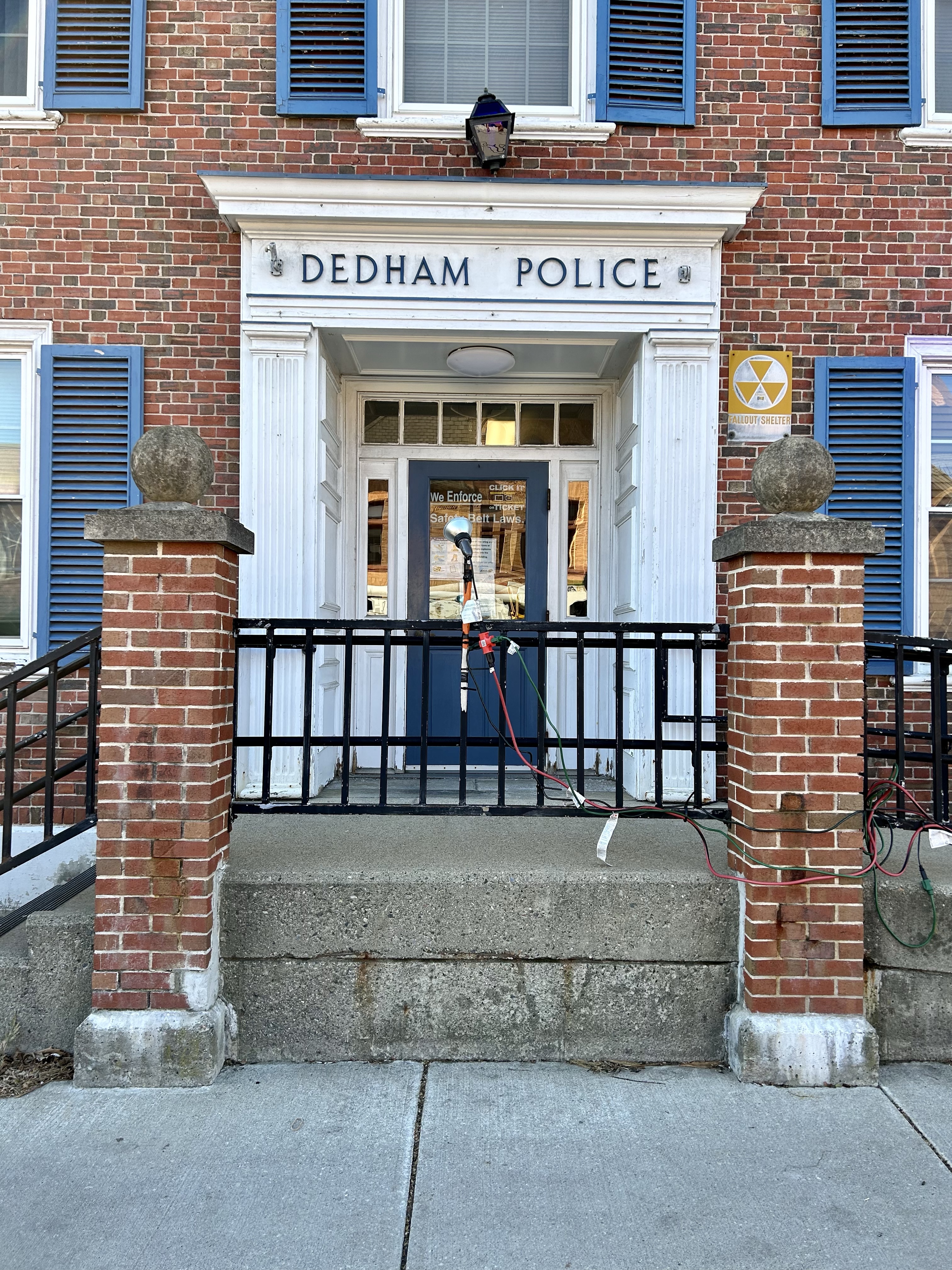
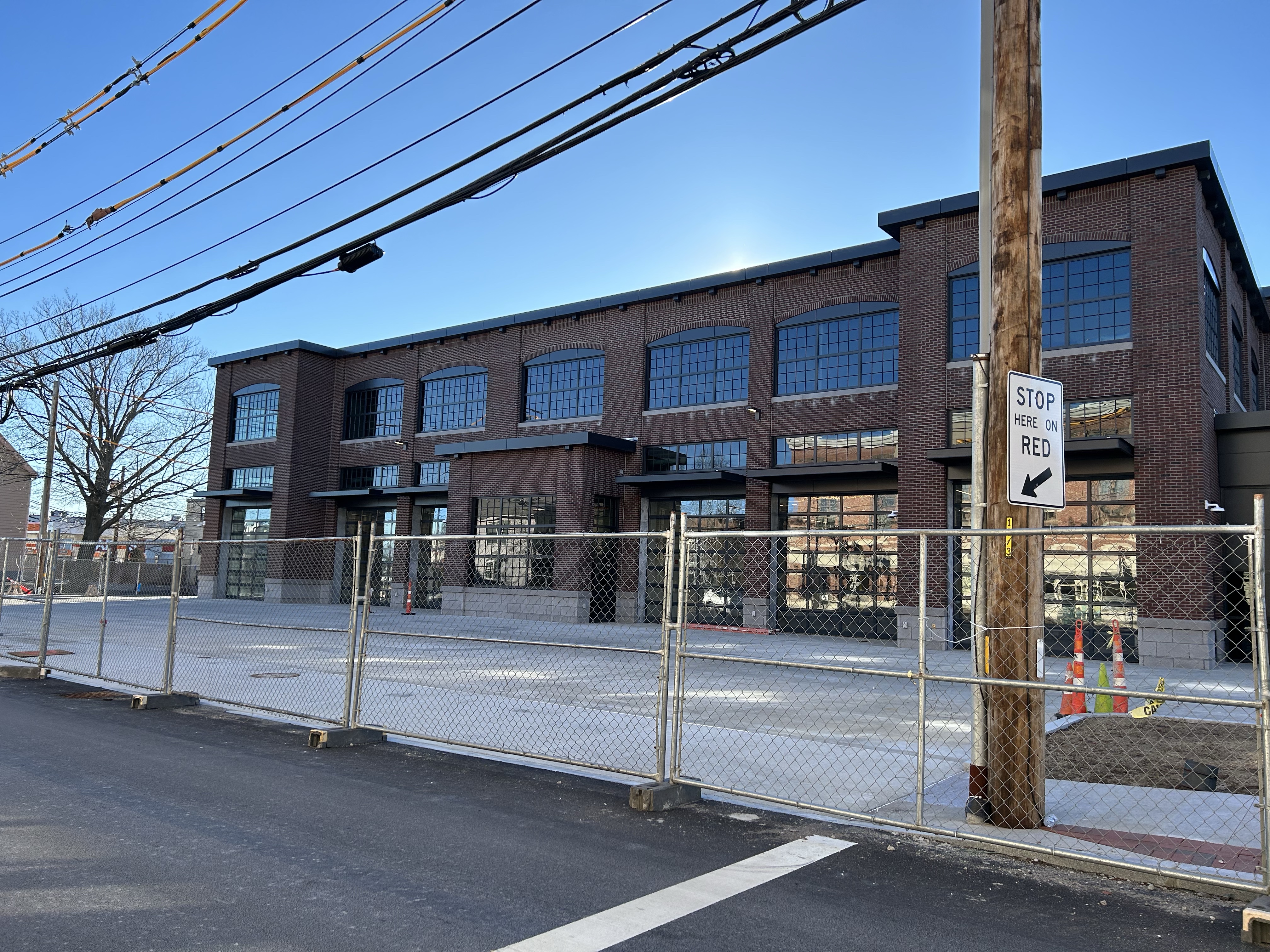
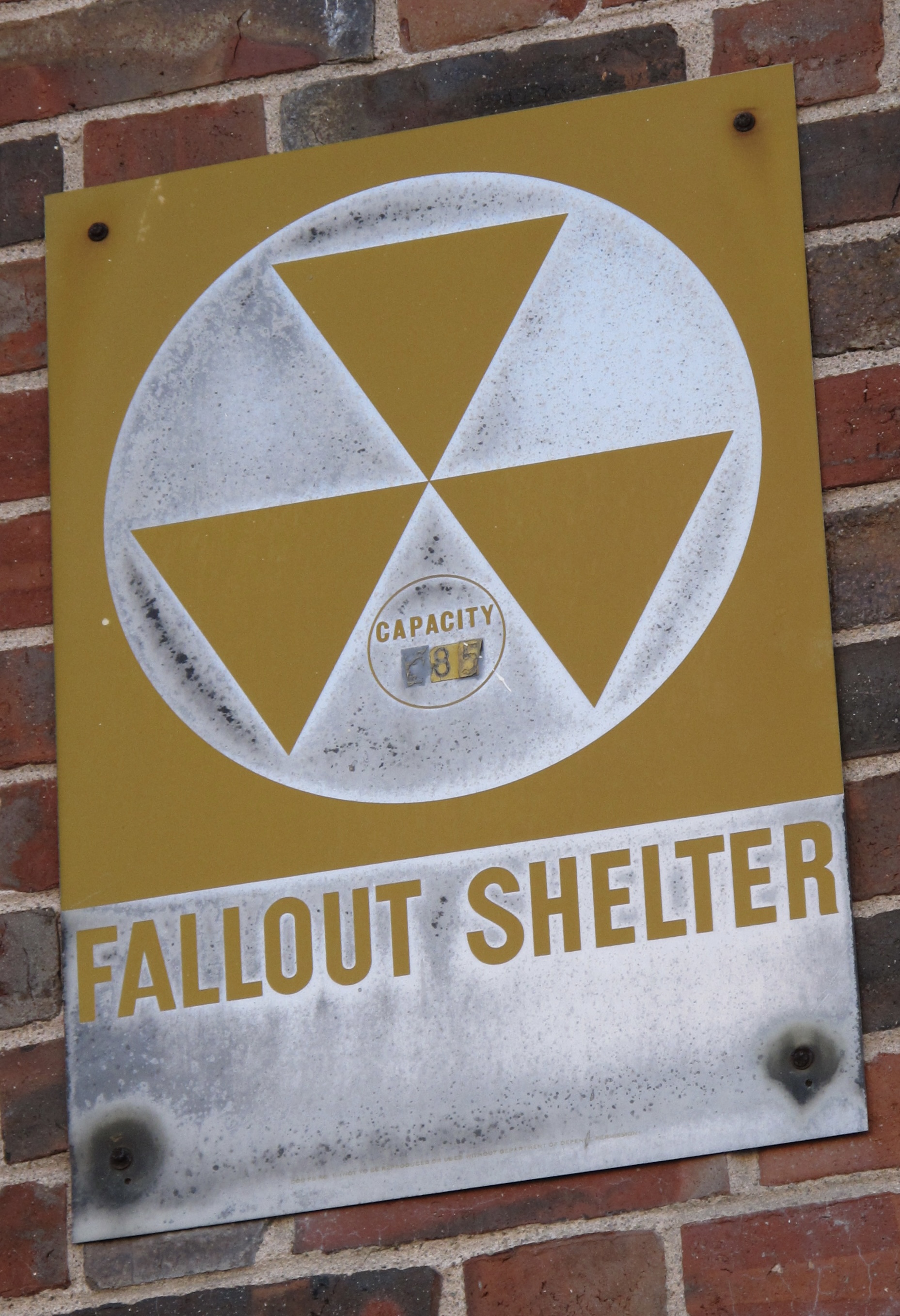
The fallout shelter sign has been hanging in this spot since the building was dedicated 60 years ago. The fallout shelter was located in the basement behind 6-inch walls of reinforced concrete and housed the Civil Defense Communication Center. A lead shield was available to be placed over the window for protection from radioactive fallout.
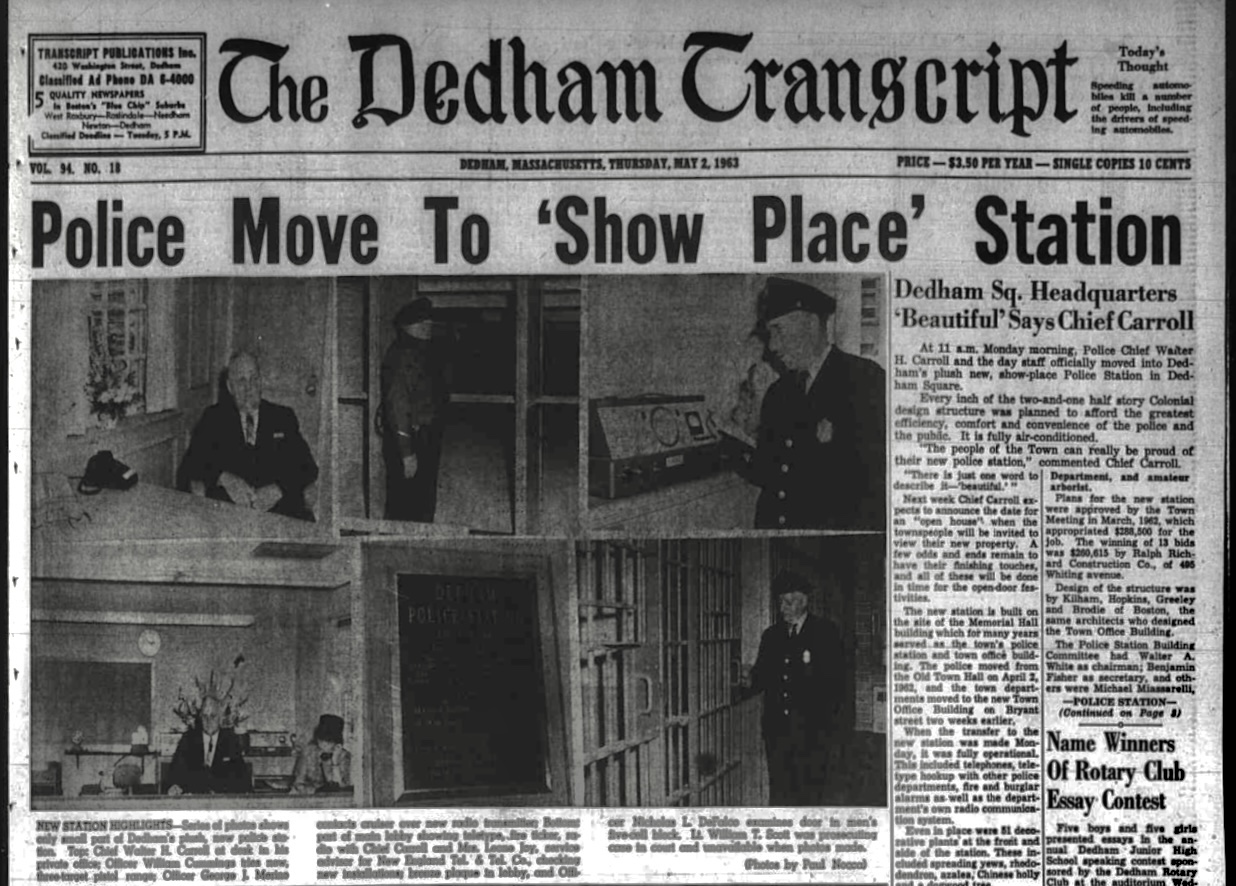
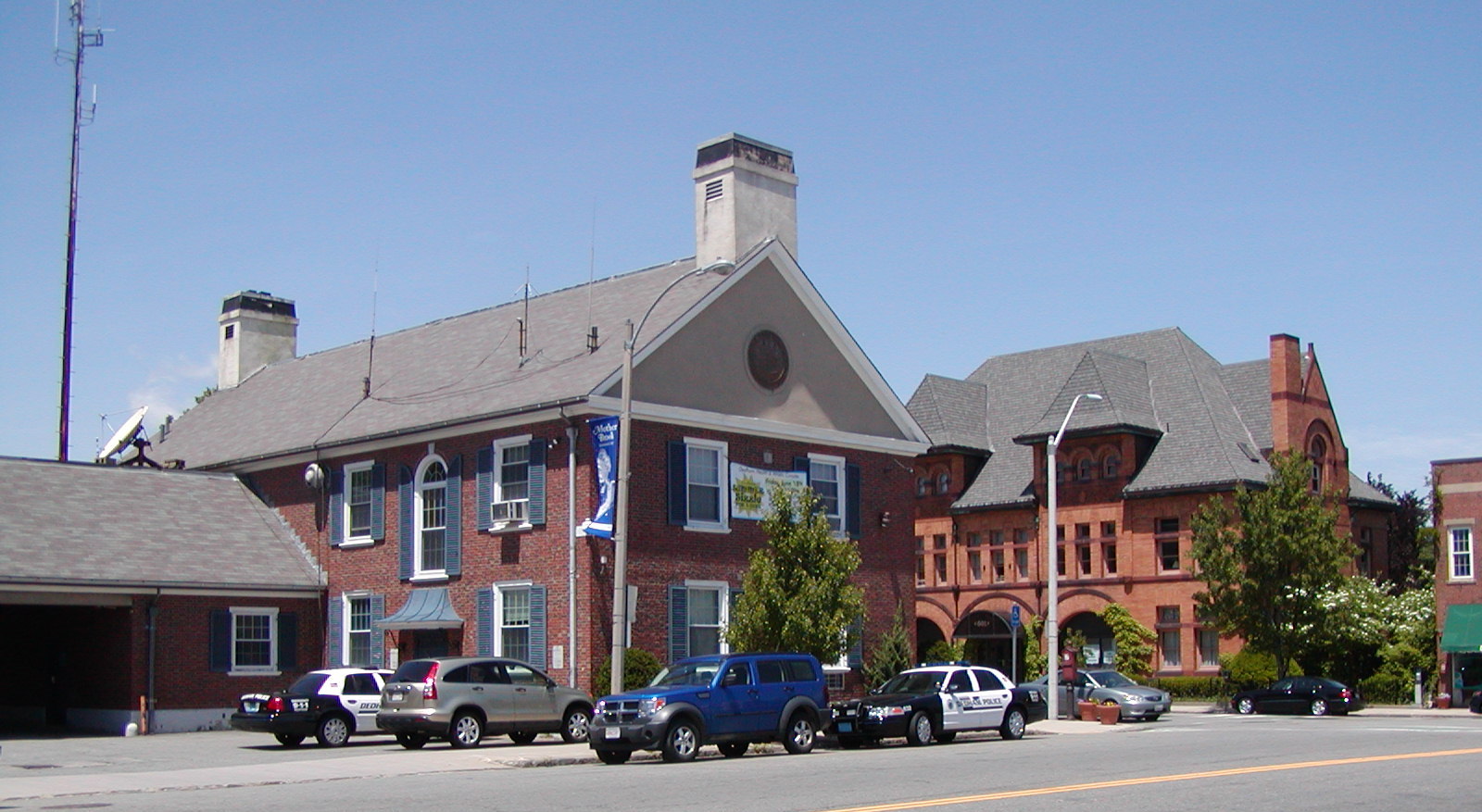
The Dedham Police Department moved into their new headquarters on April 29, 1963, almost 60 years ago. The department had been in temporary headquarters at the new town hall on Bryant Street after vacating their original home in Memorial Hall which was torn down the year before.
This was the first and only building built exclusively as a police station in Dedham. Tomorrow, the new public safety building on Bryant Street will be dedicated at a ribbon cutting ceremony at 1:00. Guests are invited to attend the ceremony and tour the new police/fire facility.
The new building at 26 Bryant Street. The combined fire/police facility will also replace the 1930 Central Fire Sation on Washington Street. The Dedham Square Planning Committe recommended in December 2021 that the former police station be demolished, and the site be developed as green space.
I’ve been inside the police station exactly two times. The first time was as an eighth grader doing a report on police work. Some officers showed me around and gave me a blank fingerprint card as a souvenir. About 20 years ago my car was rammed by another one in the Dedham Plaza parking lot and I went to the police station to file an accident report. Feel free to share stories of any time you’ve spent in the Dedham Police Station!
Congratulations to Mary Fontaine who was the first to correctly identify the location!
Posted March 11, 2023 by Jim Parr Categories:History/Mystery
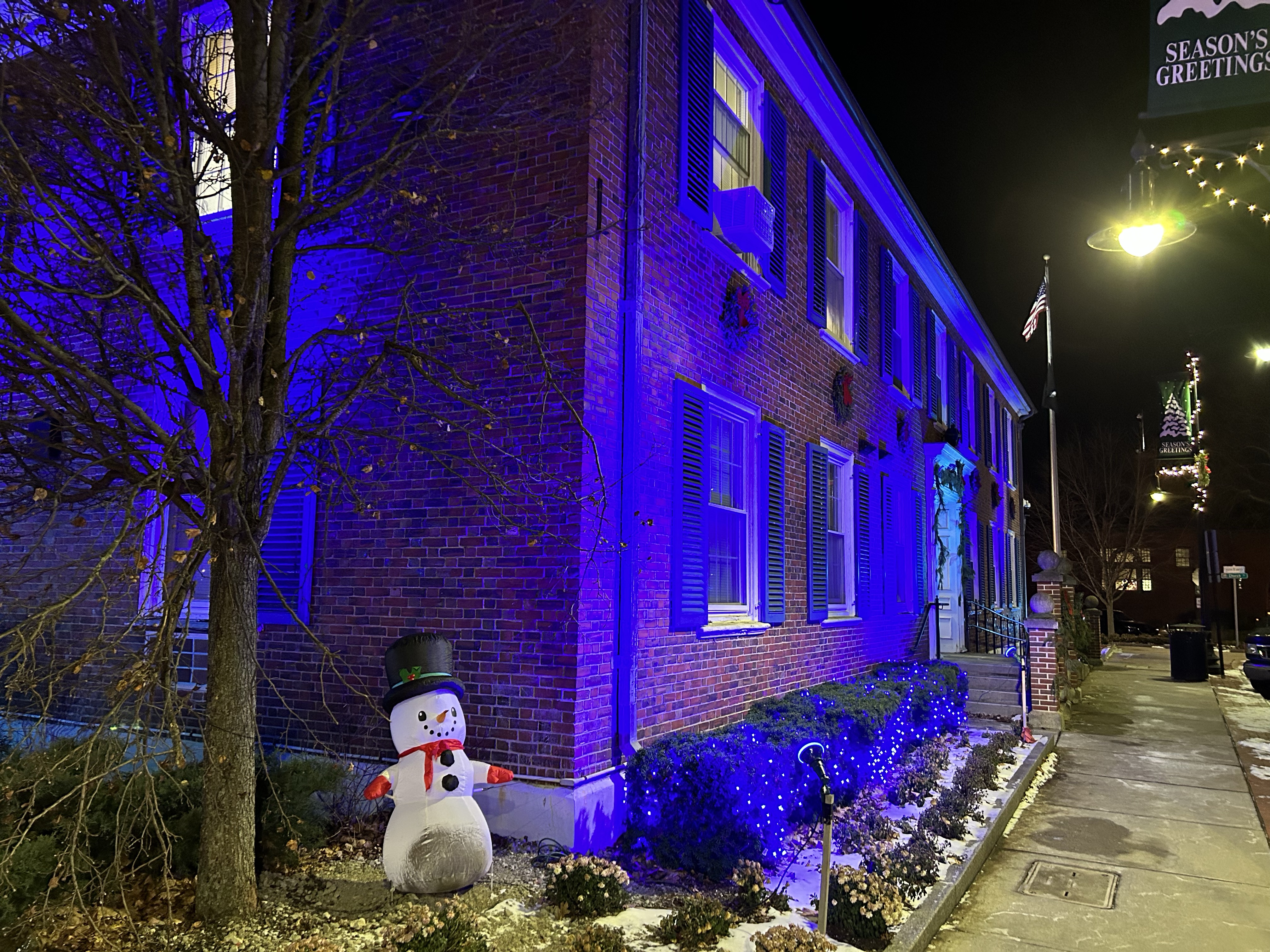
Be the first to identify the location in the picture below and win a set of historic Dedham note cards! You must post your answer in the comments below, not on Facebook. I will announce the winner and identify the location in another post. Good luck!
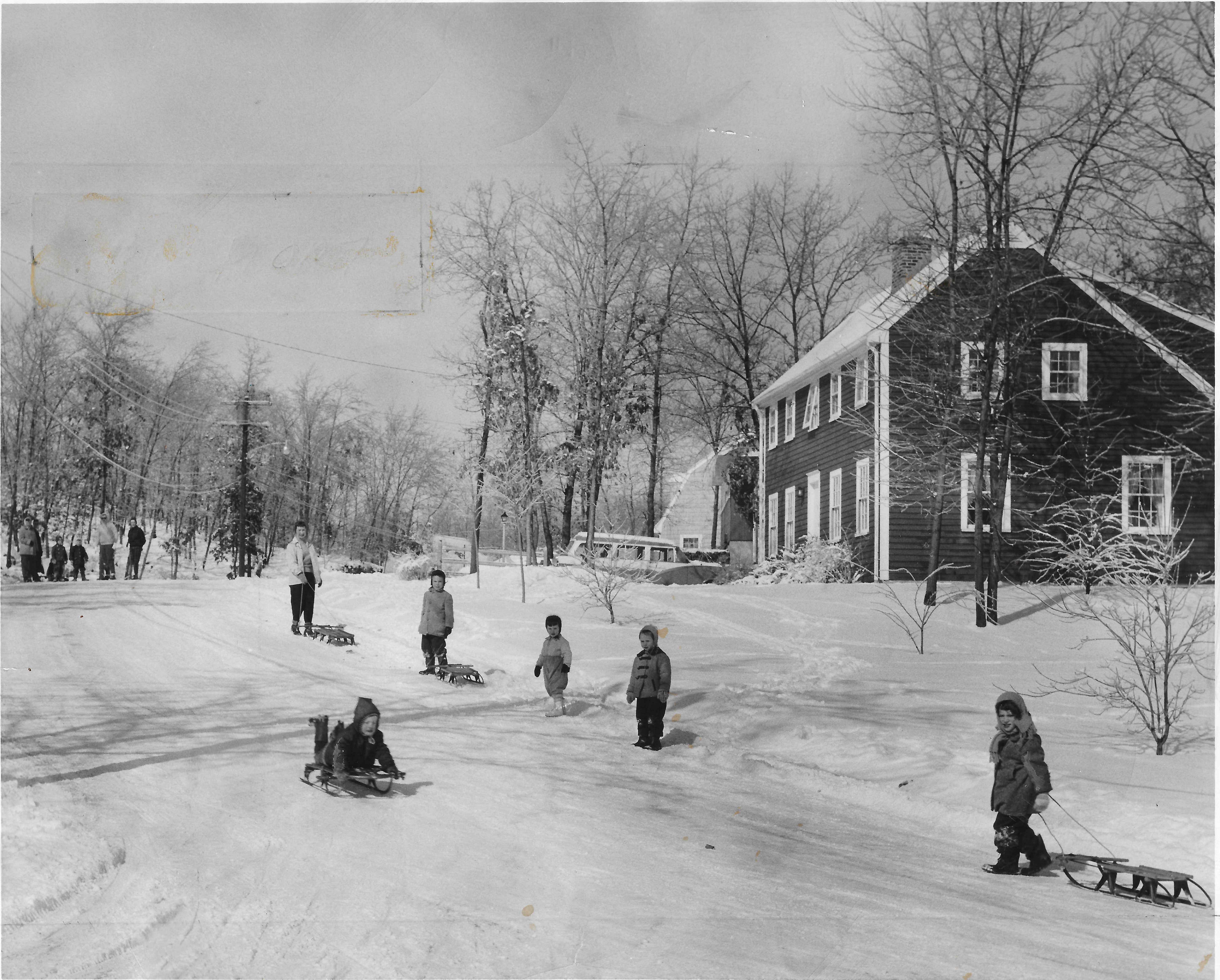
What kid, or teacher for that matter doesn’t love a snow day? As kids we would get up early and listen to the No School announcements on WHDH or WBZ radio praying to hear “No school, all schools in Dedham.” Then as quick as we could, we’d stuff our feet into Wonder Bread bags and rubber boots and head out the door to go sledding! In the days before the streets were intensely chemically treated and plowed to bare pavement before the last flake has even fallen, the little hill on Tower Street by my house made for great coasting. I’m sure this was the case all around Dedham on quiet streets with even the slightest elevation.
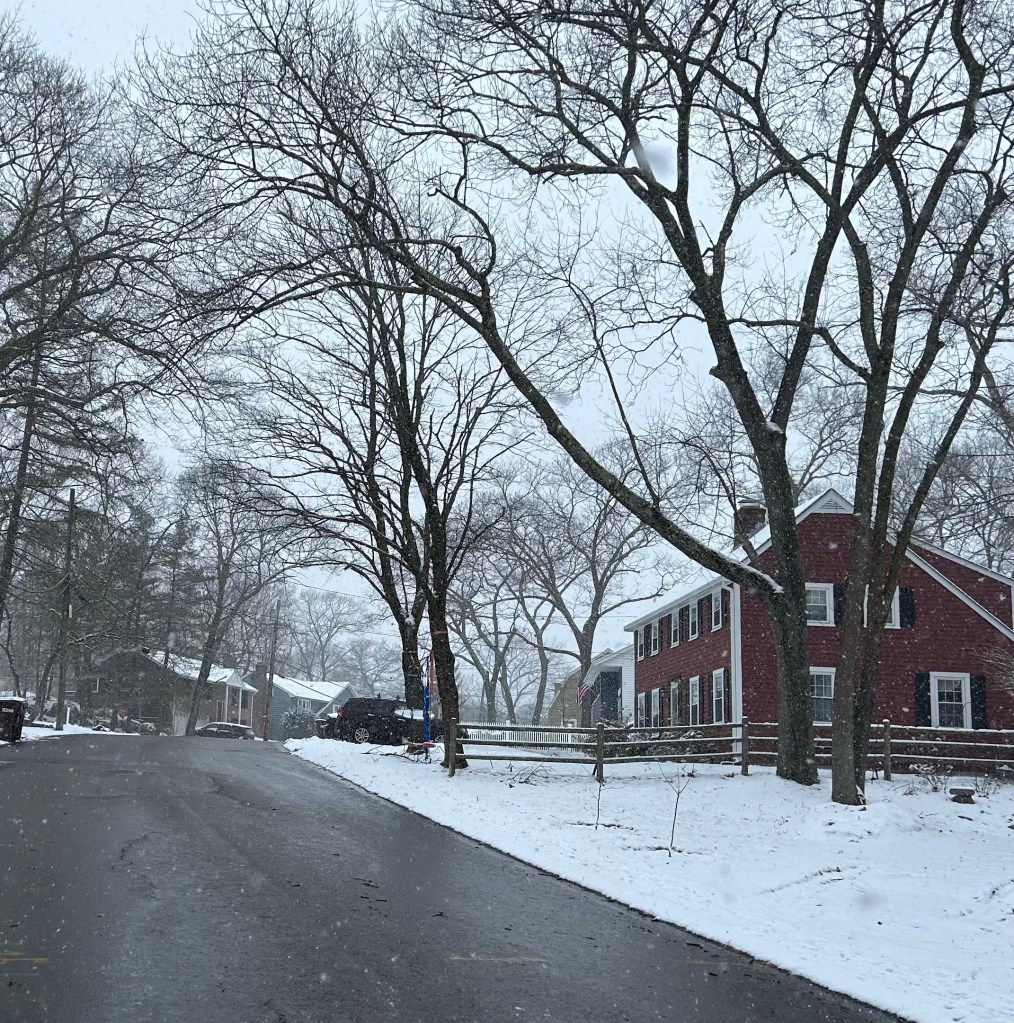
From the Boston Record-American, February 1959: “Pre-schoolers and their mothers take to the street with their sleds…This scene is being duplicated in all sections of New England…This was made in Greenlodge, Dedham.” To be exact, it is the intersection of Heritage Hill and Ledgewood.The same view, January 14, 2023.
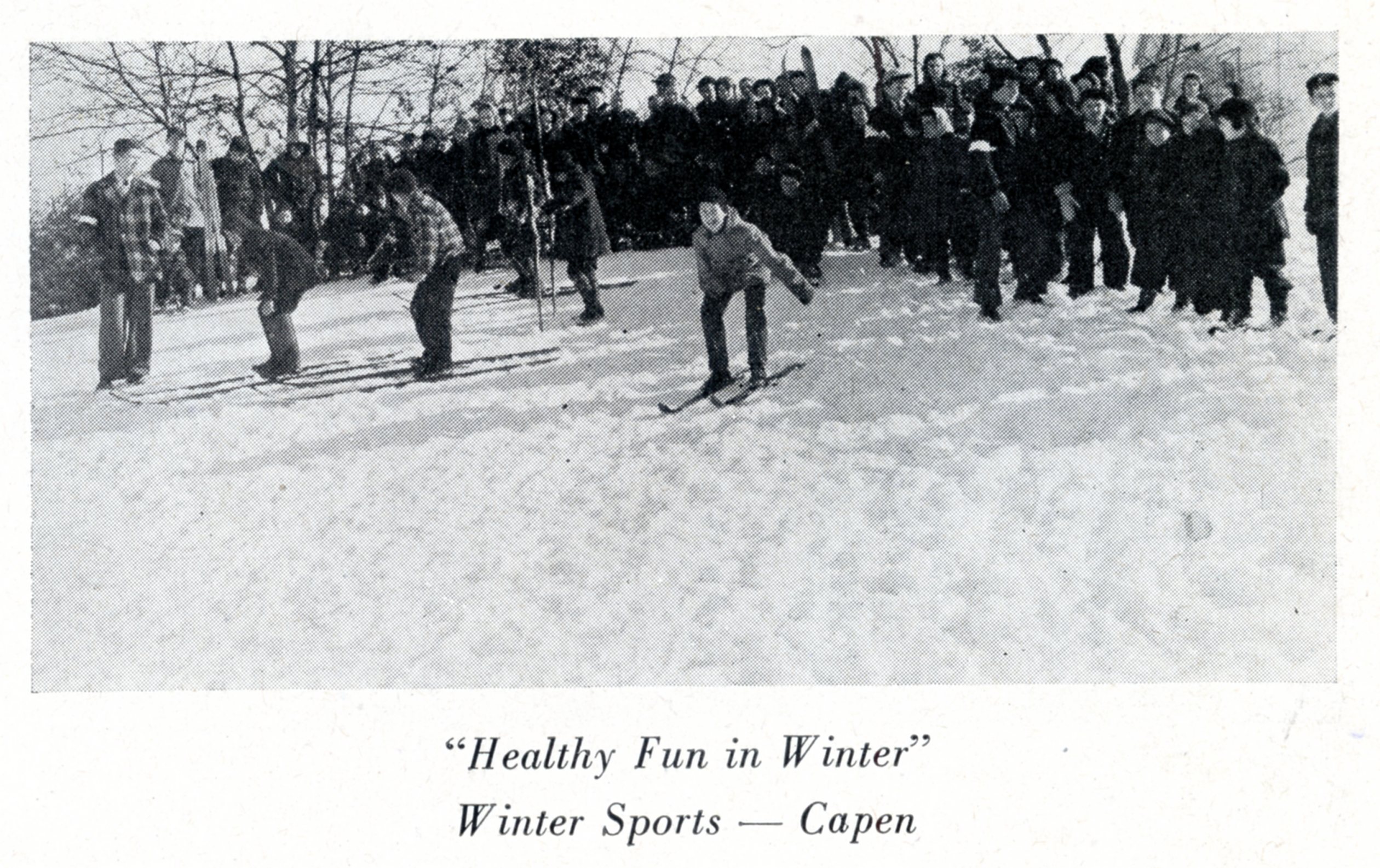
If we were feeling really adventurous, we’d take our Flexible Flyers (or Speedaway knockoffs) to the hill at the Capen School. Now THAT was a hill! If you weren’t careful, you could speed-away right onto the basketball court or the woods at the edge of the baseball field, especially if you were flying down the hill on one of those plastic or metal coasters.
From a 1943 report on the schools. That’s a pretty steep hill for downhill skiing!
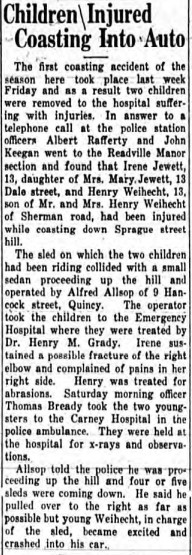
Other popular sledding locations were the Community House and Federal Hill (Highland Ave) where sledders in the 1890s covered the hill with water taken from a nearby brook to create an ice covered surface for even more thrills. Even the dangers of car traffic didn’t stop some enthusiastic kids in December 1933.
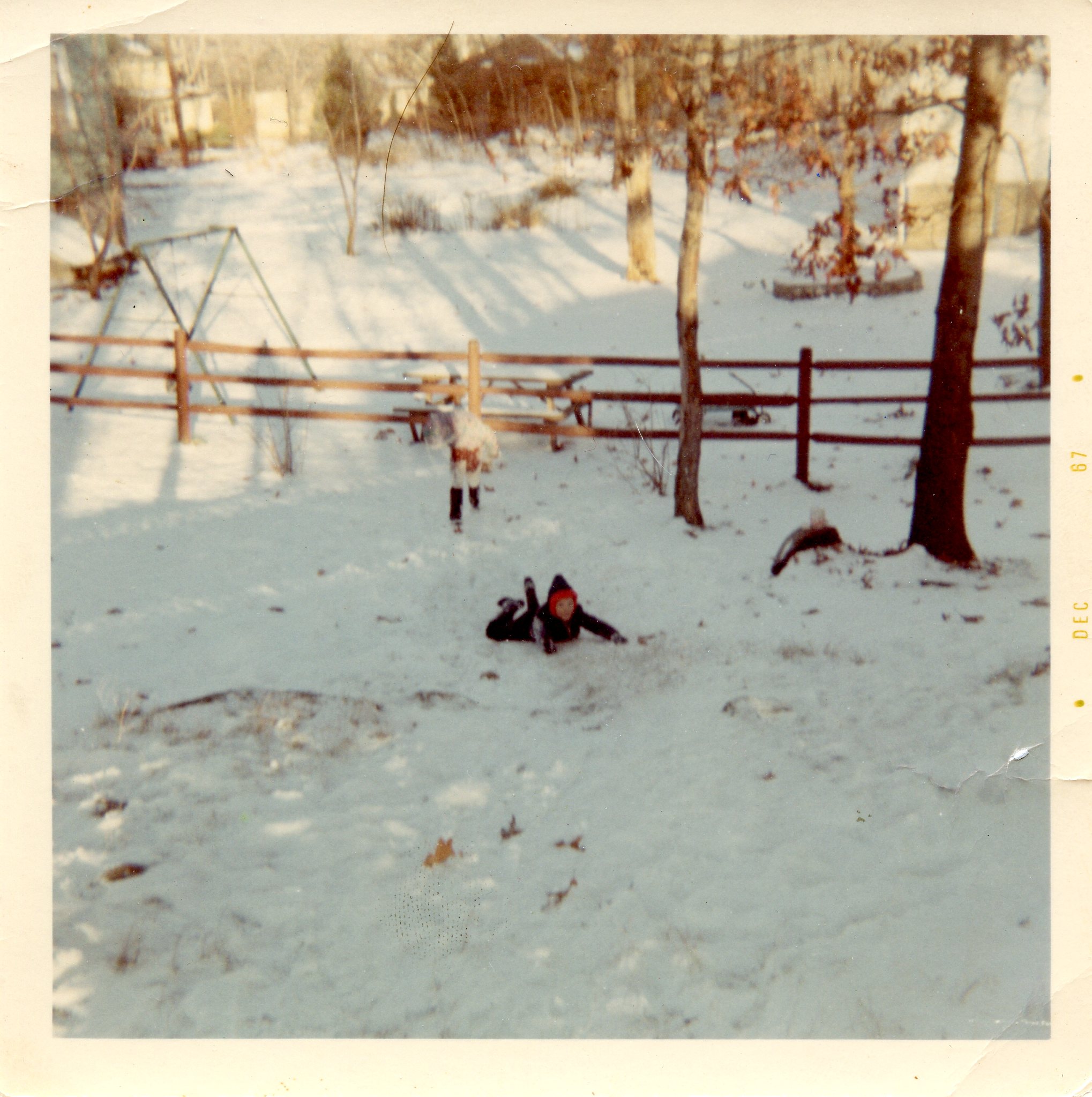
Back at Tower Street, the Parr kids and our neighbors had a safe sledding option right in our own backyard. Even the installation of a rail fence by my father didn’t keep us off that hill.
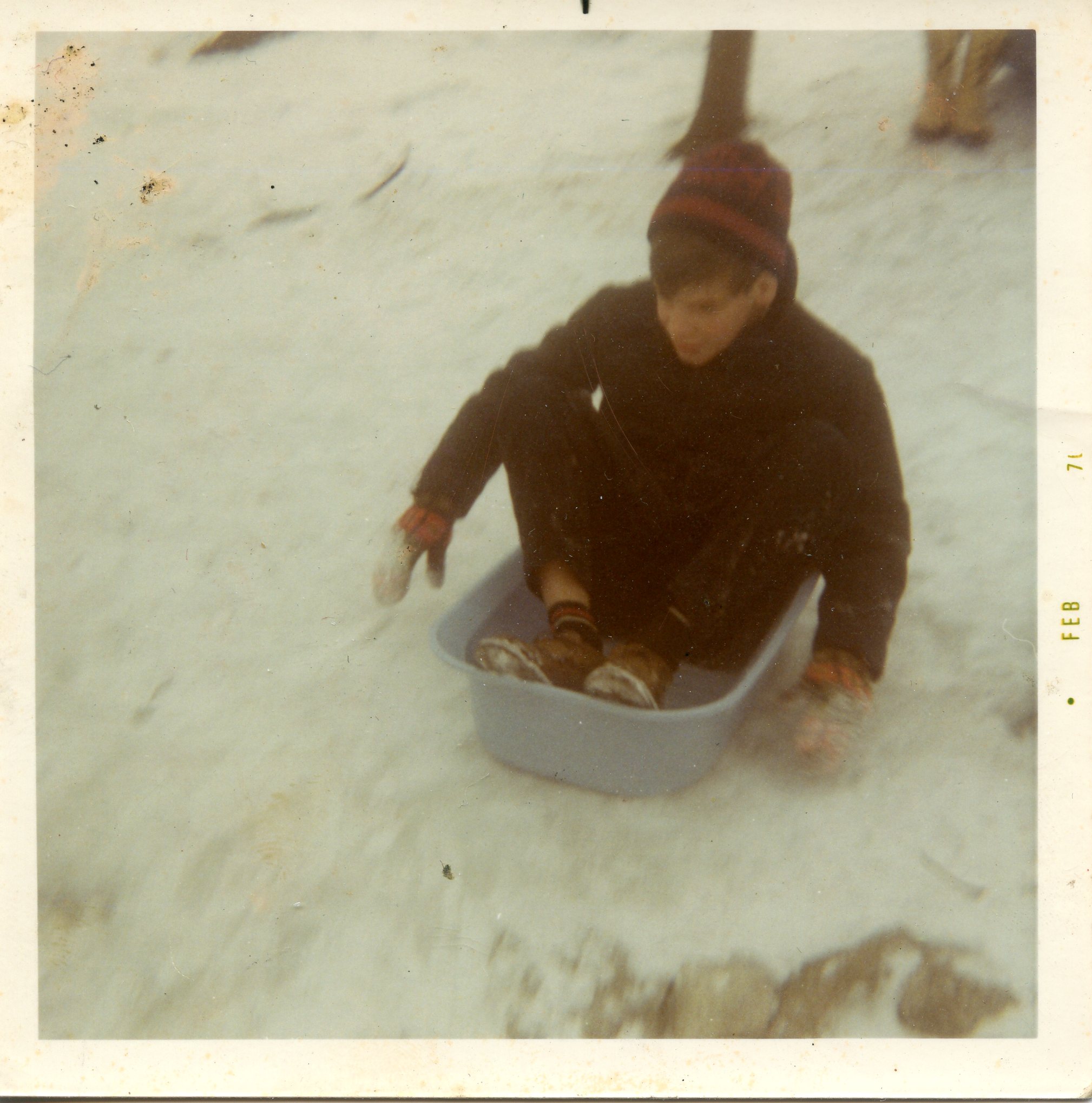
From December, 1967. If the snow wasn’t too deep and you had enough momentum, you could duck under the fence rail and continue into the O’Berg’s yard next door.I get creative and use my little brother’s plastic bathtub as a coaster. Oh, and I forgot to mention the rocks we had to glide over at the top of the hill.
Those childhood days of sledding are best captured in this poem I wrote recently. Feel free to share your coasting memories in the comments!
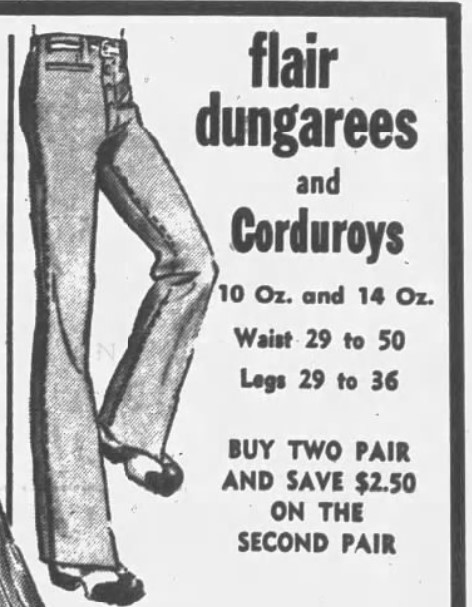
I will be wearing dungarees next Wednesday to commemorate the 50th anniversary of Dungaree Day at Dedham High School. First, for any readers not of a certain age, dungarees are what we called jeans back in the day (my mother shortened the term to “dungies”). Language changes. The Wrangler Wranch in the Dedham Mall where I sold dungarees during high school was originally called Mr. Slacks. Besides, “Jeans Day” just doesn’t have the same ring to it.
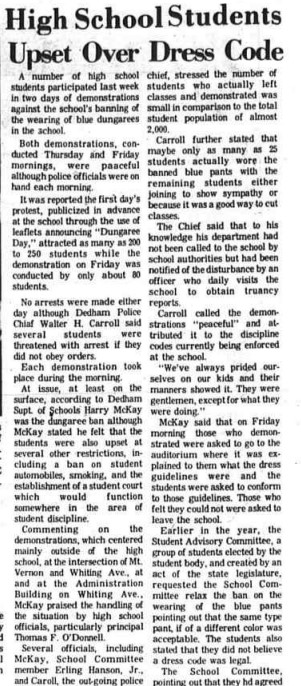
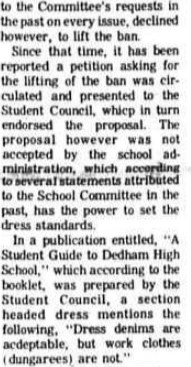
Dungaree Day took place at Dedham High School on February 15, 1973. It was a student protest that was one of the culminating events in a years-long battle between students and school authorities over a dress code that students found to be outdated, arbitrary, and unfair; a protest that saw high schoolers emulating college protestors across the country and administrators making public statements that could have been lifted from the script of Footloose. No summary I could write could accurately explain the event and the prevailing cultural attitudes of the time that precipitated it. I was still in 8th grade at St. Mary’s (dressed in shirt and tie every day, no less) and only heard about it from older friends and siblings who were there. So here is some coverage from the Dedham Transcript of February 21, 1973.
Articles in the Patriot Ledger corroborated this account and added more details. When the police arrived, students were outside chanting “We want dungarees!” After the protest students either changed out of the offensive clothing or went home. No students were suspended for protesting, but one was sent home for “gross disrespect” and smoking. A smaller protest took place the following day with a small group of students carrying signs outside before classes began.
The Dungaree Debate was nothing new in Dedham. It had only been a couple of years earlier that the necktie requirement for boys and skirts for girls had been abandoned. For several years at School Committee meetings, concerned adults had pointed out examples of dress code scofflaws followed by pleas of “Why do we have a dress code if we don’t enforce it?” For example, police chief Walter Carroll remarked at the March 1970 meeting: “The dress code should not be relaxed. A disciplined school is a happy school.” At another meeting, Committee Chair Walter Flanagan’s comment “Dungarees are not permitted but I know they are wearing them at the junior high and the high school” prompted Superintendent Harry McKay to respond: “I’ll look into it. If they wear dungarees to school, they should be sent home.” In 1965, just a few years into his tenure as DHS principal, Thomas O’Donnell was interviewed for a Patriot Ledger story about dress codes at different area high schools. Referring to Dedham’s dress code (adopted by the student council in 1958) that stipulated hair length and style among other rules, Mr. O’Donnell seemed satisfied, stating: “The students cooperate, and so do the parents.” By 1973, the ban on dungarees was about all that remained of that old dress code, and the students needed to let the administration know it wasn’t 1958 anymore, times had changed, and the dress code was obsolete.
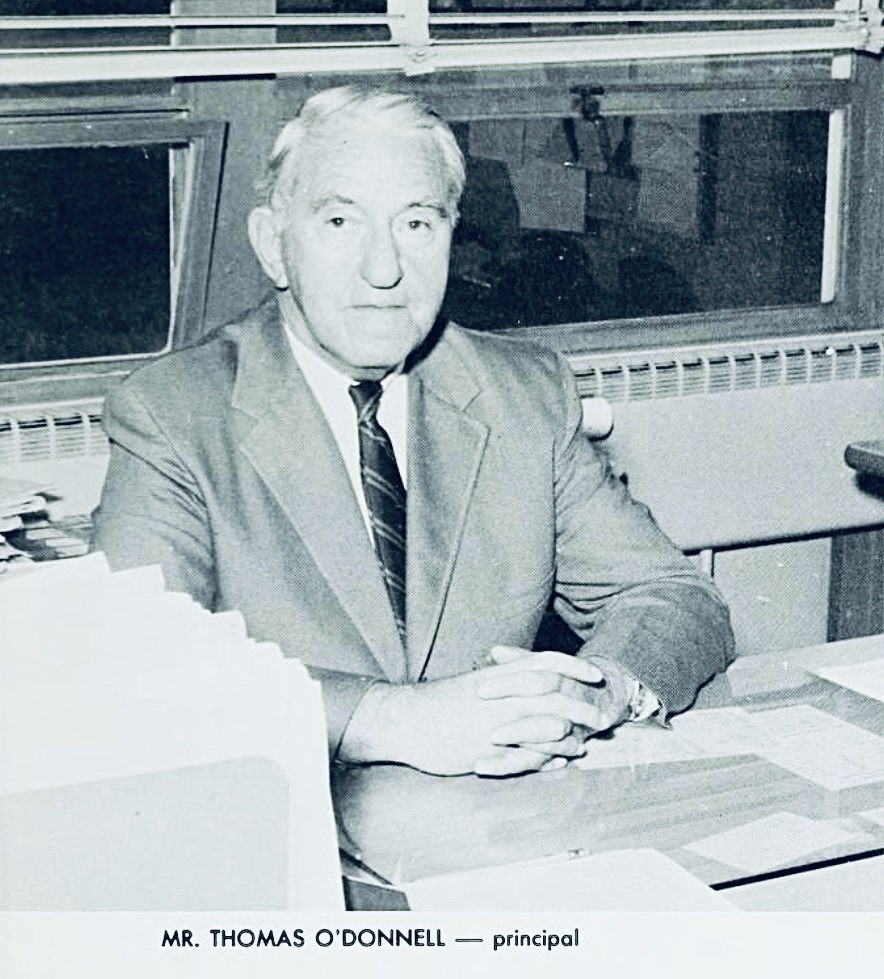
Mr. O’Donnell started as principal in 1962. He retired at the end of the 1972-1973 school yearafter serving the Dedham Public Schools for 41 years.
At a School Committee meeting in November 1972 the dress code had been discussed but not modified. The idea for Dungaree Day was proposed at a December meeting of the Student Activities Union, which had formed in September as an alternative to the traditional Student Council. According to the Transcript, the majority of the 200 students at the meeting were against the idea and favored working through proper channels to try to lift the ban. But students had been working through “proper channels” for some time with no results. The Student School Committee, an advisory committee to the town’s elected school committee had voted in November 1971 to abolish the Student Dress Code. The School Committee took no action. Students at the Junior High won a significant victory in November 1970 when the Student Council convinced administration to allow girls to wear pants (only from November-April and NO DUNGAREES!) but the dress code was still very restrictive.
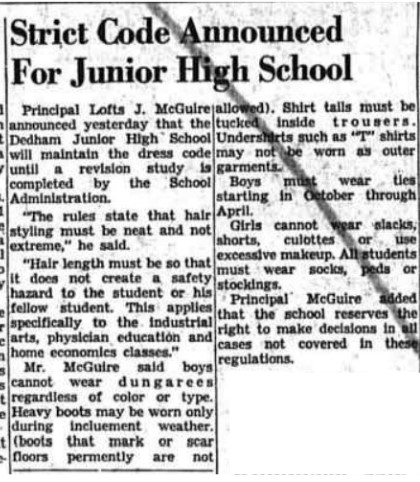
The Junior High dress code from September, 1970. In November, it was revised to allow girls to wear pants from November-April, then revised again to allow pants and pant suits year-round, but NO DUNGAREES!The necktie requirement for boys was also dropped.
Senior Susan Prodnak voiced her opinion on the dress code in a letter to the Transcript in December:
“Almost everyone agrees that the dress code is pretty ridiculous. Basically it is that you’re allowed to wear any color dungarees from saffron yellow to shocking pink with the exception of blue. If you are discovered in such blue attire, you are forced to miss several classes, and possibly several days of school.”
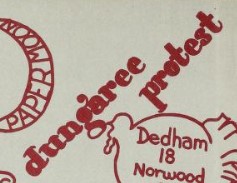
The Class of ’74 commemorated Dungaree Day in a collage in the yearbook.
The issue of dungarees seemed to come up at every school committee meeting before and after the Dungaree Day protest. In their public statements, administrators consistently voiced the same three arguments against the offending clothing: 1. Dungarees are play clothes and if students wear play clothes to school, they will be less focused and in a more playful frame of mind. 2. Dungarees are the uniform of the counterculture and the drug culture and the rebellious youth of America. Allowing students to wear them would result in a lack of respect and discipline and lead to disruptive behavior. 3. Rules are rules. Dungarees are against the rules; students need to follow the rules and face the consequences when they don’t.
The dungaree debate was resolved in July 1974 when the Massachusetts Legislature passed legislation known as the “Students’ Bill of Rights.” Among other protections for students was the ban on dress codes, unless the code was instituted for hygiene, health and safety purposes. The bill essentially put an end to dress codes in all Massachusetts high schools, as long as local school committees approved. Dungarees were allowed for the first time at DHS in the 1974-1975 school year, my sophomore year. The student conduct code was officially approved by the school committee the following October. Although my rights to freedom of expression had been affirmed by both the Massachusetts Legislature and the Dedham School Committee, they were overruled by a higher power, my mother, and so I never attended a day at DHS while wearing “dungies.”
Do you have any Dungaree Day memories? Share them in the comments below!
Coming in Part 2- This was not the first kerfuffle at Dedham High over a dress code, nor would it be the last. Stay tuned.
I am James L. Parr. I grew up on Tower St. and went to St. Mary's and Dedham High (Class of 1977). I teach school in Framingham and co-wrote a book of Framingham history, which led me to write a book of weird Dedham history called Dedham: Historic and Heroic Tales from Shiretown. That book led to this blog. To order your own copy of the book, e-mail me at jameslparr@yahoo.com




 Dedham Tales