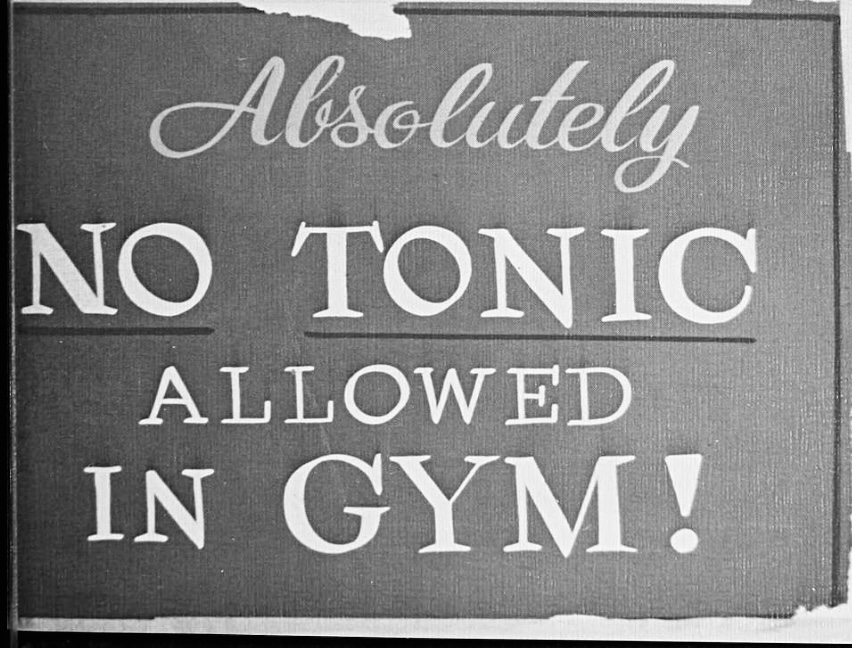
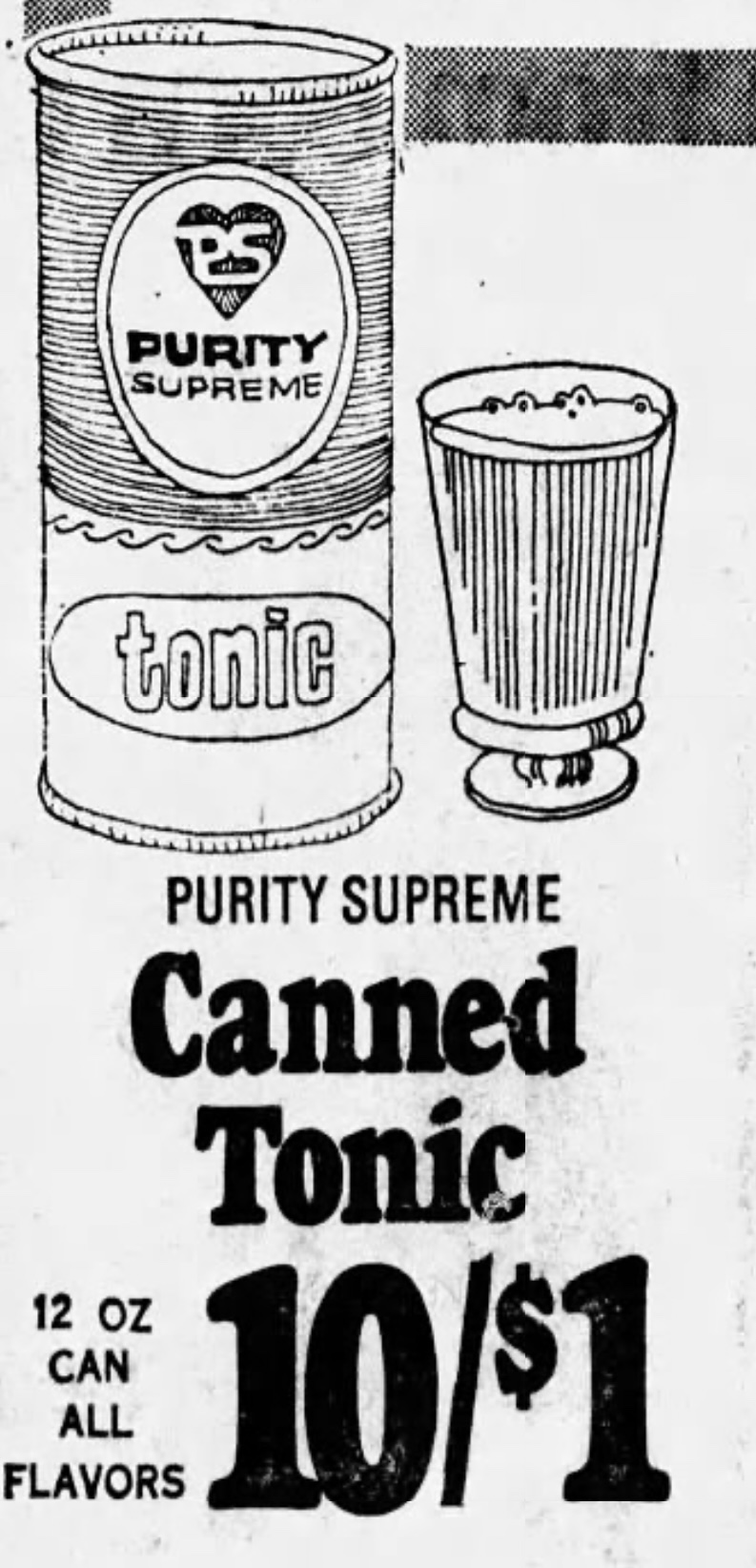
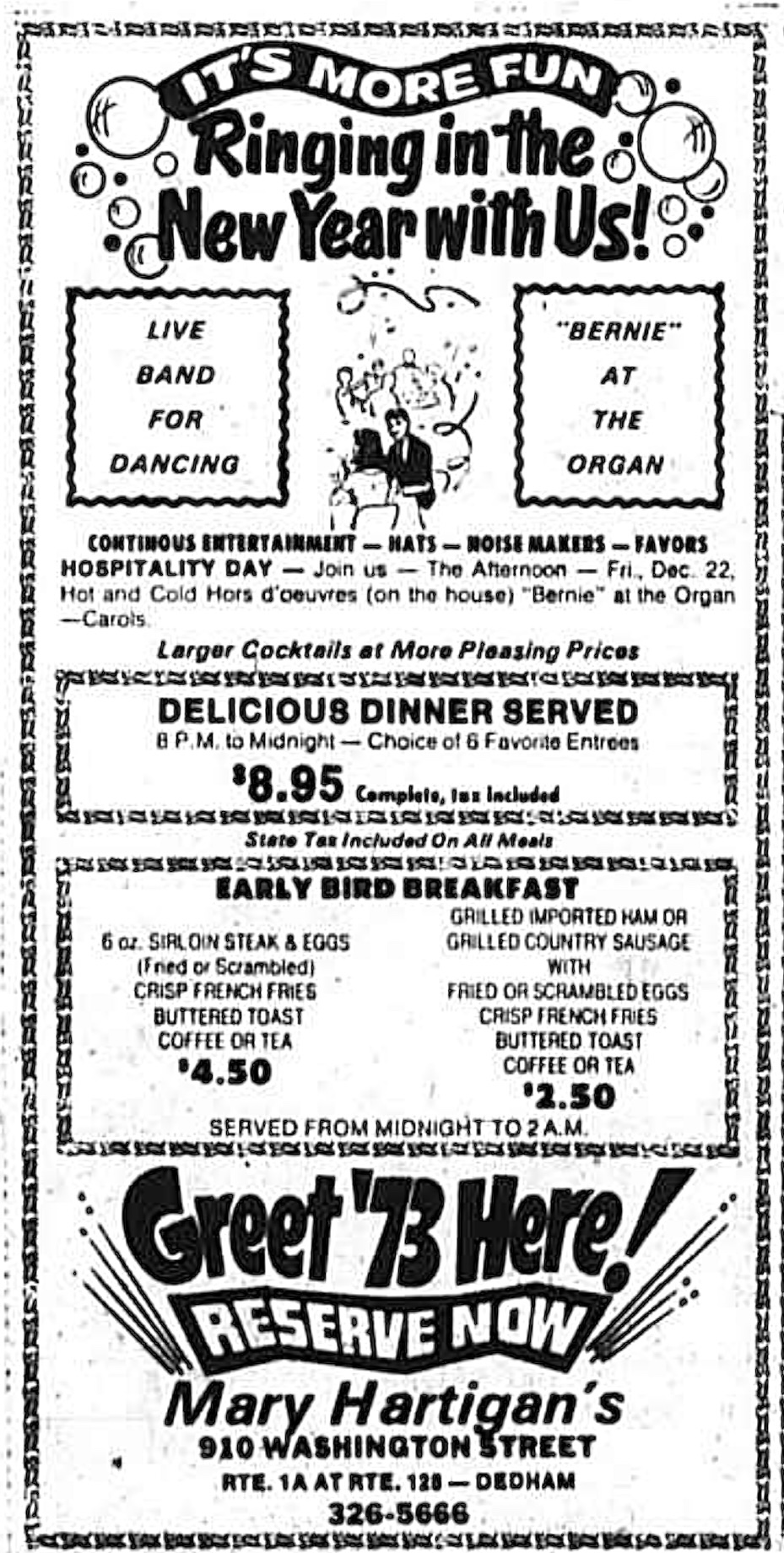
This sign hung on the door to the Dedham High gym 50 years ago, and there’s no doubt that every one of the 2,000 or so students in the school knew exactly what it meant. Hang that sign on the gym door today and you’ll get a lot of confused looks and questions…Hair tonic? Gin and tonic? Those of us who grew up in the 60s and 70s know that “tonic” was another word for soda. Orange ade, root beer, ginger ale, even Coke were referred to collectively as tonic. It was a common and widespread term around here back then, as seen in this ad from the Globe in 1972:
According to the Globe, the first printed instance of the word to describe carbonated beverages was in 1888 in an article describing the theft of ’10 bottles of tonic’ from a Boston store. For close to a century, folks in Massachusetts and other parts of New England could be assured of getting served a carbonated soda when asking for a tonic. The term has been pretty much abandoned these days (Wikipedia called it “antiquated!” Boy that makes me feel old). It joins these other words from my youth that have faded from modern day usage:
Hassock (ottoman)
Divan (couch- this was my father’s word, not mine)
Dungarees (jeans- see my February 2023 post about Dungaree Day)
Supper (dinner)
Cellar (basement)
Crueler (a horizontal donut, now called a stick)
Feel free to share your own “antiquated” words or phrases from back in the day. And keep that tonic out of the gym!
The Pauls of Dedham made significant contributions to the town’s agricultural, civic and political life for almost two centuries. The loss of the 172 year old house in which they resided for eight decades is both surprising and disappointing, but the occasion offers an opportunity to shine a light on this old New England family.
The first Massachusetts settler, Richard Paul came from England sometime between 1620-1630 and settled in the Taunton area, where Pauls would reside for the next hundred years. In 1719 Richard’s grandson Samuel purchased about 100 acres situated between the Neponset River and Sprague Pond for his sons Isaac and Samuel. This area quickly became associated with the Paul family, and the bridge over the Neponset acquired the name it retains to this day, Paul’s Bridge.
Paul’s Bridge 2022. This bridge was built in 1849.
By this time this area of Dorchester had been annexed by Dedham and was known as the “Low Plain.” The house and land eventually came into the possession of Ebenezer Paul, (b. 1818) great-great-great-great-great grandson of Richard Paul. Ebenezer was a respected progressive farmer and member of the Allin Congregational Church (despite living on the edges of town some three miles from the town center.)
Farming pursuits were seriously curtailed in July of 1861 when the US government took over the bulk of Paul’s acreage for a training camp for Union soldiers. According to an article written for the Hyde Park Historical Record (Volume VI, 1908):
” …the first that Ebenezer Paul knew of any designs on his land as a camping ground was the sudden discovery one morn of two or three men sitting under one of the long rows of elms, a few of which are now standing, and his cows gazing upon them with interest. Later, it is said, they came and took the land, leaving him to apply to the State for compensation which he did, and I am credibly informed that he received three hundred dollars per year rental.”
The government also took over about 80 acres west of Sprague Pond owned by Isaac Tower (my childhood street was named for him) who after the war submitted a claim for rent and additional funds for damages done to his house and fences. The government paid the rent but denied the claim for damages.
The first two regiments to occupy the land were the Massachusetts 18th and 20th, and the site was known as both Camp Brigham and Camp Massasoit. Later it would come to be known as Camp Meigs and gain historical significance as the training ground for the 54th Massachusetts, the first Massachusetts regiment of African American soldiers who arrived in February 1863. The history of Camp Meigs and its association with the 54th Massachusetts Regiment is a rich and fascinating one that will not be explored here. There is a brief history of the camp in my book Dedham: Historic and Heroic Tales from Shiretown.
The Ebenezer Paul House (underlined in red) stood north of Milton Street (present-day Neponset Valley Parkway). This map shows the extent of the camp at Readville and its close proximity to both the Paul House and the Edson House. In 1868 most of the land east of Sprague Street would become part of the new town of Hyde Park, which was annexed by the City of Boston in 1912.A section of Dedham from an 1858 map of Norfolk County. The red arrow indicates the original Paul house just west of Paul’s Bridge and the Neponset River. The blue arrow indicates the house at 390 Cedar St. where Ebenezer moved with his family in 1867. The house just east of that house (labeled N. Fales and S.F. Alden) was the home of Elizabeth Fales, who was murdered by Jason Fairbanks in 1801. It stood on the southeast side of Cedar St. near present-day Turner St. (See my earlier post “May 18- A Tragic Anniversary” from May 2010).
Ebenezer Paul sold his property and moved to the Cedar Street house in 1867, along with his wife Susan Dresser Paul and five children; Henry, (b.1851), Edward (b.1853), Isaac (b.1856), Ebenezer (b.1858), and Martha (b.1865). Upon his father’s death in 1898, Ebenezer Talbot Paul took ownership of the property and he and his wife Marietta Taylor Paul began the next chapter of the Paul family in Dedham.
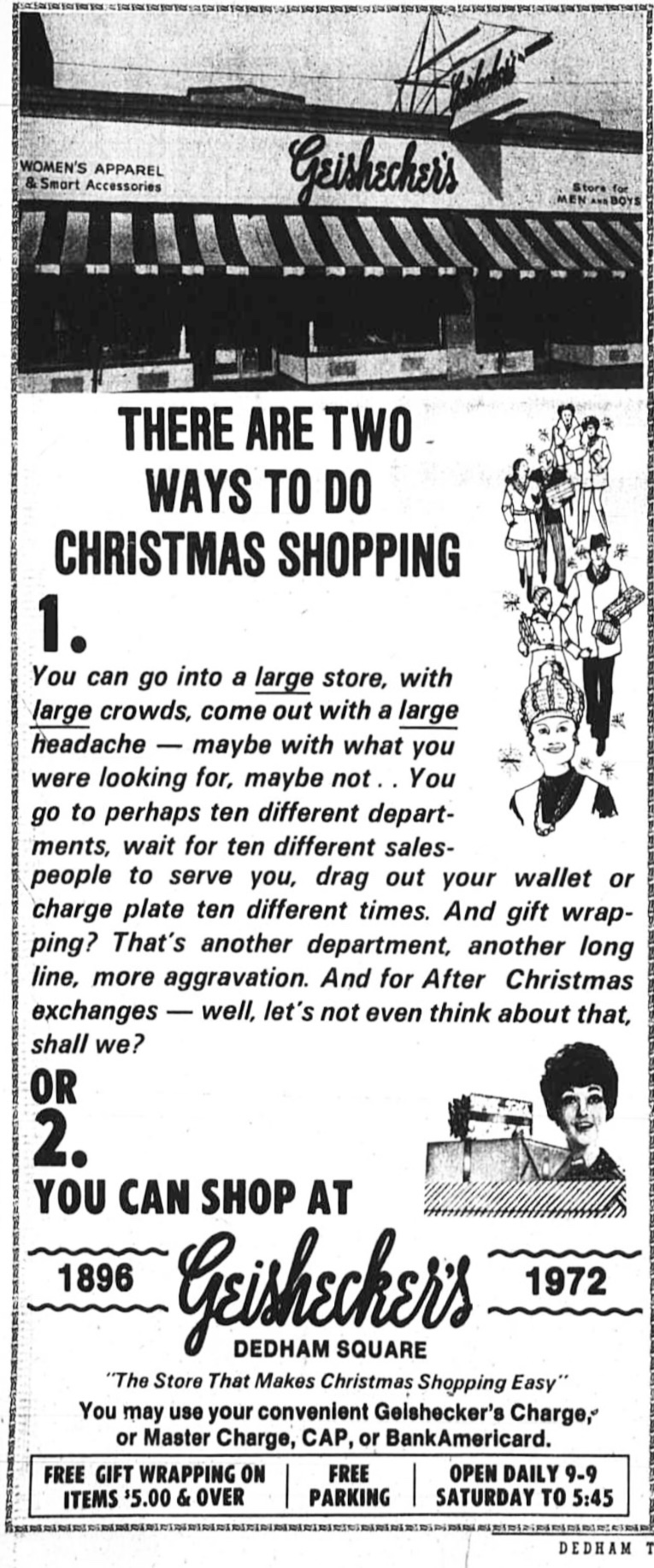
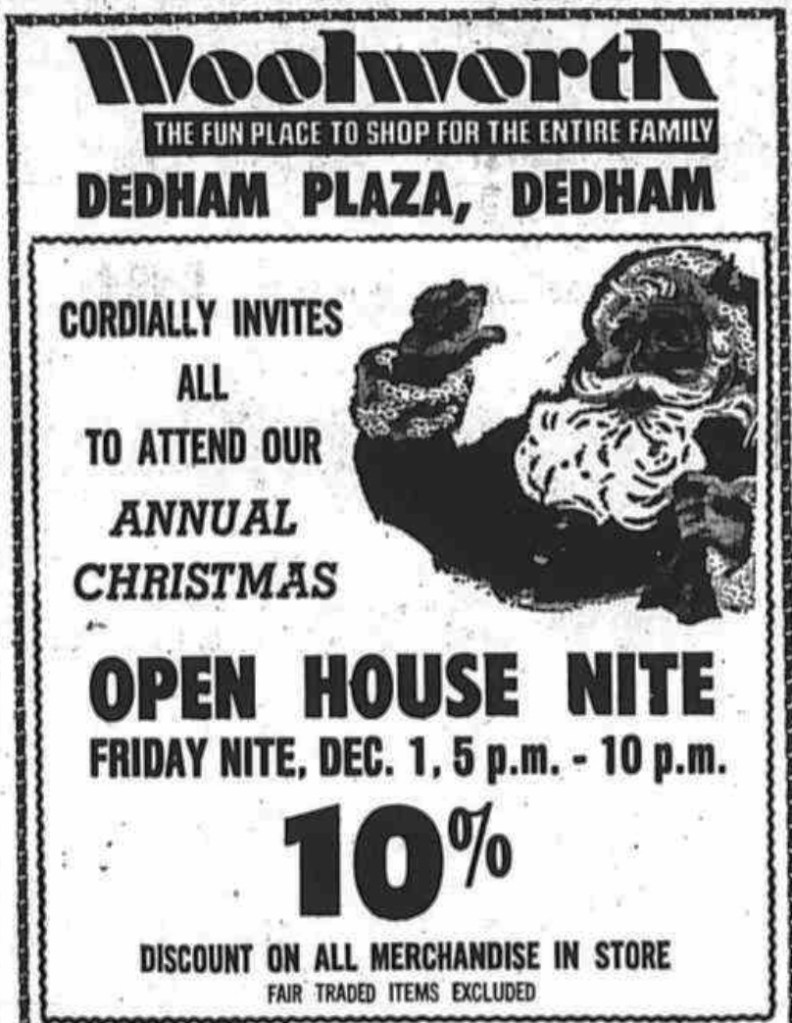
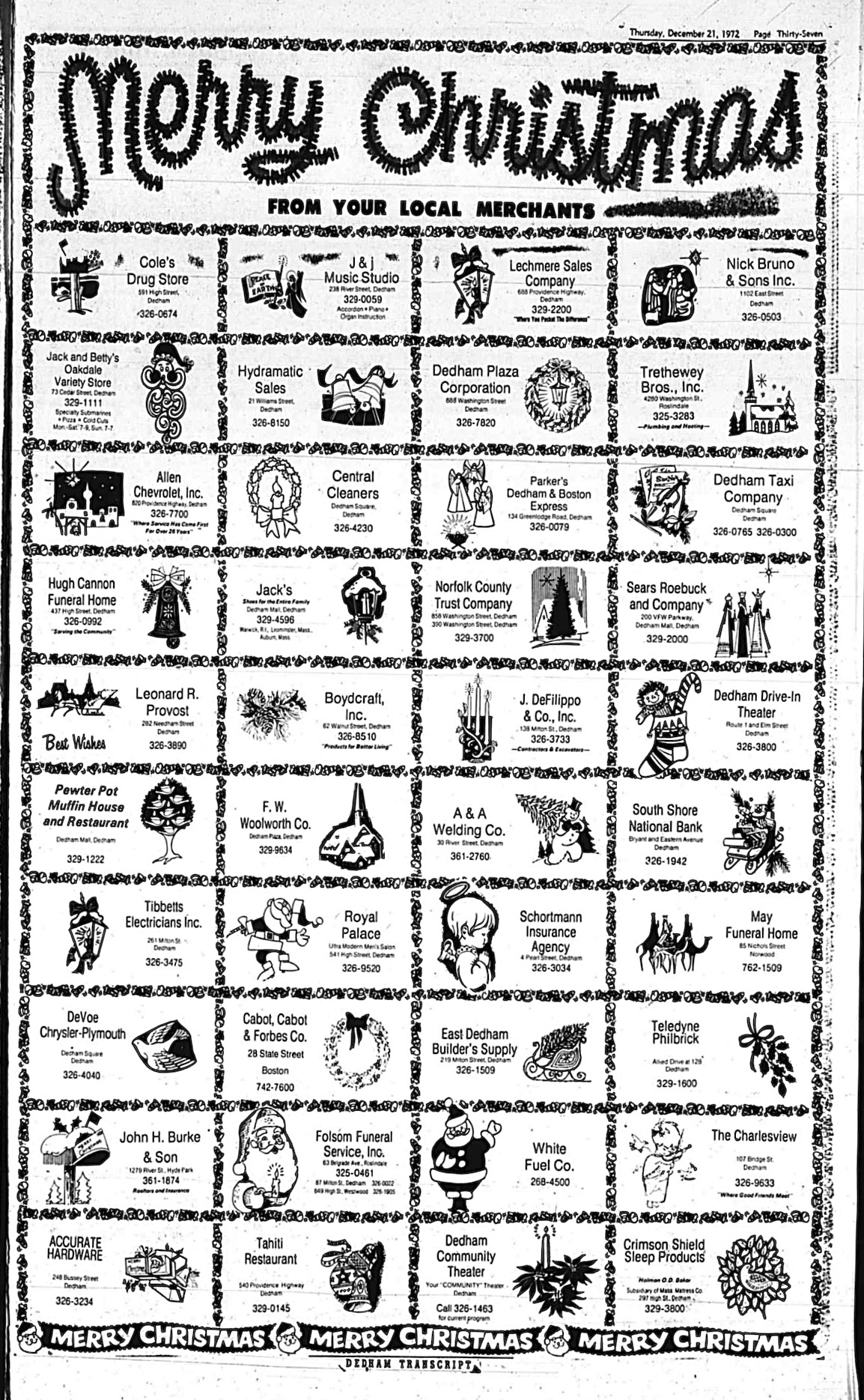
Enjoy these ads that ran in the Transcript during December 50 years ago. I’m sure blog readers will remember most of these Dedham businesses- a few of them still exist!
It’s been twenty-one years since workers dismantled the 103 ft. water tower on Walnut Street that had stood there since 1881. At the time, it was the oldest steel water tank in the country, but because it had no real historical significance (and was sitting on prime real estate in Oakdale) there was little objection to its removal.
Here’s a postcard from the early 20th century featuring the picturesque East Dedham Standpipe:
You can see the picturesque standpipe in this 1895 view from the top of the courthouse.
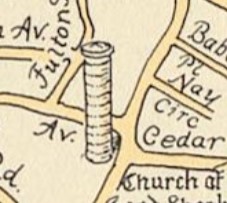
And finally, here is the “standpipe” on a pictorial map of town from 1954. I’m sure lots of people have their own special memories of this old Dedham landmark, feel free to share them in the comments!
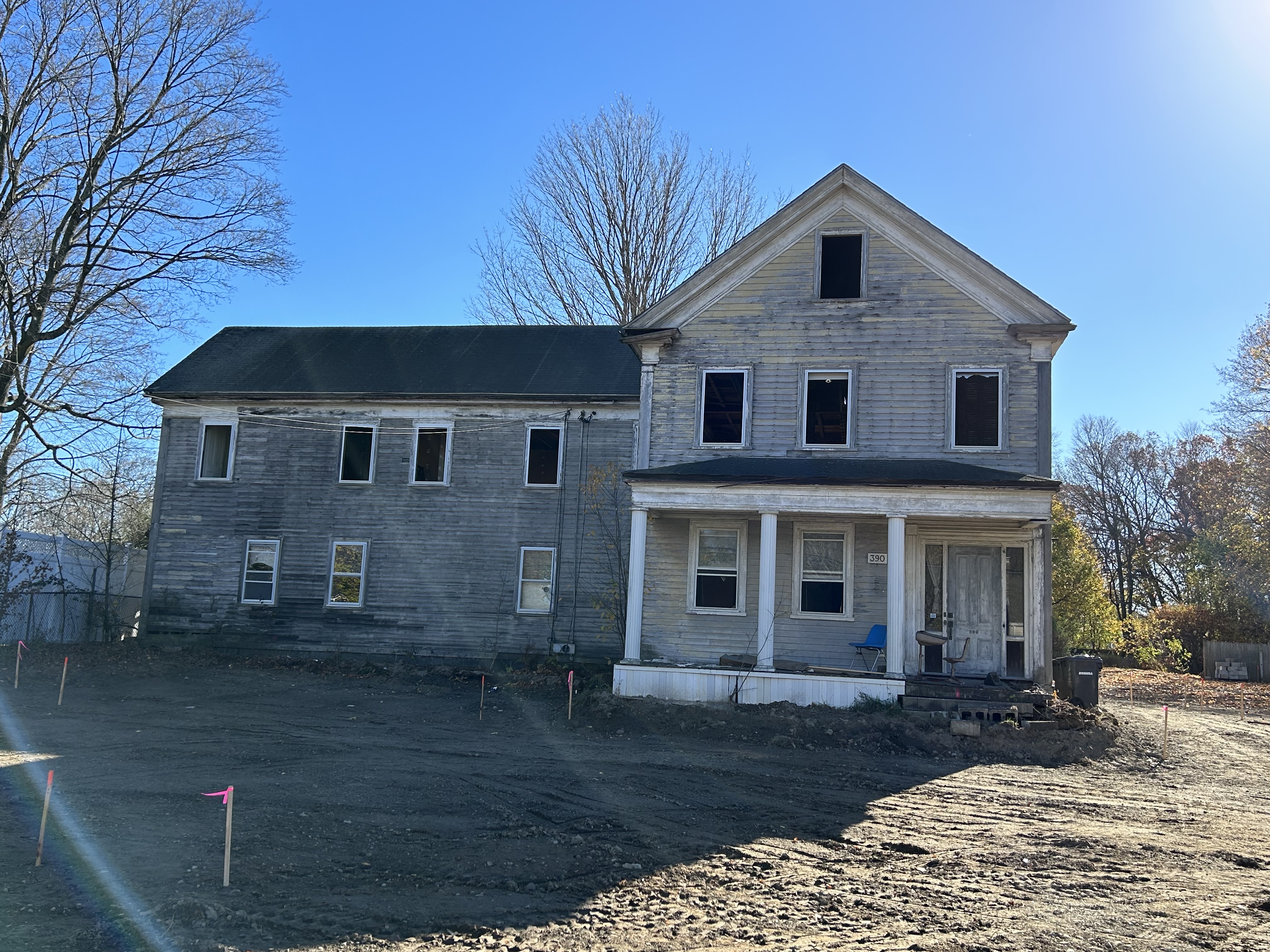
The impending demolition of this house on Cedar Street has inspired me to make a post to this blog after a very long time. Having grown up on Tower Street not too far from this residence at 390 Cedar, I remember it well from passing it by on countless trips to church, school, work, or Endicott Pharmacy. While it clearly is being readied for the wrecking ball with its windows gone and construction fence surrounding the property, the house never really looked much better than this in all the years I lived in the neighborhood. It was obviously much older than the surrounding mid-century ranches and colonials, and its Greek revival styling hints at a more respectable past. In a series of posts over the next few weeks, I will offer a glimpse into that past and reveal the stories of the families associated with the house.
390 Cedar St. on November 10, 2022
A little farther east from this spot, on the corner of Cedar and Tower Streets, lies Paul Park. During the summer in the 1960s, Paul Park was practically my second home. My brothers and sisters and I would make the short walk there with neighborhood friends to spend the day making pot holders and plaster of Paris animals, playing red rover, checkers, and mancala (which we called simply KAY-la for some reason), and holding Jimmy Fund White Elephant Sales under the supervision of the young park instructors of the Dedham Rec Department. I’m sure none of us knew that the park where we spent so much time and loved so well owed its name, in fact its very existence, to the family who once lived in that spooky, rundown old house at 390 Cedar Street.
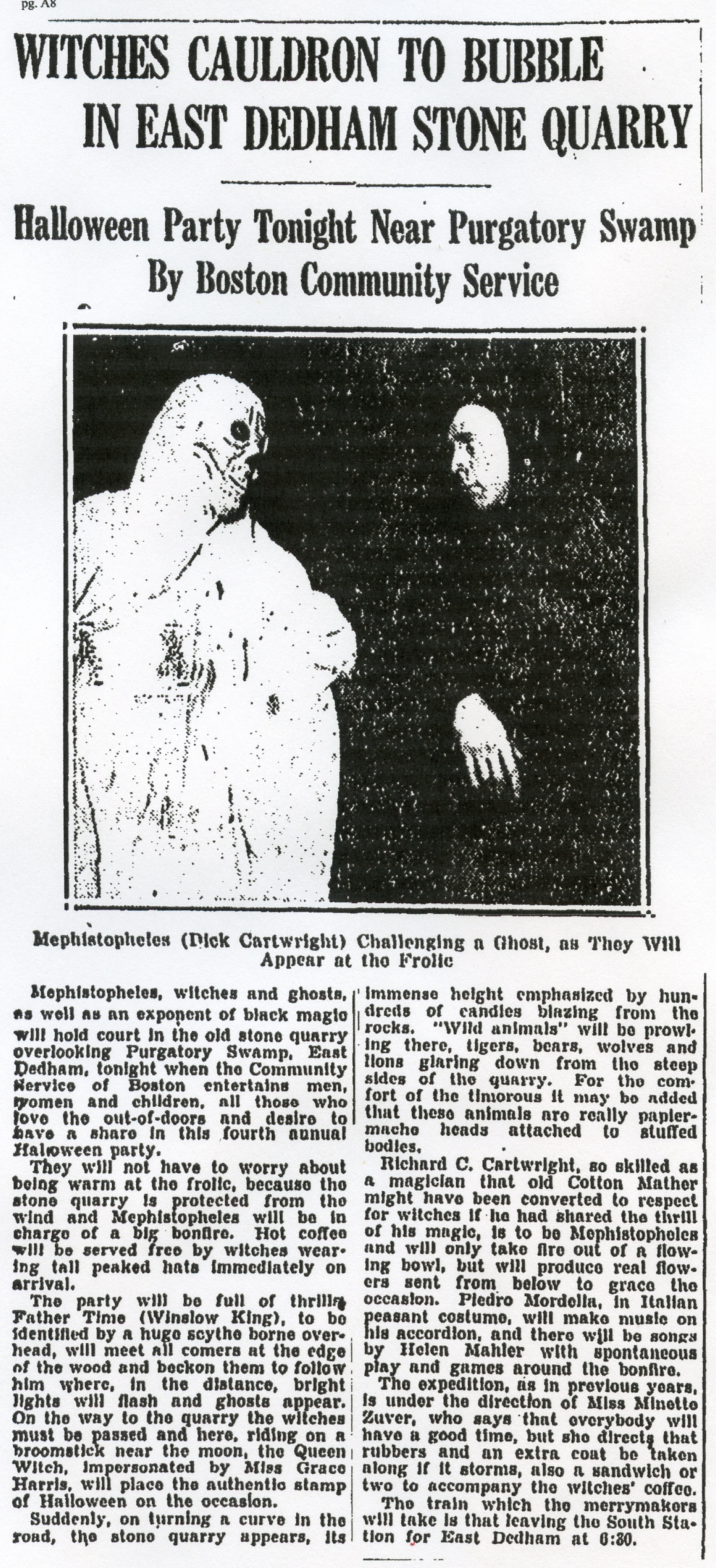
Too long since my last post. So here’s a short one that’s a little bit of a mystery in keeping with the season. This article appeared in the Globe October 30, 1926:
This is not the East Dedham that we are all familiar with, but rather south east Dedham at the end of Greenlodge Street. Purgatory Swamp is situated in the Fowl Meadows, that great expanse of wetlands on either side of the Neponset River. You can see the meadows clearly from the Neponset River Parkway near the old Stop and Shop Warehouse in Hyde Park and from the highway as you exit 95 North to get on 128. The major part of Purgatory Swamp is in Westwood, off of Canton Street. I don’t know much about the old stone quarry, but there is a Quarry Rd. in this area off of Vincent Rd.
If you know any more about the quarry or about this Hallowe’en event from 88 years ago…let me know. More posts to come! Thanks for your interest!
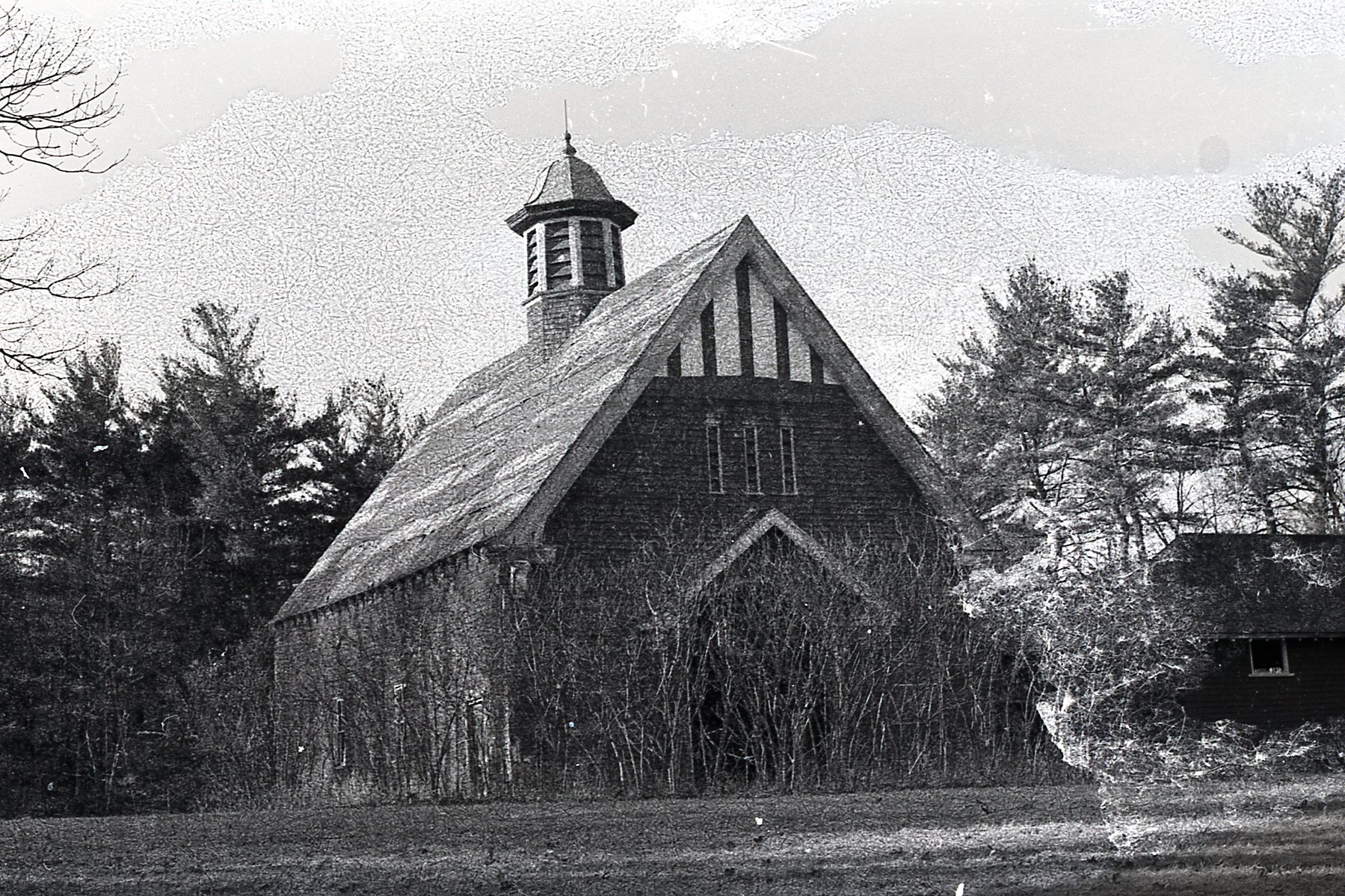
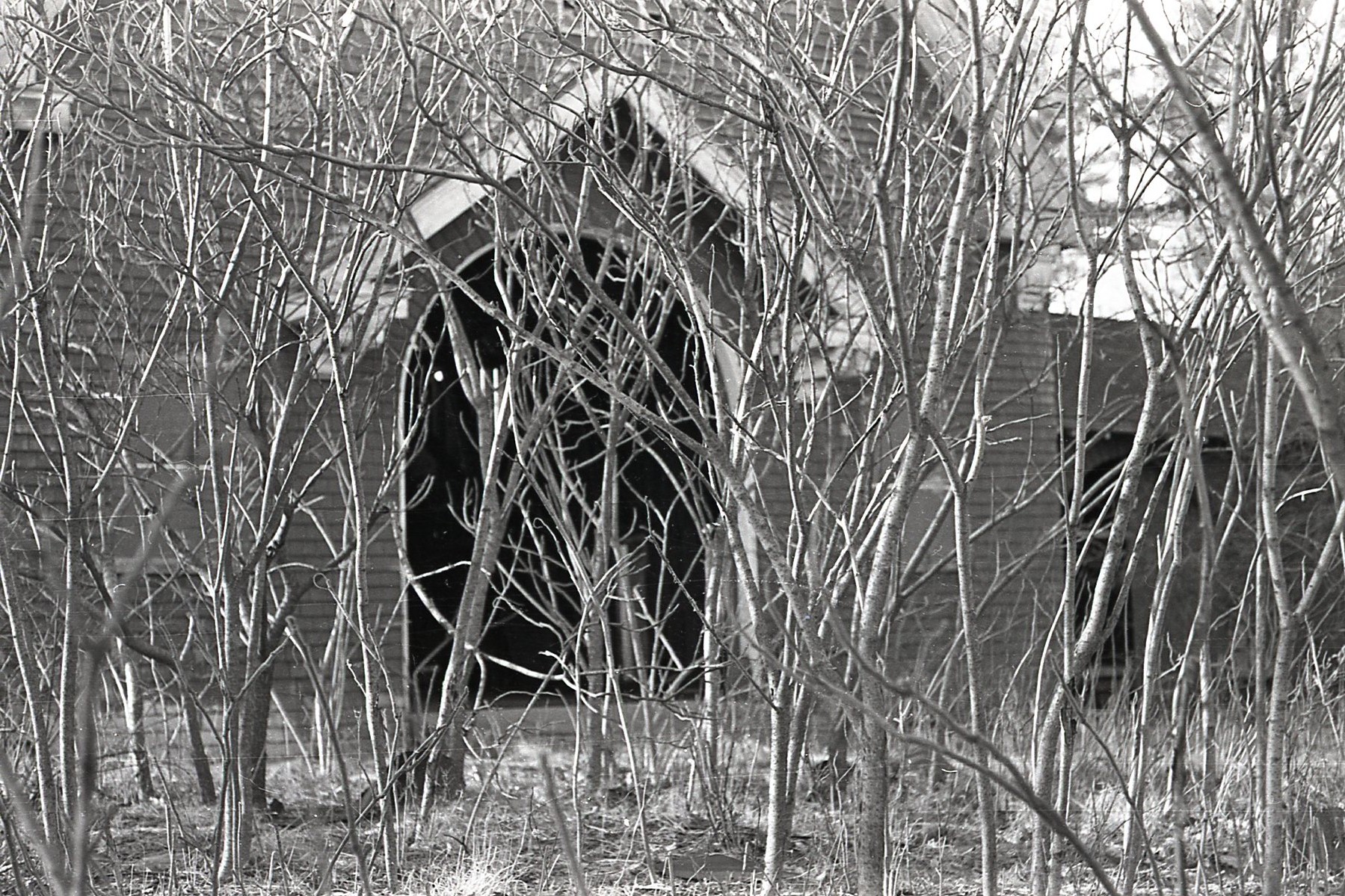
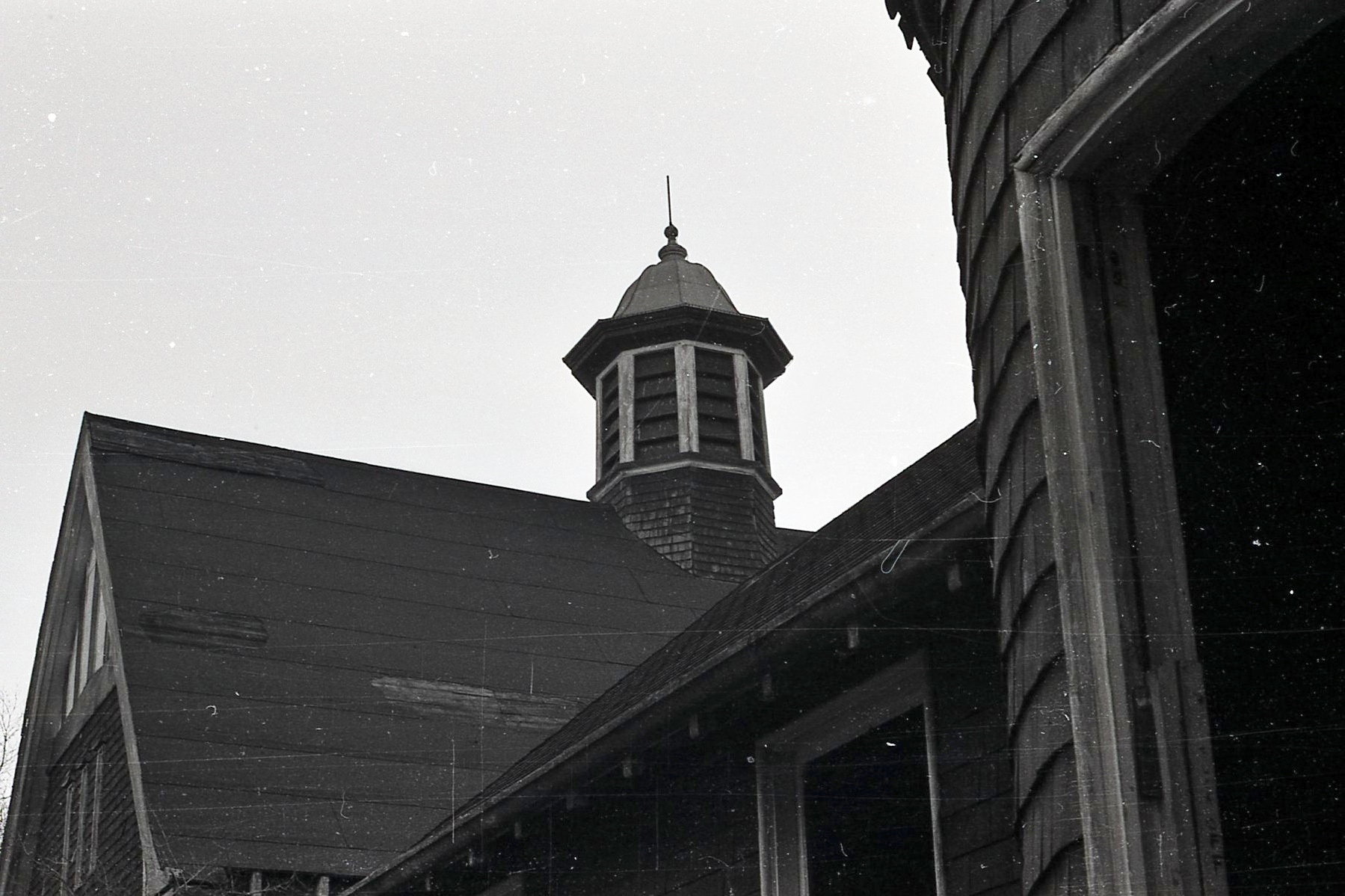
These three shots were taken in 1981 for a photography class I was taking at Bridgewater State College. At the time I took the photos, the brick building that stands on top of the hill was the S.M.A. Fathers’ Queen of Apostle Seminary. The barn once stood on the George Nickerson estate on Common St., on property now owned by Northeastern University. Nickerson was the brother of Albert Nickerson, who built the castle at his “Riverdale” estate, which has been home to Noble and Greenough since 1922.
The barn, which was red, stood behind the seminary. There was also a run-down log cabin in the woods of the Wilson Mountain Reservation.
The grainy quality of this picture was not my attempt at being artsy. The negatives were stored in my basement for years, and this one got stuck to its glassine envelope.
This is the artsy picture. Kind of Stephen King like…
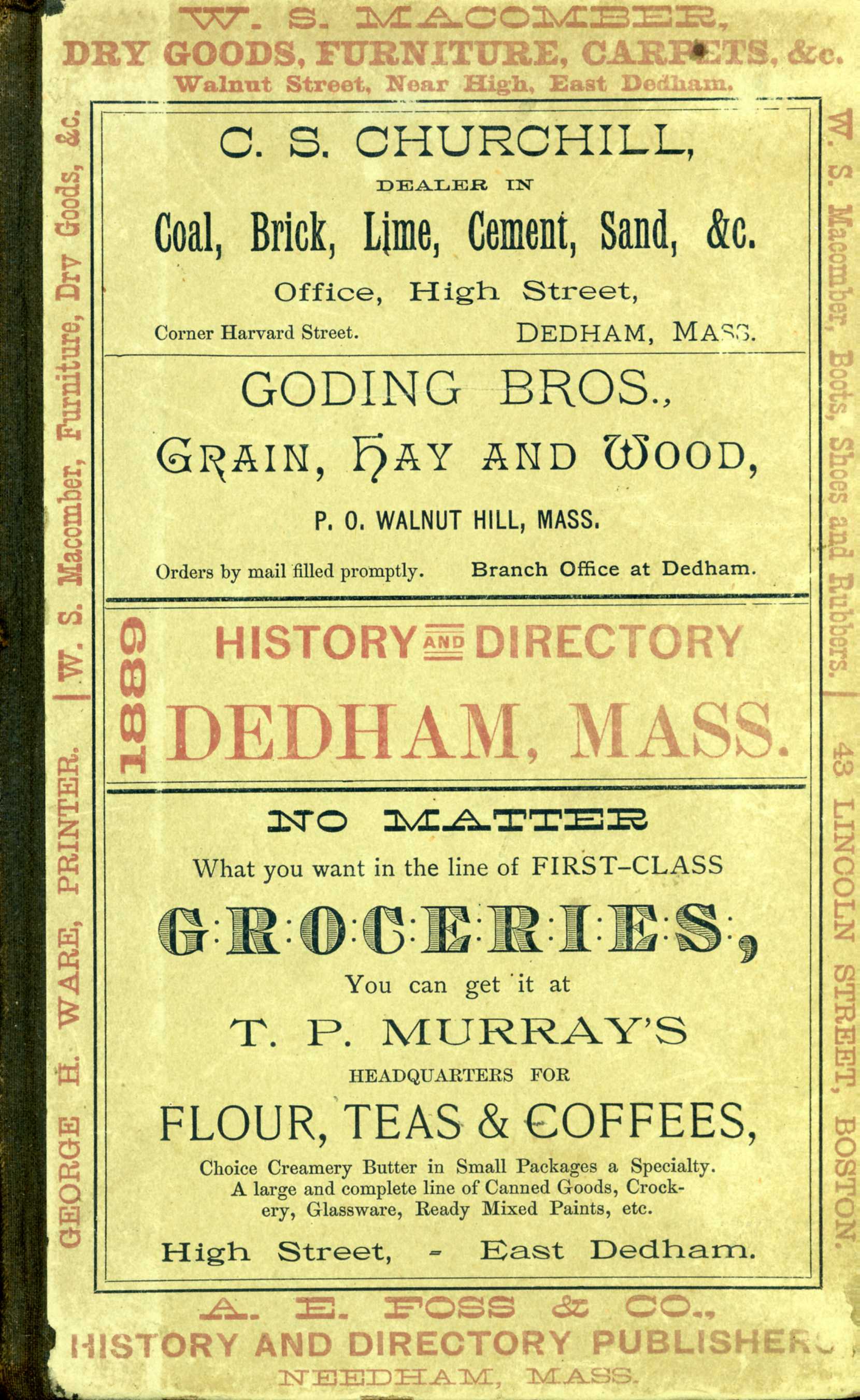
Reading through the 1889 Dedham Directory gives you a pretty good picture of life in Shiretown in the late 19th century. The population at the time was 6,641, including those living in West Dedham who would become residents of Westwood in 1897 when that town seceded. Dedham also had about twice the land area that it does now.
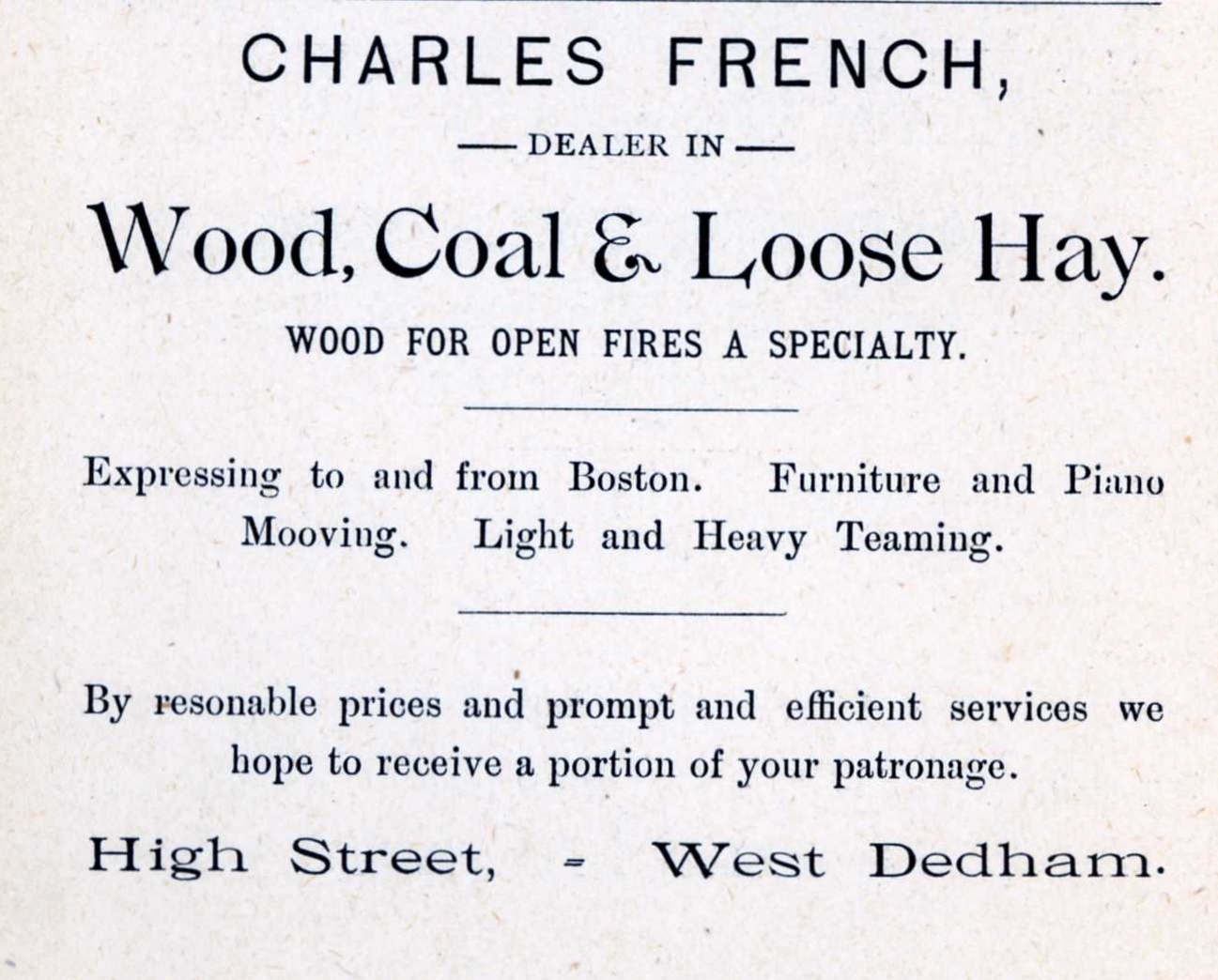
For a small town, it offered just about everything you needed for your home, your business, and your social life. All of the following products were produced in town in 1889: boots, cabinets, chocolate, carriages, cigars, dresses, harnesses, slippers, suspenders, soap, tools, watches, and whips. The directory lists 10 blacksmiths, 6 boarding houses, 5 hotels, 2 ice dealers, 17 grocers, 7 physicians and surgeons, 4 lawyers, 17 dressmakers and 1 dentist. Remarkably, this town of under 10,000 residents had 7 post offices! Almost all of these were located inside railroad depots or grocers.
The listing of residents includes occupations as well as addresses. In 1889, a great number of Dedhamites either worked in the mills or for the Old Colony Railroad.
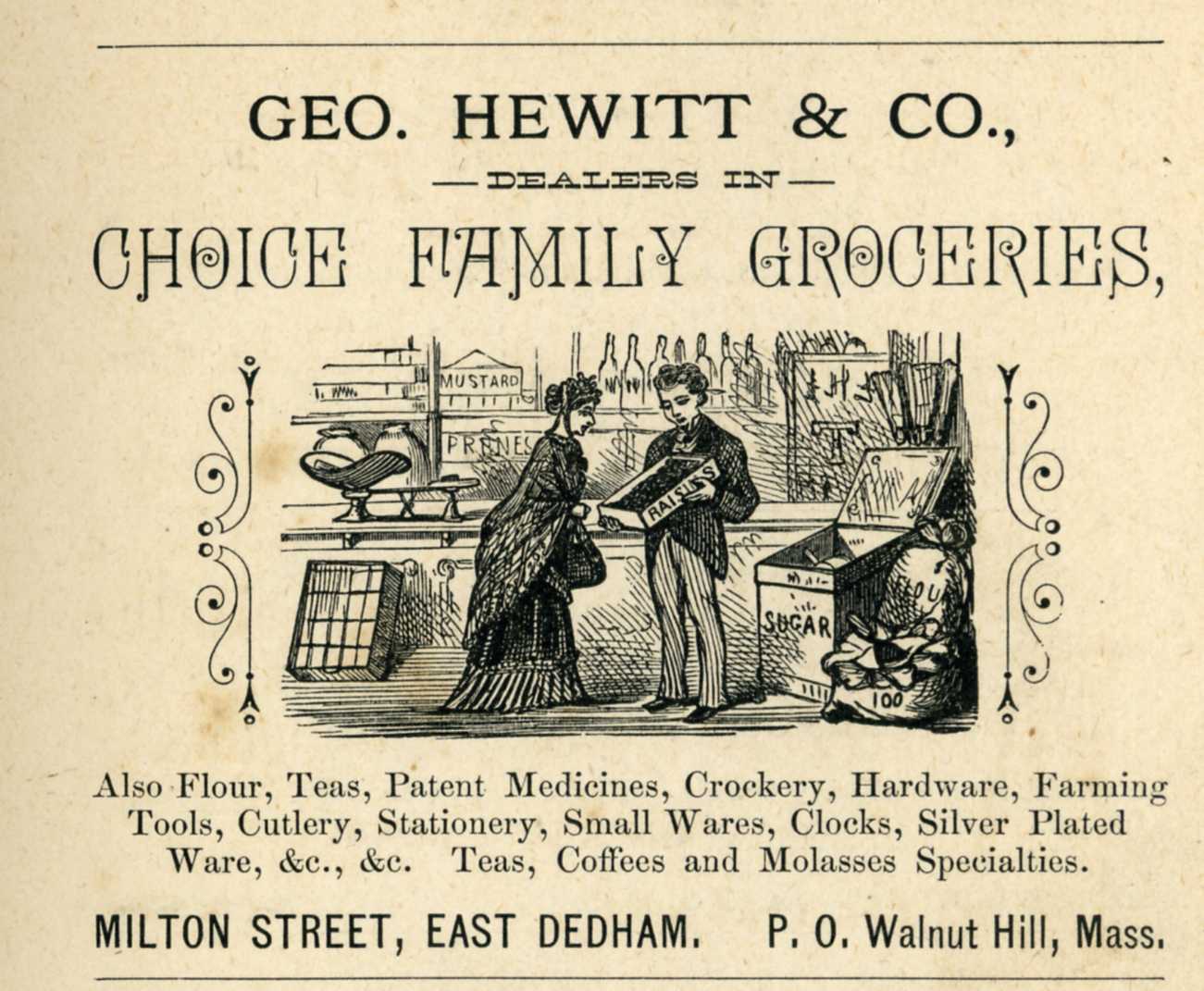
Those are pretty big raisins! Walnut Hill was the name given to the area surrounding the intersection of High St. and Walnut St. in East Dedham.
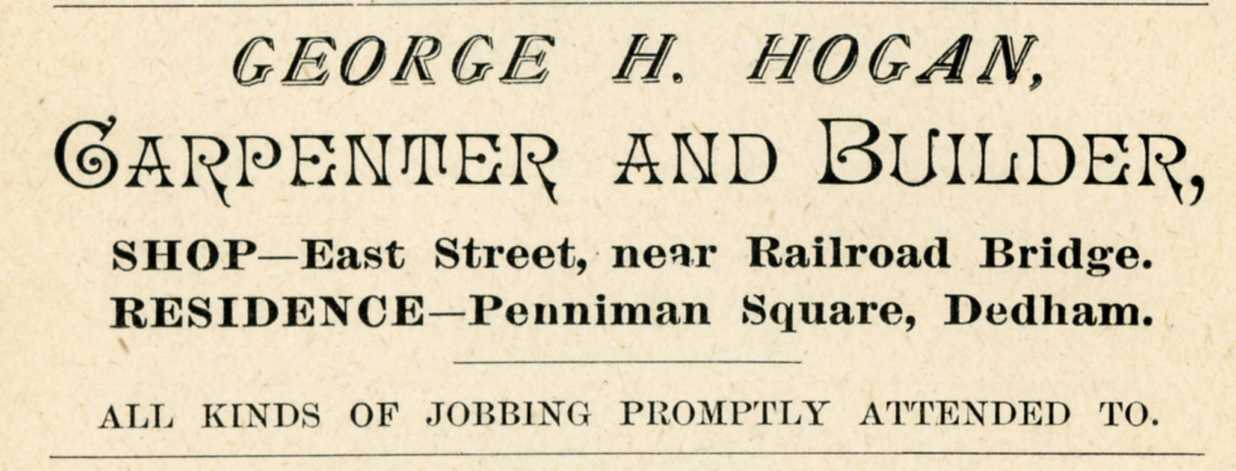
Penniman Square was the name given to the intersection of Mt. Vernon St.and Auburn St. (Whiting Avenue)
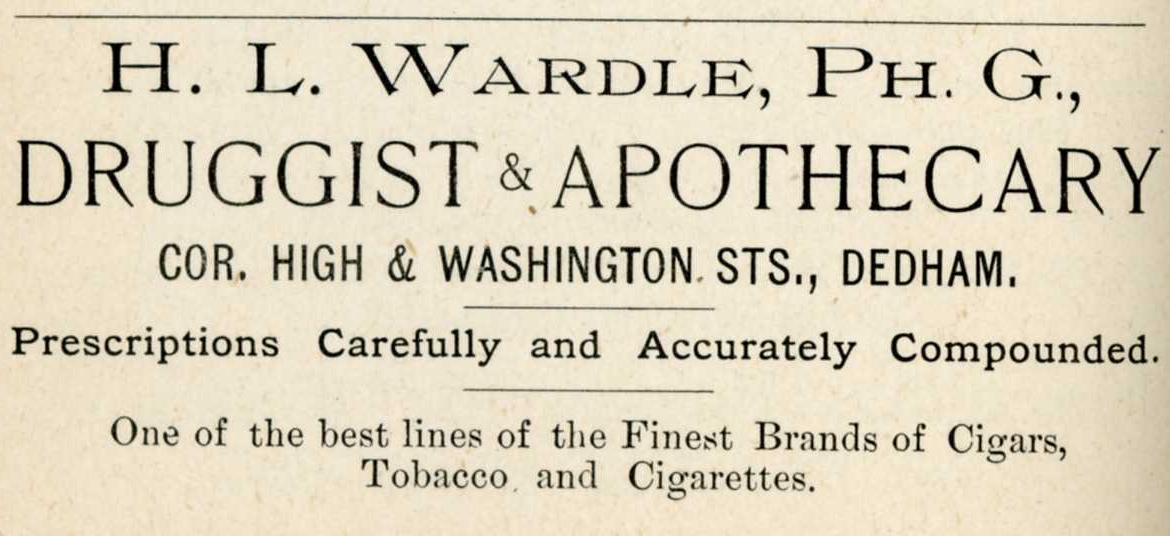
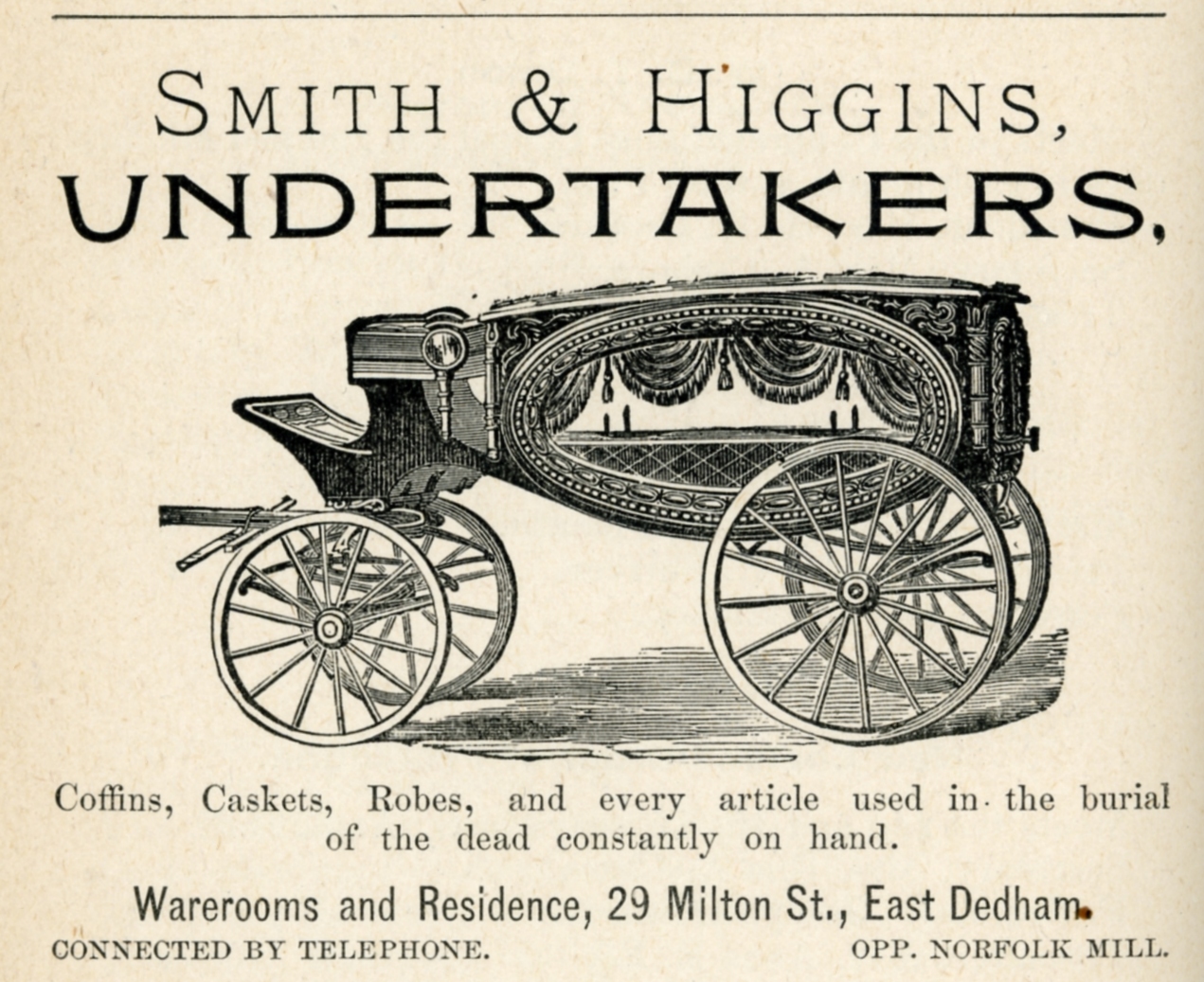
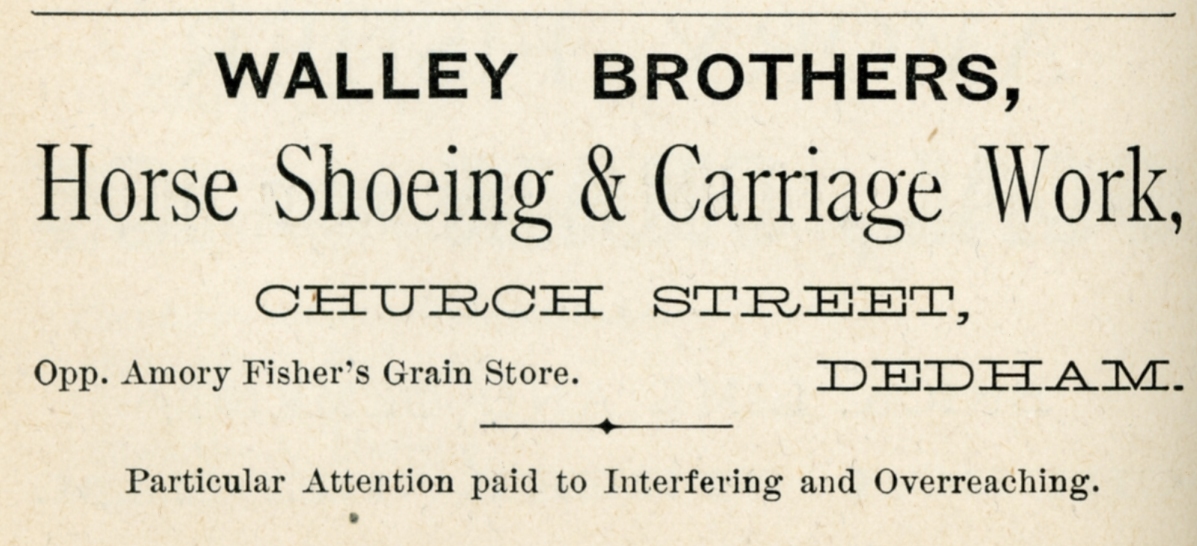
Here are a few ads from the 1889 Dedham Directory. The directory lists Dedham residents, businesses, town officers, and organizations. It also has a brief history of the town, and pages of these great ads.
Wardle’s is the oldest continuous business in Dedham. It opened in 1858 as B.F. Smith’s Apothecary, and was taken over by Harry L. Wardle in 1882.
Maybe the pianos are played by cows?
Talk about going out in style…
The Walley family still operates a business in Dedham, Walley Insurance on High Street. President Frank Walley III assures me that he doesn’t pay so much attention to interfering and overreaching anymore. At least not in his business.
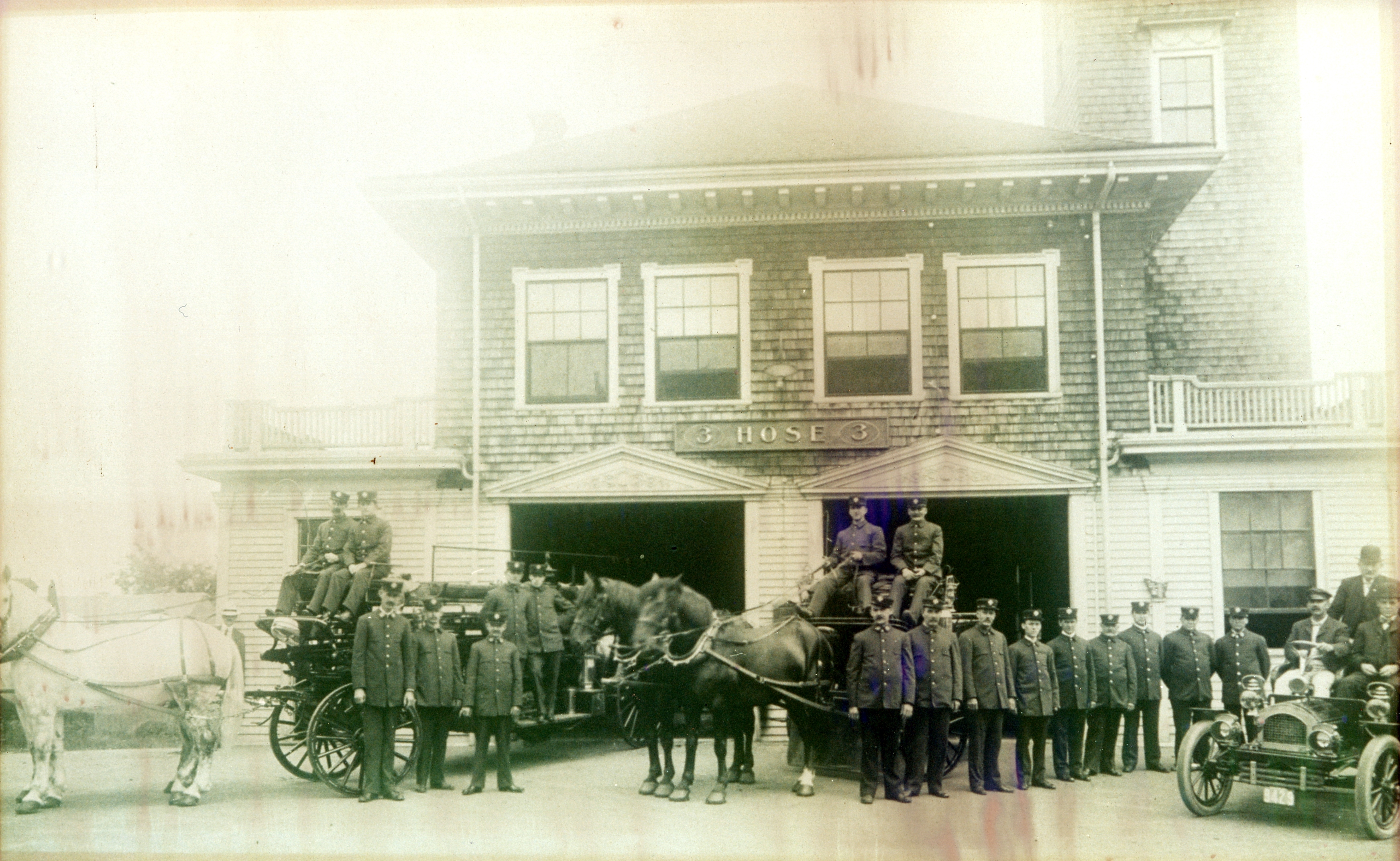
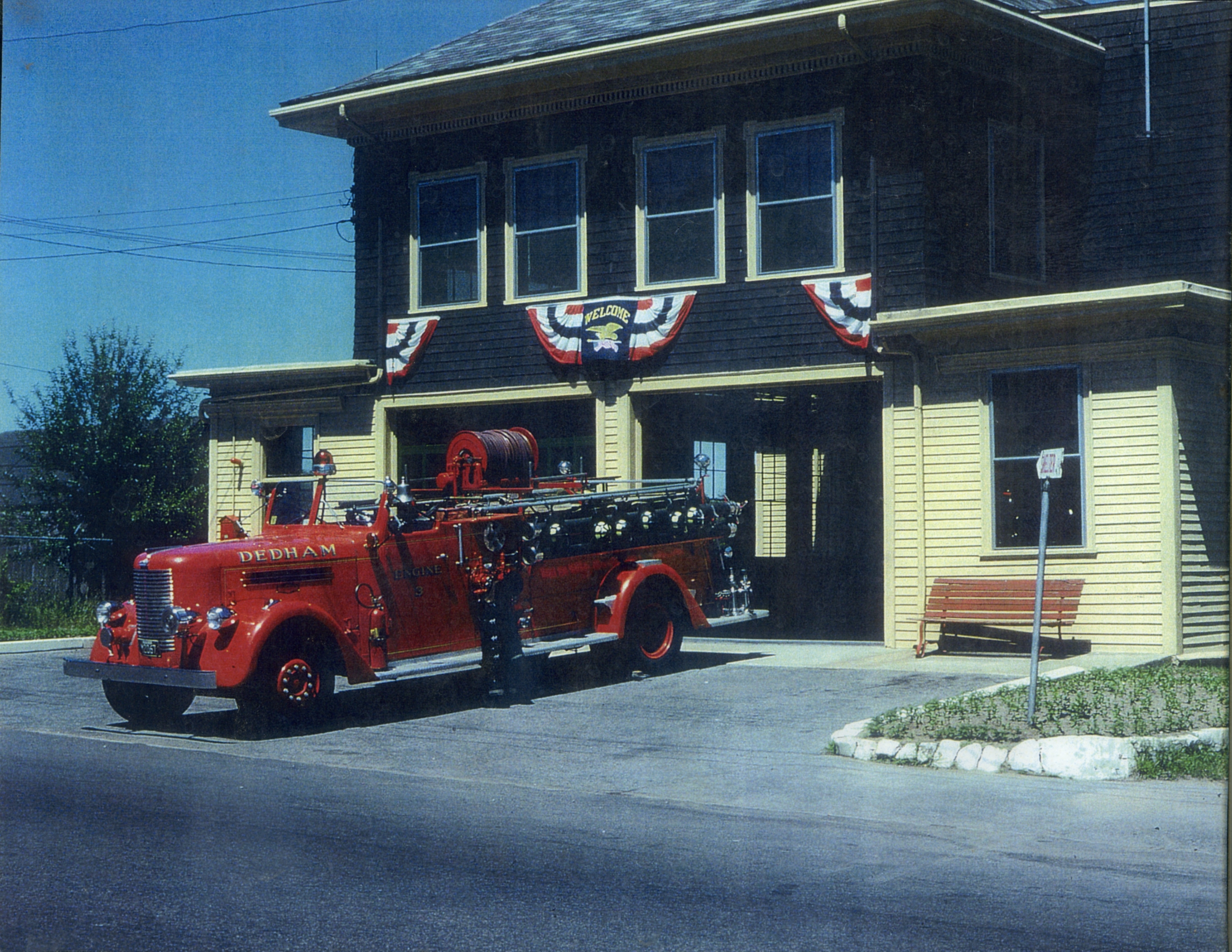
It was Hurricane Carol that took out the 80-foot bell tower, in dramatic and dangerous fashion on August 31, 1954. Lifted by a particularly strong gust, the tower tore loose from the building and sailed across the fire station, crashing into the house next door, where Mrs. Maria Guerriero was feeding her one year old son Joseph at the time. Miraculously, neither Mrs. Guerriero nor her son were hurt. A portion of the tower fell across Bussey St., crushing 3 cars and damaging the house at #219.
The steeple of the Old North Church and a WBZ radio tower were also toppled by the hurricane, which was more powerful and more devastating than the famous 1938 storm.
Here is a picture of the firehouse from the early twentieth century:
This is how I remember the firehouse looking when I was a kid:
Thanks to Firefighter Charlie Boncek for letting me use these images.
I am James L. Parr. I grew up on Tower St. and went to St. Mary's and Dedham High (Class of 1977). I teach school in Framingham and co-wrote a book of Framingham history, which led me to write a book of weird Dedham history called Dedham: Historic and Heroic Tales from Shiretown. That book led to this blog. To order your own copy of the book, e-mail me at jameslparr@yahoo.com




 Jim Parr
 Dedham Tales