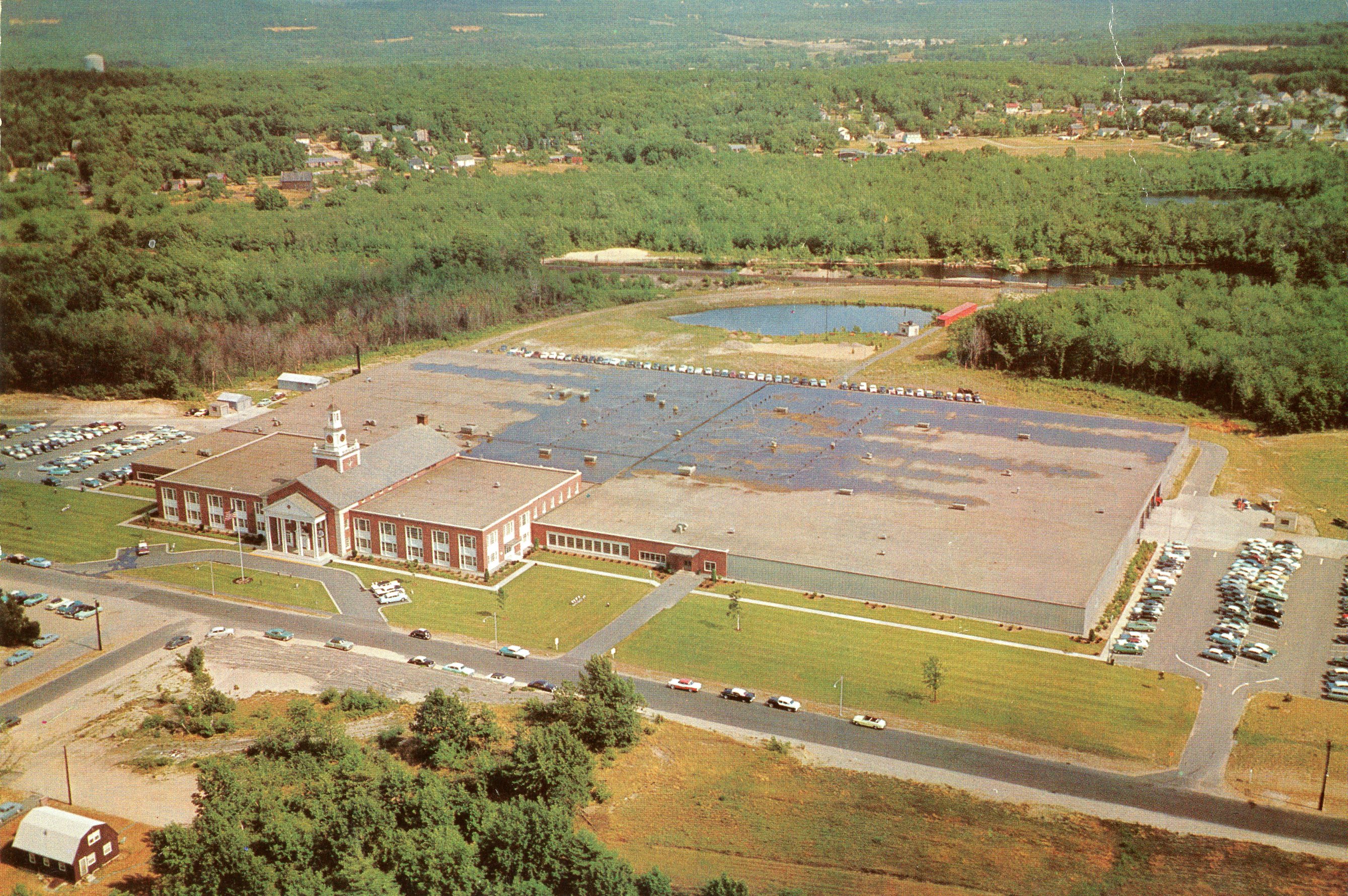
The Rust Craft Greeting Card Company as seen in a 1950s postcard view (courtesy of Dedham Museum and Archive)
I can’t really improve upon the caption that accompanied this picture in newspapers across the country on July 24, 1955, the day after the greeting card company opened its new headquarters in Dedham:
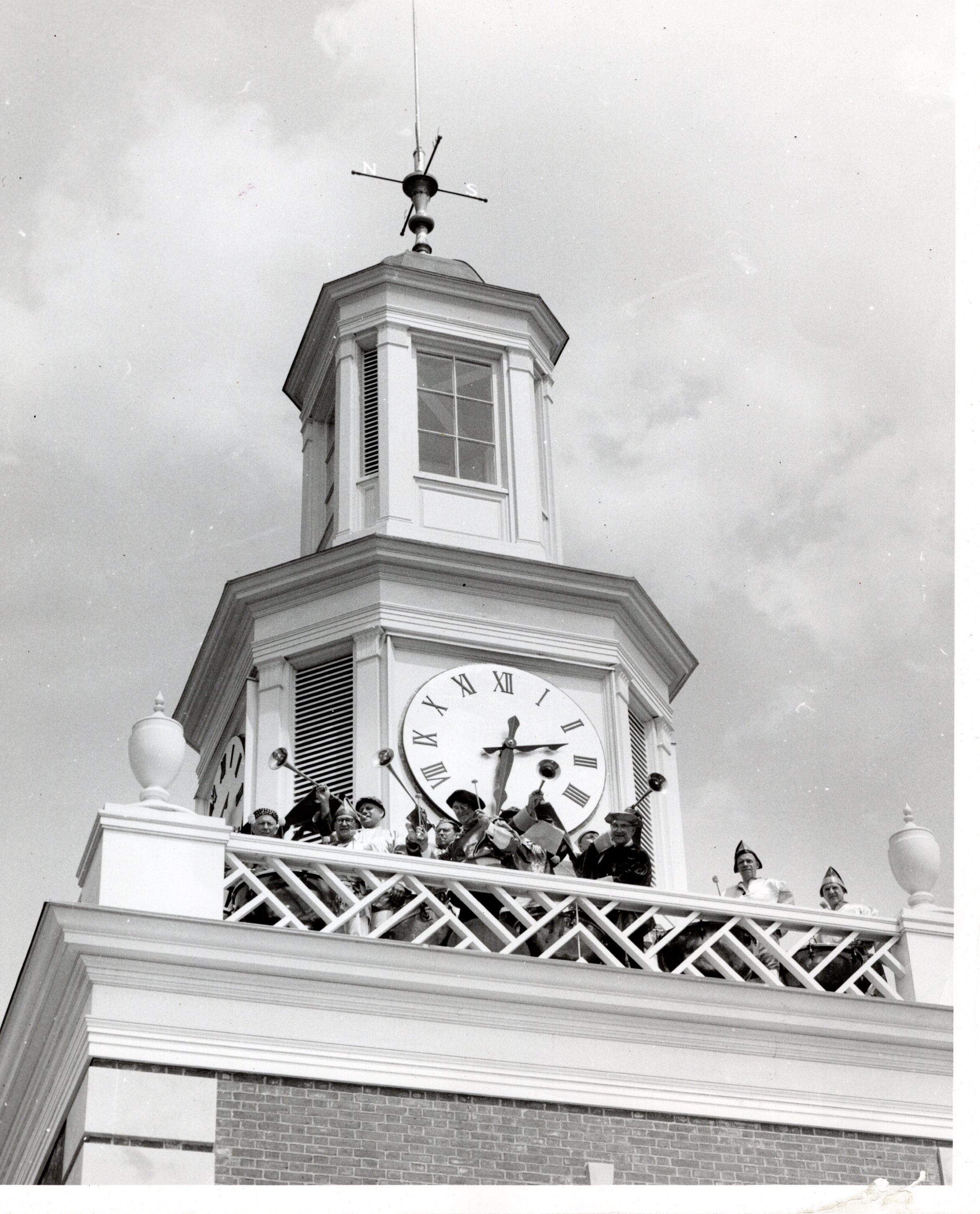
700-YEAR-OLD “BLESS HOUSE” CEREMONY, symbolic of inviting good luck to the opening of a new building, was reenacted yesterday as the Rust Craft Greeting Card Co. officially opened its nine-acre plant in Dedham, Mass. Perched atop the clock tower of the new building were these authentically garbed musicians, drumming out evil influences and summoning the good with long heraldic trumpets. 10,000 visitors toured the $3,500,000 plant and watched the making of greeting cards.
During the ceremony described above, six drummers beat kettle drums from the cupola of the building, driving evil spirits away, while trumpeters facing the four points of the compass sounded their 4 foot-long horns, calling good and gentle spirits into the building. Just to cover their bases, company officials invited Father William Kenneally from St. Mary’s Catholic Church and Reverend Rudolph Roell from St. Paul’s Episcopal Church to give blessings as well.
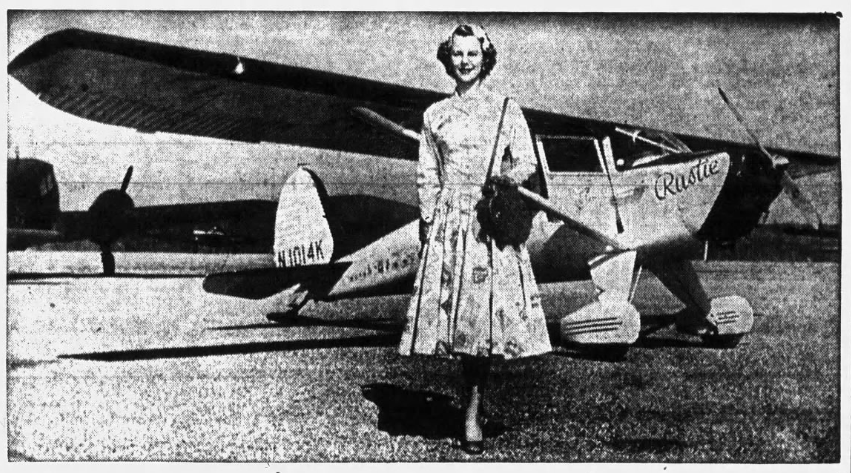
Later in the afternoon, town officials presented Rust Craft co-founder Donald Rust with a silk flag bearing the company logo, along with a large, framed replica of the original Indian land deeds to the Rust Craft property. Also on hand was goodwill ambassador “Rustie,” described by the Transcript as “a living greeting card herself, warm and friendly, lovely to look at, and with a cheery greeting for everyone.”
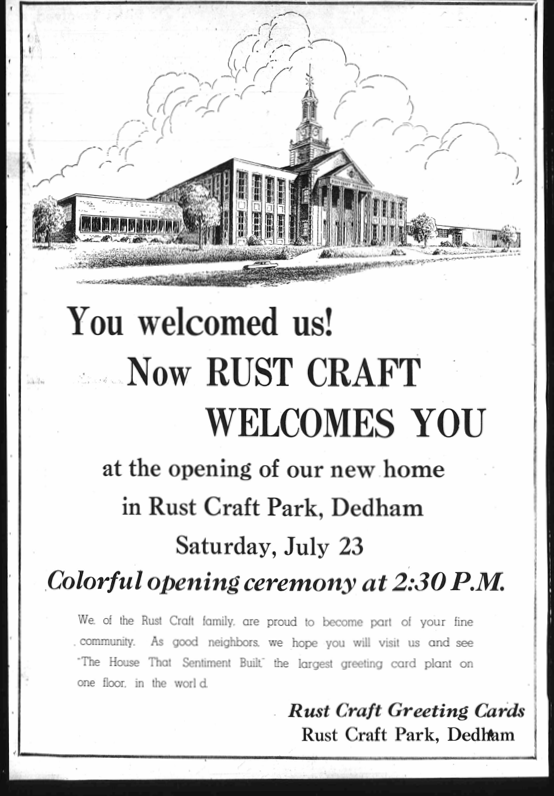
“Rustie” the ‘living trademark’ of the Rust Craft Company stands by the plane she piloted on nationwide promotional tours. Note her dress, which is printed with a variety of greeting card images.This full page ad from the Transcript shows the excitement surrounding Rust Craft’s relocation from Boston to Dedham.
This is the logo used by Rust Craft for several years after their move to Dedham, perhaps inspired by the unique medieval opening day ceremony of that hot July day 70 years ago.
Rust Craft operated in Dedham until 1980 when it moved its operations to Pennsylvania, before going out of business in 1982. The Dedham Museum and Archive is putting together an exhibit highlighting the people, products, and pictures of the company’s 25 years in town. If you have any stories to share, or photos/artifacts to loan us for this exhibit, we would love to hear from you! Please email us at memories@dedhammuseum.org
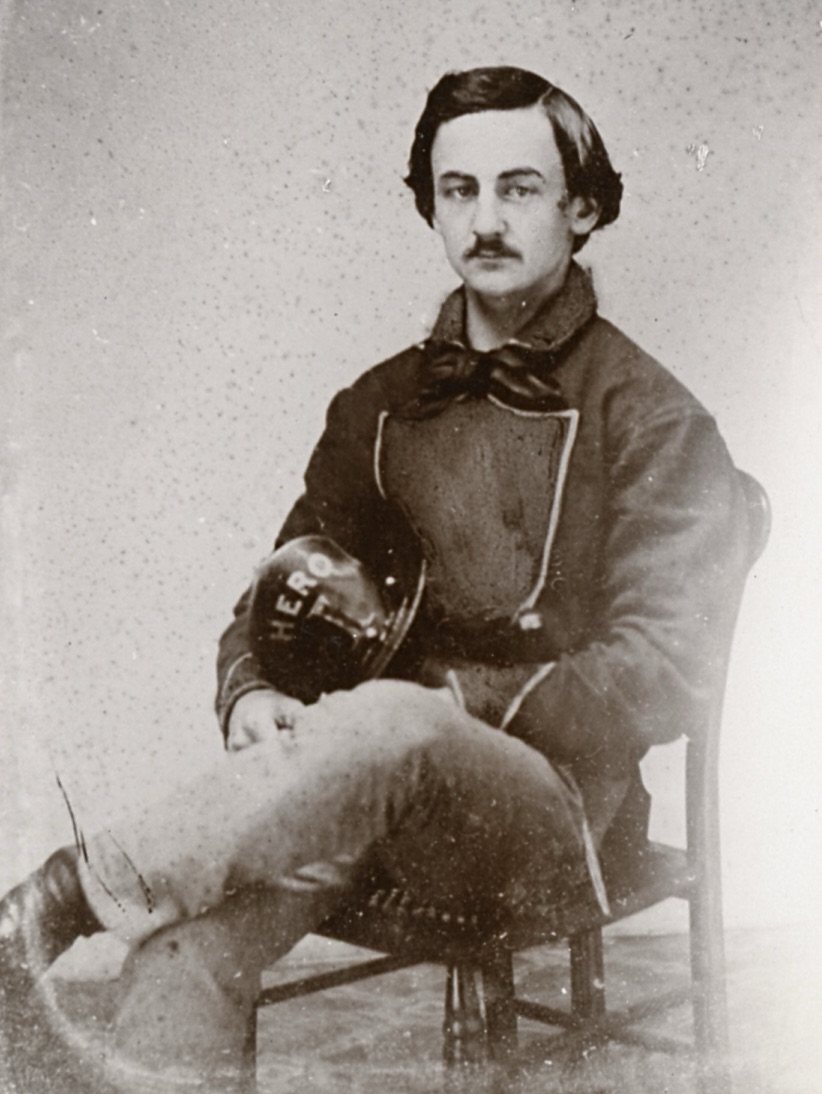
Today’s firefighters live and work in a time in which they can devote their full energy to the demands of the challenging profession they’ve chosen. From the earliest days of organized firefighting until the mid-twentieth century, however, firefighters often held down several jobs in addition to their departmental duties. One such firefighter, George Austin Guild, was not only the chief engineer of the Dedham Fire Department, but also ran a successful business in town for over forty years.
Guild as a member of the Hero Company. Early firefighters used colorful names to designate both their engines and companies.
George Guild was born in 1836, 200 years after the first Guild, John, came to Dedham as one of the original proprietors. In 1853, at the age of 17 he joined the Hero Engine Company One, headquartered at Connecticut Corner near the Town Common. He served as the department’s chief engineer from 1877-1892, when he retired. He was a popular chief and upon his retirement was feted at the central firehouse and presented with “an elegant easy chair, and handsome, as well as valuable writing desk” according to the Boston Herald.
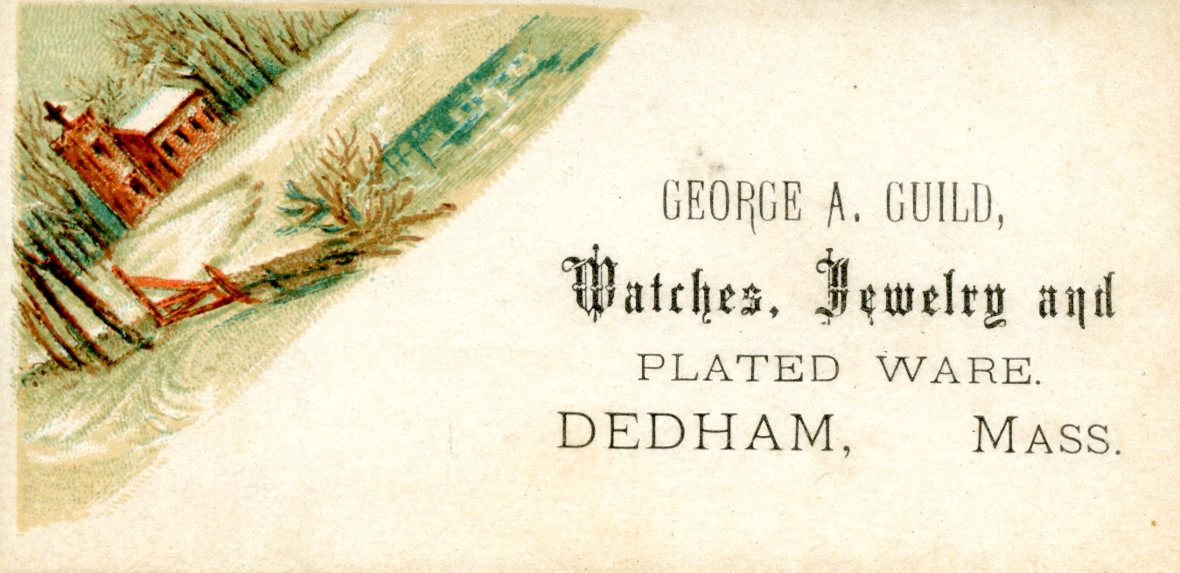
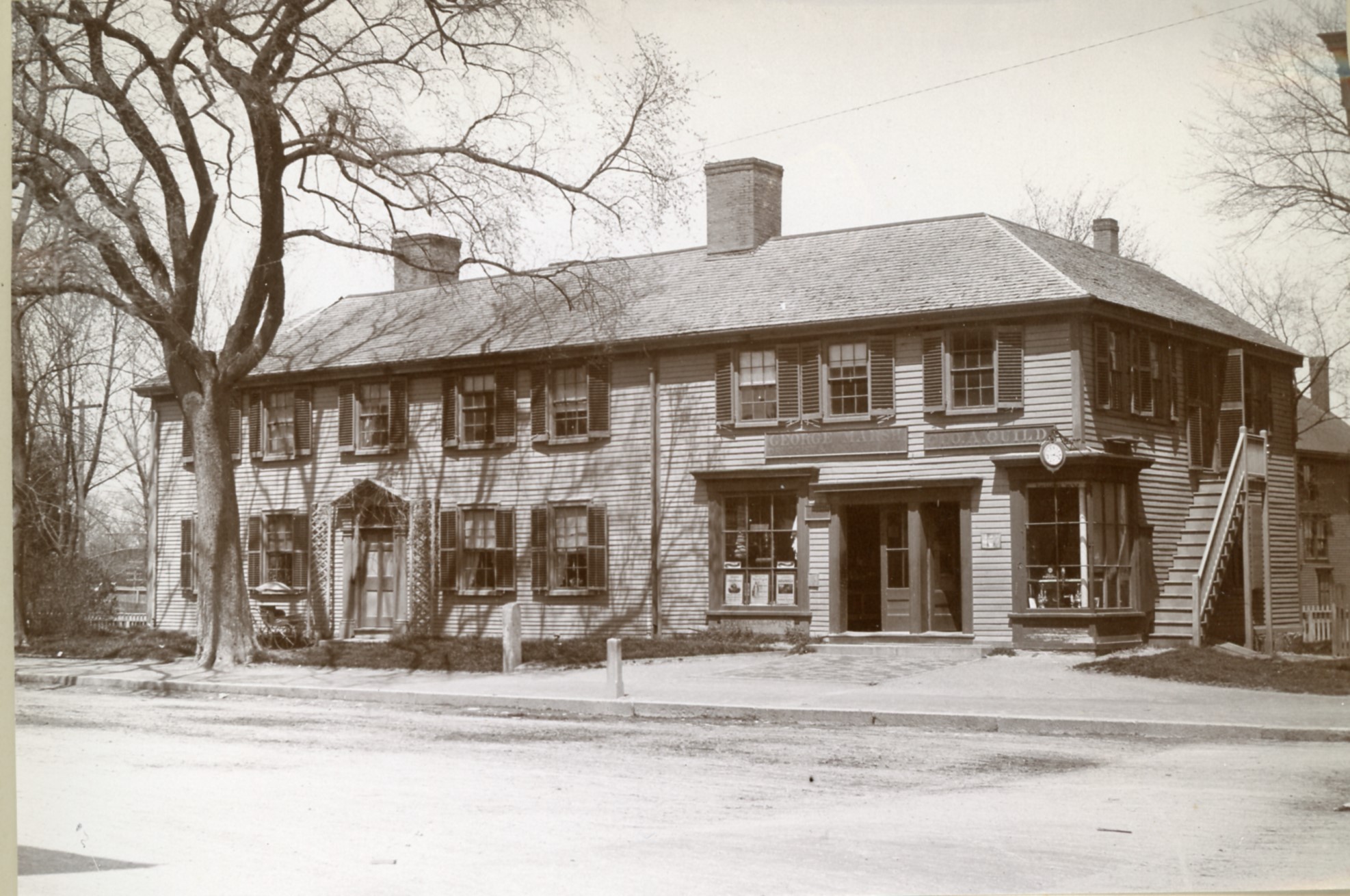
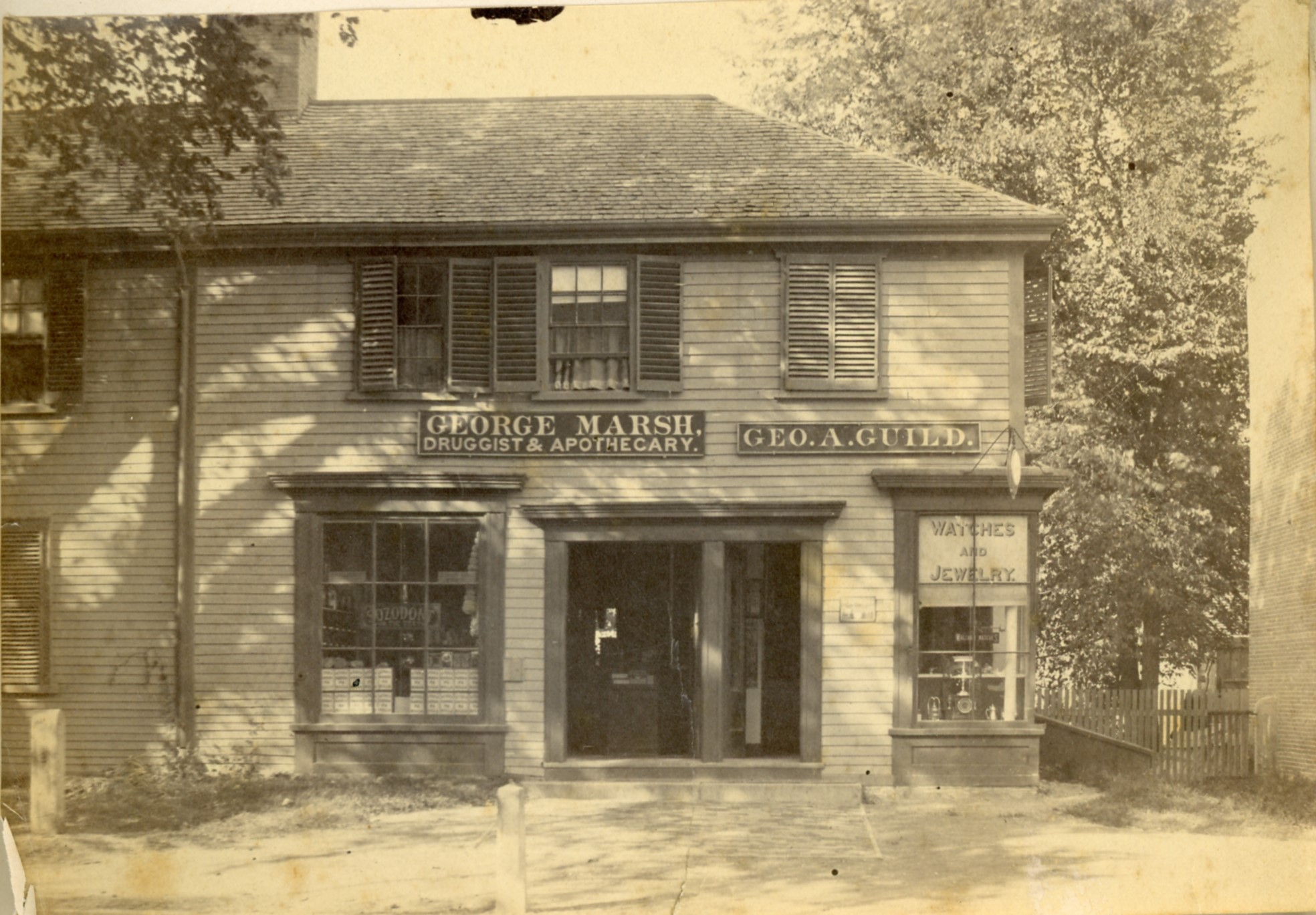
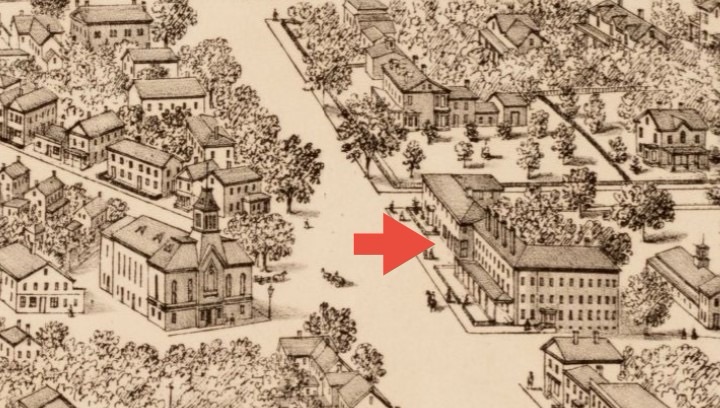
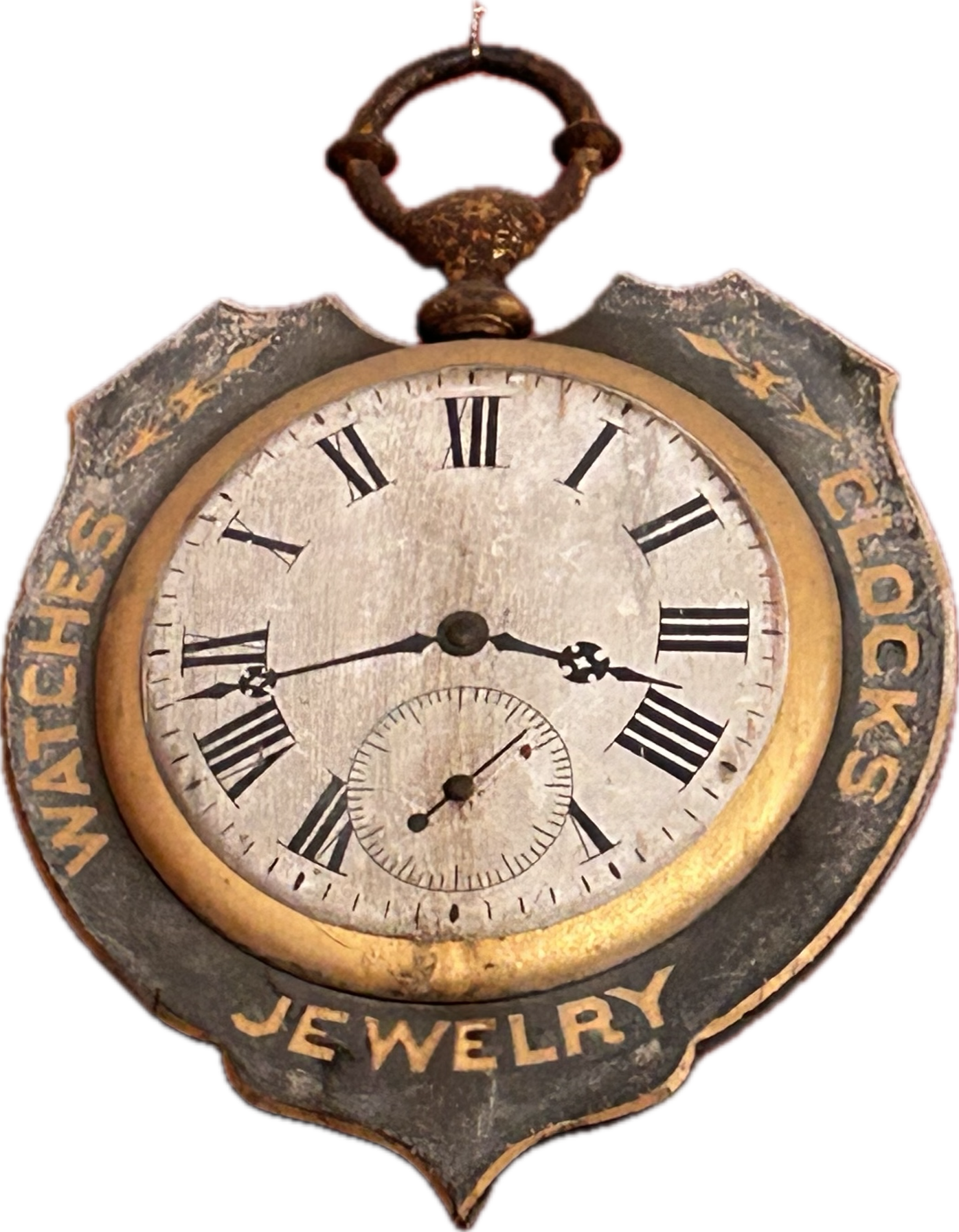
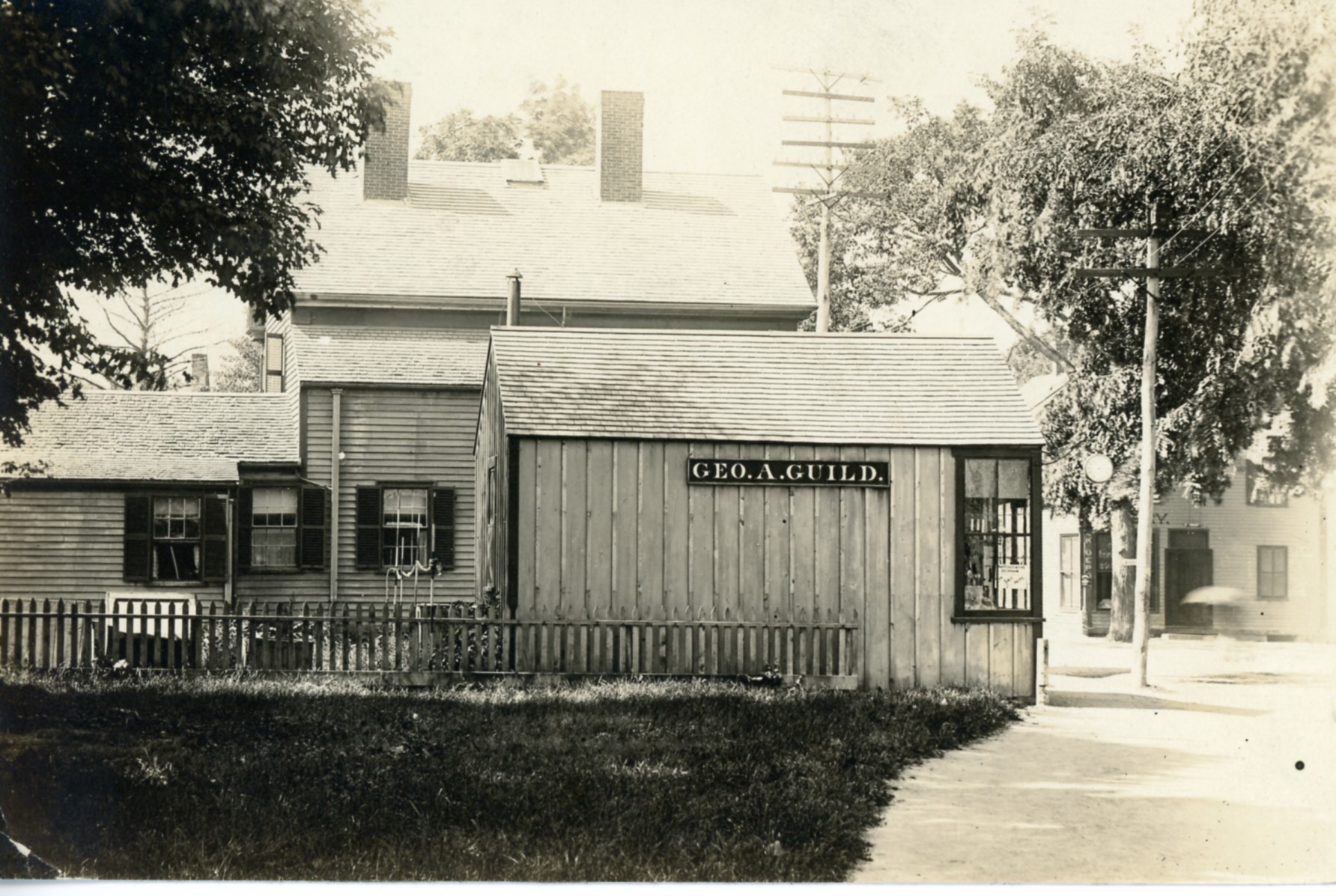
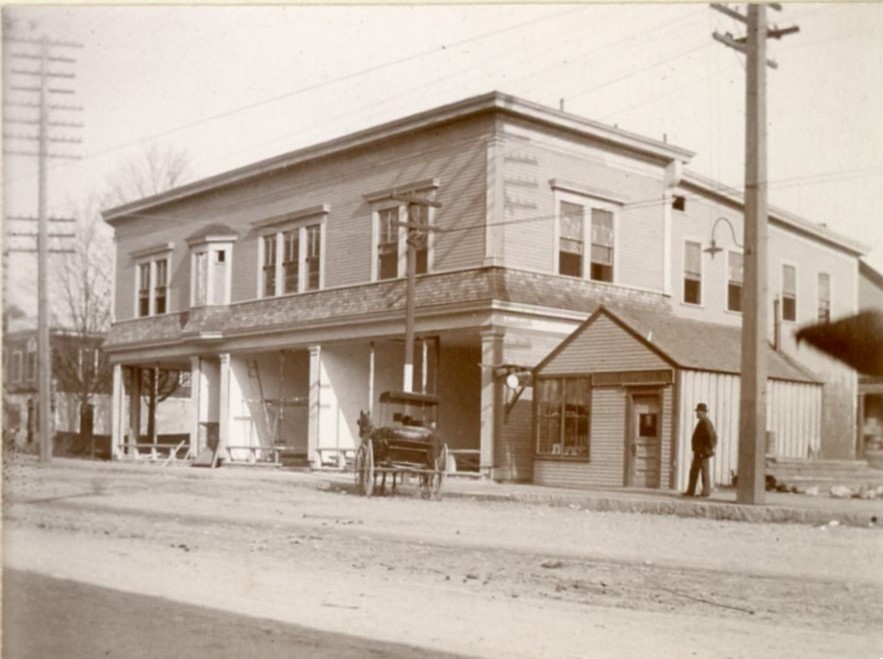
At the young age of twenty-three, Guild opened his business as a jeweler and watch seller in the old Dixon House, which stood on High Street across from Memorial Hall. The wooden watch sign that hung high above his shop window became one of the most recognizable landmarks in the Square. Guild operated at this location from 1859-1891, when he was forced to relocate to Washington Street as the Dixon building was being torn down to make way for the new Dedham Institution for Savings.
The wooden watch sign can be seen in these two photos of Guild’s shop on High StreetThe Dixon Building with George Guild’s shop as seen in this 1876 birds-eye view map by E. Whitfield. Next to it on the corner of High and Washington Streets is the Phoenix Hotel (current Knights of Columbus Building), which burned to the ground in 1880. Memorial Hall stands on the western corner of High and Washington.
The wooden watch sign adorned Guild’s tiny shop for another ten years until declining health caused him to close his shop after forty-one years in business. At the time of his retirement in June,1901, Guild had been the longest serving tradesman in town.
Two views of Guild’s second shop on Washington Street, across from School StreetSame view as above in 2025
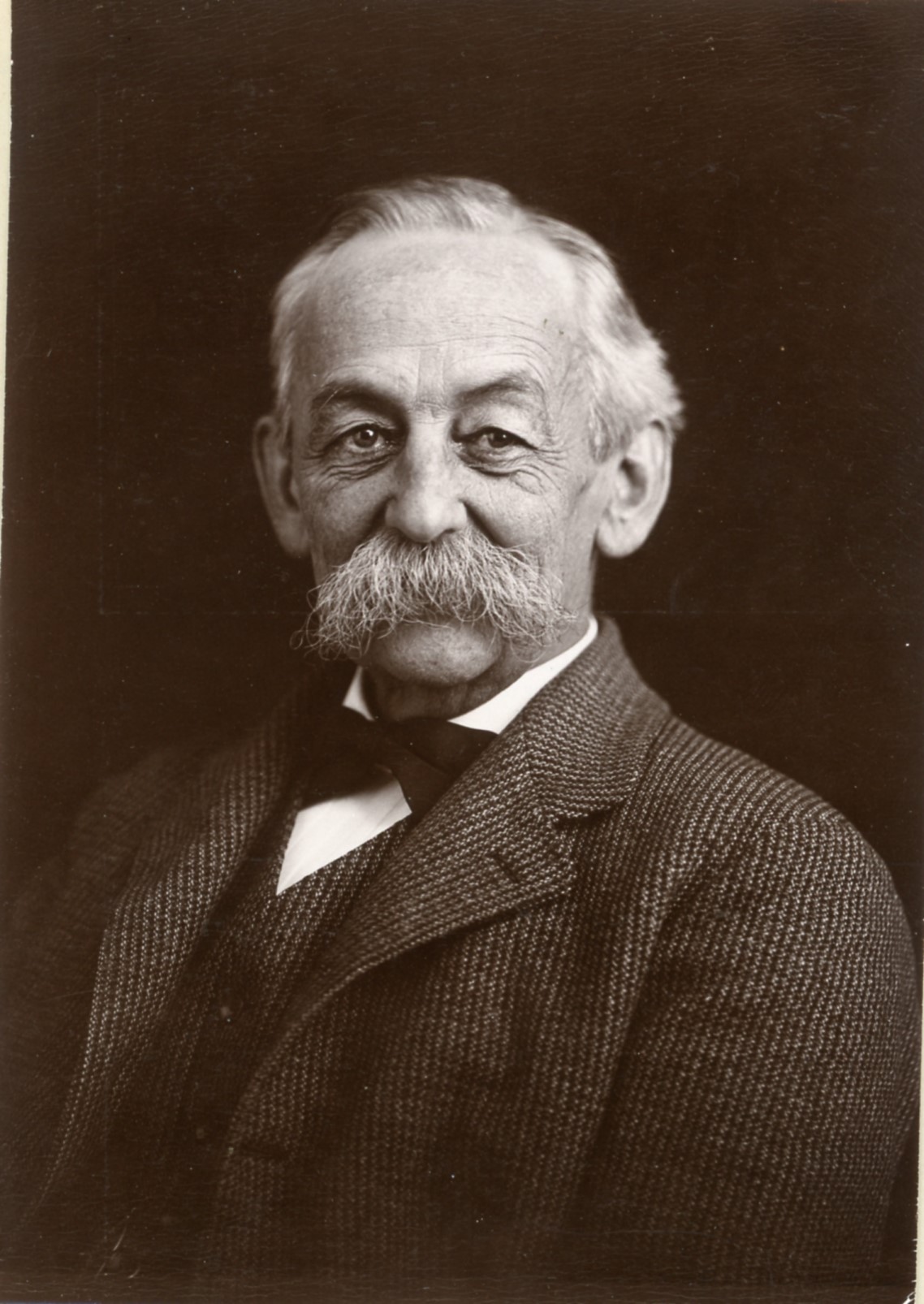
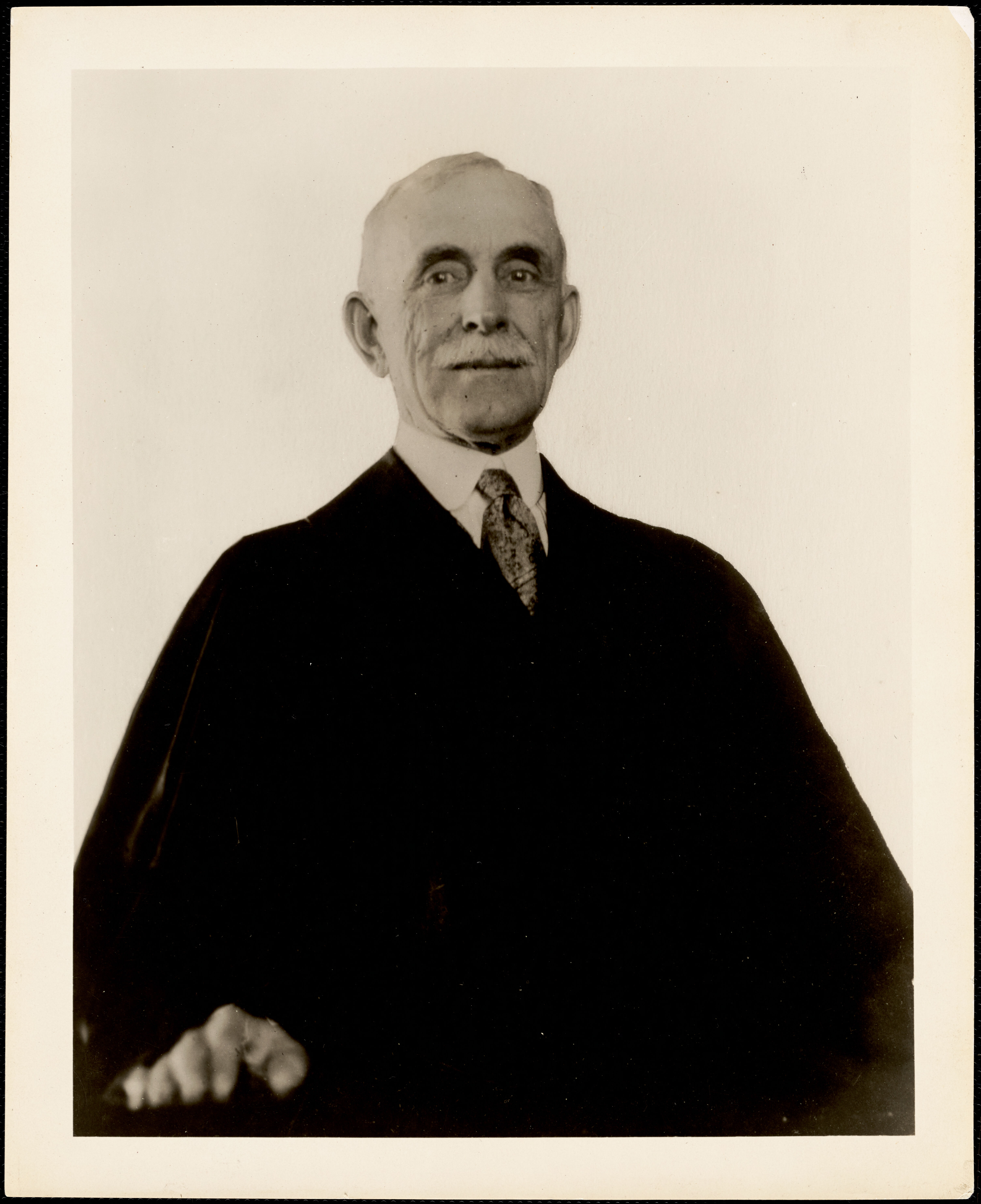
George made his home at 41 School Street where he and his wife Abby raised their three children. Jonathan, the youngest, became a successful Dedham businessman himself, after opening a photography studio on High Street in 1891. On October 26, 1901, the 65-year old George made the short walk to the studio and posed for his son one final time. He passed away at his home just a few weeks later on November 18. The following week an obituary in the Transcript praised him as a “man of sterling traits of character, an honest citizen, a steadfast and true friend, an excellent neighbor, a firm believer in religion, temperance and morality, a good husband, a kind and loving father…”
Guild’s final portrait taken by son Jonathan
The wooden advertising watch is on display at the Dedham Museum and Archive, 612 High Street. You can learn more about the Hero Engine Company and early firefighting in the current exhibit on the history of the Dedham Fire and Police Departments. Museum hours are Tuesday-Friday (11:00-5:00) and Saturdays (2nd & 4th of each month) 11:00-2:00. All historical images used with permission of the Dedham Museum and Archive.
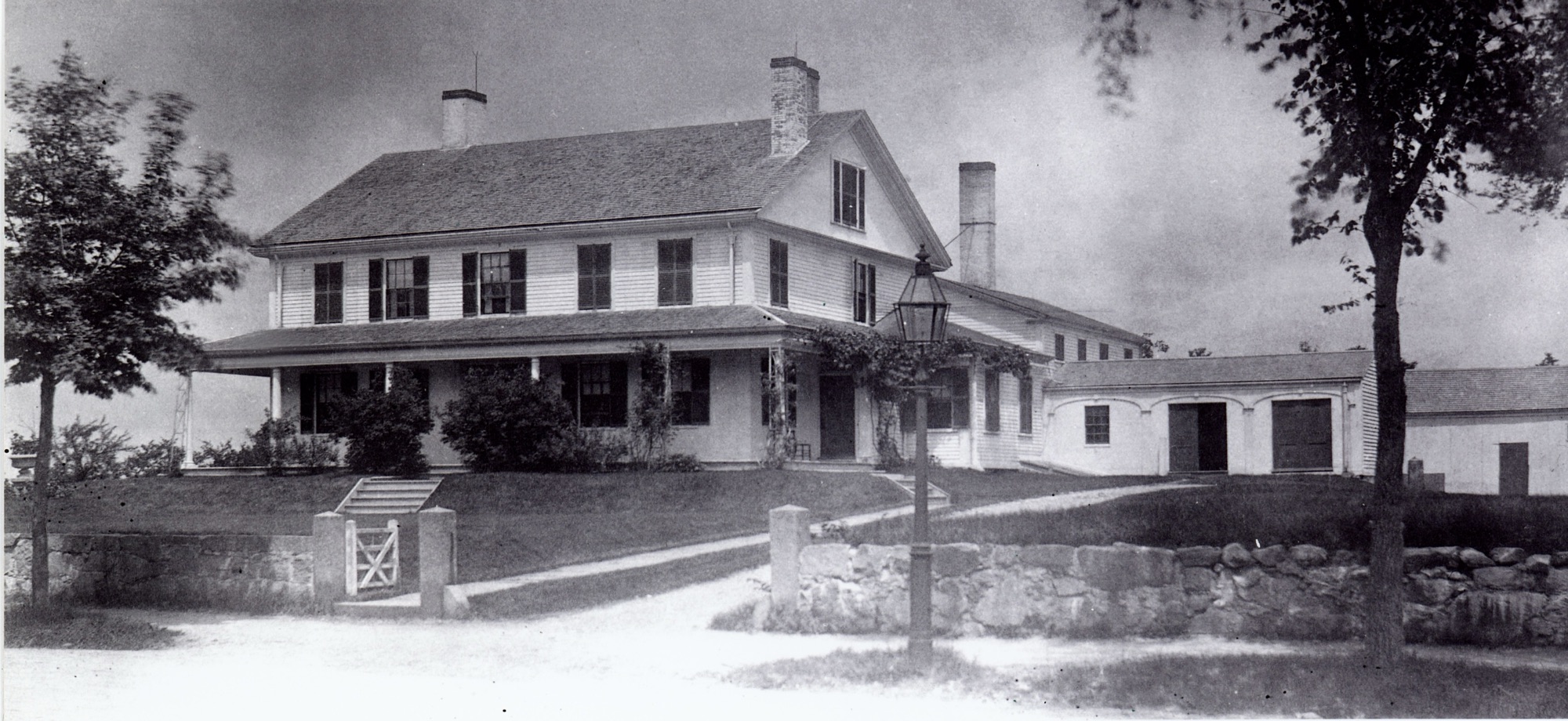
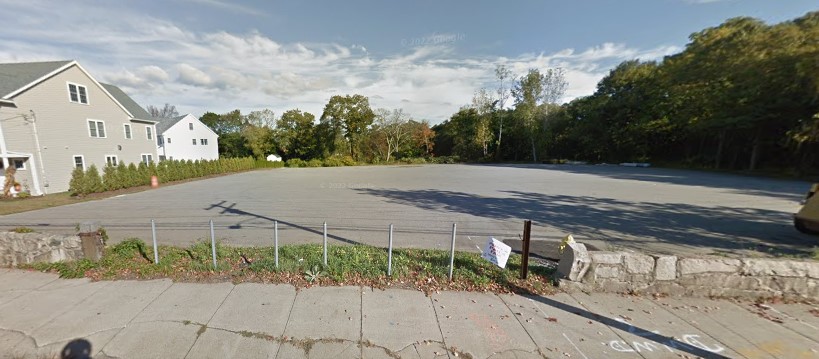
This handsome dwelling once occupied a prominent site on a very busy street in town; much of the stone wall still stands and you probably recognize it. If you want to test yourself, I’ve placed the modern day photograph at the bottom of the page so you can scroll down after you’ve made your guess.
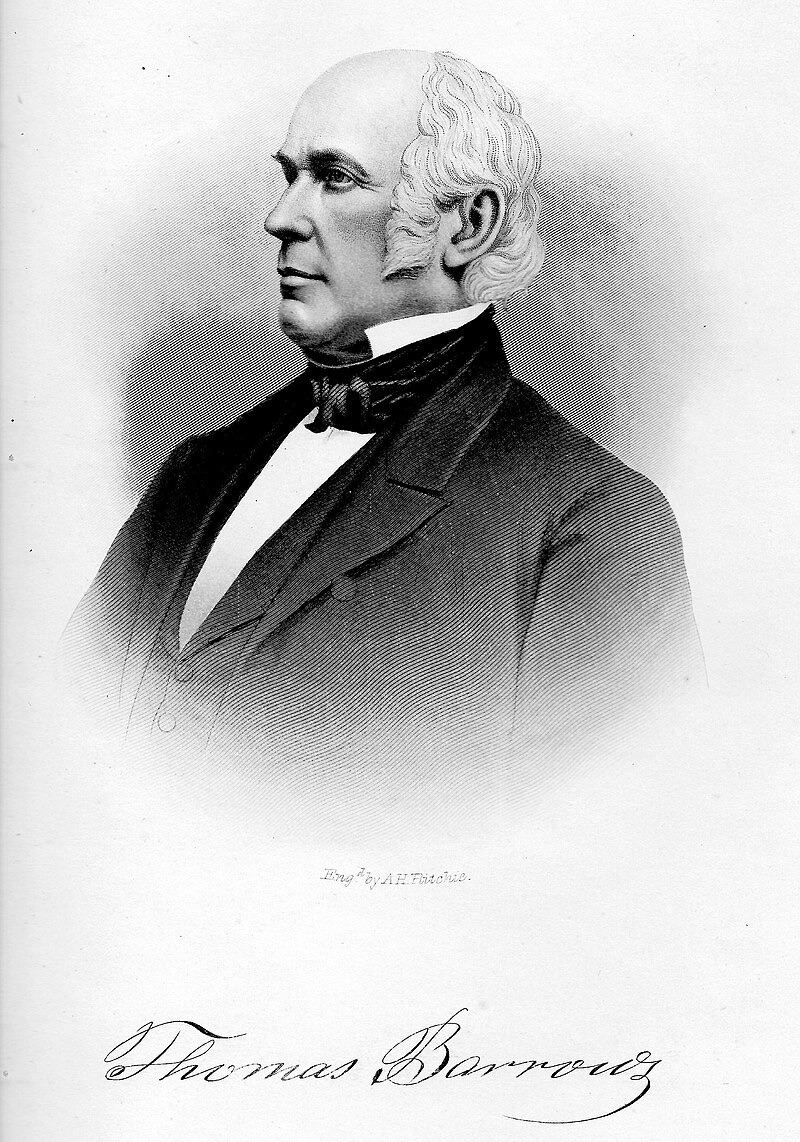
Built in 1834, this was the home of Thomas Barrows, mill owner and prominent Dedham citizen. Born in Middleboro in 1795, Barrows began working in mills in Plymouth County at age 17, making his way to Dedham in 1825 to work as an agent for Benjamin Bussey. Barrows’ life is a perfect example of a rags to riches story. After working at several Dedham mills, Barrows purchased the 1835 Stone Mill on Mother Brook in 1863 and expanded and renovated the mill to manufacture wool products. Barrows had 4 children; his oldest son Thomas was killed in a railroad accident, his daughter Elizabeth married Eliphalet Stone, another influential citizen who lived on Mt. Vernon Street.
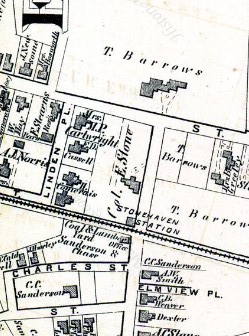
This 1876 map shows the Barrows estate on High Street, as well as other Barrows properties, including Barrows Street, which was named after the mill owner.
From History of Norfolk County by D. Hamilton Hurd, 1884
Barrows was president of the Dedham Institution for savings and a committee member of the Brookdale Cemetery Commission. He sold a portion of his land for the development of the cemetery.
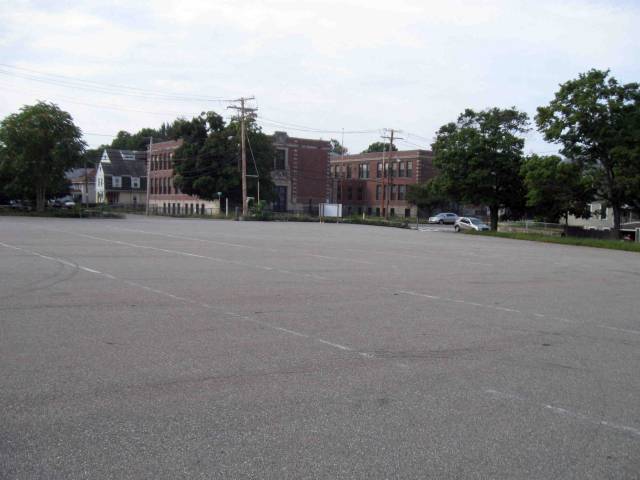
The land was purchased by the Archdiocese of Boston for St. Mary’s Church and the house torn down in 1959. For the next 50 years, the elegant stone wall of Dedham granite bordered a parking lot that was quite full on Sundays during the church’s heyday in the 1960s and 70s. The large rectangular lot also served as the playground for students from the school. I recall running up and down that giant tar playground during 7th and 8th grade recess in the early seventies; 50-80 rambunctious middle schoolers running wild under the semi-watchful eyes of just a few nuns.
The Town of Dedham purchased a portion of the land in 1976 to develop the Dedham Housing Authority O’Neil Drive Elderly Housing complex. In 2009 the Town purchased the rest of the land (about 2 acres) and used the lot for various purposes including DHS band practice and snow removal. In 2011 about half of the property was developed and private homes were built.
The old Barrows estate in 2013My 7th and 8th grade playground, with my old school in the background.
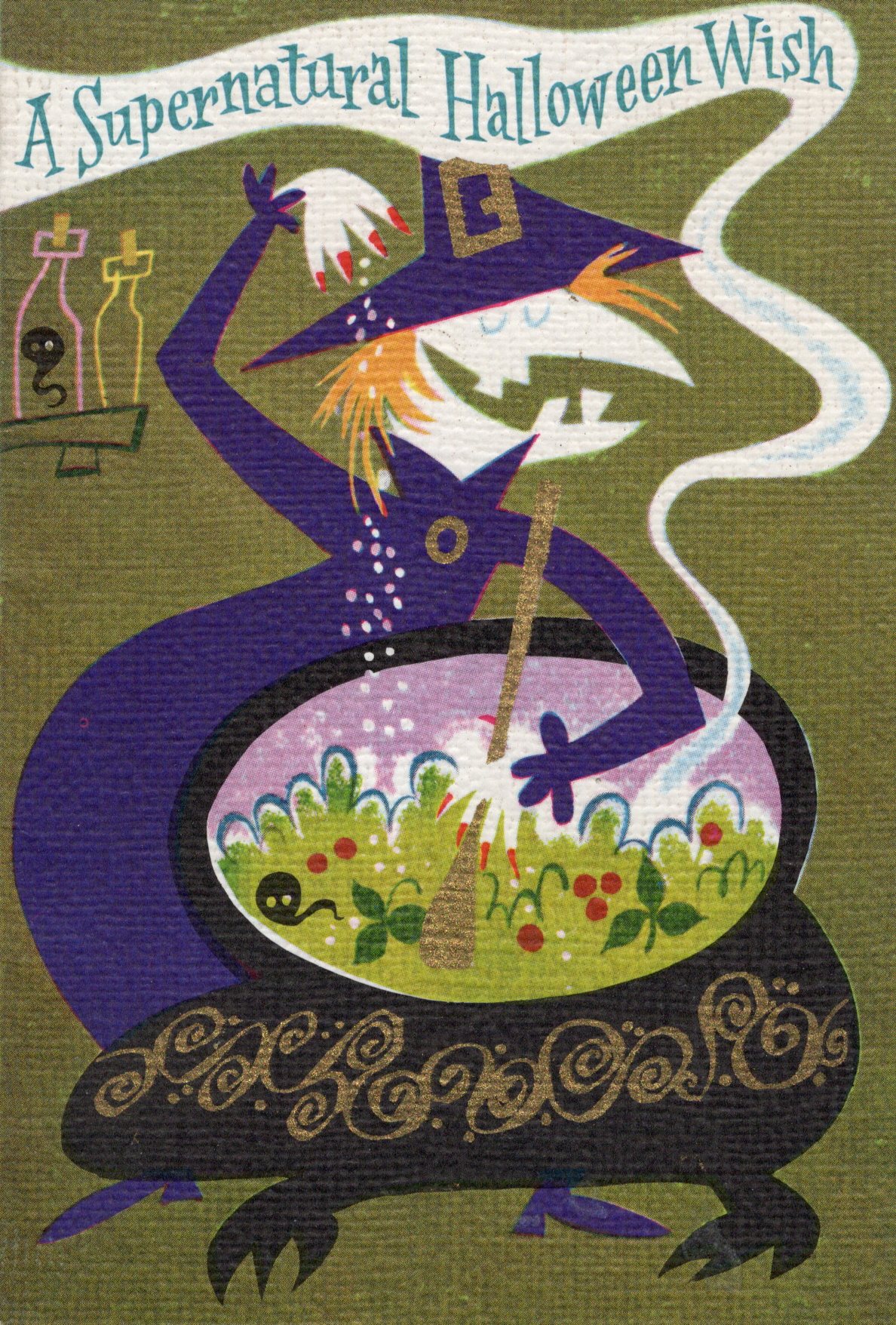
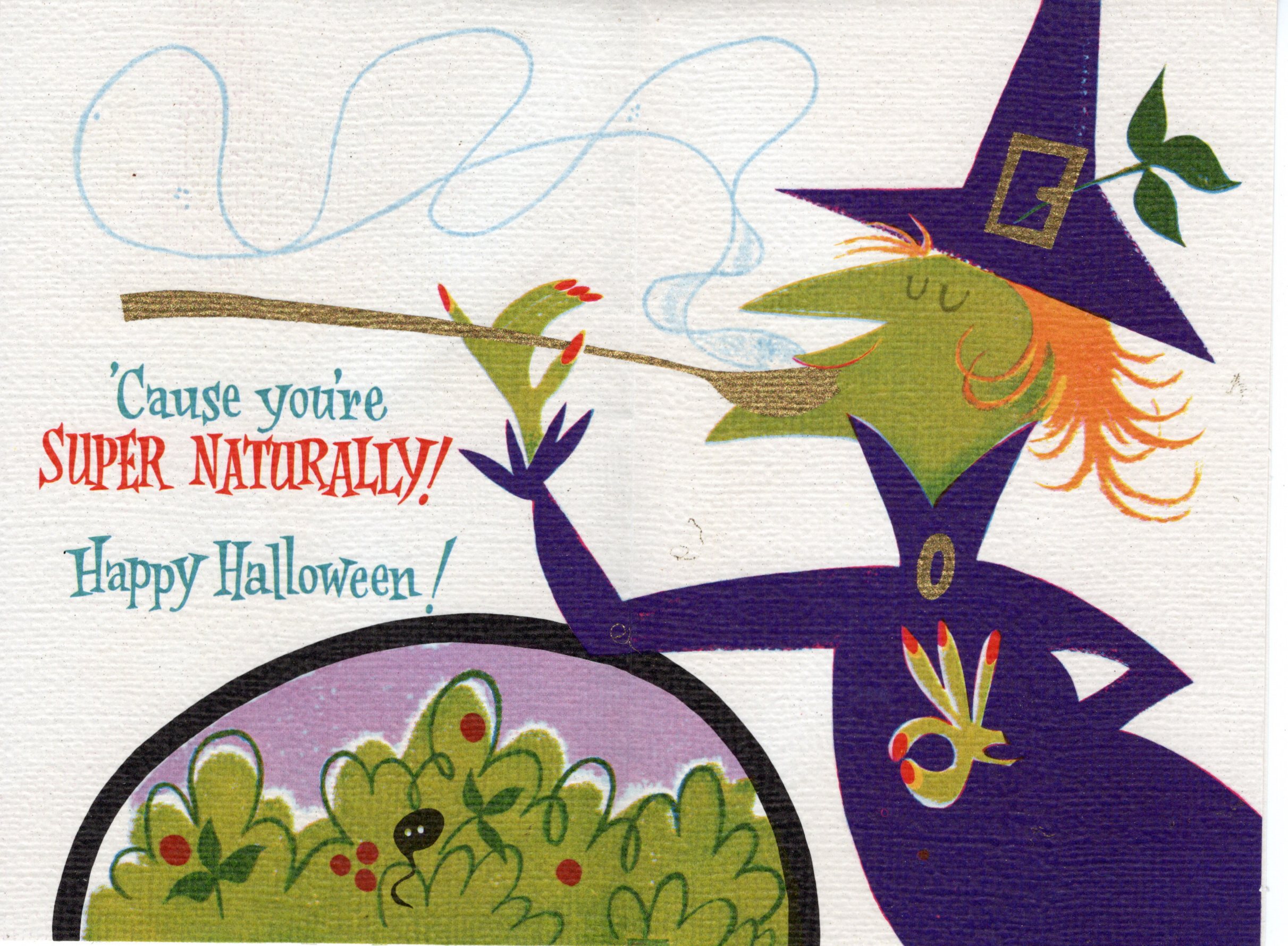
This is a Halloween card from the late 50s/early 60s manufactured by Rust Craft Greeting Card Company which operated in Dedham from 1955-1981. I love the mid-century graphics and colors; reminds me of the Fractured Fairytales cartoons I used to watch. The later versions of their cards from the 70s-80s were, in my opinion, bland and uninteresting.
One of my favorite things to do is to find remnants of the past around town and then research the history of that location. Old stone pillars and walls that seem at odds with nearby more modern dwellings are usually signs of a lost building and an interesting tale. This is the first in a series of posts about several Dedham sites with a hidden past.
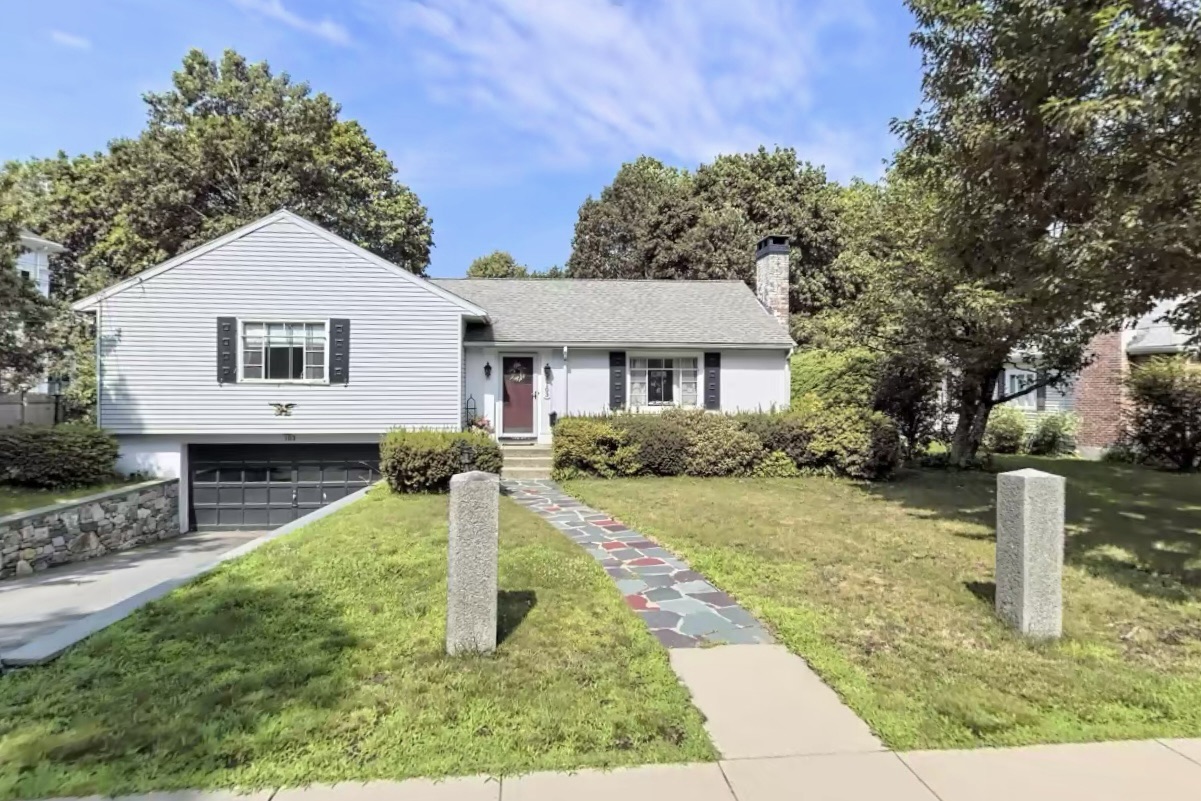
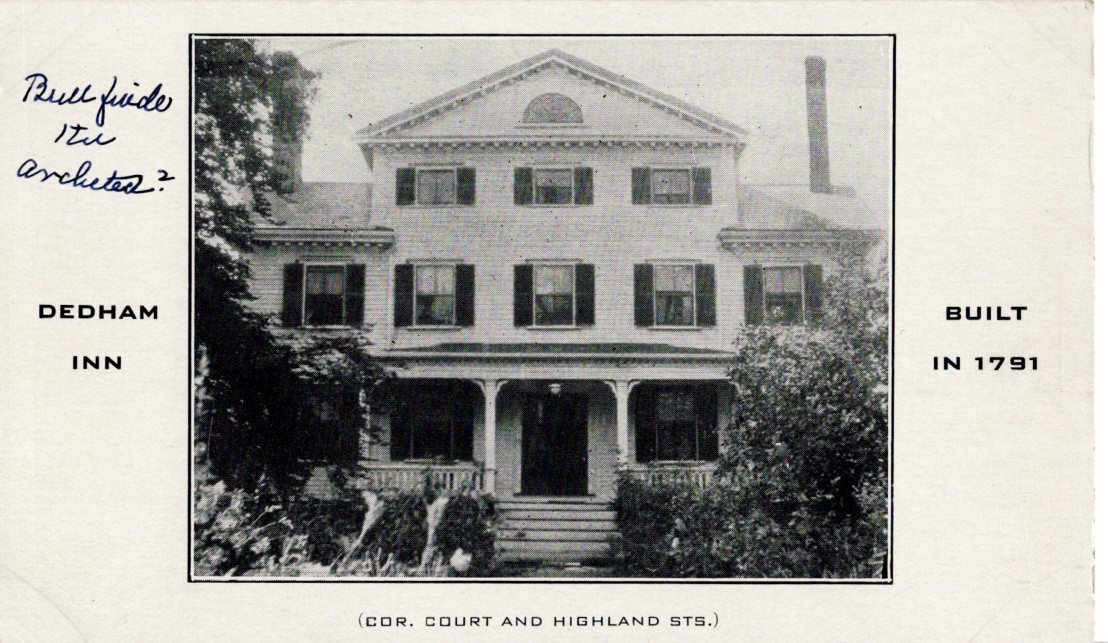
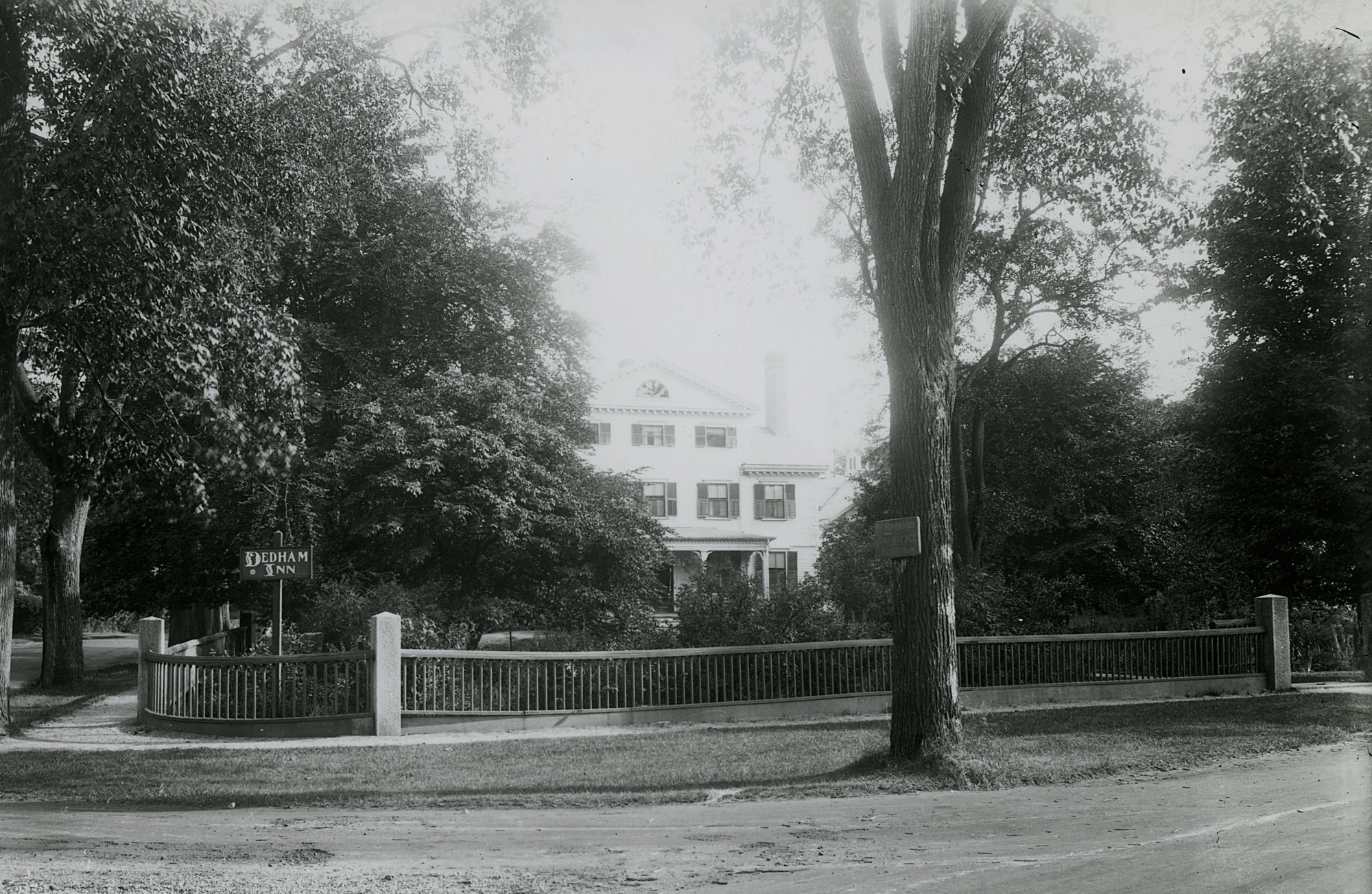
On the western side of Court Street near Highland Street stand three homes built in the early 1950s. The split-level/ranch design is typical of the time period, but the granite posts that stand on the lawns of these homes are from a much earlier period and indicate that something grand once stood here. Fortunately, the history of the previous structure is well documented and with some help from the staff at the Dedham Museum and Archive and a little sleuthing in the digital newspaper archives I am able to present the story of the Richards House, also known as the Dedham Inn.
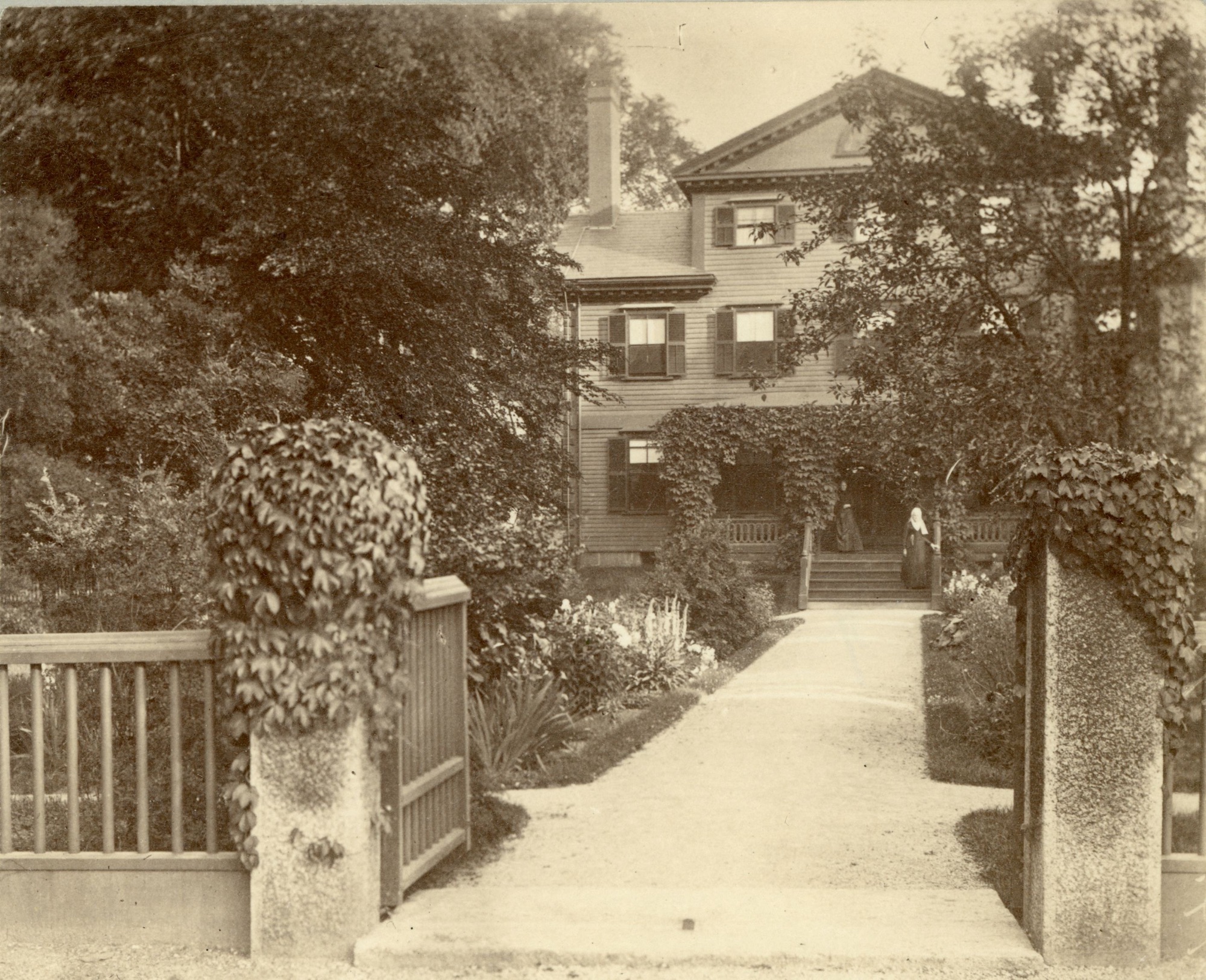
Richards House in the late nineteenth century (Courtesy of Dedham Museum and Archive)
The house was built in 1791, and was purportedly designed by famed architect Charles Bullfinch, designer of the nearby Haven House (Dedham Community House), Massachusetts State House, as well as many other historic buildings. Ownership passed through several families before Boston hardware merchant Samuel Richards purchased the house and acreage in 1802. It would remain in the Richards family for over 100 years before being sold, enlarged and converted into an inn in 1915.
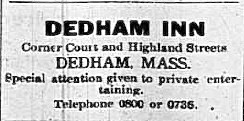
1923 ad for the InnPostcard from the Inn with handwritten question “Bullfinch architect?” The Bullfinch attribution was family lore and not actually documented elsewhere.
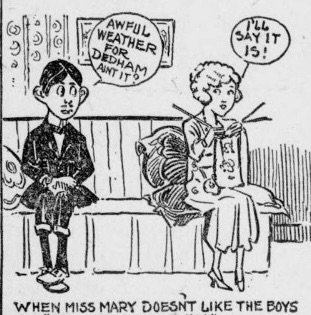
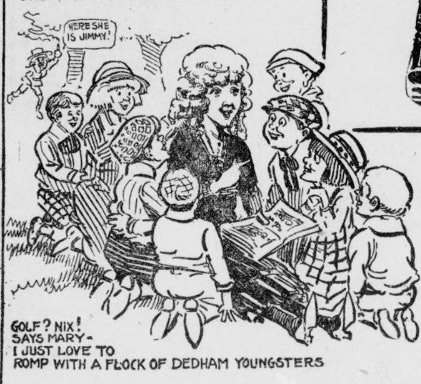
The newly established Dedham Inn quickly became a popular venue for social gatherings such as anniversary parties and wedding showers. An early guest was 17 year-old Hollywood starlet Mary Miles Minter and her mother/manager Charlotte Shelby who arrived in August 1919 to film a silent version of the book Anne of Green Gables. Earlier that summer, a scouting team from RealArt Pictures had chosen Dedham for location filming, with the landmark Fairbanks House serving as the farmhouse where orphan Anne Shirley lived with Matthew and Marilla Cuthbert. Also staying at the Inn was the film’s 49-year old director William Desmond Taylor. During their stay at the Inn, despite their age difference, Mary developed a serious (one-sided) crush on the dashing British director. Taylor would be murdered in his Hollywood bungalow in February 1922, and the ensuing investigation would reveal correspondence from the young actress that provoked a scandal that eventually ended Minter’s career and most likely caused copies of the film to be destroyed, making it one of thousands of missing silent films. The murder of Taylor remains unsolved to this day. The complete story of this 1919 filming is featured in my book Dedham: Historic and Heroic Tales from Shiretown.
Cartoons in the Boston Post published at the time of the filming of Anne of Green Gables
Its close proximity to the courthouse made the Inn a gathering place for anyone with court business including attorneys, jury members and judges. Throughout the famed 1921 murder trial of Nicola Sacco and Bartolomeo Vanzetti, jurors were housed overnight in the grand jury room of the Superior Courthouse and took their meals at the Dedham Inn. During the appeals process for the convicted men, it was reported that trial judge Webster Thayer had made numerous prejudicial statements outside of the courtroom throughout the trial; many of these statements were made to reporters during lunch breaks at the Inn. In a clemency request to Governor Alvan Fuller in May 1927, affidavits were filed by several reporters who had heard the judge’s remarks firsthand. Globe reporter Frank Sibley wrote that Judge Thayer would often discuss the case with reporters while gathered in the Inn’s private dining room, and several witnesses, including Sibley, recalled how on one walk back to the courthouse, the judge angrily denounced defense attorney Fred Moore by stating “I’ll show them that no long-haired anarchist from California can run this court!” All appeals on behalf of the accused failed and Sacco and Vanzetti were executed on August 23, 1927.
Judge Webster ThayerThe Inn in the 1920s (Courtesy Dedham Museum and Archive)
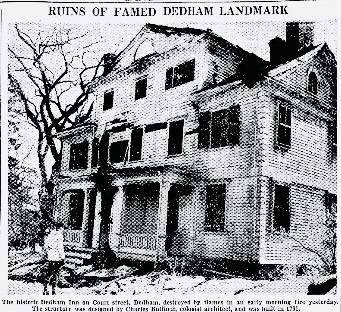
In the early morning hours of February 6, 1939, the Dedham Fire Department responded to a call from inn owner George Thorley. The entire department, under the direction of Chief Henry Harrigan, fought the flames for five hours, battling slippery conditions and icy equipment in a vain effort to save the landmark. While Thorley, his wife and daughters and three guests all managed to escape, Josephine the family’s cocker spaniel, was unable to get out. The beloved pet was credited with saving the occupants of the Inn by waking them with her barking before the fire got out of control. On the morning after the fire the walls of the historic inn still stood, but fire had gutted the interior and the building was razed. A faulty furnace was cited as the likely cause of the fire. The property was subdivided and the three single family homes that stand there now were built between 1950-1951. Today, four granite fence posts are all that remain of this once elegant and well-known property. Those posts, along with this post, remind us of the Dedham that used to be.
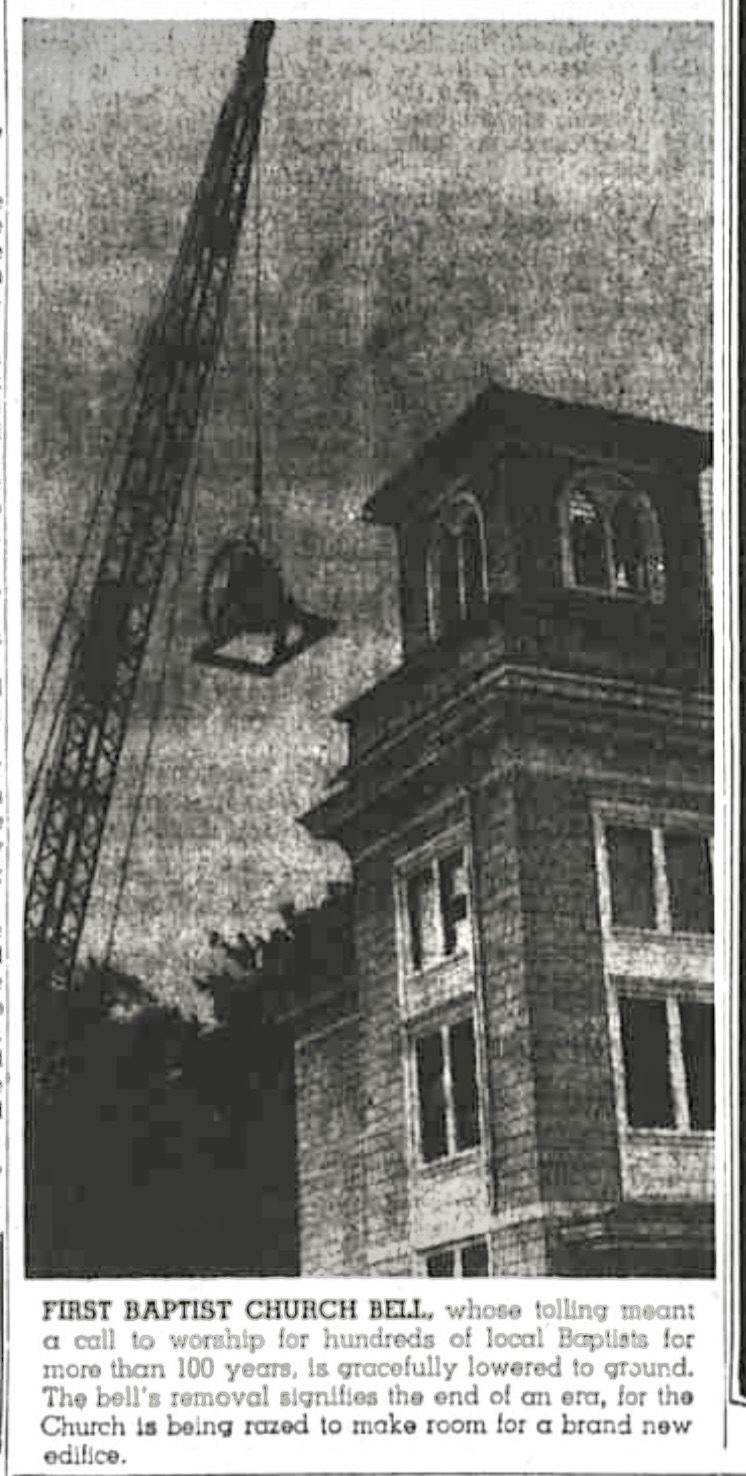
Ok. I confess, this was a trick question. The bell is not presently in Dedham, but it did hang in the belfry of the First Baptist Church on Milton Street for over 90 years. Congrats to Robert Morrissey for figuring out the location of the bell. If you want to see the bell in person, you’ll have to take a road trip to Falmouth, where it has resided for over 50 years. The journey of this historic bell from East Dedham to a private garden almost 60 miles away is an interesting and somewhat delicate subject.
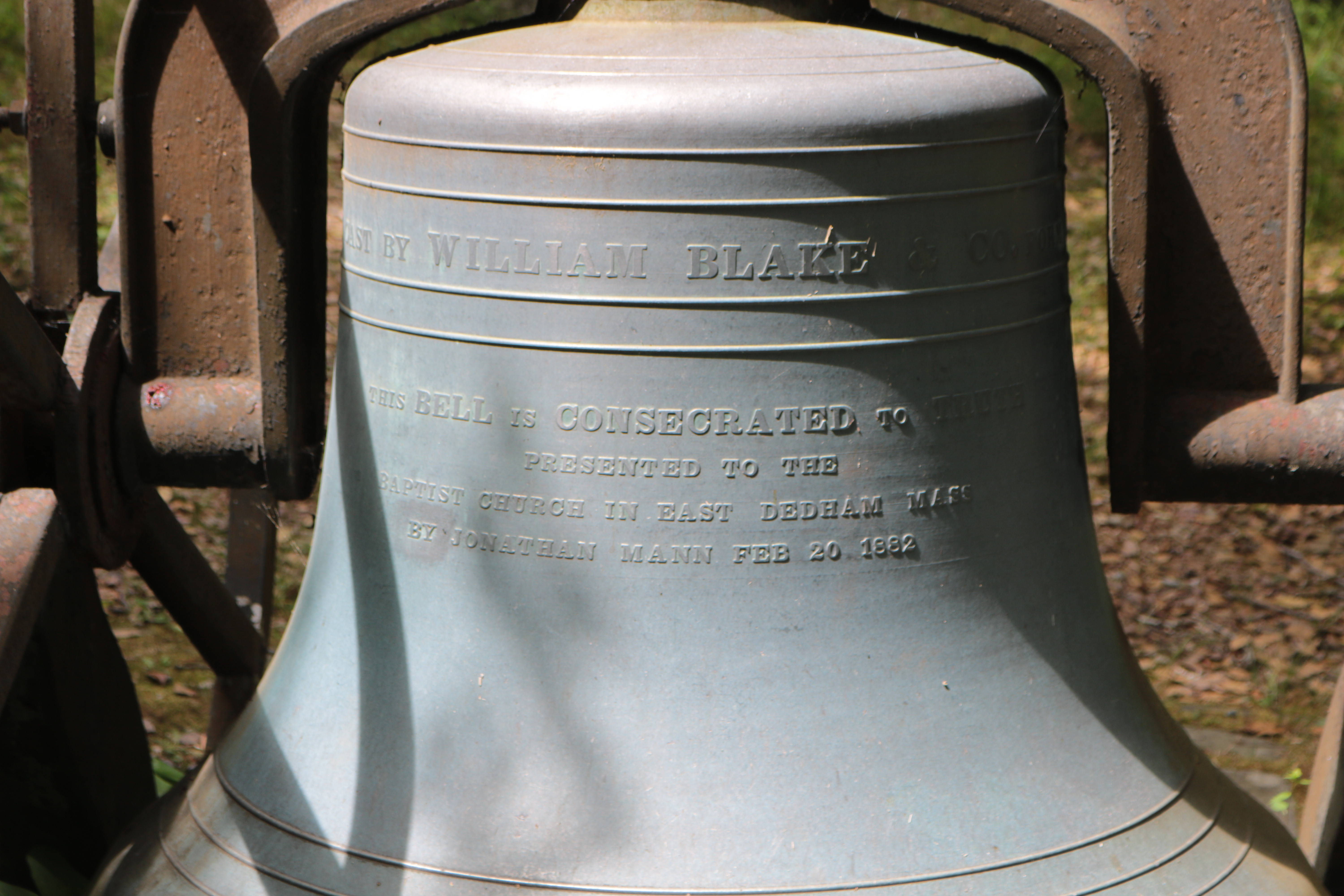
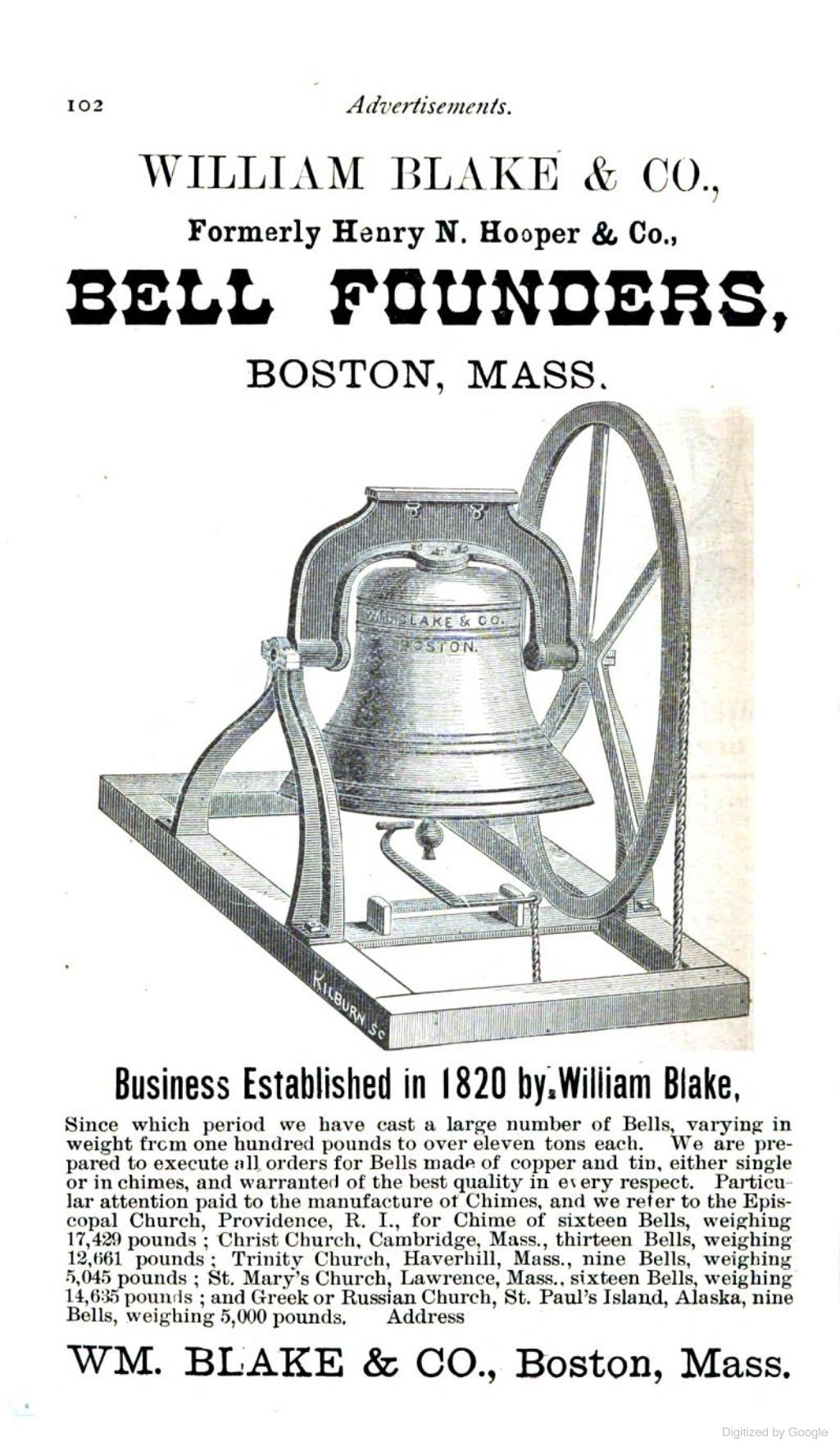
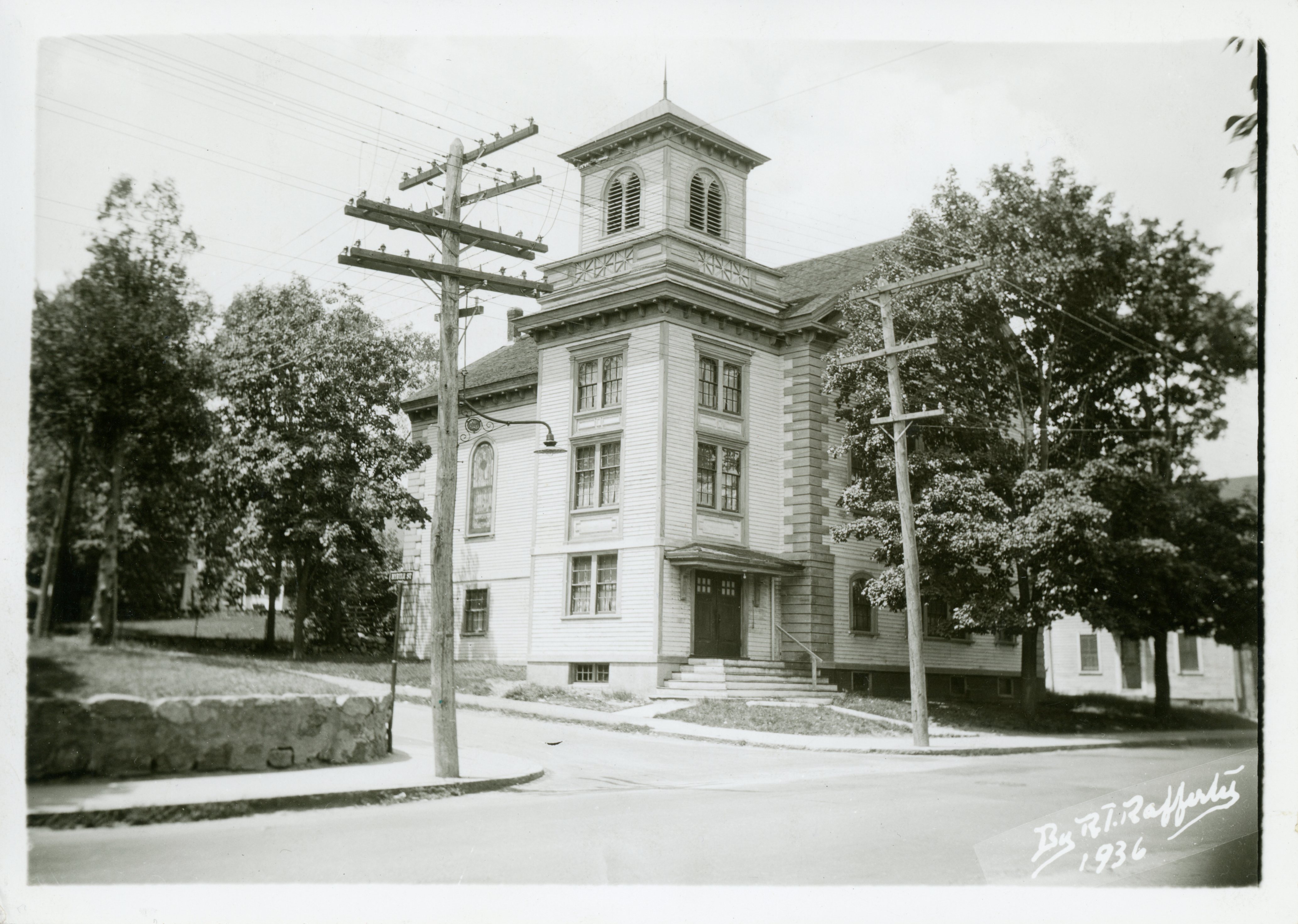
The East Dedham Baptist Church was officially established in 1843, and in 1852 a new wooden church was built at the corner of Myrtle and Milton Streets. Through the generosity of Jonathan Mann of Canton, a 2000 lb. bell was cast in Boston by the William Blake Company and presented to the congregation on February 20, 1882. The church underwent renovations in 1910 and a belfry was built to house the bell, which would hang there for the next 62 years. In 1919 the church was renamed the First Baptist Church.
The First Baptist Church in 1936/courtesy of the Dedham Museum and Archive
By 1972, time had taken its toll on the wooden structure, and church leaders determined that the building would have to be torn down completely and replaced. The demolition took place in August, coincidentally the same summer that the famed Avery Oak came down in a storm. Demolition was done by the John J. Duane Wrecking Company of Quincy.
Dedham Transcript August/1972
Here’s where the bell makes its mysterious departure from old Shiretown. According to church sources, the congregation, being in tough financial straits, offered the bell to the demolition company as partial payment. Meanwhile, husband and wife Charlie and Margaret Spohr were living on six beautiful acres in Quissett, a village in Falmouth. For decades the Spohrs had been transforming their property alongside Oyster Pond into a series of unique and lush gardens; Margaret tending to the plantings, Charlie taking care of the “decorations.” which included millstones, chains, anchors, (75 of them!), lanterns and…bells. When the Duane Company offered to sell the bell to Charlie, he enthusiastically accepted and made it a prized feature of his collection.
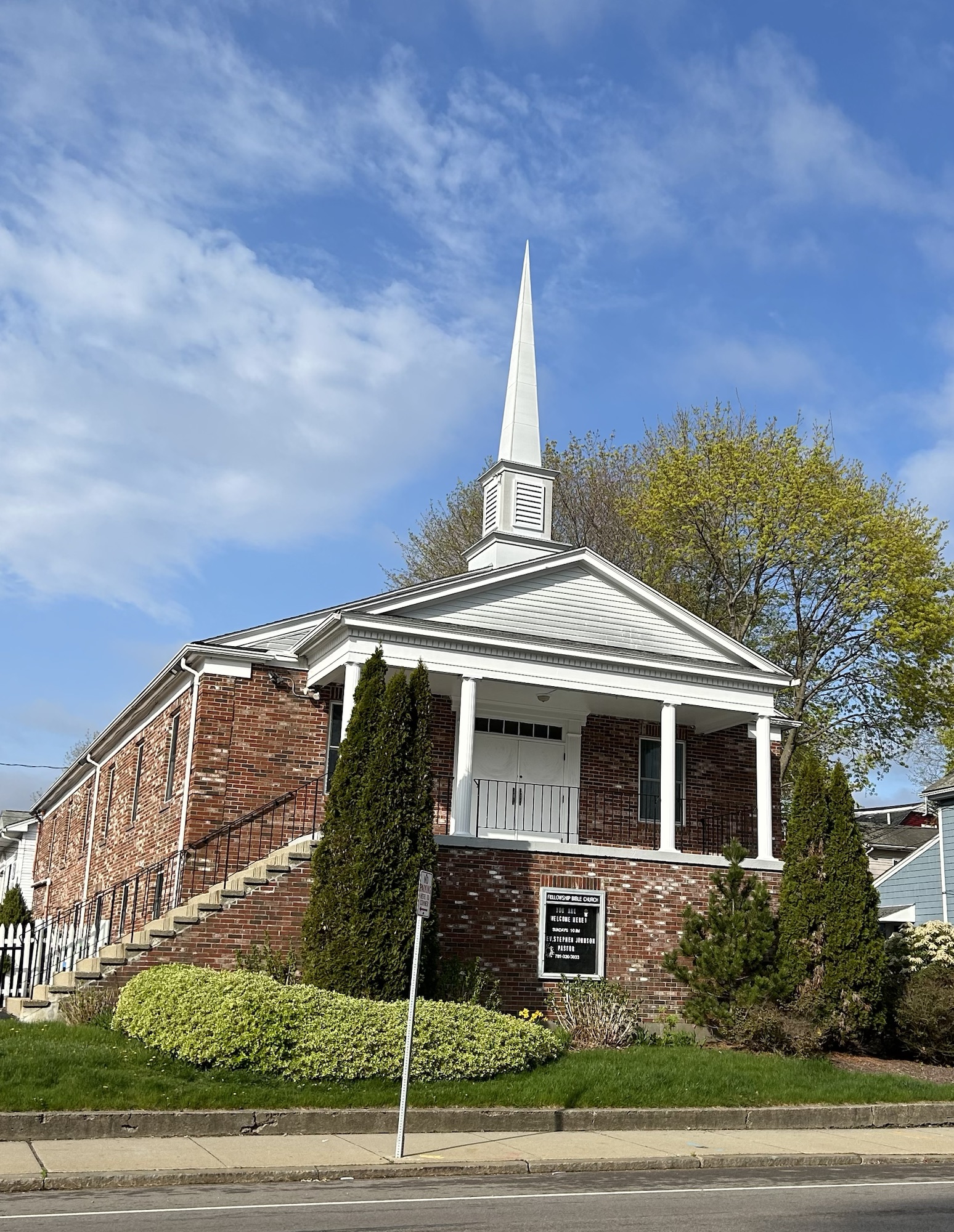
Fellowship Bible Church 2024
Back in Dedham, a new church was built and dedicated on September 30, 1973, and stands there to this day. In 1994 the congregation voted to change its name to the Fellowship Bible Church, and a diverse community of believers continues to carry out the mission of the church.
Upon the death of Margaret Spohr in 2001 (Charlie passed away in 1997), the property was left to the Charles and Margaret Spohr Charitable Trust which maintains the gardens and welcomes visitors free of charge all year. In 2005, church pastor Dr. Omar Adams wrote to the trust requesting that the bell be returned, or offered for sale. In the letter, Adams expressed the desire to celebrate the church’s 160 year history in Dedham, and hoped it could be returned in time for the dedication of an addition to the 1973 building. That did not happen, and the bell can still be found on the grounds of the Spohr Gardens.
While the current church administration holds no ill feelings to Spohr Gardens, they do feel a connection to the bell and would welcome an opportunity to display it on church grounds. In the meantime the bell can be seen in its beautiful garden setting in Falmouth. Here is a link to their website where you can plan your trip and find out more information about this unique Cape Cod destination.
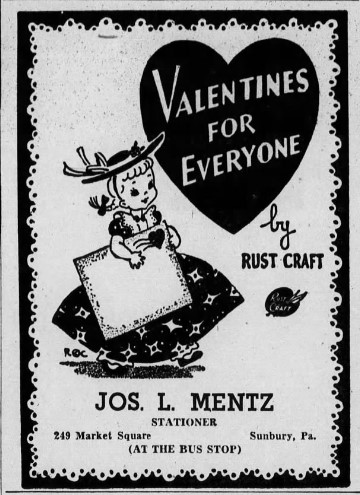
Happy Valentine’s Day from Rust Craft Publishers, which made its home in Dedham from 1955-1980. I plan on doing a more detailed post on this company in the future, but for now just enjoy these vintage valentines and ads from the 50s-60s!
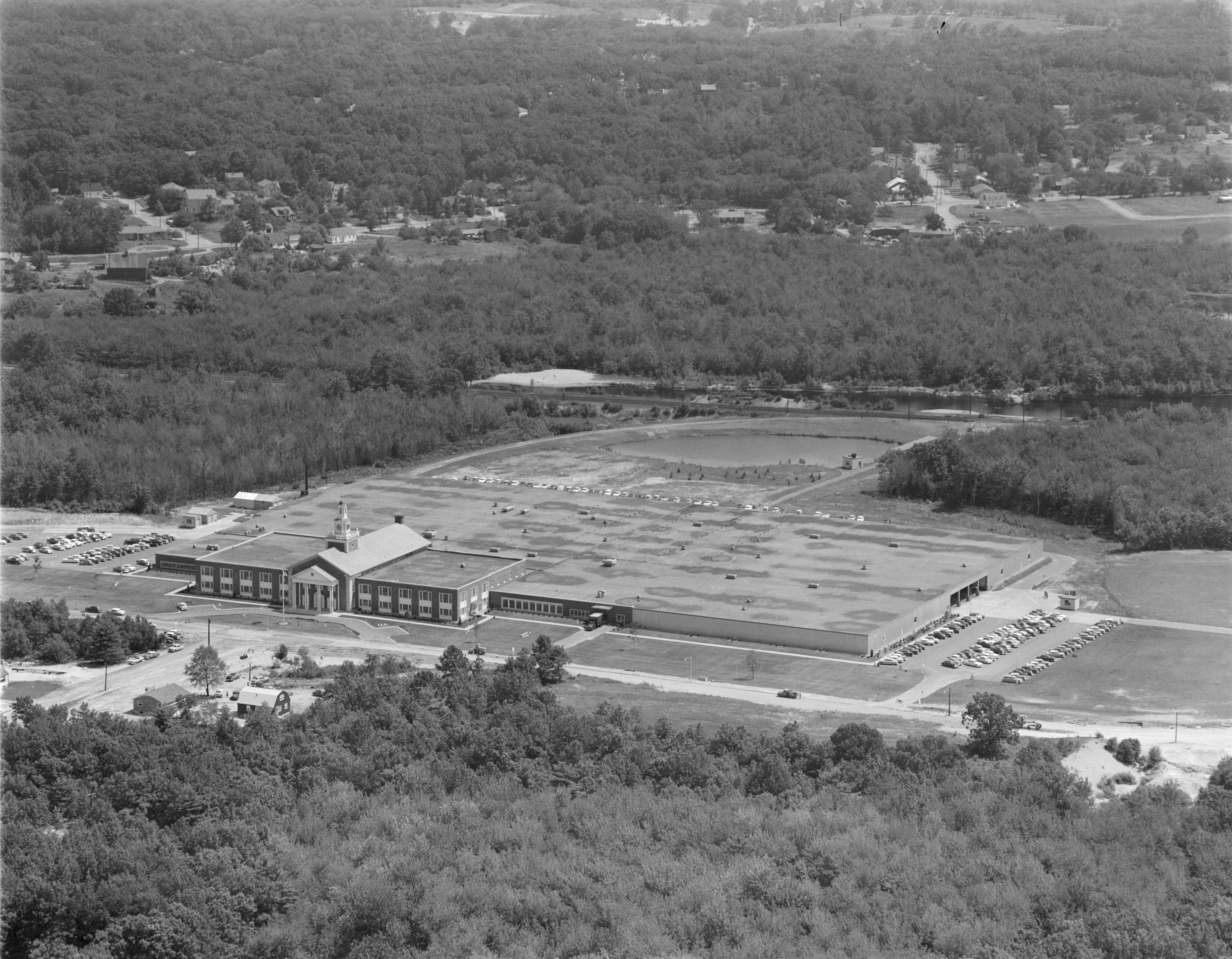
An aerial view of the Rust Craft plant from the late 50s
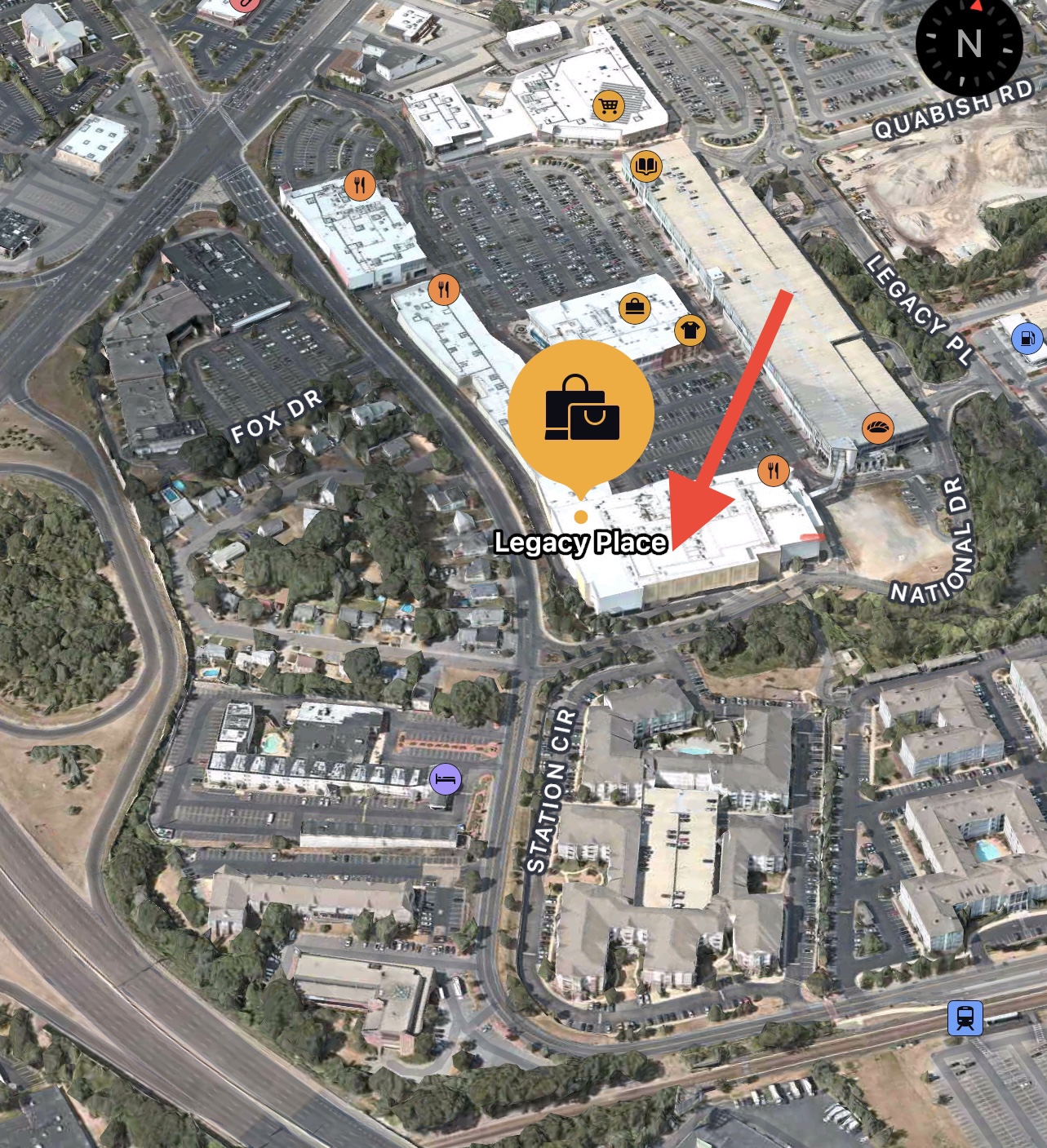
It’s the summer of 1948. Athletes from around the world are gathering in London for the first Olympics in 12 years. In the White House, Harry Truman is gearing up for a presidential run in the fall. The Boston Braves are a few months away from their first National League pennant, (and just a few years away from abandoning the city for Milwaukee). Here in Dedham kids are beating the heat at Mother Brook, East Dedham’s Mill Pond, Cox’s Cove on the Charles or down the river at the new day camp at Noble and Greenough School (still going strong after 76 summers!). Midget auto racing is featured at Norwood Arena which just opened on Rte. 1. You can get a new Motorola television set for $49.95 at Henry’s Radio and Electronics (but you’ll only have programming from WBZ-TV, which commenced broadcasting in early June). Movies and quiz contests are being offered at the 21-year-old Community Theater in the square, and, starting on August 11, movie fans will have a second option for viewing as the Dedham Drive-in opens just off the Providence Pike.
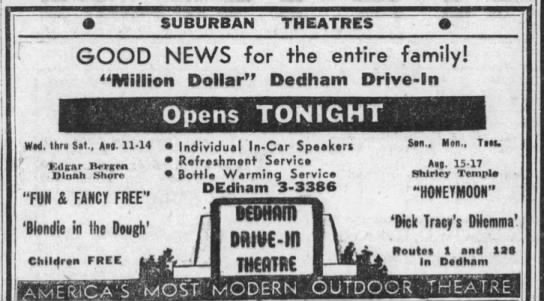
Hundreds of cars are lined up along Elm St as selectmen and local business leaders gather with owner and operator Michael Redstone to cut the ceremonial length of movie film stretched across the drive-in’s entrance. Tonight, a double feature of Disney’s Fun and Fancy Free along with the comedy Blondie in the Dough are shown on the “million dollar” drive-in’s 60′ x 42′ screen.
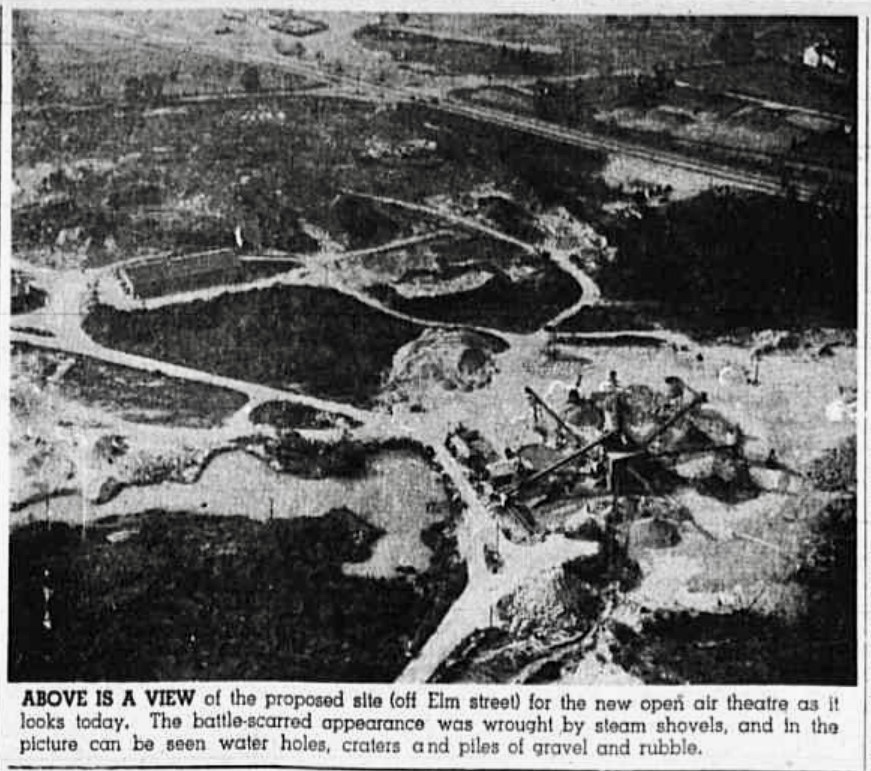
In the fall of 1947, the Board of Selectmen granted Michael Redstone a permit to build an “open air theatre” on 23 acres of land that had at one time been the site of Farquhar’s Nursery, but in recent years had become an eyesore, after gravel and loam was repeatedly removed, creating an unattractive and unsafe moonscape. Redstone, a Boston native, had been successfully operating an outdoor theater on Long Island for ten years, and the Dedham location would be an exact copy.
The drive-in concept was introduced to the world in Camden, New Jersey in 1933 by entrepreneur Richard Hollingshead. Since then, some 800 theaters had been built across the country with the first Massachusetts location opening in Weymouth in 1936. Dedham was about the 20th drive-in theater to be built in the state.
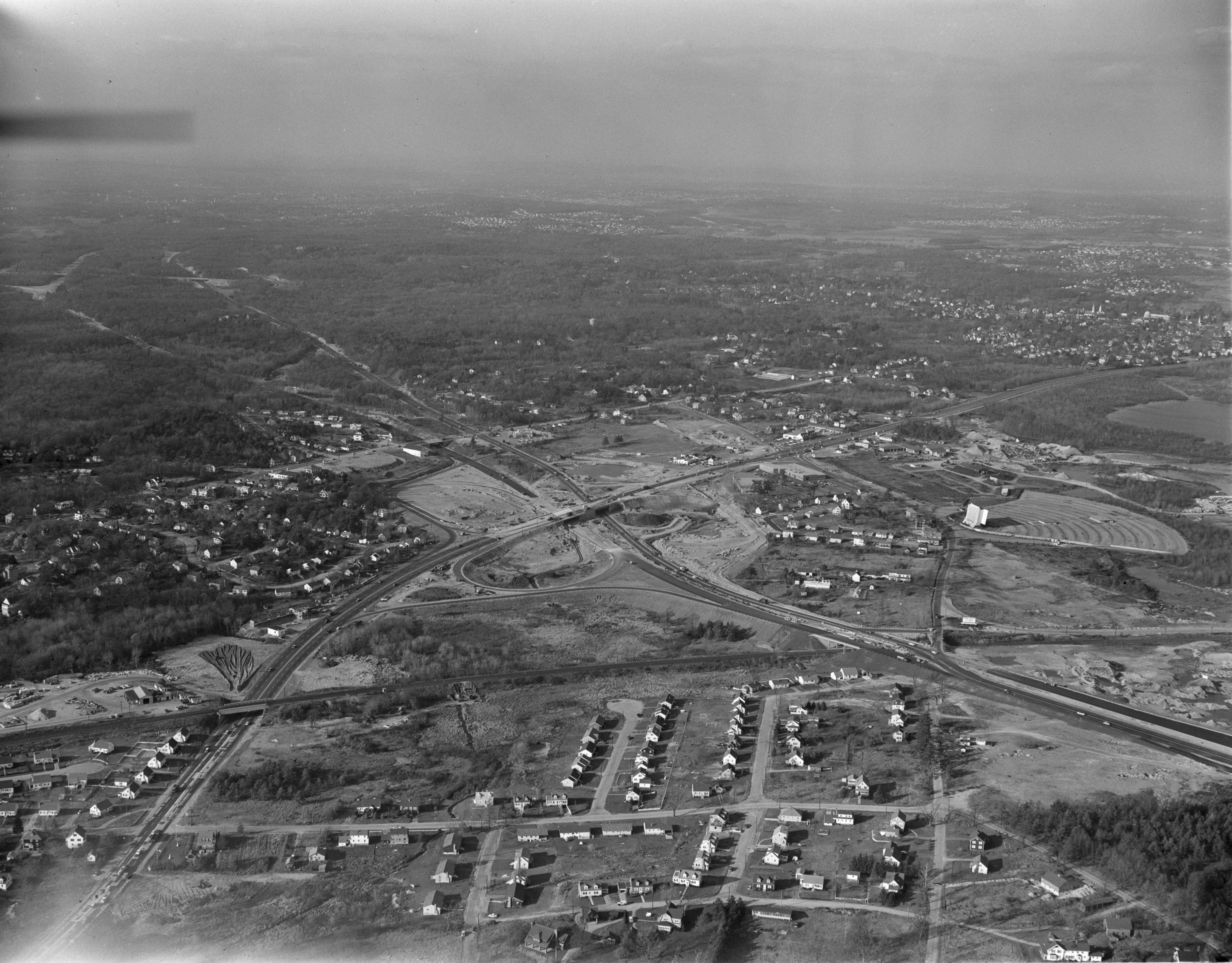
The Drive-in, as seen in this mid-fifties view, was located on Elm Street, the screen standing in nearly the exact same location where the Showcase Cinema de Luxe at Legacy Place now stands.
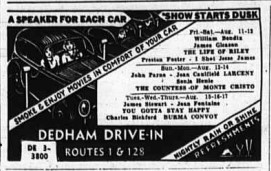
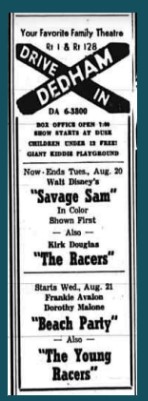
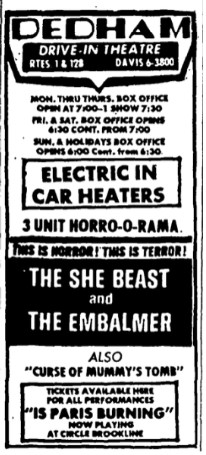
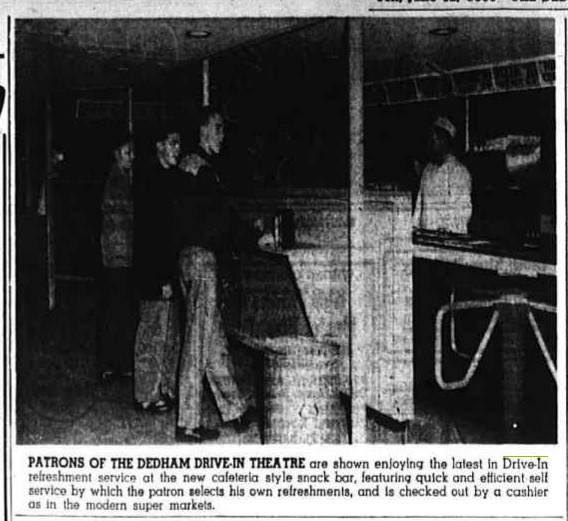
Initially, the drive-in was marketed as a family-friendly place you could take the kids in their pajamas to watch a movie, eat a meal, play on the playground, and enjoy a smoke. Over time, first run movies were replaced by “B” movies that were popular with teens, who probably didn’t really care what movie was playing. Throughout its history, Dedham offered a mix of wholesome entertainment and schlocky horror/beach flicks, as evidenced by the ads below:
19501963January 1967- there were some years that the drive-in was open year-round!
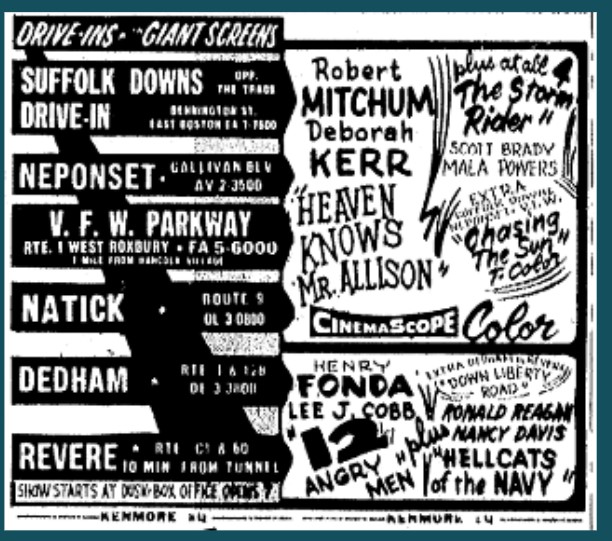
The Dedham Drive-in was the first theater in Redstone’s Massachusetts Drive-in empire. The Revere location opened 2 weeks later, followed by Neponset Circle, VFW in West Roxbury, Suffolk Downs, and Natick (a joint venture with another company). Redstone’s sons Edward and Sumner eventually took over management of the company, and Sumner Redstone transformed it from a regional theater operation to a multi-billion-dollar company when he purchased Viacom, Inc. (CBS, Paramount, Nickelodeon, MTV) in the 1980s. Today National Amusements is headquartered in Norwood and operates about 1,500 theaters across the US and Canada. Sumner Redstone passed away on this date in 2020 at the age of 97 leaving an estimated $2.6 billion estate.
The Redstone Drive-in Empire in 1957
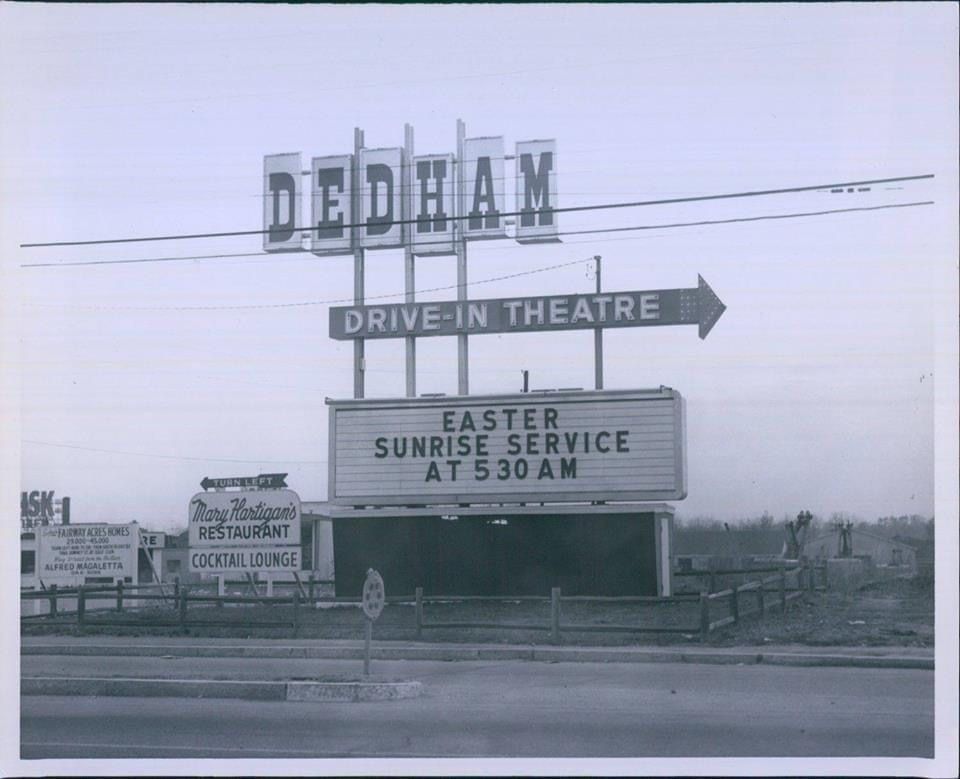
One of the traditions at the theater was the annual sunrise Easter service, which began in 1954. The first service was sponsored by the United Christian Youth Movement with 500 in attendance. St. Luke’s Church on East St. began hosting the services in 1961 and continued to do so through at least 1977.
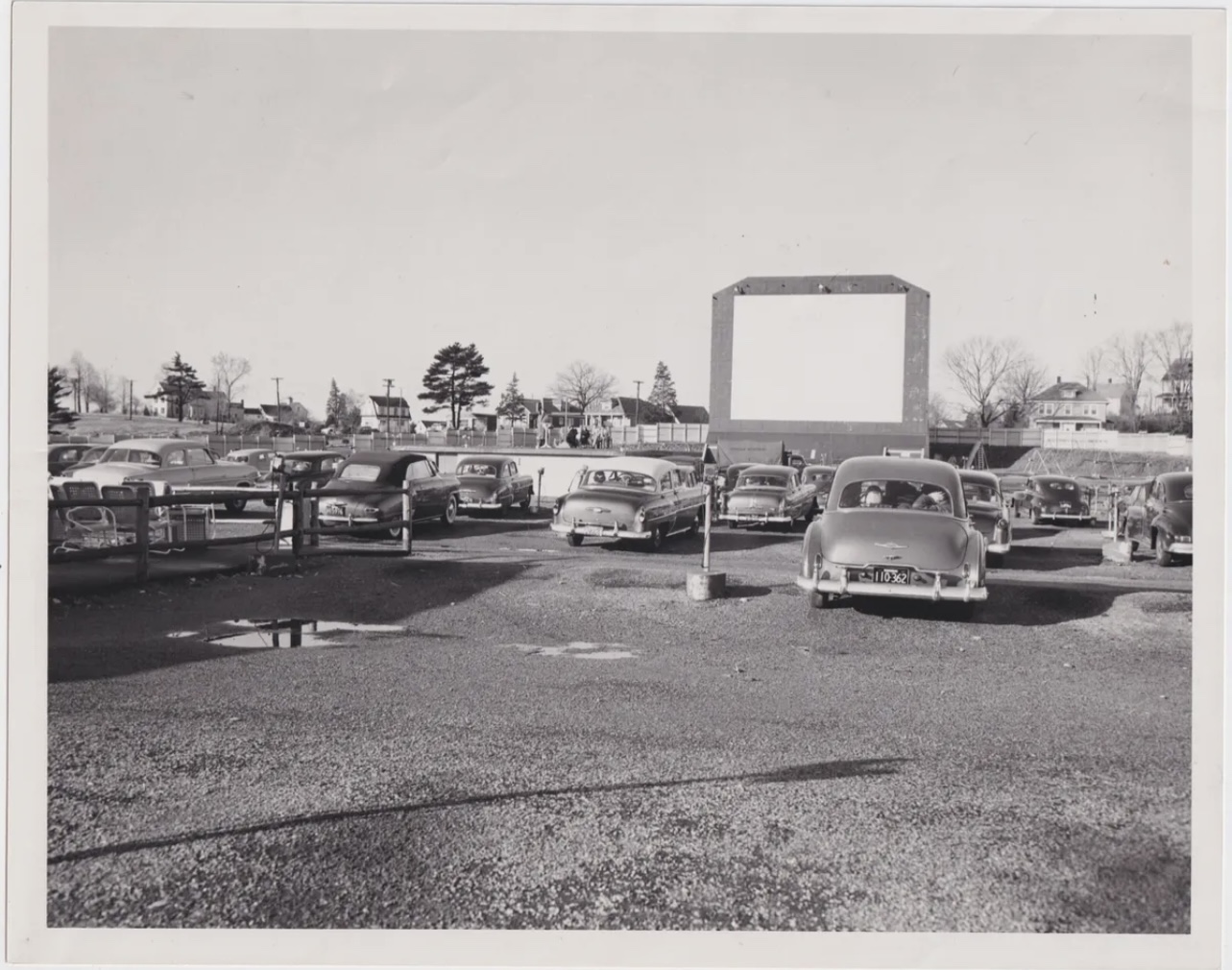
Easter Sunday, April 18, 1954. Note the large cross to the left of the screen on the roof of the projection booth. The screen was enlarged at some time before the fall of 1955. Photo by Frank Van Pelt/Parkway Photo Service
The drive-in was in operation until about 1979; although some sources state it closed in 1982. The Showcase Cinema 1-3 (a Redstone operation) opened next door in 1973. In part 2 of this tale, I will share the one and only time I went to the Dedham drive-in, as well as the controversy that nearly cost the theater its license in 1970. Here are a few more images. Please feel free to share your stories in the comments section!
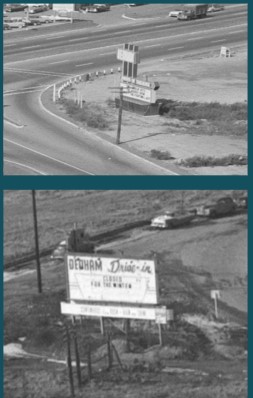
Mid-fifties signs at Rte 1 and Elm Street (top) and Elm St facing 128 (bottom)
I’m pretty sure that Dedham is the only town in the U.S. with a town ordinance that reads like this:
“No person shall set fire to or burn, or cause to be moved through any way or street of the Town, any waste material, paper, wood or any inflammable substance on any wagon, cart, buggy, push–cart or on any vehicle, with the intention of setting fire to or burning same on any way or street of the Town.”
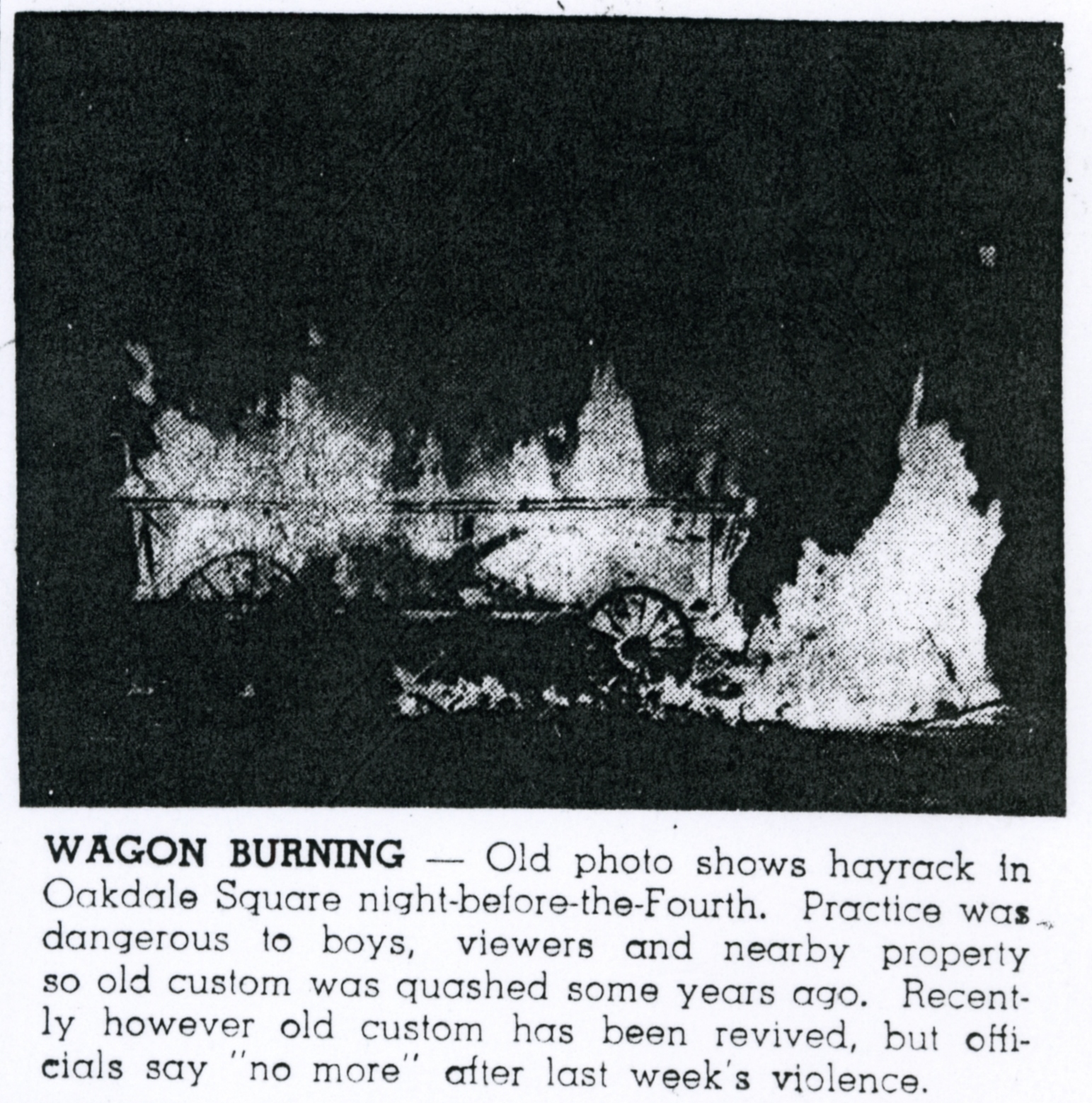
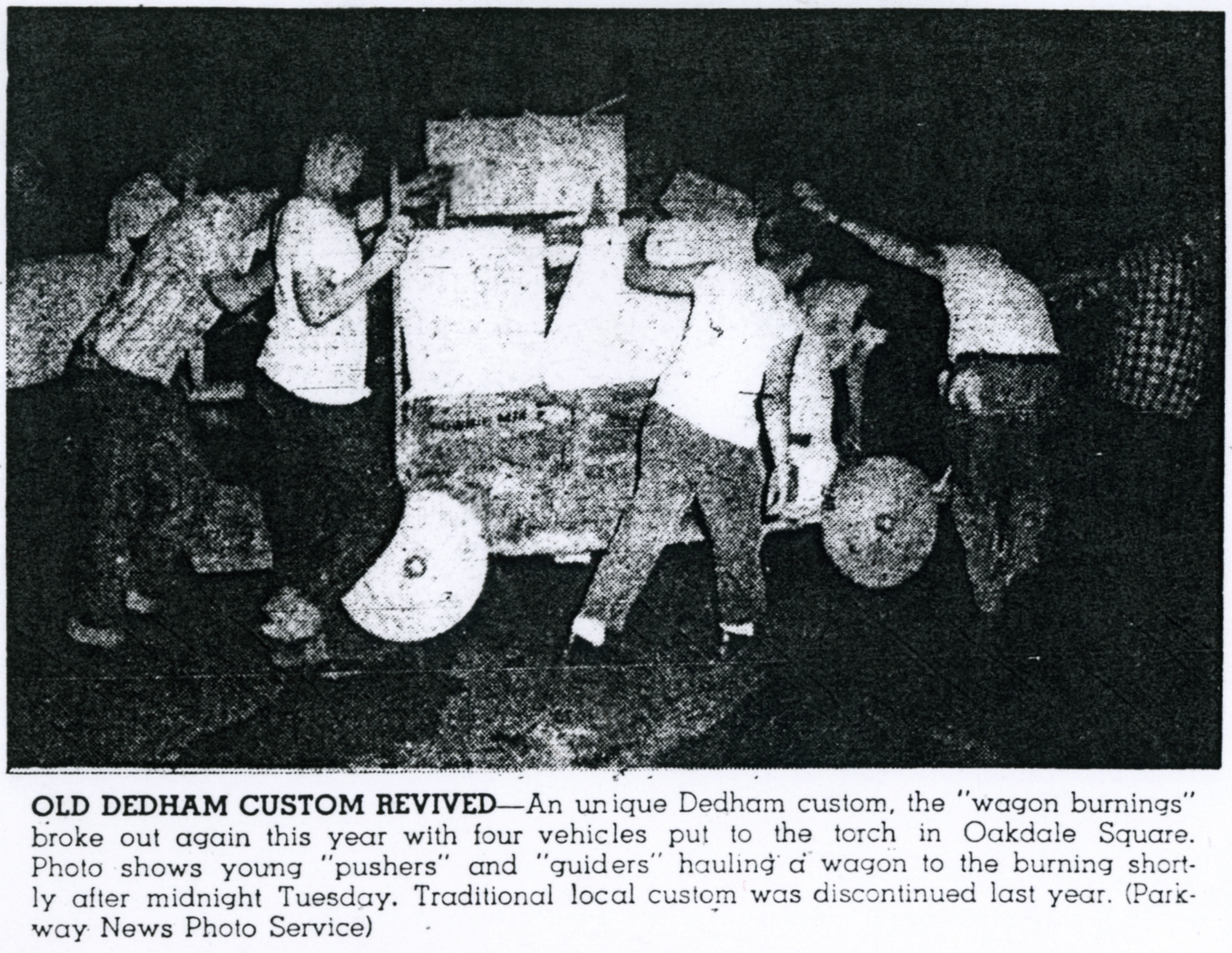
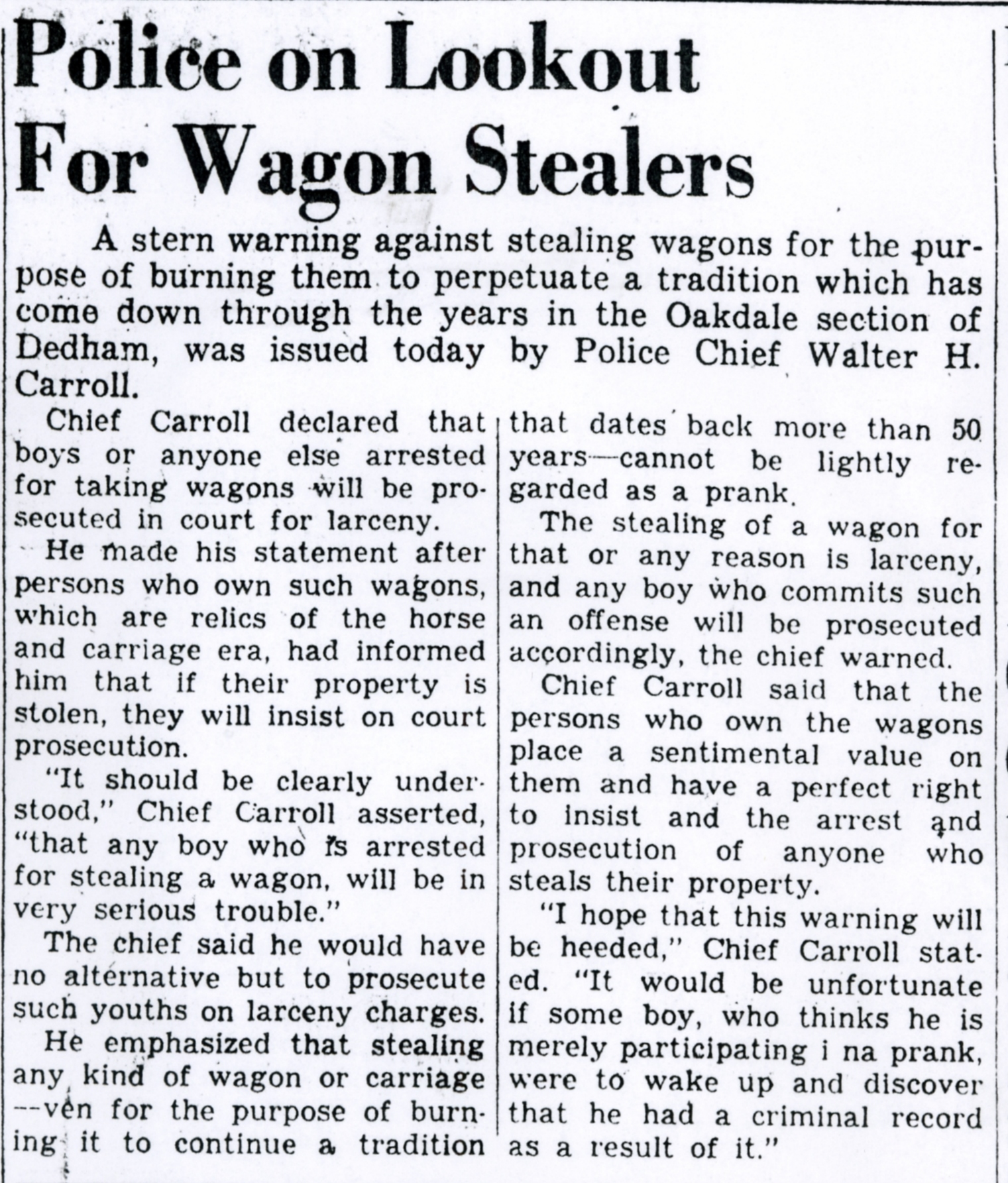
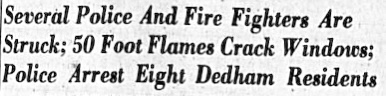
The bylaw was adopted in 1959 in response to the resurrection of a dangerous, unique, and beloved Dedham tradition- the burning of old farm wagons in Oakdale Square on either “the night before” of July 3rd, or the night of the 4th itself. Beginning some time in the early 20th century (my research found the oldest recorded reference to be 1922) thousands of people would gather in the square to witness the event. In the 20’s and 30’s, police and fire officials merely watched and made sure nobody got hurt. The spectacle usually began at midnight when some brave youth would climb the roof of the Good Shepherd Church and ring the bell.
The wagons came from local farms in Dedham and surrounding towns. As authentic farm wagons became scarcer, teenagers would make their own and hide them in back yards and garages until the big night. In 1938, no wagons were found or made, so an old outhouse had to do. Usually the fires got so intense the windows of the stores in the square would crack and the tar underneath would melt. The last Oakdale Square burning was in 1963, when revellers threw rocks and full cans of beer at police and firefighters when they arrived on the scene. After that the burnings disappeared for a few years before the tradition was revived in the Manor. After an explosion and the melting a vinyl-sided house in 1990, police chief Dennis Teehan finally put an end to the burnings.
1963 was a pretty memorable 4th of July in Dedham. On the positive side, 40.000 people turned out for the annual parade which featured 20 bands and some 5,000 marchers. The town’s fireworks display was described as “the best ever.” However, the rowdy element put a damper on the festivities with their actions; hurling rocks and bottles at firemen, ignoring police directions, and tossing cherry bombs into the crowd, one of which landed on the parade float carrying Miss Massachusetts, who abandoned the float for the safety of a car for the remainder of the parade. Ah, the good old days.
I remember hearing about the wagon burnings when I was a kid, but I never witnessed one. After the publication of my Dedham book, the wagon burnings was the most popular topic brought up at book signings and talks. Maybe you have some more tales to add to the collection? Pass them along and have a Glorious Fourth!
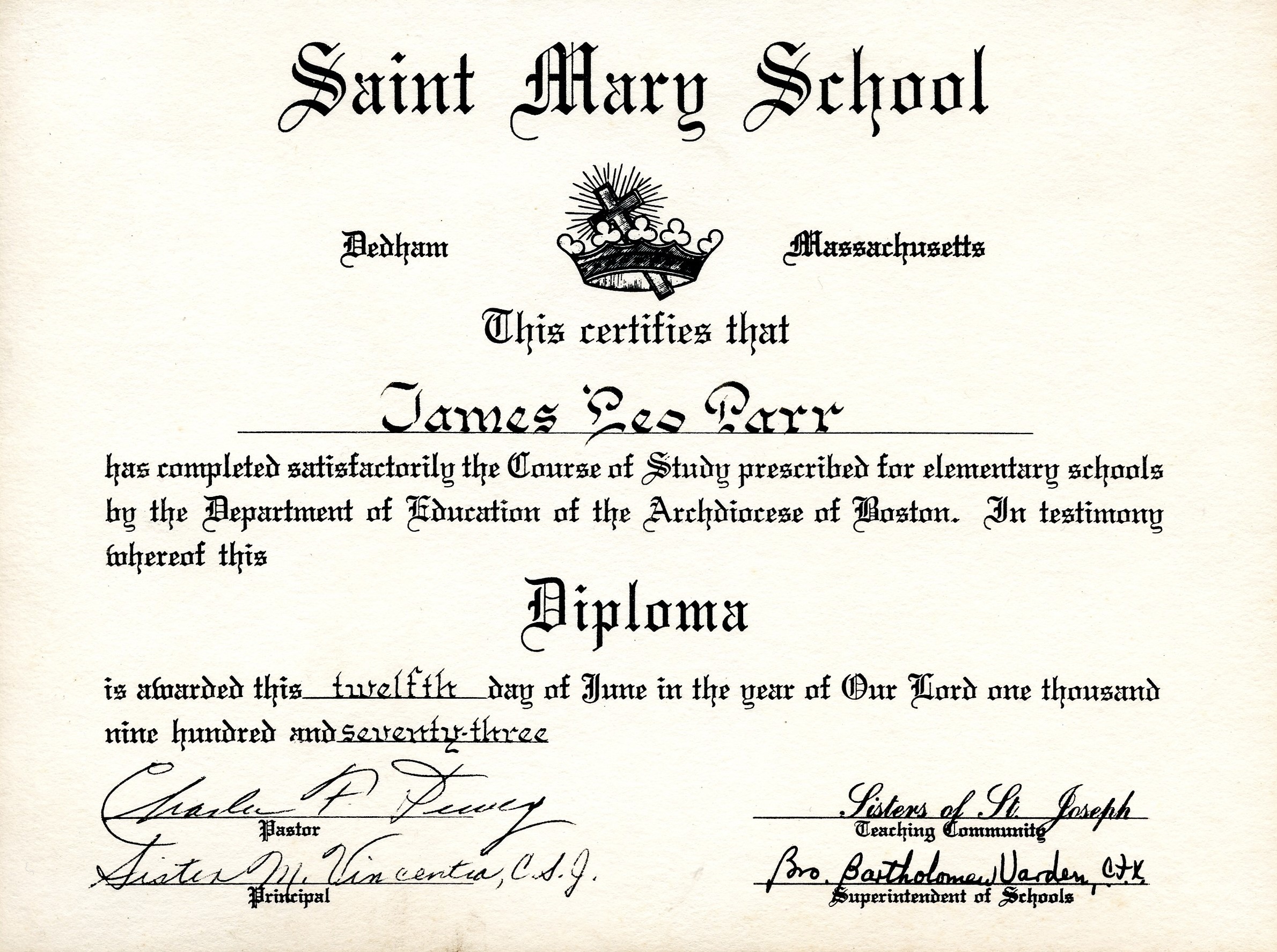
On June 12, 1973, I ended my 8 years at Saint Mary’s when I received this diploma in a graduation ceremony in the upper church on High Street. I was the last of 5 siblings to graduate from St. Mary’s; the school would close permanently in June 1975 before my younger brother was old enough to attend (despite having been enrolled at his christening in 1969).
In December 1972, Monsignor Charles Dewey, pastor, announced that the Sisters of St. Joseph would no longer be staffing the school effective June 1975. At the time there were 9 nuns teaching the 16 classes of approximately 525 students. The possibility of continuing the school with lay faculty was discussed, but in the end the decision was made to close. The school served as home to several other educational institutions including the British School of Boston and the Rashi School, before being torn down in 2010.
The cornerstone for the original building (we called it “the old school”) was laid on June 16, 1935, with 500 people attending the ceremony. The “new school” opened in the fall of 1958 and increased the school’s capacity to 650 students. My 1st, 2nd and 4th grade classrooms were all in the “old school,” where the desks still had holes for ink bottles and were bolted to the floor. There were about 85 graduates in the Class of ’73, which means there were over 40 students in each classroom with just one teacher. Some of those classmates are still good friends, and I hope to see many of them as we gather for a reunion in August.
My grandparents sent me this card for my graduation
I am James L. Parr. I grew up on Tower St. and went to St. Mary's and Dedham High (Class of 1977). I teach school in Framingham and co-wrote a book of Framingham history, which led me to write a book of weird Dedham history called Dedham: Historic and Heroic Tales from Shiretown. That book led to this blog. To order your own copy of the book, e-mail me at jameslparr@yahoo.com








 Jim Parr
 Dedham Tales