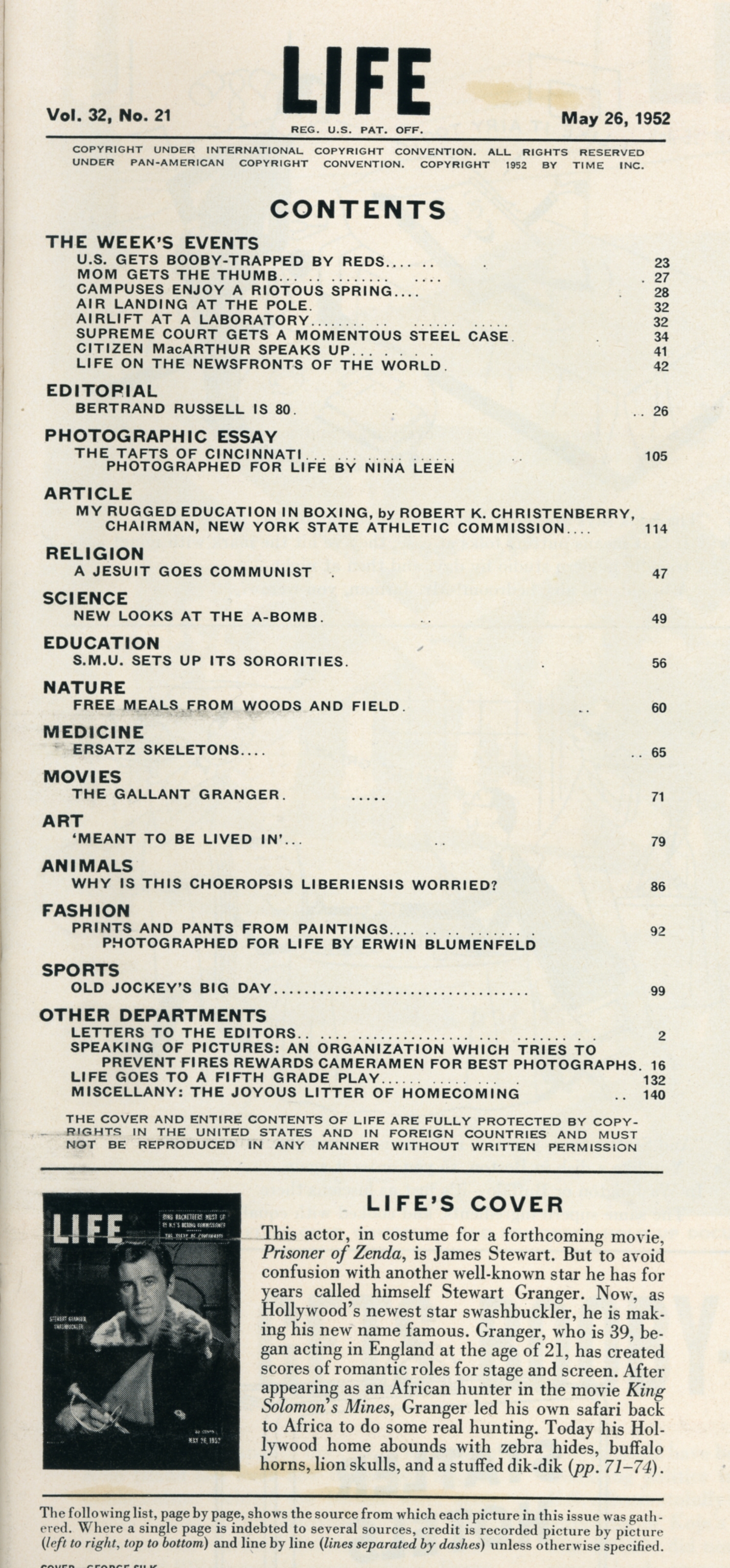
One of the stories listed in this table of contents from the May 26, 1952 edition of Life magazine is about a group of Dedham residents. The article and accompanying photographs made minor celebrities of the group for a while, and you can read all about in my next post…
Archive for the ‘History/Mystery’ category
LIFE in Dedham
March 30, 2011Happy Presidents’ Day!
February 21, 2011George and Abe. Two of our most famous, accomplished, and popular presidents. Both of whom visited Shiretown. How many towns can claim that such important figures in U.S. history spent time within their borders, and be able to point out the exact place and time of the visit?
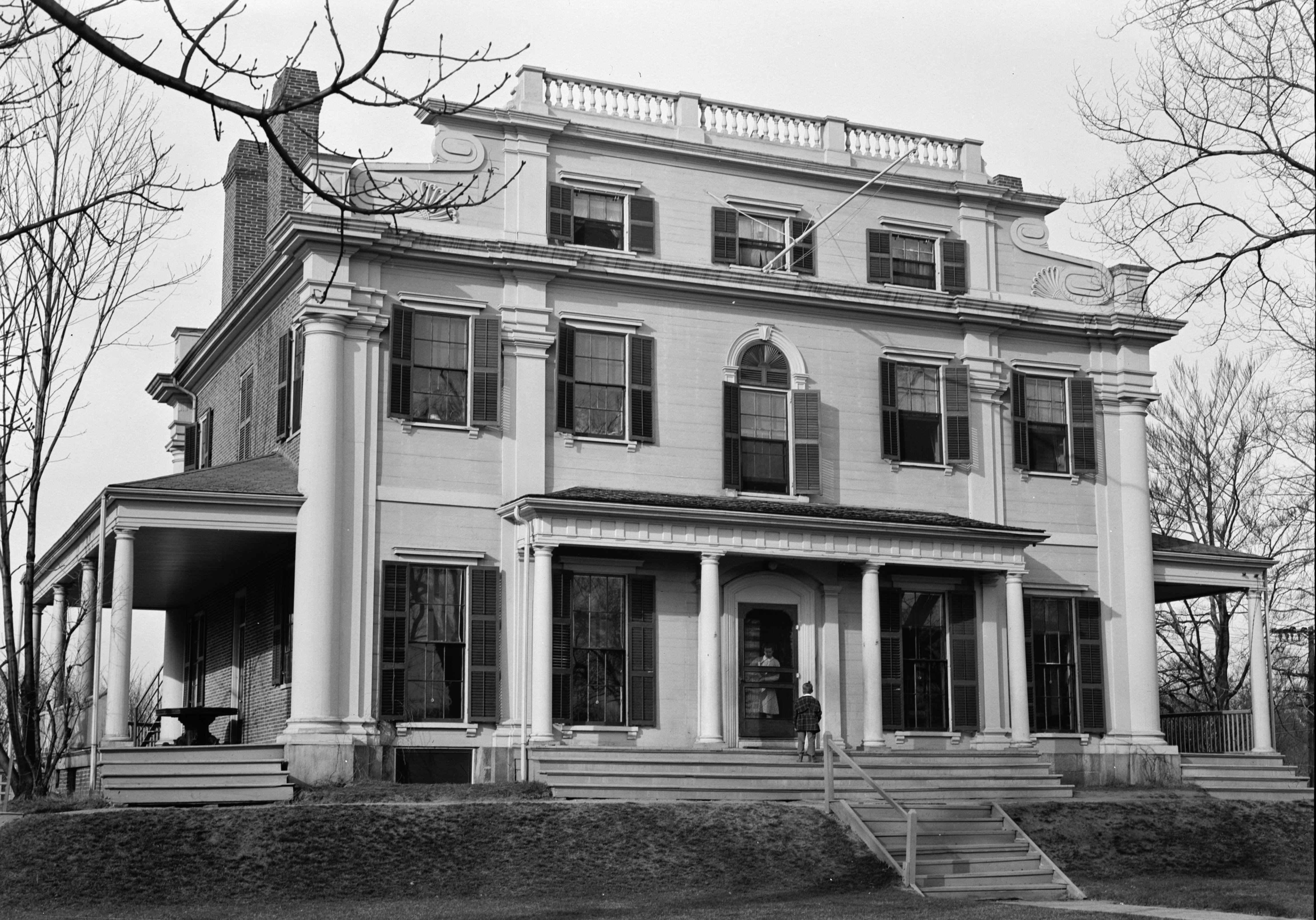
Washington spent the night of April 4, 1776 at the home of Samuel Dexter. Then General Washington was on his way to New York after having successfully driven the British out of Boston. The house still stands on High St., although it has been much altered over the years. There is another Shiretown tale associated with this house which involves the Battle of Bunker Hill, a suicide, a curious soldier, and a rotting corpse. That tale will be told here at a later date.

Just down the street from the Dexter House is the Community House, also known as the Judge Samuel Haven House. It was here that Illinois Congressman Abraham Lincoln was entertained for lunch on September 20, 1848, while traveling New England in support of presidential candidate Zachary Taylor. Later that day, Lincoln spoke at Temperance Hall on Court St., before catching a train at the station that once stood in the Square where the town parking lot is now located. Below is a map commemorating Lincoln’s Massachusetts visit. See if you can find details of the Dedham trip on the map!
Other presidential visitors to Dedham include Andrew Jackson and John Quincy Adams.
An Execution in Charlestown- Part 2
June 18, 2010

Crowds in front of the Dedham Court House during the trial
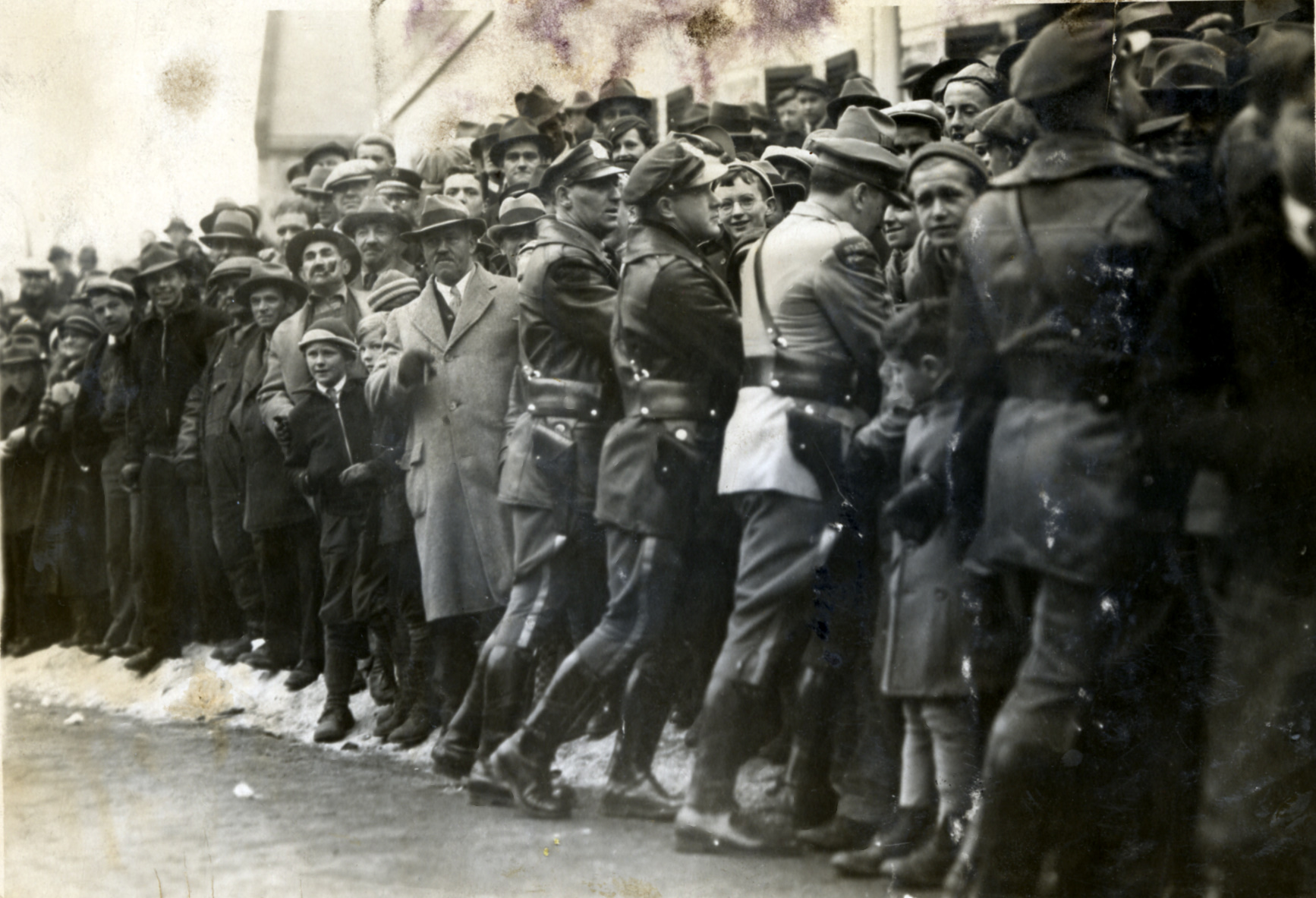
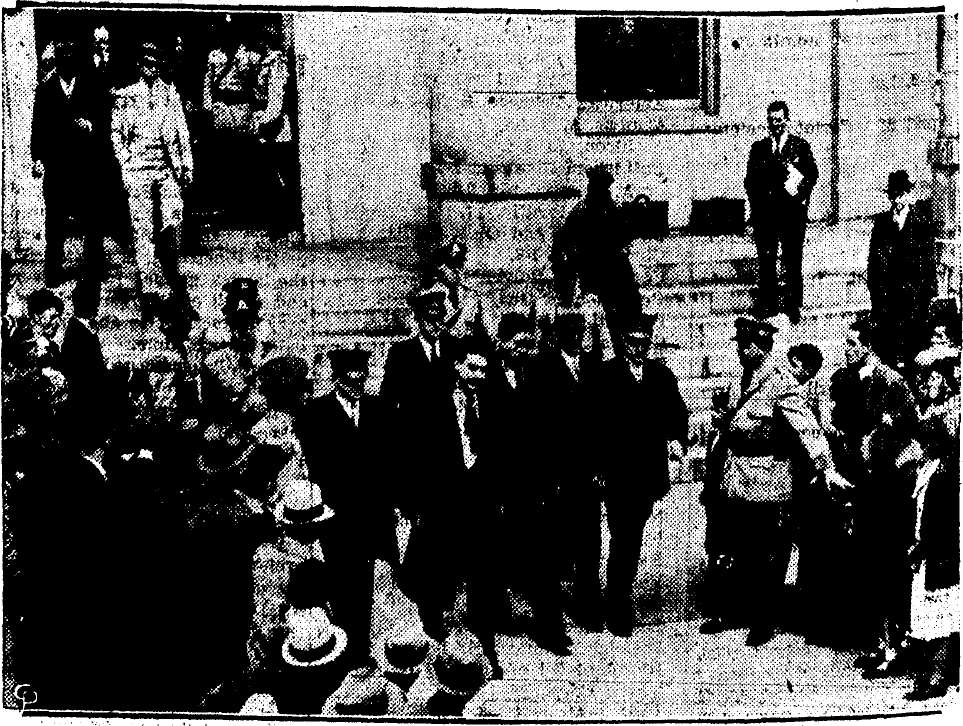
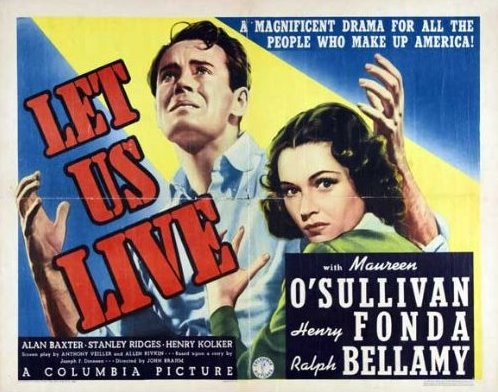
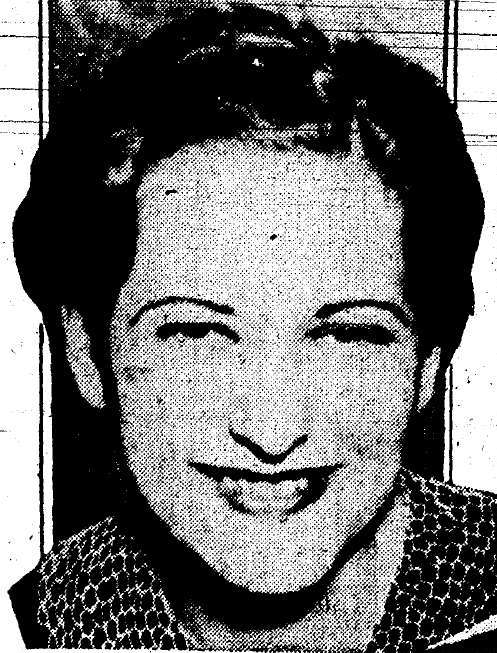
The scene at the Readville train station on March 2, 1934 was just a preview of the frenzy that would surround the Millen Brothers’ case over the next year. Several thousand people gathered at the station to greet the brothers upon their arrival from New York. The crowds continued to gather throughout the trial, with curious onlookers from all over the country heading to Dedham to get a look at the accused and the beautiful young bride, Norma. School kids played hookey and waited in front of the court house to see the defendants brought from the jail. People dressed in suits and carrying briefcases tried to pass themselves off as lawyers in order to sneak into the court room. With Faber’s confession already in hand, the trio would have had a difficult time proving their innocence, and so their lawyers pleaded not guilty by reason of insanity. Incredibly, Faber’s confession in late February included the details of a Lynn theater hold-up and murder for which 2 cab drivers were on trial in Salem. The judge suspended the trial and freed the 2 men just as the DA was about to present his closing argument. This bizarre chapter in the Millen Brothers case was later dramatized in the 1939 film “Let Us Live,” starring Henry Fonda.
After a two month trial, all three men were found guilty and sentenced to death. The men certainly did their best to avoid their fate by attempting several escapes from the Dedham Jail, but by June of 1935, all appeals had been exhausted and the electric chair awaited them at the state prison in Charlestown. After the executions, the drama continued as a mob of onlookers tussled with members of the Millen families at the cemetery dusing burial services.
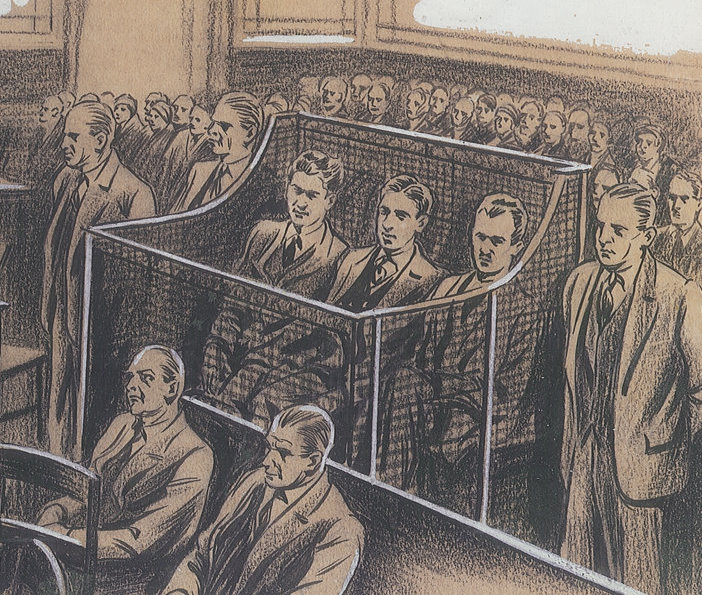
Twenty-year old Norma Millen was released from the Dedham Jail two months later, and disappeared into obscurity. Although the case received as much attention in 1934 as the Sacco-Vanzetti trial had a few years earlier, today it remains a little known chapter in Norfolk County legal history. Look up my May 23, 2010 post “The Cage is Removed” to see a courtroom sketch of Faber and the Millens sitting in the “cage” during the trial.

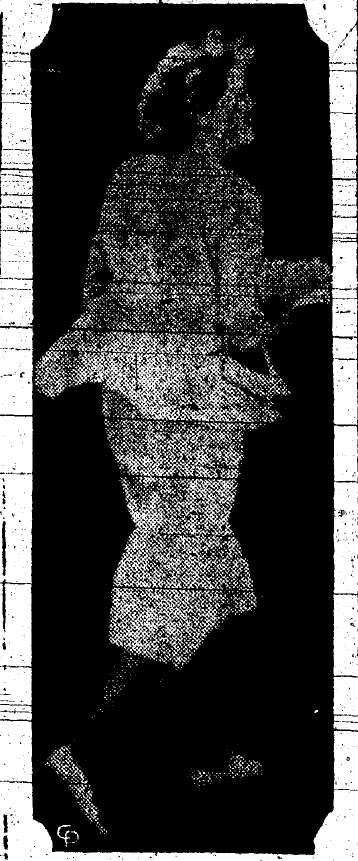
Above- the “lovely” Norma Millen, Below- Norma exercising in the yard of the Dedham Jail

75 years ago- An execution in Charlestown
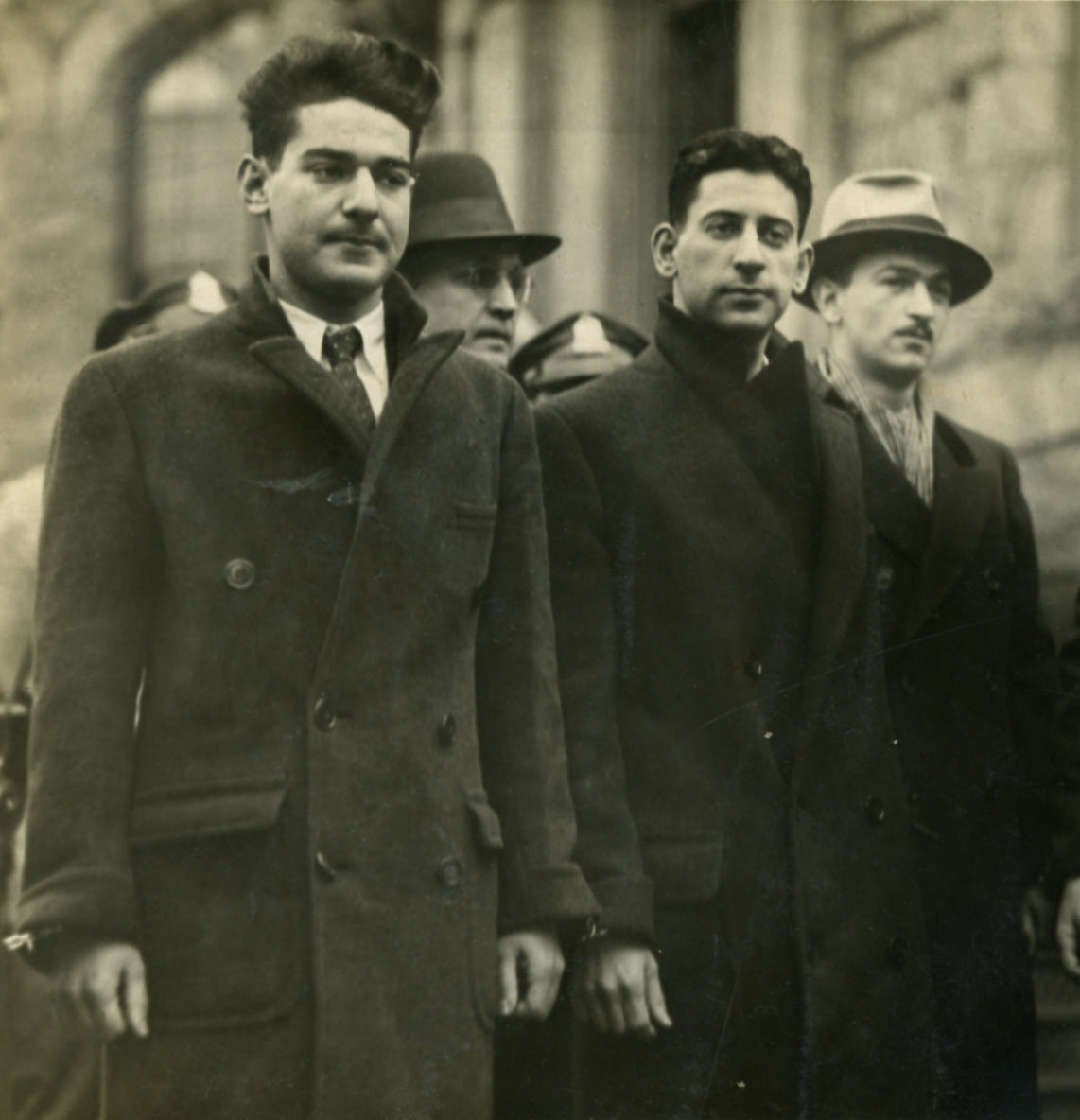
June 7, 2010June 7, 1935- Irving Millen, Murton Millen, and Abraham Faber are executed in the electric chair at Charlestown State Prison a year after their convictions in the Dedham Court for the murder of a Needham police officer during a robbery at The Needham Trust Company. Faber and the Millen Brothers, all in their early twenties, had begun a short but violent crime spree in the fall of 1933 and winter of 1934, robbing banks and other businesses in the Greater Boston area and leaving four men dead.
The Needham robbery on February 2, 1934 was like a scene right out of a gangster movie, with sub-machine guns blazing and a terrified bank employee hanging on to the running board of the getaway car as it raced through town. Needham police officers Forbes McLeod and Frank Haddock were gunned down by the robbers; McLeood when he responded to the bank alarm and Haddock as he stood with a Needham fireman in front of the Needham firehouse.
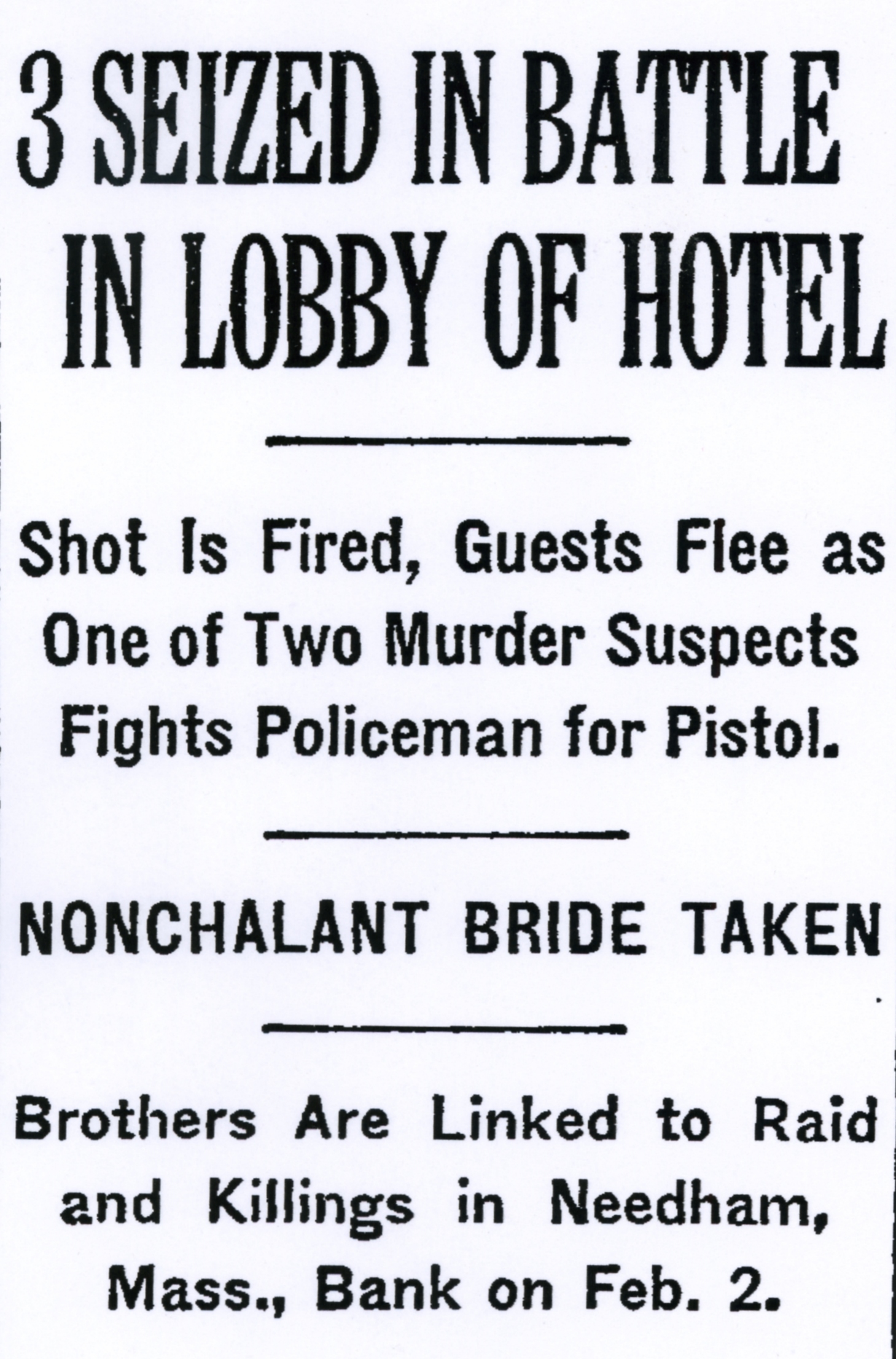
After finding the burned out wreckage of the getaway car in a wooded area of Norwood, police were able to trace a battery repair job to Irving and Murton Millen and their friend Abraham Faber. Millen, his 19 year old wife and brother Irving manged to escape to New York, but were captured after a wild gun battle in the lobby of a New York City hotel. Faber was apprehended in Boston. While the brothers and Murton’s young bride rode the famed Yankee Clipper train back to Dedham to face justice, Abraham Faber began to talk. NEXT: The TRIAL
Happy 200th SIDFAHT!
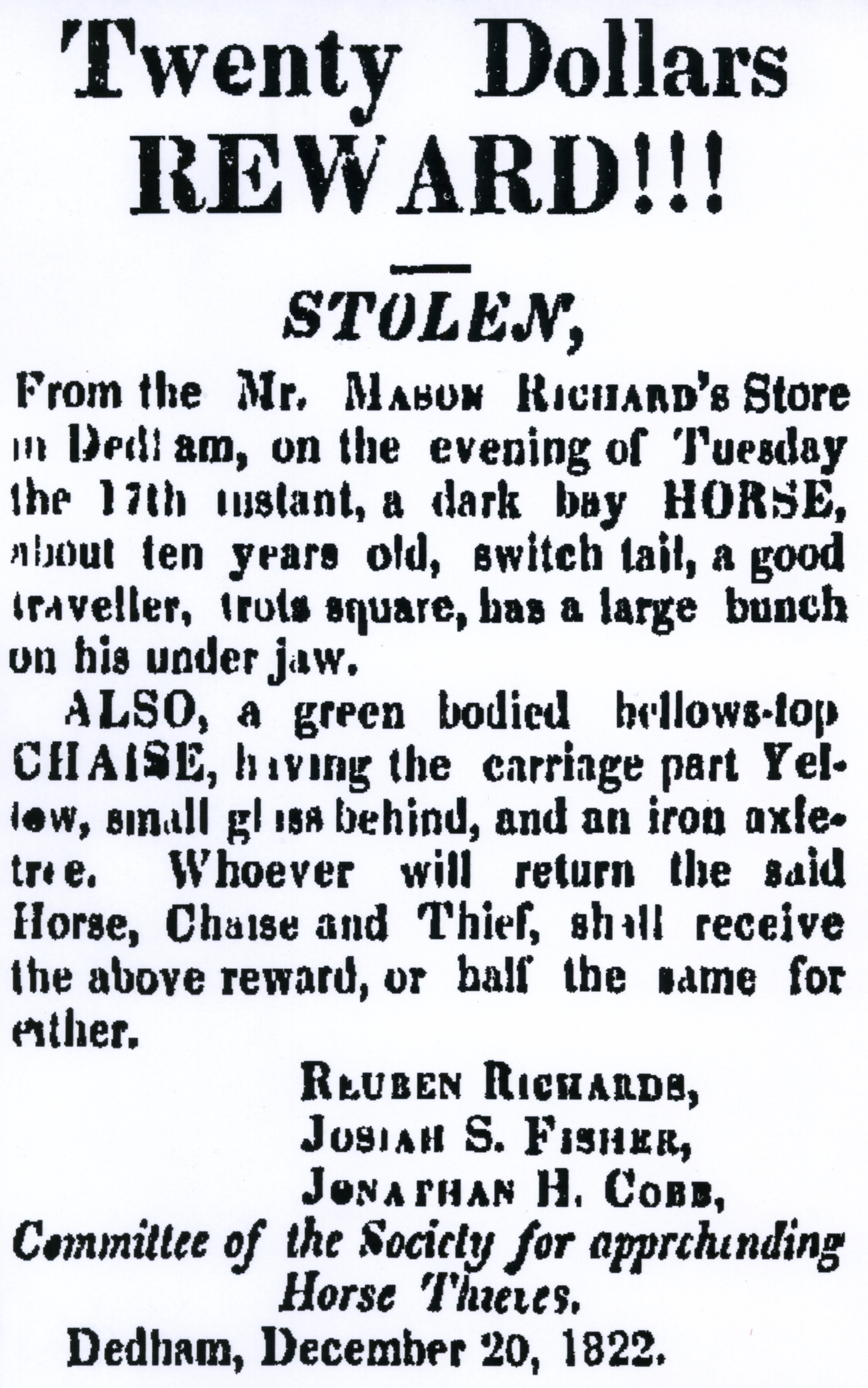
June 4, 2010On June 4, 1810, the Society in Dedham for Apprehending Horse Thieves was founded by group of men in town who were fed up with “the nefarious practice of horse-stealing” in Dedham and the neighboring towns of Norfolk County. Membership gave you the full benefit of the Society’s crime detecting and thief apprehending powers, which consisted mostly of putting up posters and taking out newspaper ads such as this one from 1822:
By the end of the nineteenth century, the usefulness of such a group had lessened considerably, and as other such societies in nearby towns disbanded, Dedham’s began a new life as a social organization. Entertainment was featured at each annual meeting, and charitable donations were made to such groups as the Dedham Emergency Nursing Association. Today the Society is believed to be the oldest such organization still in existence, and will celebrate 200 years of protecting Dedham and Norfolk County at its annual meeting in December. I am proud to be the vice-president of this venerable institution, and invite all of you to join up and do your part to keep our town and county safe from felonious thieves of horse-flesh for the next century.
To read a more detailed history written by Clerk-Treasurer Robert Hanson, and to learn about becoming a member, go to our website: http://www.dedhamhorsethieves.org
Look for more posts about SIDFAHT during this, our bicentennial year!
The Community House will be rockin’ on Saturday!
June 2, 2010Come on down this Saturday, June 5th from 10:00- 8:00 and enjoy the Dedham Square Music and Arts festival. I am pitching a tent and selling and signing my book, so be sure and stop by and say hi. Check out the festival’s website for the complete schedule: http://dedhamfestival.org/
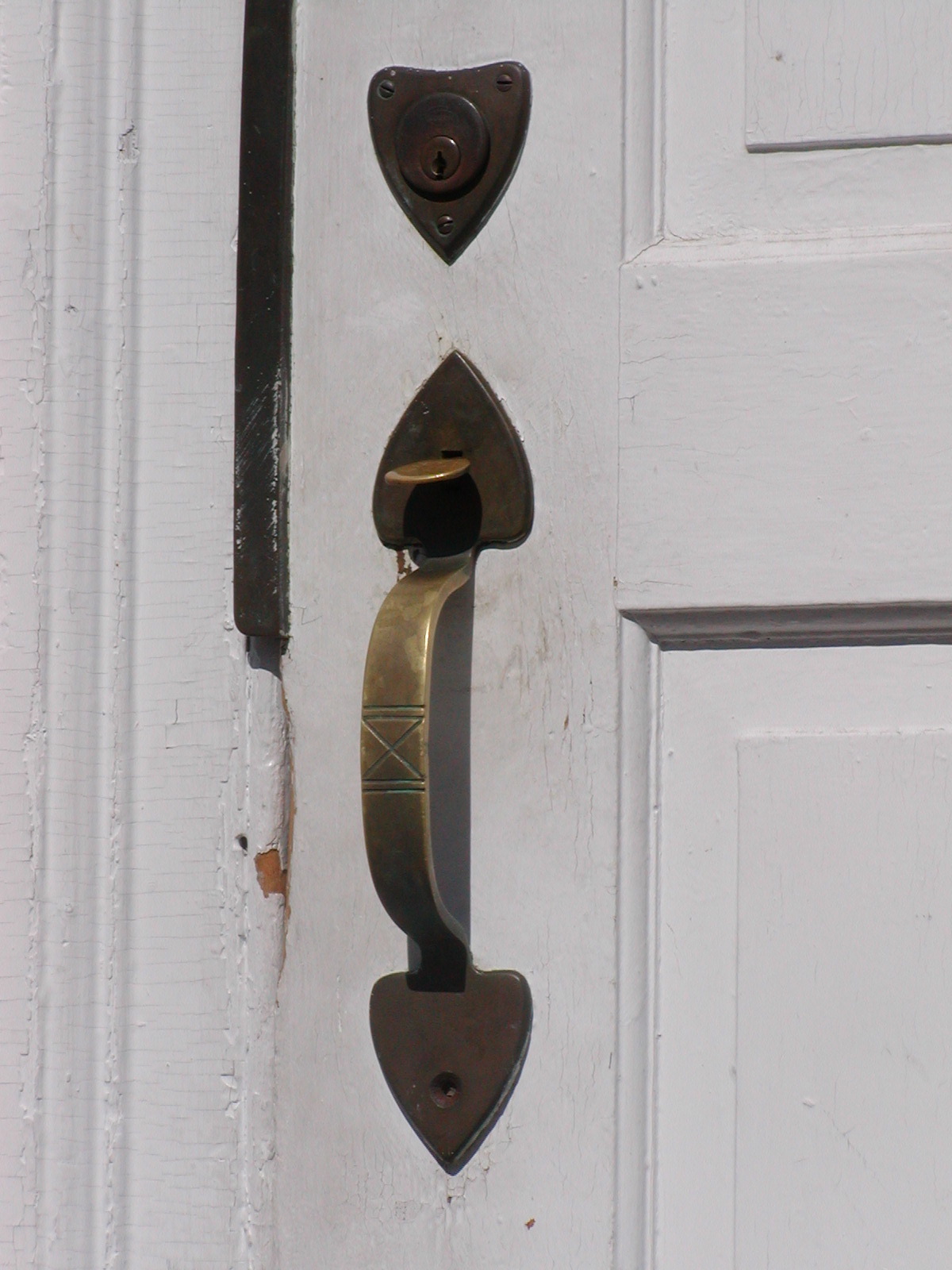
While you’re there, take a look at the front door latch of the 1795 mansion. Some people believe the X shaped mark inscribed into the metal is a hexmark to keep witches out. What do you think?
2 Dedham Heroes- John A. Barnes III & Henry Farnsworth
May 31, 2010
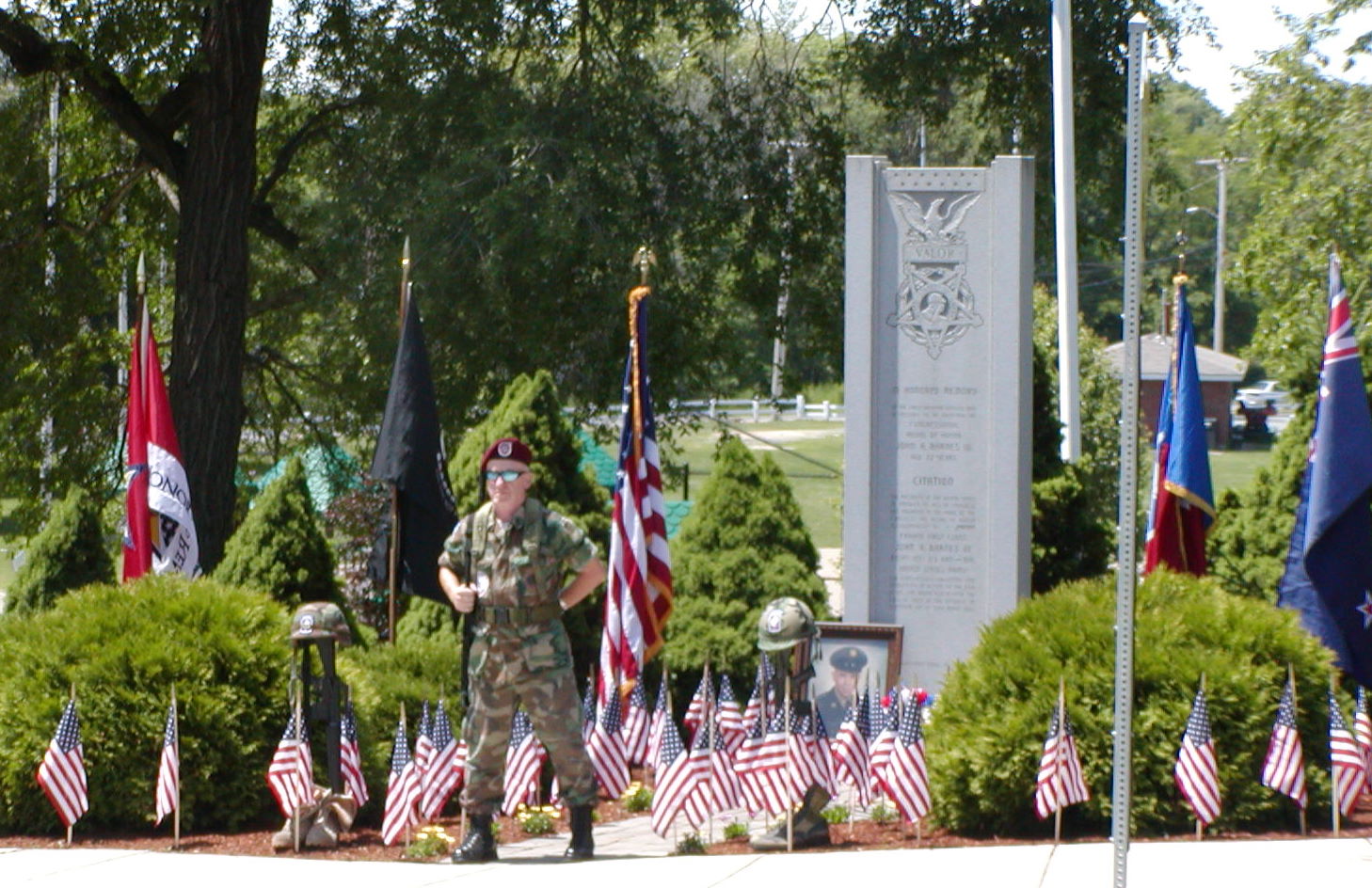
A member of the 173rd Airborne Infantry Association keeps vigil at the John Barnes Memorial on May 30, 2010.
From Dedham:Historic and Heroic Tales from Shiretown:
John A. Barnes III grew up in the Greenlodge section of Dedham and graduated from Dedham High School in 1964. After graduating, he enlisted in the Army and trained at Fort Benning, Georgia before serving a one year tour of duty in Vietnam, where he was awarded the Bronze star, the Purple Heart and several other medals for valor. Barnes began a second tour of duty in the fall of 1967 in the active central highlands, where he was a grenadier with the 503d Infantry. On November 19, Barnes and his unit came under attack by a battalion of North Vietnamese. When an American machine gun crew was killed, Barnes quickly manned the gun himself, killing nine enemy soldiers while under heavy attack. As he paused to reload, Private Barnes saw a hand grenade land directly in the midst of a group of wounded Americans. In an act of extreme bravery and selflessness, Barnes threw himself on the grenade just before it exploded, saving his fellow soldiers.
Private Barnes was laid to rest in Brookdale Cemetery, and two years later was posthumously awarded the highest military decoration, the Congressional Medal of Honor. A portion of the citation accompanying the medal reads:
Pfc. Barnes’ extraordinary heroism, and intrepidity at the cost of his life, above and beyond the call of duty, are in the highest traditions of military service and reflect great credit upon himself, his unit, and the U.S. Army.
On April 19, 1970, Memorial Field was rededicated as John A Barnes III Memorial Park. An impressive gathering of dignitaries, V.F.W. members from dozens of towns, and local marching bands processed to the corner of East Street and Eastern Ave., where a marble monument was unveiled. Congressman James A. Burke was one of several speakers who spoke of Barnes’ heroism.
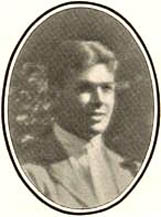
Henry Farnsworth of Westfield St. was one of the first American casualties of World War I, having died in the Battle of Champagne in September, 1915 while fighting with the French Foreign Legion. Farnsworth attended Groton and Harvard, graduating in 1912. He lived a life of adventure in the short time between his graduation in 1912 and his death on the French battlefield, reporting from the Balkan War in 1912 and traveling to Mexico when U.S. troops arrived there in 1914. His exploits in the Balkans were published as “The Log of a Would-be War Correspondent.”
Farnsworth was working in the Boston office of his father, a wool merchant when war broke out in Europe. His need for adventure compelled him to sail to France and enlist in the French Foreign Legion on New Year’s Day, 1915. Soon his unit was on the front lines and in the trenches. He wrote this passage to his mother on March 15: “I long to be with you all again, once the war ends. I think it will be this summer some time; then for the rest and peace of Dedham.”
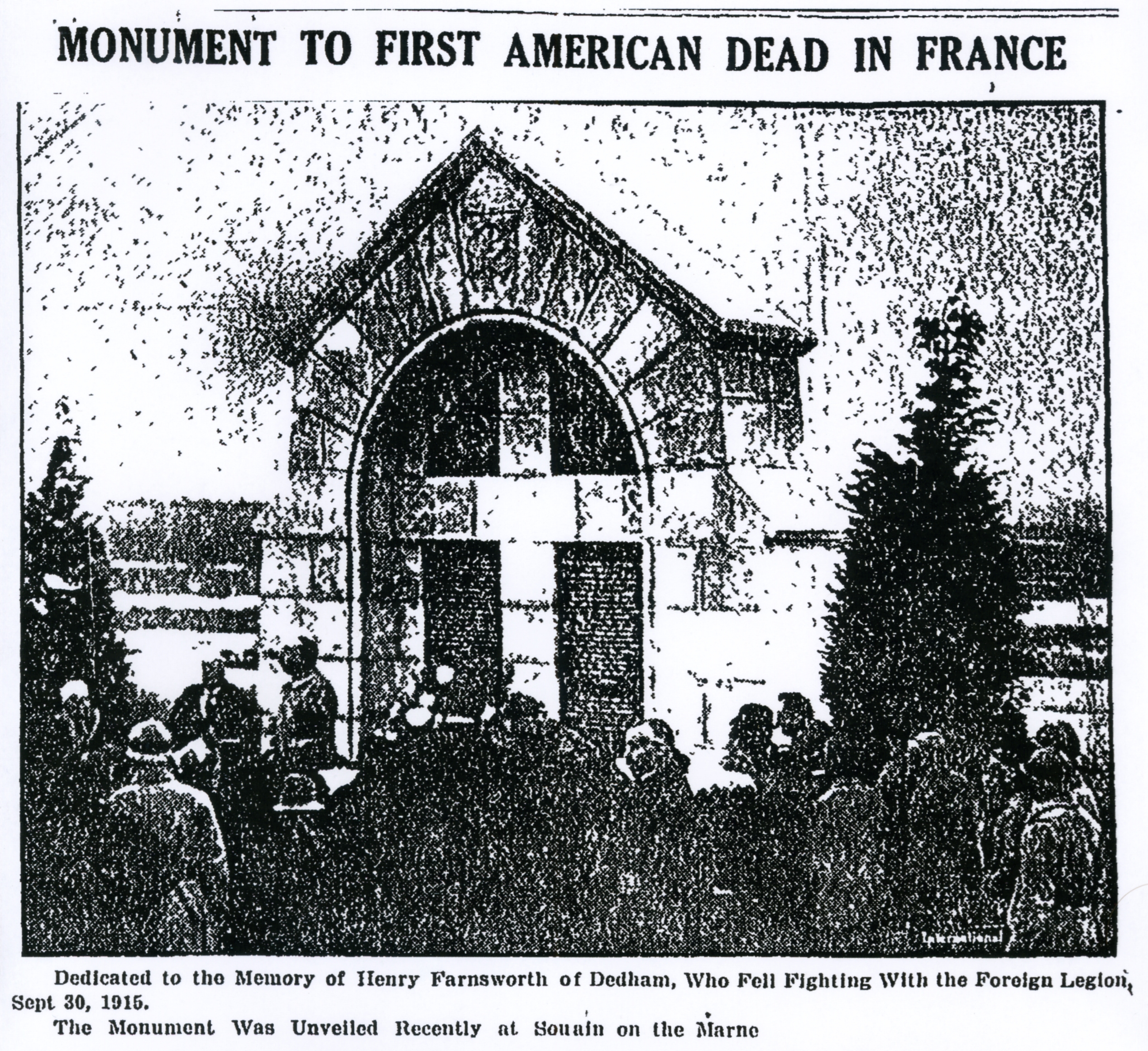
Farnsworth’s last letter home was dated September 16. On September 28, he was killed while fighting in the trenches outside of Champagne. Many of his fellow Legionnaires spoke of Henry Farnsworth’s remarkable spirit and bravery. His letters were later published by his father and can be found on Googlebooks. In 1920, an elaborate monument was dedicated to the memory of Farnsworth and 130 other foreign Legionnaires killed in the Battle of Champagne. The monument was paid for by the Farnsworth family.
50 Years Ago- The “cage” is removed
May 23, 2010
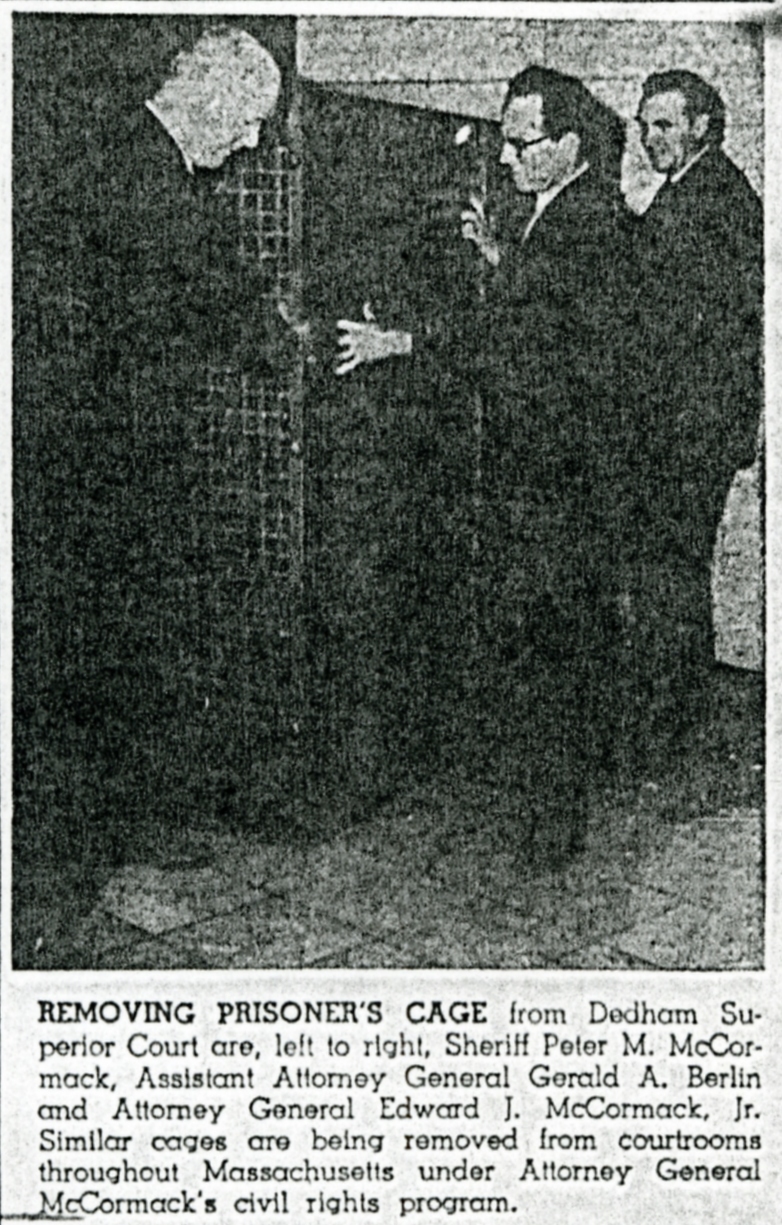
Dedham Transcript/May 26, 1960
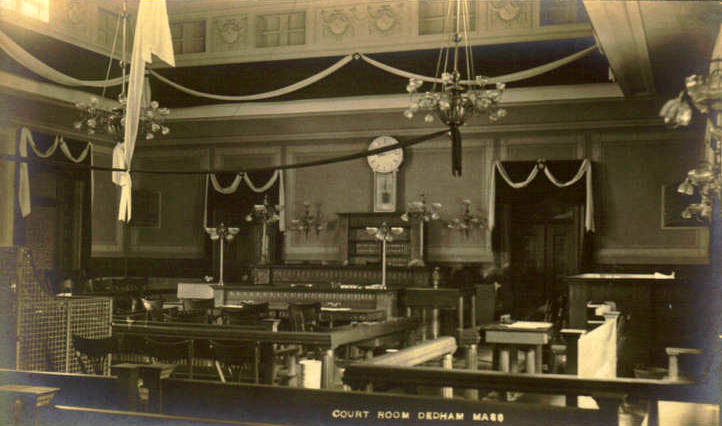
In the last week in May, 1960, Massachusetts Attorney General Edward McCormack oversaw the removal of an iron “cage” from the courtroom in the Norfolk County Superior courthouse. The cage was actually an enclosure where defendants sat during trial. It was the American version of the British prisoner’s dock, which is still in use in Britain and Canada. The unfortunate design and choice of materials for the prisoner’s dock in Massachusetts gave it the appearance of a cage, and this was frequently observed during the Sacco-Vanzetti trial and appeals in the 1920’s. The cage in the Dedham courthouse looked like an elaborate Victorian ski-lift. It was removed from storage and displayed last year during the 150th anniversary celebration of the Massachusetts Superior Court.
The first picture is a postcard from the early twentieth century; the cage can be seen on the left. The second picture shows Irving Millen, Murton Millen, and Abraham Faber in the cage during their 1934 trial for robbery and murder. The complete tale of their crime is documented in my book.
A Tragic Anniversary – Part 2
May 19, 2010
The hanging scene on the Common, from a broadside published shortly after the execution
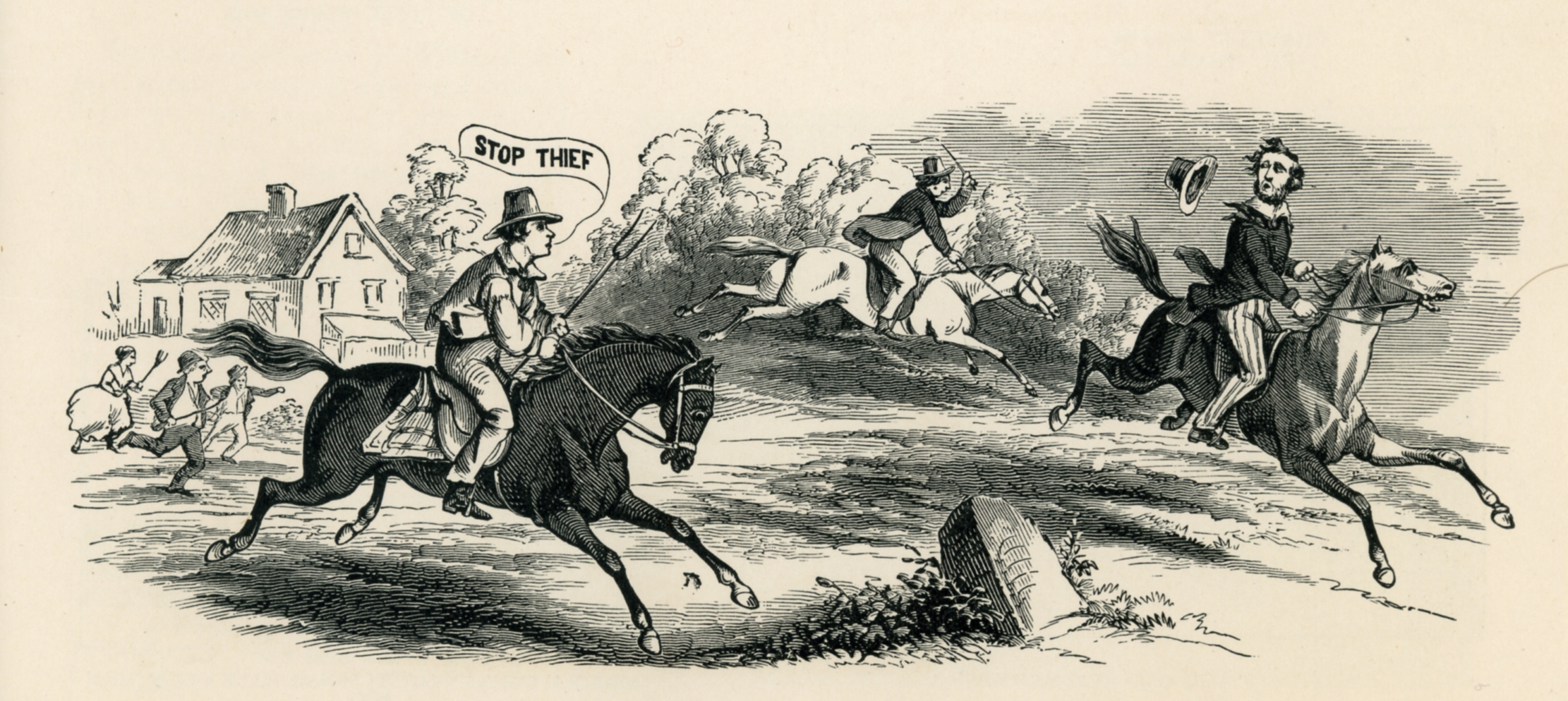
Jason Fairbanks had been in jail awaiting execution for only 10 days after his conviction when he was liberated by a group which included his brother, several nephews and friends. Word spread quickly across the county and New England of the daring escape, and the town of Dedham was torn apart by the friction between Jason’s supporters and his detractors. A reward for his capture was offered, and it took only 10 days for three men with fast horses to catch up with Jason and one of his accomplices in a New York town on the shores of Lake Champlain. Jason was returned to Massachusetts and imprisoned in Boston until his execution date.
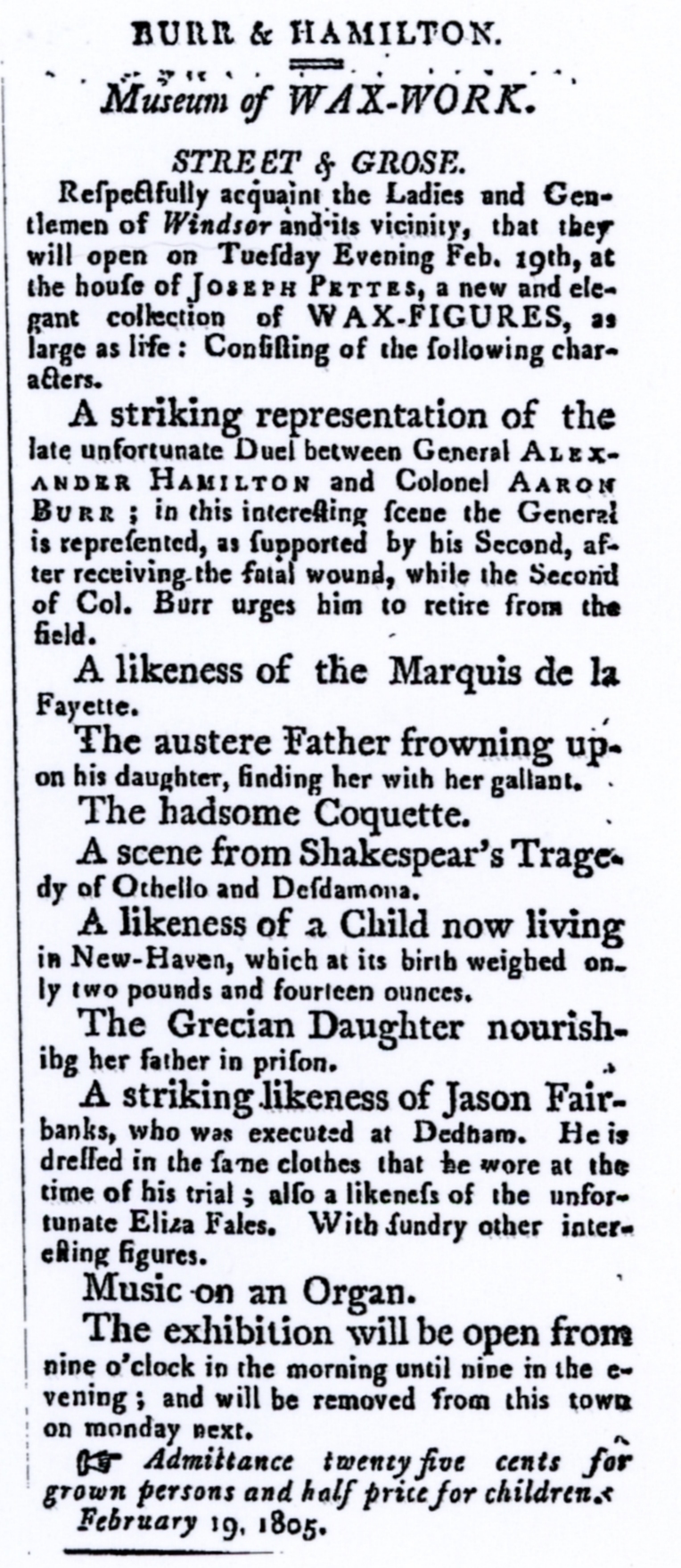
On the morning of September 10, he was transferred to the Dedham jail, and from there Jason Fairbanks walked the short distance to Dedham Common where a crowd of thousands waited. After signalling he was ready by dropping his handkerchief, Fairbanks was hanged. Dozens of articles, broadsides, books and poems were written and sold on the day of the execution and for months afterward. The following year a traveling wax museum began touring the country, featuring the tragic figures of both Jason and Elizabeth, along with other famous and infamous characters from history and literature.
For a more detailed account of the affair, visit the Fairbanks House website: http://www.fairbankshouse.org/
where you will find a paper written by Fairbanks descendant Dale Freeman as well as a reprint of two 1801 publications for sale in the on-line gift shop.
May 18- A Tragic Anniversary
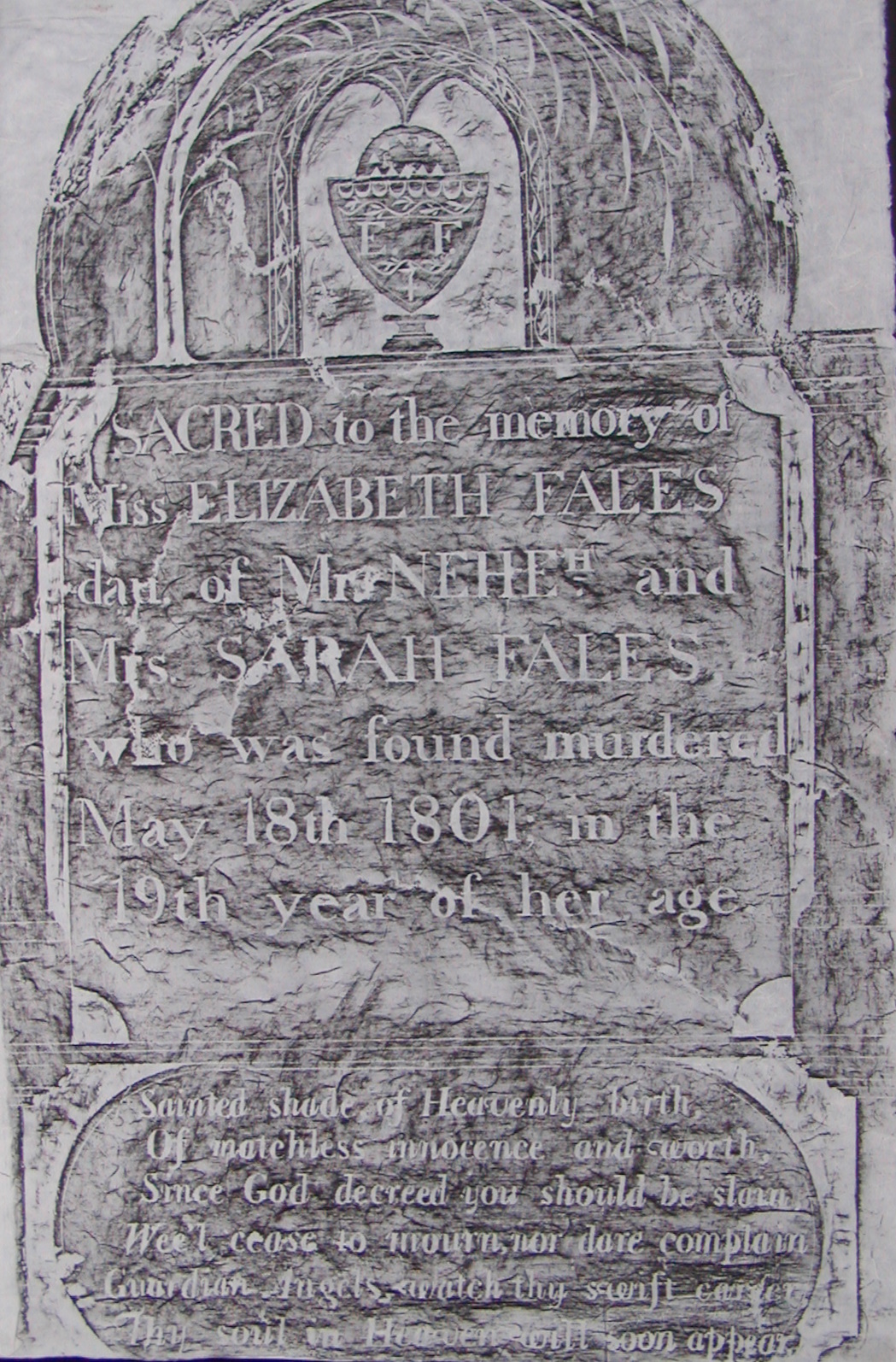
May 18, 2010May 18, 1801- Nehemiah Fales is startled by the sight of 20 year old Jason Fairbanks running toward the Fales home in the present day Cedar St./Turner St. area of town. Jason is bleeding profusely from various wounds and claiming that Elizabeth, Fales’ 18 year old daughter has killed herself in a nearby thicket of birch trees called Mason’s Pasture. Nehemiah and his brother Samuel run to the spot where they find Betsey lying on the ground, her life ebbing away from severe stab wounds to her chest, arm, back and hands. She dies shortly after her distraught mother arrives at the scene.
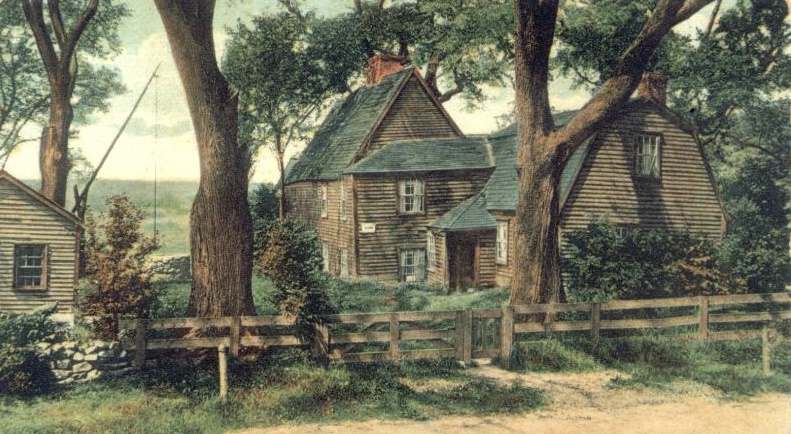
Jason Fairbanks is so severely wounded himself that he can not be removed from the Fales home until a few days later, when he is carried across town on a litter, past the family home on East St. to the Dedham Jail, where he is held for the murder of Betsey.
The trial of Jason Fairbanks began on August 4th of that year. Jason’s lawyers tried to prove that his weakened condition and withered arm made it impossible for him to have inflicted the numerous and violent wounds on Betsey, and that she had killed herself in a fit of romantic despair. The prosecution contended that these same wounds could not have been self-inflicted, and that Jason murdered Betsey in a rage when she spurned his attentions. Jason was found guilty on August 8th and sentenced to be hanged. But a group of his friends had other plans. TO BE CONTINUED…