Posted tagged ‘Dedham High School’

Dedham’s Stone Secrets/Part 3

January 19, 2025

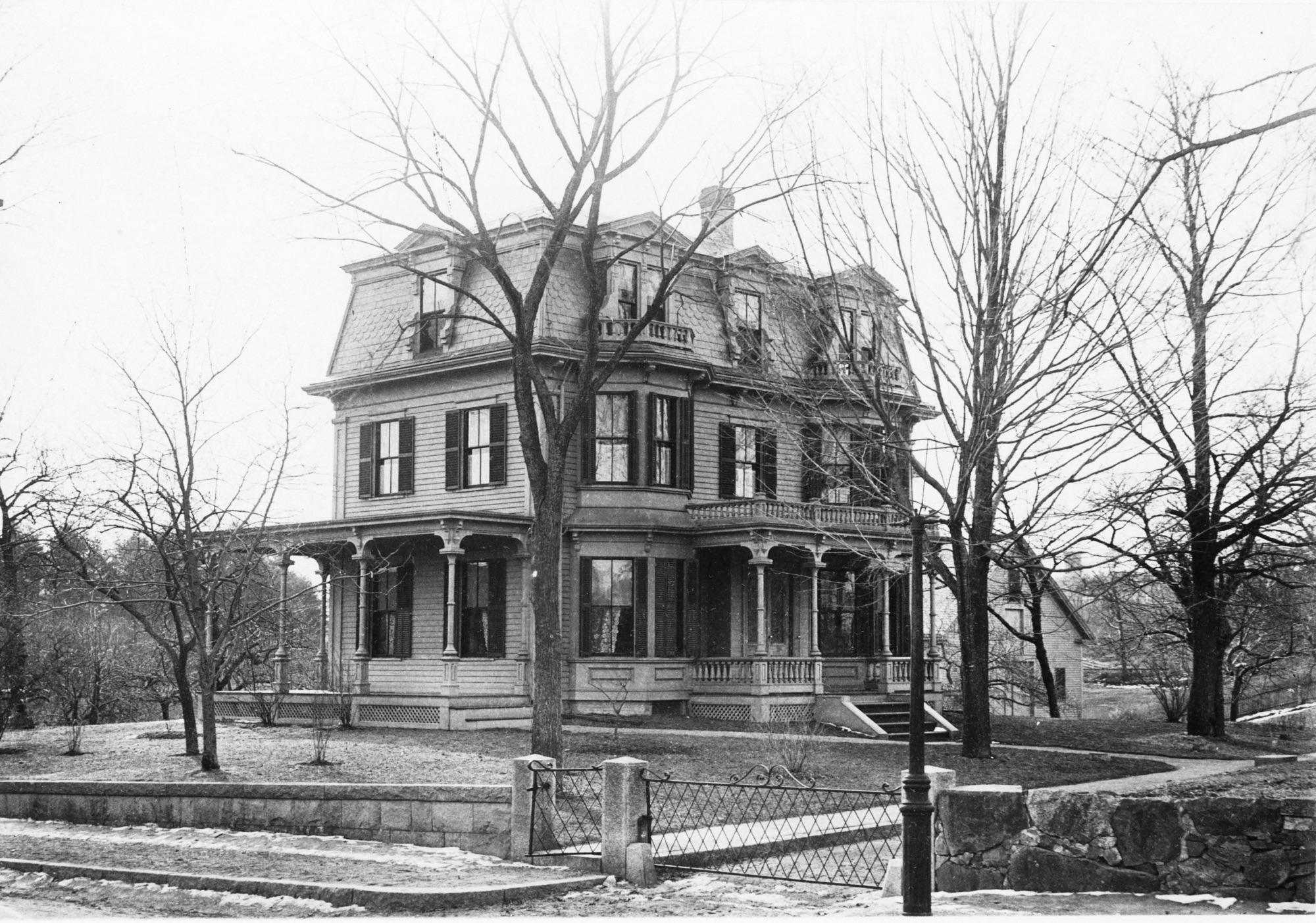
This is the third lost Dedham house featured in my Stone Secrets series, and, it is the only one that was still standing during my lifetime. Although I was only six years old when it was torn down, I do have a memory of it, perhaps because of its resemblance to the Addams Family house from a favorite TV show of the time. The Storrs/Welch house, constructed by local contractor Otis Withington c. 1870, stood south of High Street and east of Mt. Vernon, diagonally across from the Thomas Barrows estate (St. Mary’s parking lot) featured in the last Stone Series post. The large house with its Mansard roof, pedimented windows and decorative porch features is a good example of the Second Empire style, popular in the mid-to-late nineteenth century. The first occupants of the house were Royal Otis (R.O.) Storrs, his wife Lora, and three children.
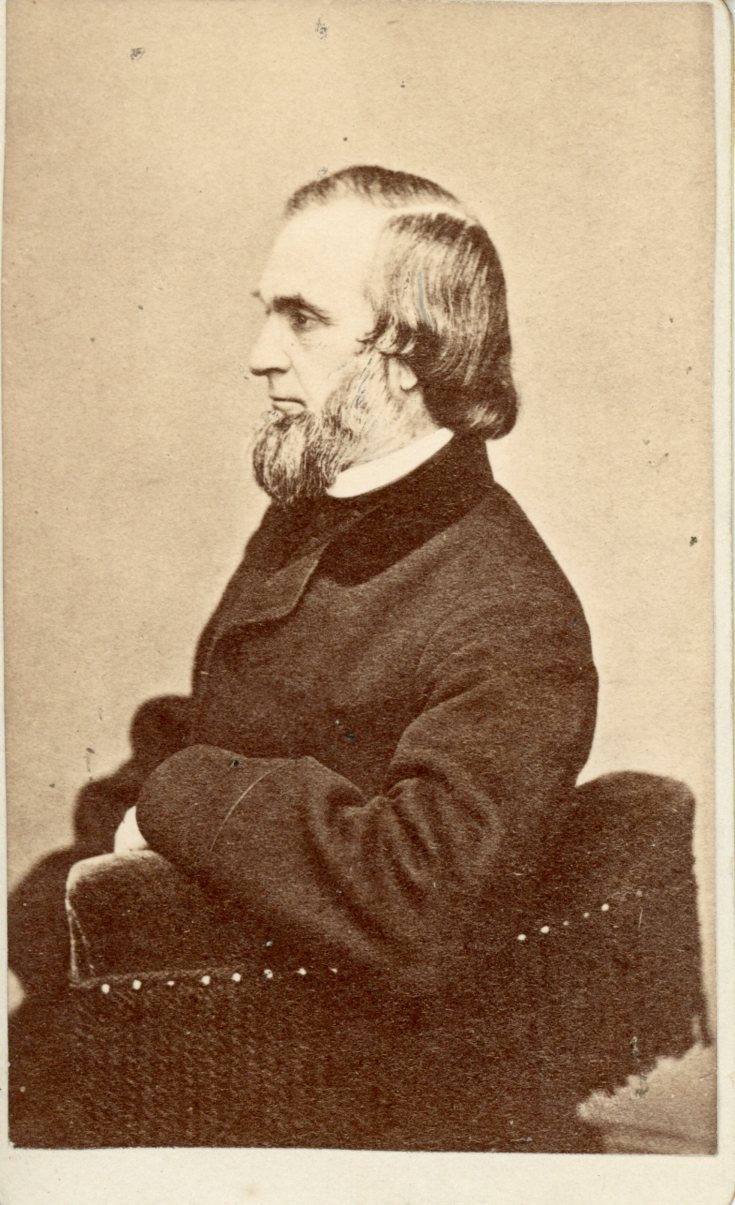
Royal Otis (R.O.) Storrs

A Connecticut native (his younger brothers Charles and Augustus founded the University of Connecticut), Royal Storrs came to Dedham in 1868 and leased the Merchant’s Woolen Mill on Mother Brook, before purchasing the Stone Mill on Milton Street, which he ran with his son Frederick. Storrs quickly immersed himself in Dedham town affairs, serving on the school committee, select board, and library committee, among many other boards and committees. Financial misdeeds, however, resulted in Storrs running up a half million dollar debt to his creditors, forcing him in 1882 to declare bankruptcy and sell the mill. He died on May 25, 1888 at the age of 73, and a few years later his widow put the estate up for sale.
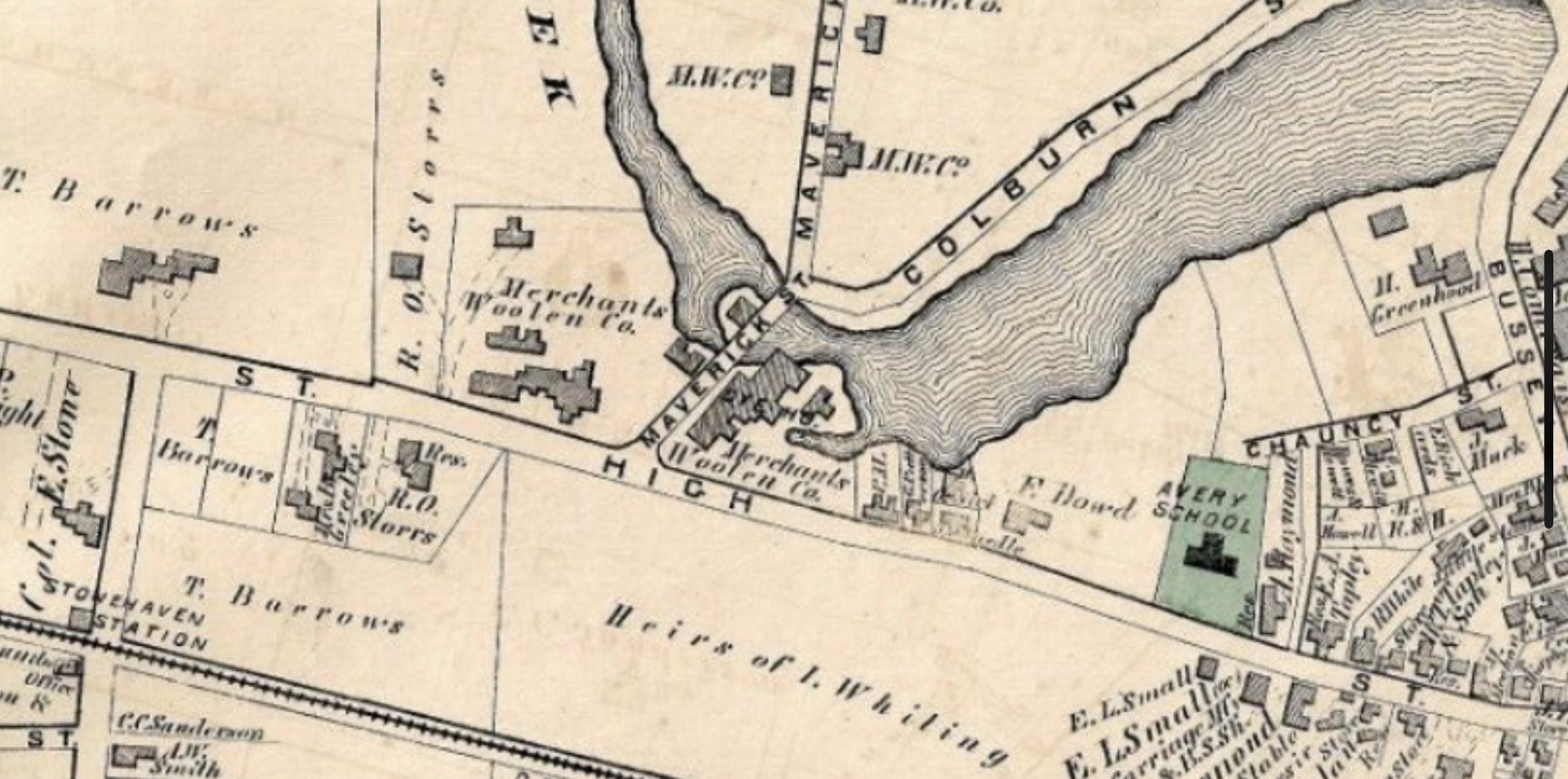
The Storrs property as seen on an 1876 map. Interestingly, Storrs lived across the street from Thomas Barrows, a previous owner of the Stone Mill and the subject of the previous Stone Secrets post.

The property was purchased in 1892 by Boston contractor Stephen Tarbell, who only resided there a short time before passing away on January 18, 1894 at the age of 69.
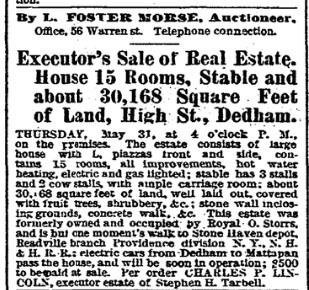
Boston Herald, May 27, 1894- the house has grown to 15 rooms after a large addition was built on the back

The next owners, David and Isabel Greenhood, also occupied the home for a short time, before it was sold to wool merchant James H. Welch.
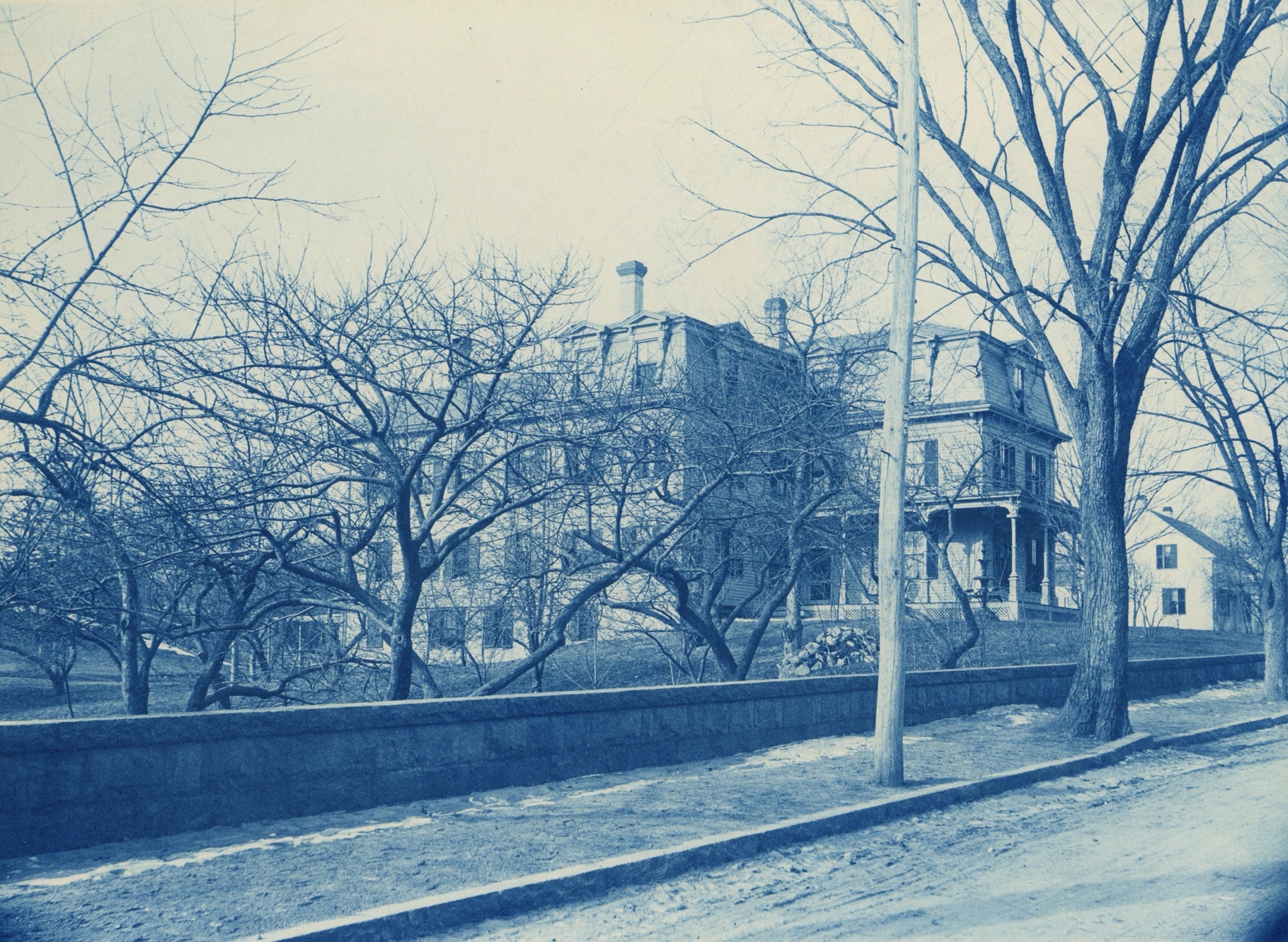
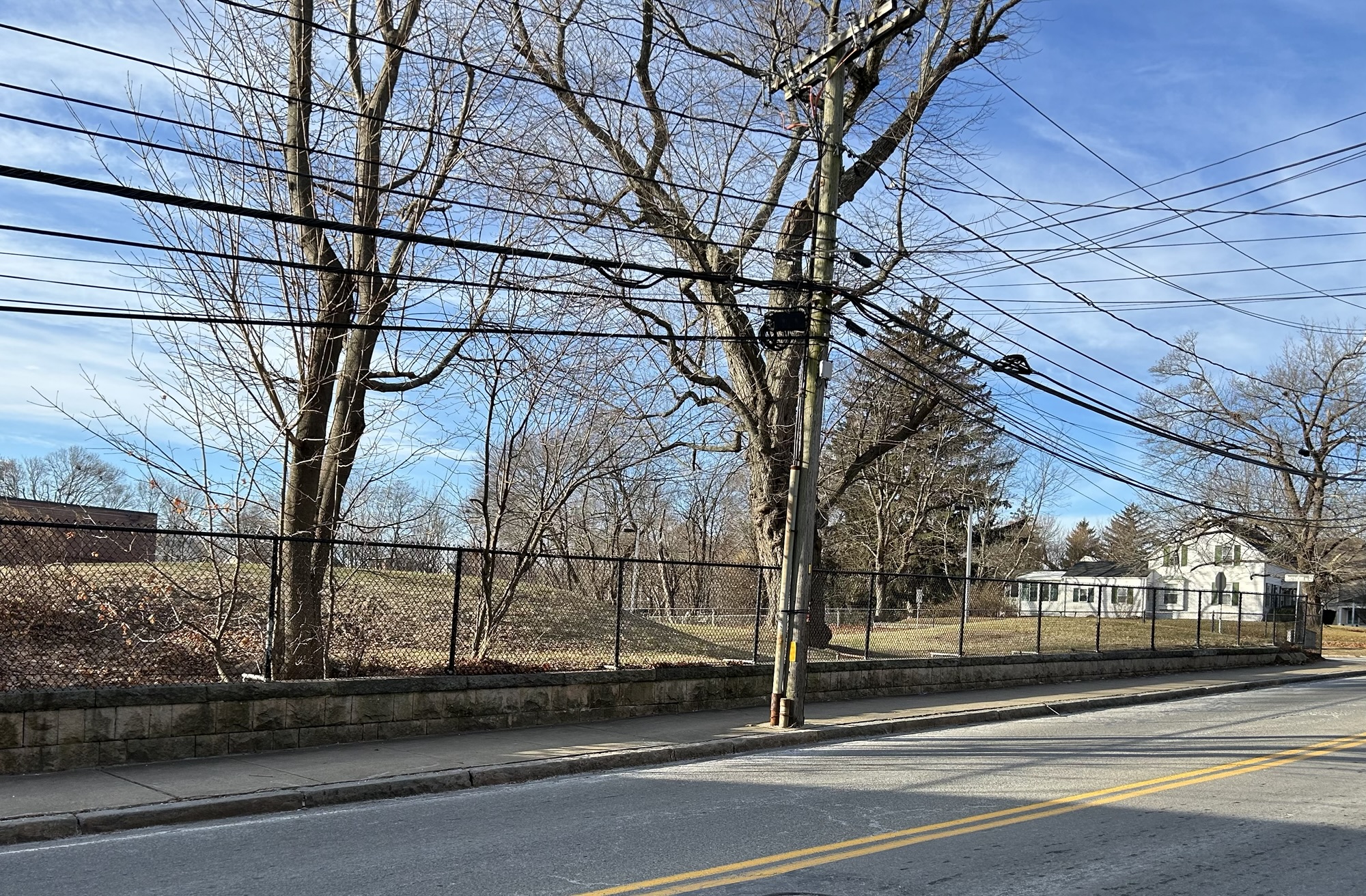
Welch was an Irish immigrant working as the wool broker for the Merchant’s Woolen Mills. He and his wife Ellen moved into the large house with their six children and Irish servant in 1897. Welch died in 1909, but for the next five decades the house would be occupied by several of his children and their families. As the twentieth century rolled on, the Welch family witnessed the changes that modernization brought to Dedham and the country. Neighborhoods grew where farms once stood, railroads were replaced by paved roads and highways, obsolete buildings replaced by up-to date ones.
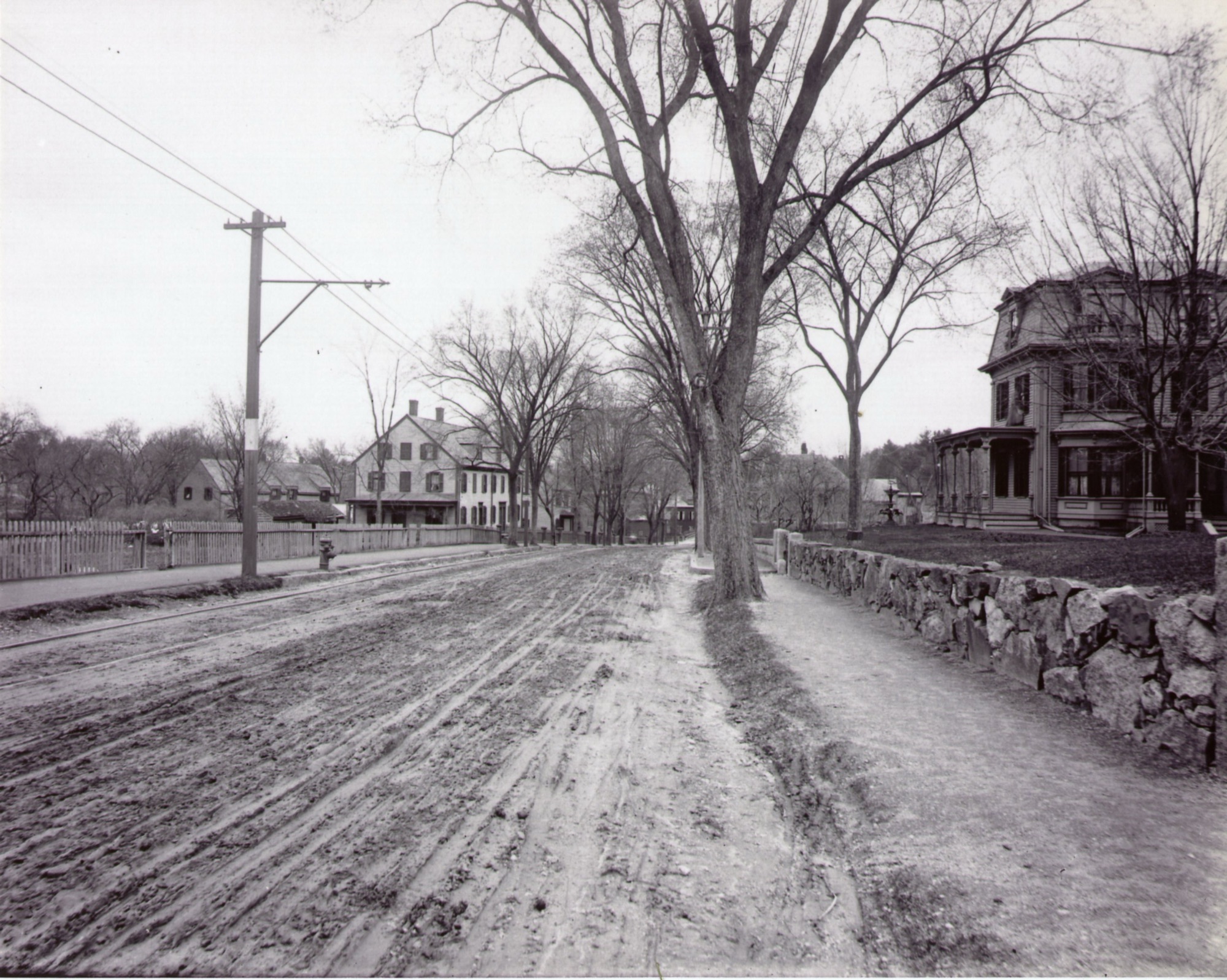
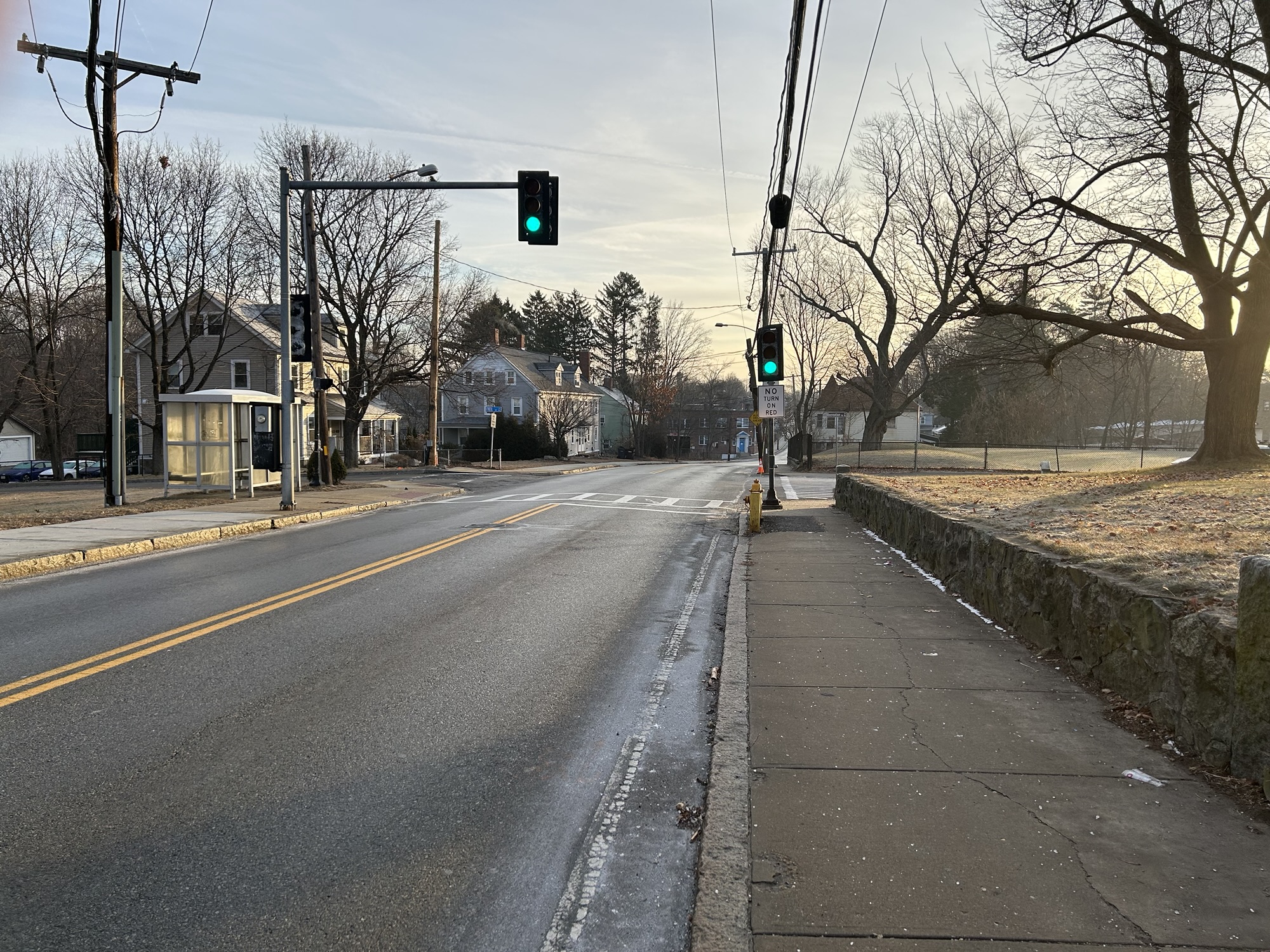
A view down High Street in 1895 and in 2025. The large building with dormers on the north side of High Street, visible in both images, served as housing for employees of the woolen mills.

One of those buildings was the high school on Bryant Ave, which the Welch children had all attended. That school was replaced in 1915 by a large four story brick building on Whiting Ave., which, in turn was replaced by the current high school complex in 1959. Despite the sprawling size of the new facility, and its two million dollar price tag, town officials were aware before the doors even opened that it was not adequate for the growing student population. In early 1965, the town approved an addition that would include twenty-eight new classrooms, a small gym, practice athletic fields and tennis courts. Situated on the other side of the New Haven Railroad tracks, it would seem as if the Welch home was safe from the proposed expansion, but the architect’s plans included the construction of a pedestrian bridge, making the land along High Street the perfect location for the fields and tennis courts. In August, the town voted to take by eminent domain several properties on Elmview Place and High street, including the Welch property.
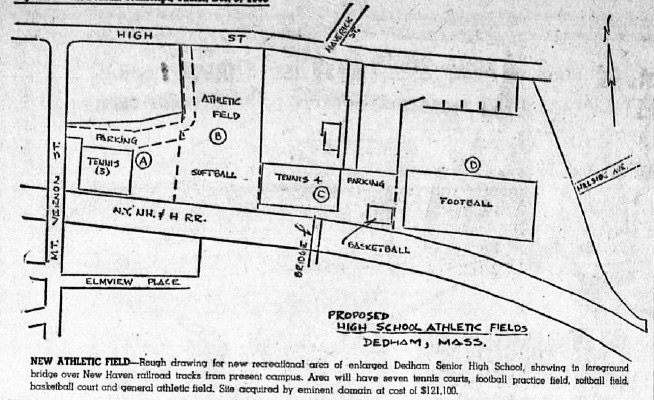
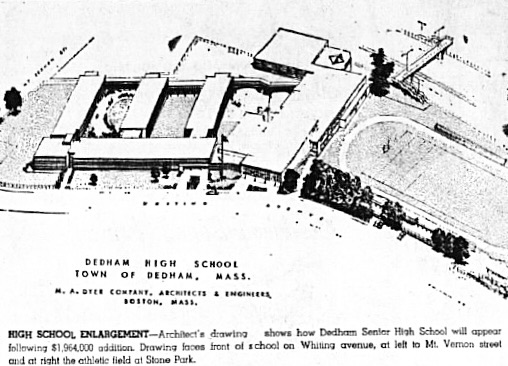
From the Transcript December 9. 1965. The Welch House stood on Site B where a new athletic field would be built. The driveway would become Recreation Road.
The addition would also include a new wing of classrooms facing Mt. Vernon Street.

The house was unoccupied at the time of the taking, and town officials were concerned about vandalism after a copper weathervane was stolen from the barn. The barn burned down in a suspicious fire the following summer, and by September the house had been razed and construction begun.
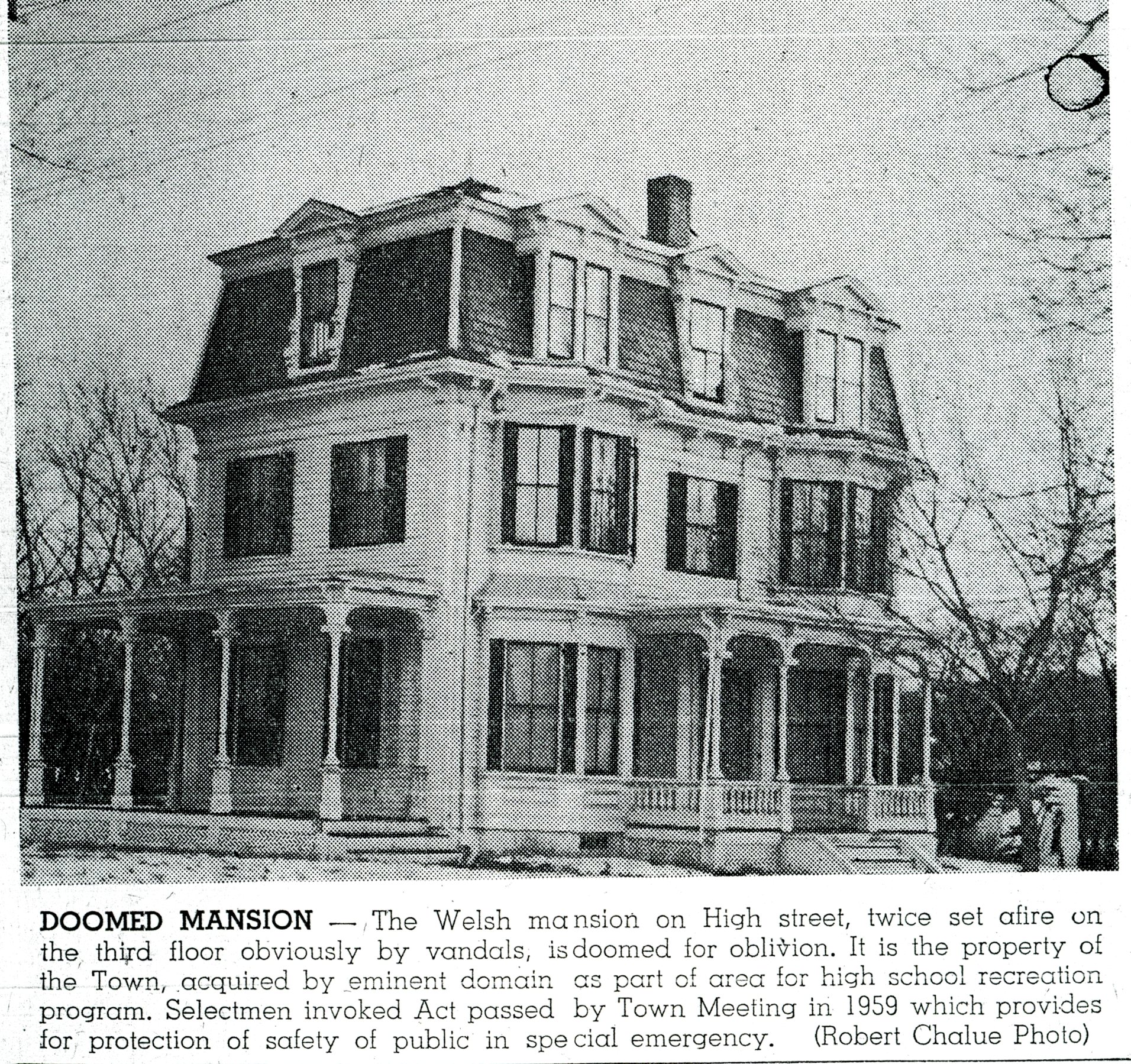
Transcript/January 6, 1966

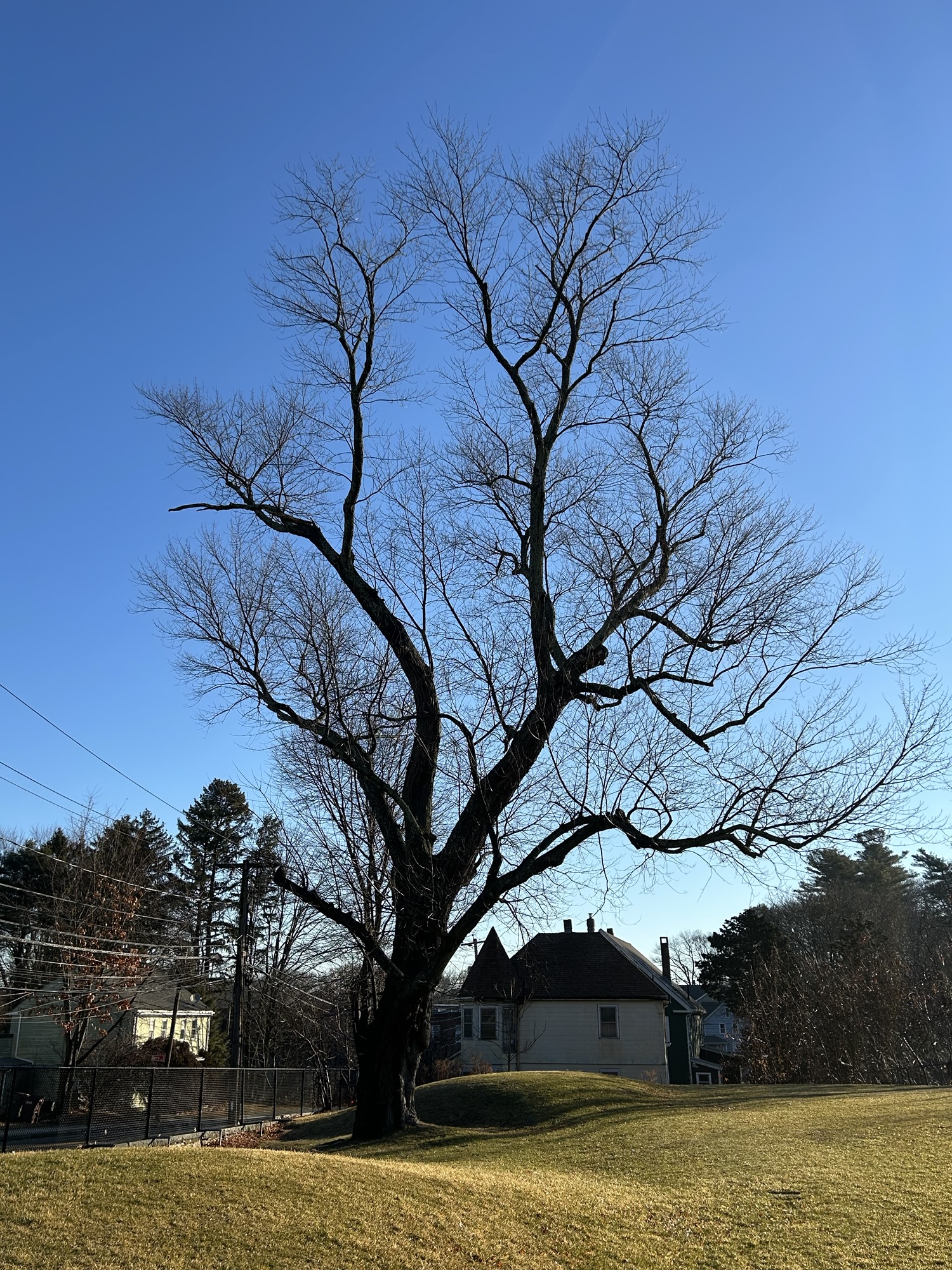
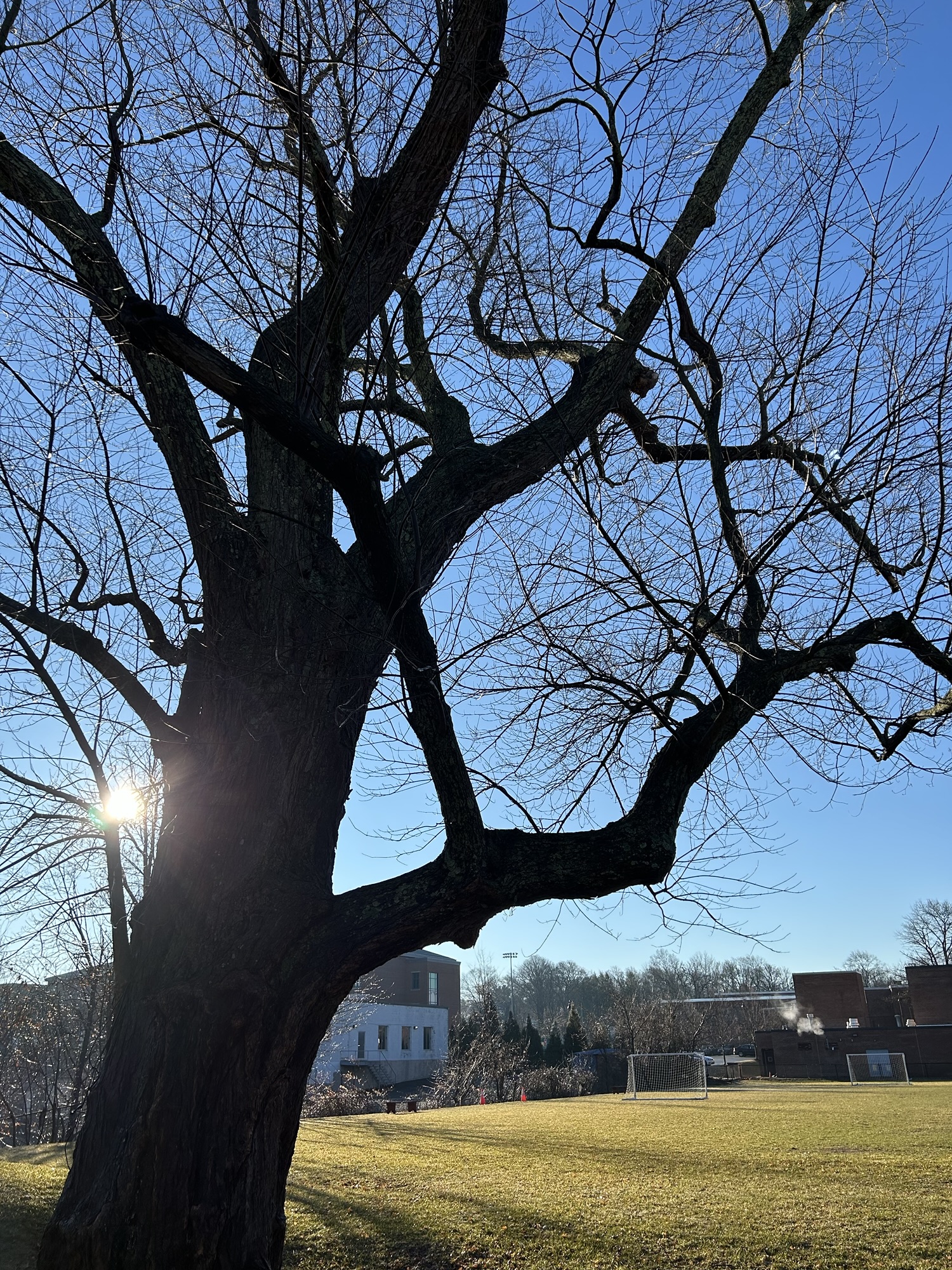
During negotiations with the town at the time of the taking, Mrs. Ella Welch, wife of youngest Welch son William, petitioned the town to save some of the “beautiful shrubbery” and the “two fine spruce trees” on the property, but town officials denied her request. Amazingly, several gnarled oak trees along High Street were spared, and today, along with the stone wall, are the only reminders of a once majestic house and the families who lived and died there.
All historic images courtesy of the Dedham Museum and Archive. 19th century photos of the house were taken by Jonathan F. Guild, a well-known photographer who had a studio in Dedham Square for many years.
No Tonic Allowed in the Gym

April 19, 2023
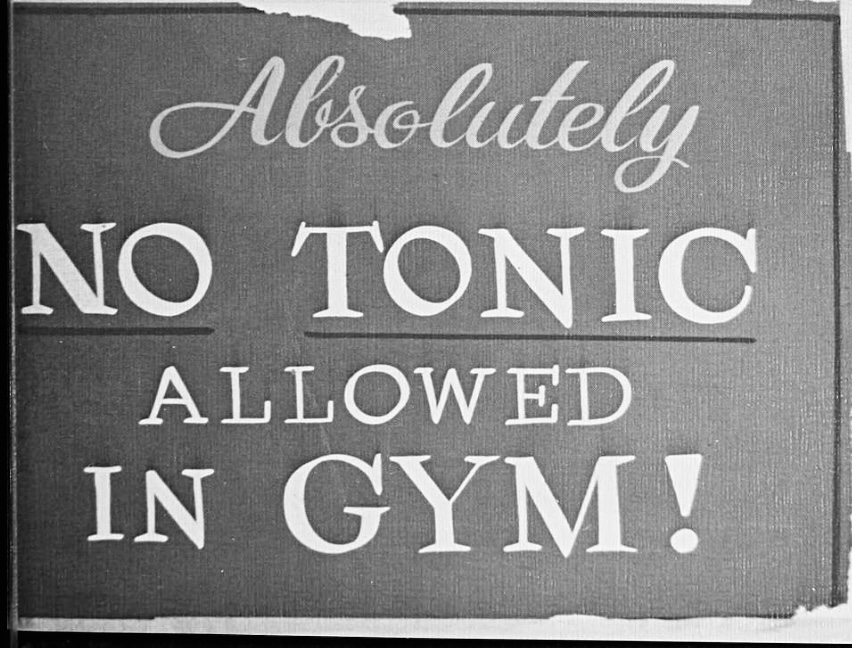
From the 1973 DHS yearbook.

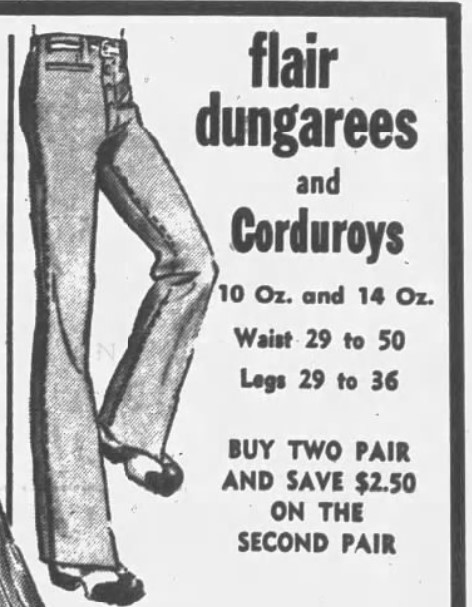
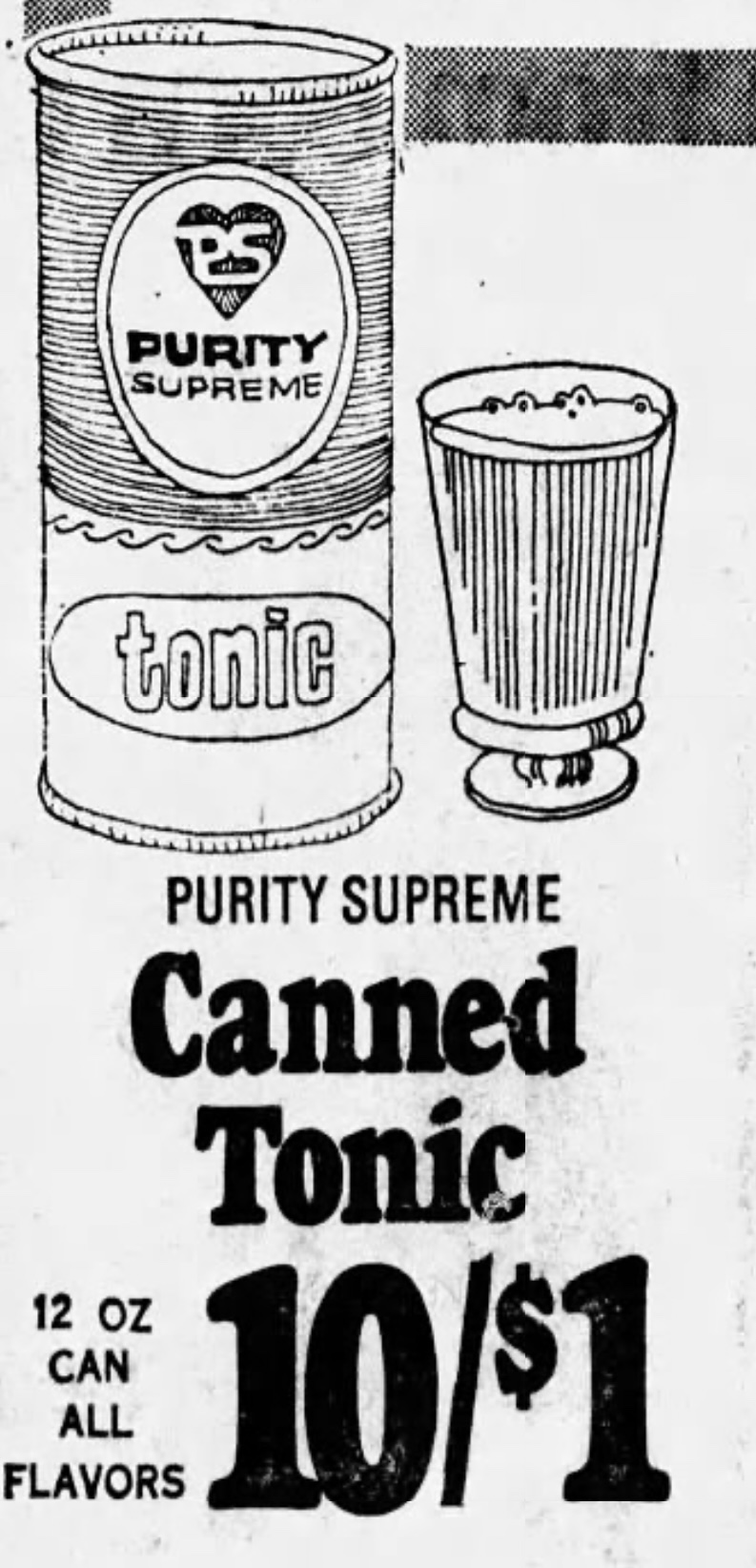
This sign hung on the door to the Dedham High gym 50 years ago, and there’s no doubt that every one of the 2,000 or so students in the school knew exactly what it meant. Hang that sign on the gym door today and you’ll get a lot of confused looks and questions…Hair tonic? Gin and tonic? Those of us who grew up in the 60s and 70s know that “tonic” was another word for soda. Orange ade, root beer, ginger ale, even Coke were referred to collectively as tonic. It was a common and widespread term around here back then, as seen in this ad from the Globe in 1972:

According to the Globe, the first printed instance of the word to describe carbonated beverages was in 1888 in an article describing the theft of ’10 bottles of tonic’ from a Boston store. For close to a century, folks in Massachusetts and other parts of New England could be assured of getting served a carbonated soda when asking for a tonic. The term has been pretty much abandoned these days (Wikipedia called it “antiquated!” Boy that makes me feel old). It joins these other words from my youth that have faded from modern day usage:

Hassock (ottoman)

Divan (couch- this was my father’s word, not mine)

Dungarees (jeans- see my February 2023 post about Dungaree Day)

Supper (dinner)

Cellar (basement)

Crueler (a horizontal donut, now called a stick)

Feel free to share your own “antiquated” words or phrases from back in the day. And keep that tonic out of the gym!

50 Years Ago- Dungaree Day

February 10, 2023

I will be wearing dungarees next Wednesday to commemorate the 50th anniversary of Dungaree Day at Dedham High School. First, for any readers not of a certain age, dungarees are what we called jeans back in the day (my mother shortened the term to “dungies”). Language changes. The Wrangler Wranch in the Dedham Mall where I sold dungarees during high school was originally called Mr. Slacks. Besides, “Jeans Day” just doesn’t have the same ring to it.

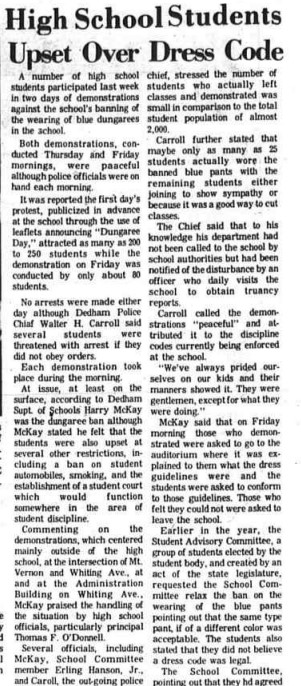
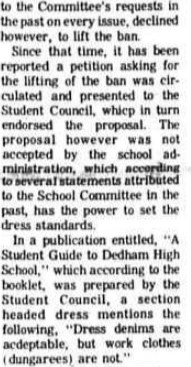
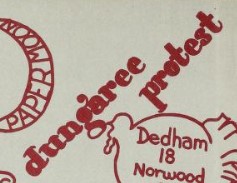
Dungaree Day took place at Dedham High School on February 15, 1973. It was a student protest that was one of the culminating events in a years-long battle between students and school authorities over a dress code that students found to be outdated, arbitrary, and unfair; a protest that saw high schoolers emulating college protestors across the country and administrators making public statements that could have been lifted from the script of Footloose. No summary I could write could accurately explain the event and the prevailing cultural attitudes of the time that precipitated it. I was still in 8th grade at St. Mary’s (dressed in shirt and tie every day, no less) and only heard about it from older friends and siblings who were there. So here is some coverage from the Dedham Transcript of February 21, 1973.

Articles in the Patriot Ledger corroborated this account and added more details. When the police arrived, students were outside chanting “We want dungarees!” After the protest students either changed out of the offensive clothing or went home. No students were suspended for protesting, but one was sent home for “gross disrespect” and smoking. A smaller protest took place the following day with a small group of students carrying signs outside before classes began.

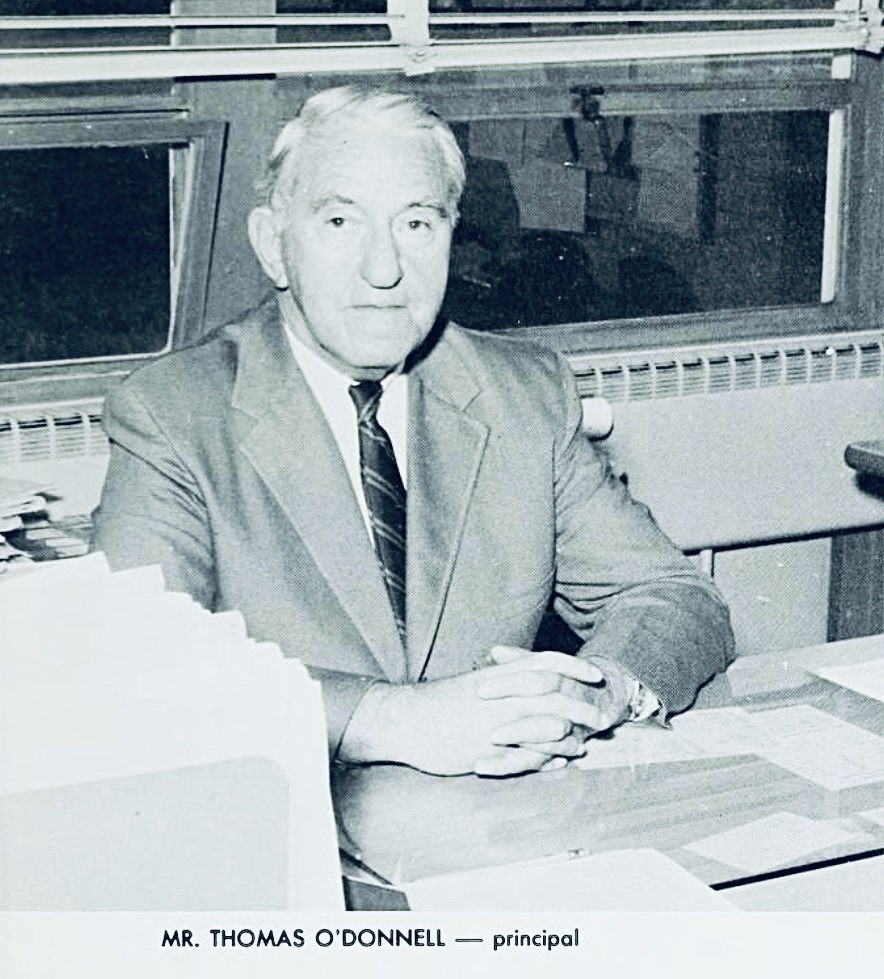
The Dungaree Debate was nothing new in Dedham. It had only been a couple of years earlier that the necktie requirement for boys and skirts for girls had been abandoned. For several years at School Committee meetings, concerned adults had pointed out examples of dress code scofflaws followed by pleas of “Why do we have a dress code if we don’t enforce it?” For example, police chief Walter Carroll remarked at the March 1970 meeting: “The dress code should not be relaxed. A disciplined school is a happy school.” At another meeting, Committee Chair Walter Flanagan’s comment “Dungarees are not permitted but I know they are wearing them at the junior high and the high school” prompted Superintendent Harry McKay to respond: “I’ll look into it. If they wear dungarees to school, they should be sent home.” In 1965, just a few years into his tenure as DHS principal, Thomas O’Donnell was interviewed for a Patriot Ledger story about dress codes at different area high schools. Referring to Dedham’s dress code (adopted by the student council in 1958) that stipulated hair length and style among other rules, Mr. O’Donnell seemed satisfied, stating: “The students cooperate, and so do the parents.” By 1973, the ban on dungarees was about all that remained of that old dress code, and the students needed to let the administration know it wasn’t 1958 anymore, times had changed, and the dress code was obsolete.

Mr. O’Donnell started as principal in 1962. He retired at the end of the 1972-1973 school year after serving the Dedham Public Schools for 41 years.

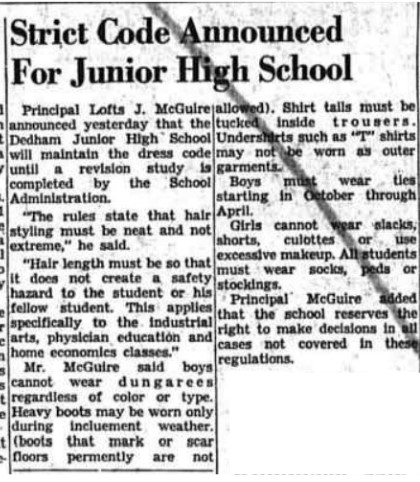
At a School Committee meeting in November 1972 the dress code had been discussed but not modified. The idea for Dungaree Day was proposed at a December meeting of the Student Activities Union, which had formed in September as an alternative to the traditional Student Council. According to the Transcript, the majority of the 200 students at the meeting were against the idea and favored working through proper channels to try to lift the ban. But students had been working through “proper channels” for some time with no results. The Student School Committee, an advisory committee to the town’s elected school committee had voted in November 1971 to abolish the Student Dress Code. The School Committee took no action. Students at the Junior High won a significant victory in November 1970 when the Student Council convinced administration to allow girls to wear pants (only from November-April and NO DUNGAREES!) but the dress code was still very restrictive.

The Junior High dress code from September, 1970. In November, it was revised to allow girls to wear pants from November-April, then revised again to allow pants and pant suits year-round, but NO DUNGAREES! The necktie requirement for boys was also dropped.

Senior Susan Prodnak voiced her opinion on the dress code in a letter to the Transcript in December:

“Almost everyone agrees that the dress code is pretty ridiculous. Basically it is that you’re allowed to wear any color dungarees from saffron yellow to shocking pink with the exception of blue. If you are discovered in such blue attire, you are forced to miss several classes, and possibly several days of school.”

The Class of ’74 commemorated Dungaree Day in a collage in the yearbook.

The issue of dungarees seemed to come up at every school committee meeting before and after the Dungaree Day protest. In their public statements, administrators consistently voiced the same three arguments against the offending clothing: 1. Dungarees are play clothes and if students wear play clothes to school, they will be less focused and in a more playful frame of mind. 2. Dungarees are the uniform of the counterculture and the drug culture and the rebellious youth of America. Allowing students to wear them would result in a lack of respect and discipline and lead to disruptive behavior. 3. Rules are rules. Dungarees are against the rules; students need to follow the rules and face the consequences when they don’t.

The dungaree debate was resolved in July 1974 when the Massachusetts Legislature passed legislation known as the “Students’ Bill of Rights.” Among other protections for students was the ban on dress codes, unless the code was instituted for hygiene, health and safety purposes. The bill essentially put an end to dress codes in all Massachusetts high schools, as long as local school committees approved. Dungarees were allowed for the first time at DHS in the 1974-1975 school year, my sophomore year. The student conduct code was officially approved by the school committee the following October. Although my rights to freedom of expression had been affirmed by both the Massachusetts Legislature and the Dedham School Committee, they were overruled by a higher power, my mother, and so I never attended a day at DHS while wearing “dungies.”

Do you have any Dungaree Day memories? Share them in the comments below!

Coming in Part 2- This was not the first kerfuffle at Dedham High over a dress code, nor would it be the last. Stay tuned.