Walking Tours presented by Dedham Museum and Archive October 18 and 25
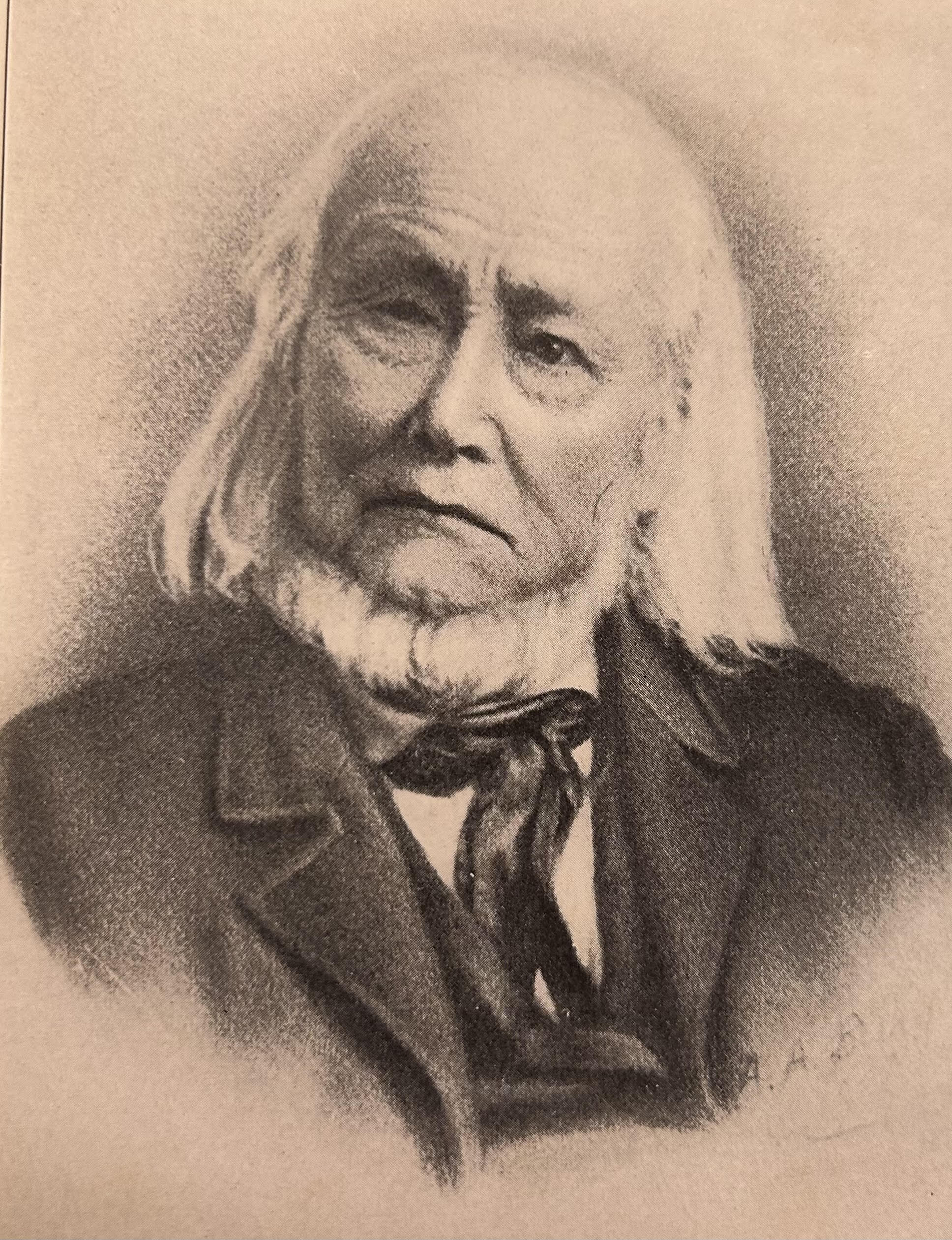
This jolly-looking fellow is Martin Bates. He was a prominent businessman and land owner who lived in Dedham from 1788-1869. At one time he owned the Norfolk House on Court Street, one of Dedham’s most popular taverns which still stands today.
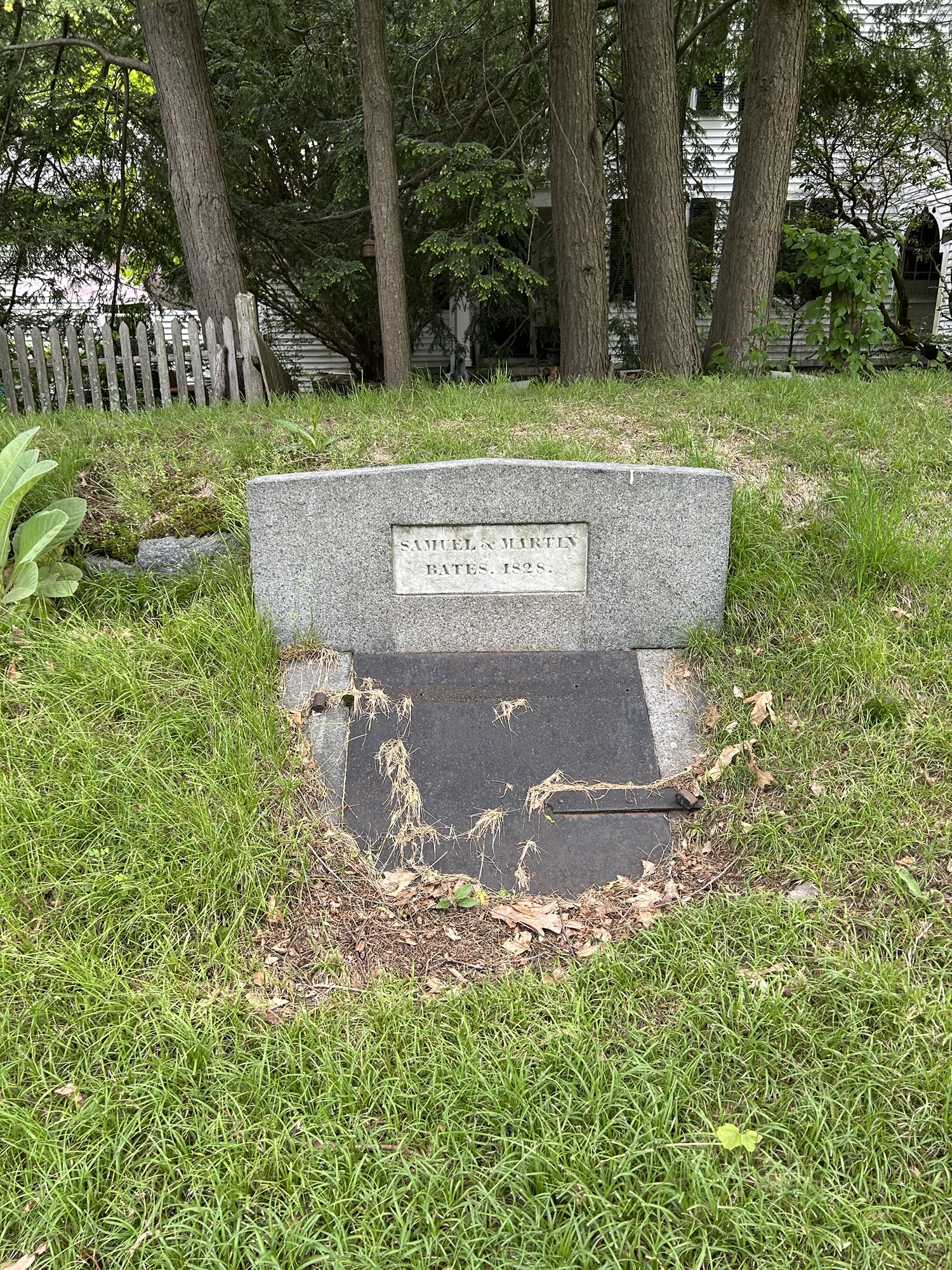
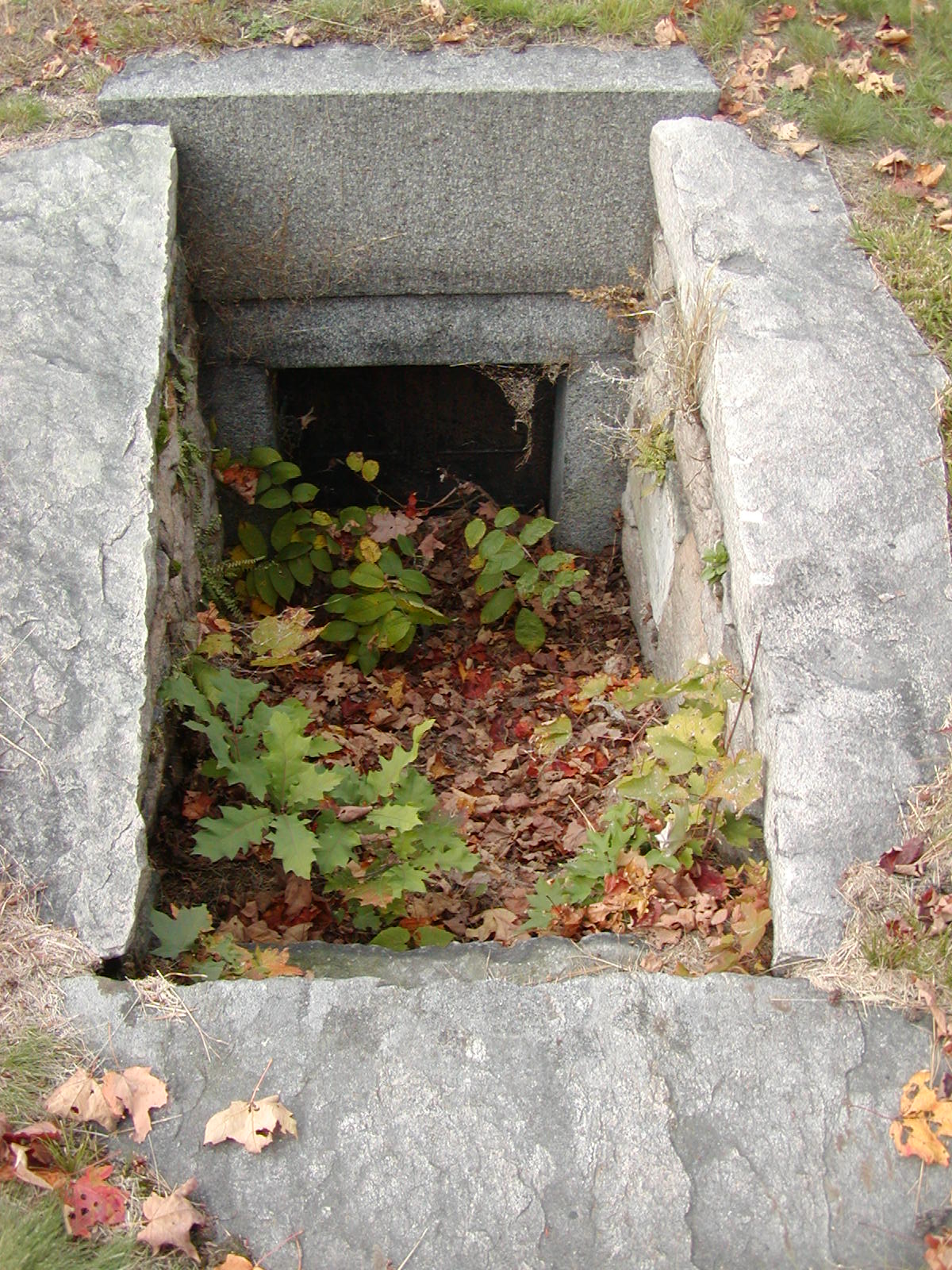
This is the Bates family tomb in the Village Avenue Graveyard. On Saturday October 18 and October 25, Martin Bates will exit his tomb to great visitors as the Dedham Museum and Archive presents the first ever “Voices from the Graveyard” Walking Tour. Marty and six other “Dead-hamites” will be on hand to share stories of their lives (and deaths) in old Shiretown. This is a special seasonal event you don’t want to miss- but hurry, some time slots are already sold out and tickets are going fast. Visit the Museum website for more information and for tickets. I’ll be looking for you among the gravestones! https://www.dedhammuseum.org/programs-events/seasonal-walking-tours/
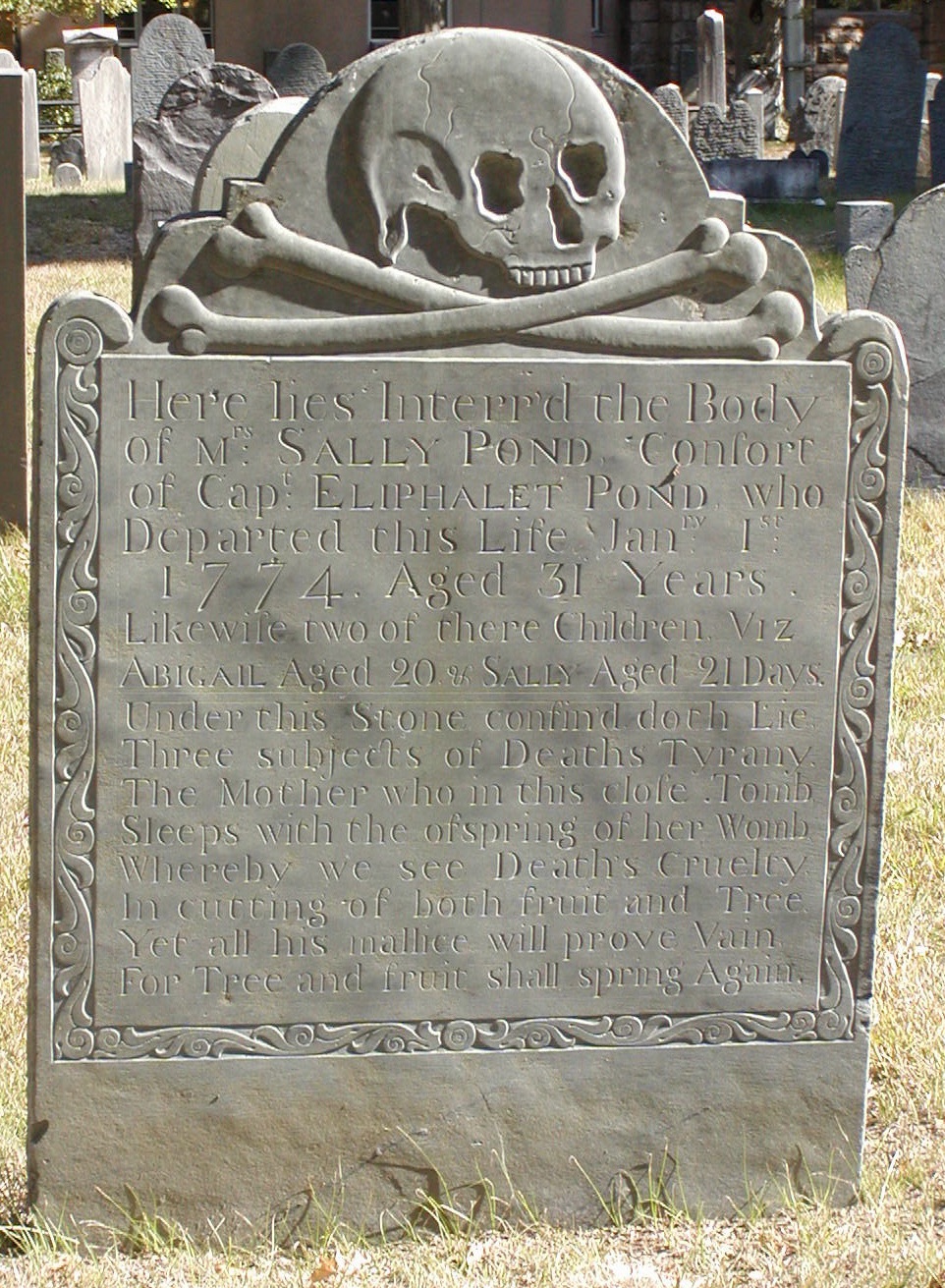
The gravestone of Sally Pond and her infant children, carved by noted Boston area carver John Homer.
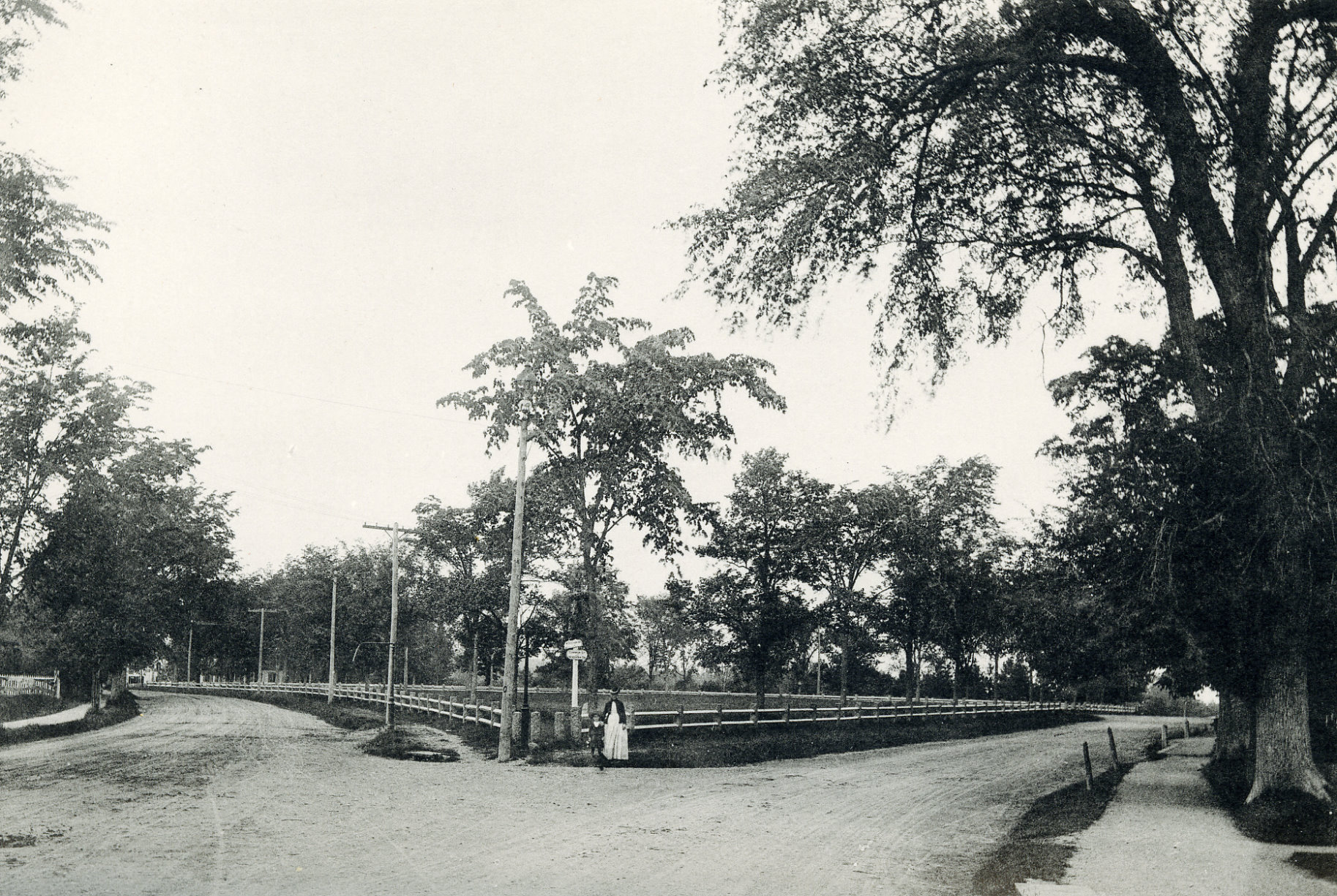
Dedham Common, 1890s- Courtesy of Dedham Museum and Archive
50 years ago, communities and businesses began observing the 200th anniversary of the founding of our country, beginning in April 1975 with celebrations and commemorations of the famous battles that marked the start of the Revolution. In the summer of ’75 the town of Dedham saw residents engaged in their own battle, one that could fittingly be described as “uncommon.”
Sometime around the 4th of July, residents in Precinct One were shocked to find the wooden railings surrounding the Town Common had been transformed from traditional white to a Bicentennial color scheme of red, white and blue. The reaction of the townspeople, especially those living on streets adjacent to the Common, was swift and strong. The new paint job was described as “garish,” “an aesthetic outrage,” “the worst of taste” and “inappropriate, incongruous and demeaning.” “It looks like the town trollop,” one woman remarked to a Boston Globe reporter.
Boston Globe July 13 1975
As equally enraging to locals was the process by which the fence received its tacky paint job. Despite the existence of a Bicentennial Commission and a recently formed Historical District Commission, neither group was consulted before Public Works Commissioner Paul Sullivan supervised the work. Sullivan explained that several benches in East Dedham had already been painted the patriotic colors with no public complaint, and when it came time to repaint the Common fence, it seemed like an appropriate way to honor the country’s Bicentennial. “I think it looks wonderful,” he said at a mid-July select board meeting. “Our forefathers would turn over in their graves if they could see it,” was one response to Sullivan’s remarks.
At the July 15 meeting, the select board voted 3-2 to keep the patriotic paint scheme, despite the vocal disapproval of most of the 80-plus in attendance and the presentation of a petition signed by over 100 townspeople demanding the fence be repainted white. At times the meeting became heated, with residents and members of the select board shouting at each other, questioning the taste of those in favor of the red, white and blue color scheme and the patriotism of those opposed. The meeting ended with more than a few attendees asserting that the fence would be repainted white again, one way or another. Hours after the crowd dispersed, a midnight caller to the Transcript calling himself “The Dedham Militia Man” stated “We do not like the fence red, white and blue. The fence now has black crepe paper on it and soon it will be white.” Such threats of civil disobedience were taken seriously by town officials, and a 24- hour police guard was posted at the Common for the next few days.
North Adams Transcript/August 11 1975
News stories throughout New England took a rather bemused tone when describing the kerfuffle, but Dedham residents, especially those living near the Common, took the matter very seriously. Throughout the summer, members of the various historical committees continued to meet to resolve this issue. But for the time being, the fence would keep its “Andy Warhol type pop-art” color scheme.
PART 2 Coming next week: A little history of the Town Common and the resolution to the ongoing disagreement
Kevin Hampe, clerk-treasurer of the Society in Dedham for Apprehending Horse Thieves, talks to Chronicle’s Ted Reinstein outside the old Norfolk Hotel on Court Street, where the society was founded in 1810.
Monday June 9, 7:30 on Channel 5 (WCVB)- I will be on Chronicle talking to Ted Reinstein about Dedham’s Town Forest as part of his “Who Knew?” series. Also on the segment will be the Fairbanks House, Society in Dedham for Apprehending Horse Thieves and the Dedham Museum and Archive. Here’s a link to the promo; be sure to watch!
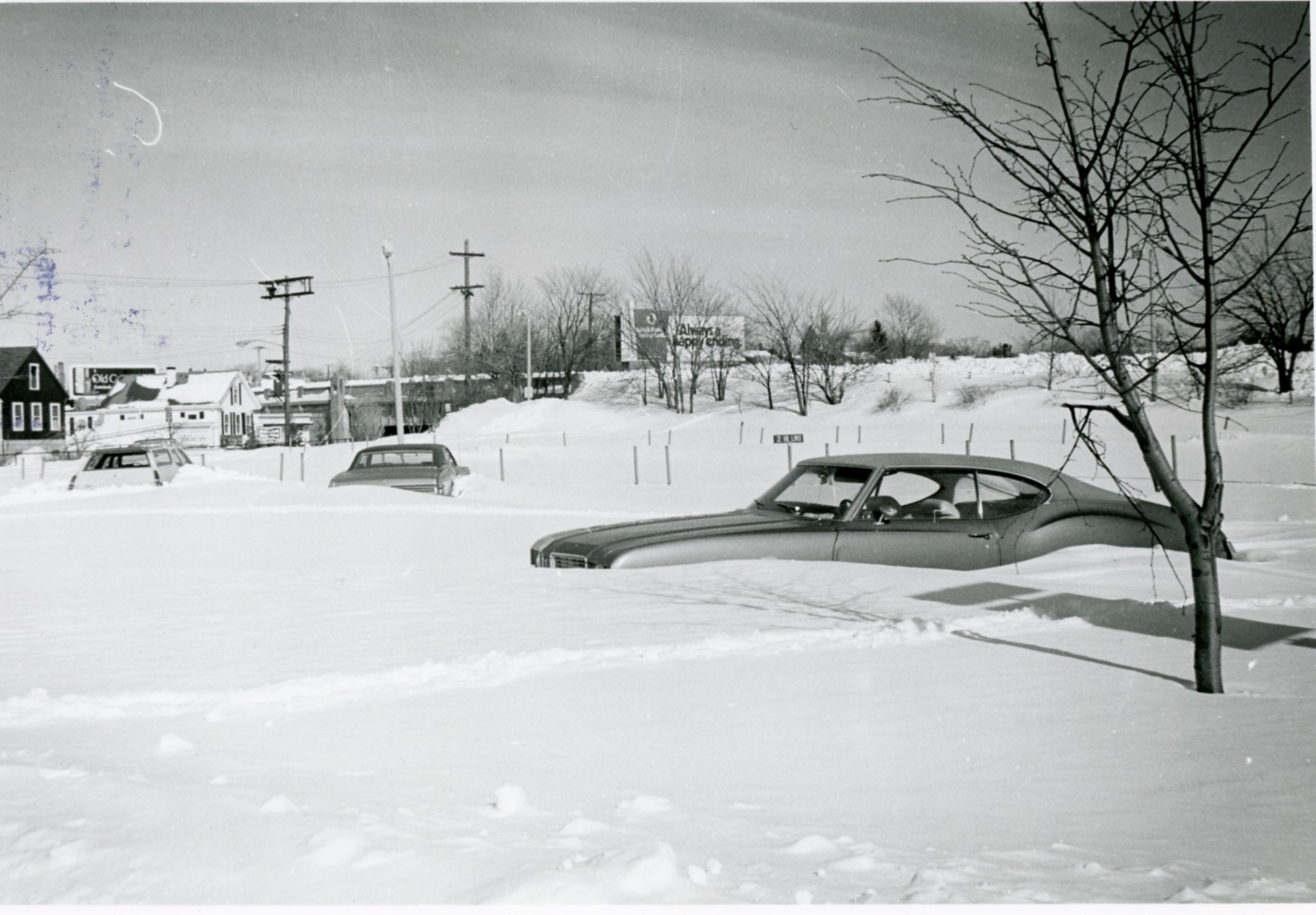
This is the Town parking lot on Eastern Ave., a few days after the historic storm that hit Dedham on this day in 1978. My car is currently parked in that same lot, and even though it is snowing and Dedham schools have a Snow Day, I don’t think I’ll see anything like this when I return to it in a few hours. For more Blizzard pictures, check out the Facebook post of the Dedham Museum and Archive : https://www.facebook.com/share/p/1Kbtmhdked/
You can also search on this blog and read my Blizzard posts from 2011. It certainly was a storm to remember!
Today’s firefighters live and work in a time in which they can devote their full energy to the demands of the challenging profession they’ve chosen. From the earliest days of organized firefighting until the mid-twentieth century, however, firefighters often held down several jobs in addition to their departmental duties. One such firefighter, George Austin Guild, was not only the chief engineer of the Dedham Fire Department, but also ran a successful business in town for over forty years.
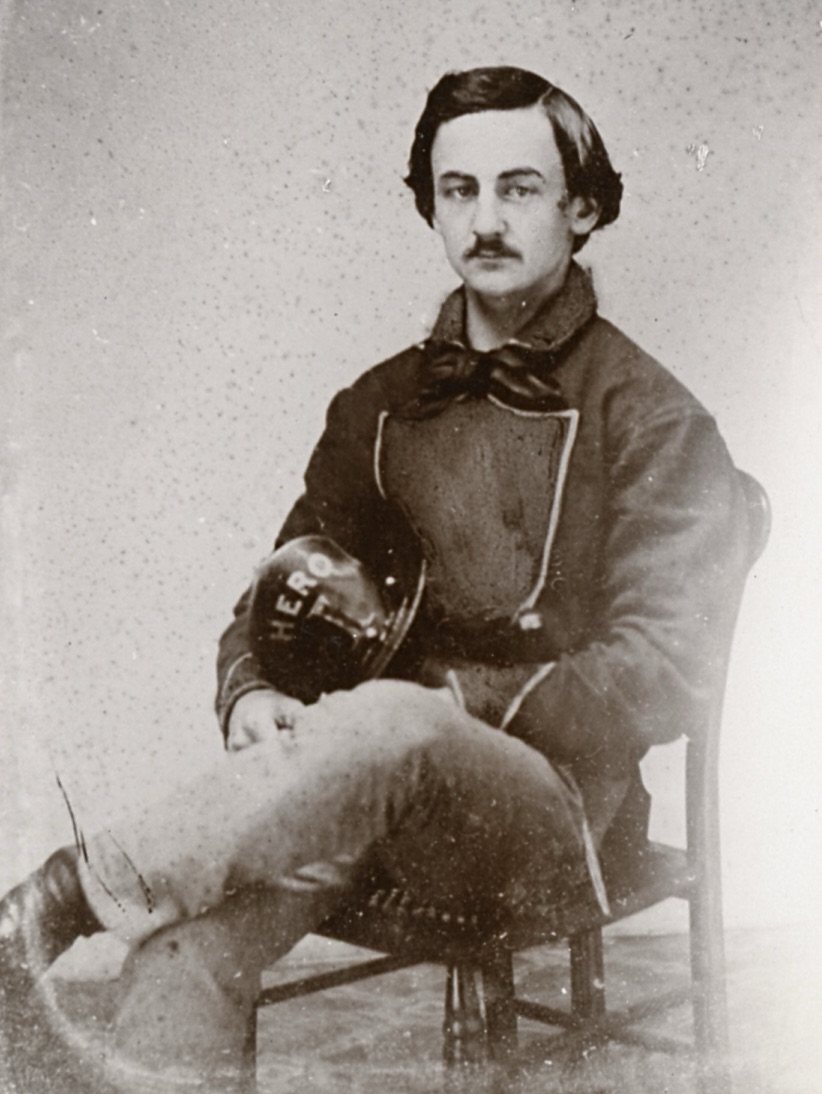
Guild as a member of the Hero Company. Early firefighters used colorful names to designate both their engines and companies.
George Guild was born in 1836, 200 years after the first Guild, John, came to Dedham as one of the original proprietors. In 1853, at the age of 17 he joined the Hero Engine Company One, headquartered at Connecticut Corner near the Town Common. He served as the department’s chief engineer from 1877-1892, when he retired. He was a popular chief and upon his retirement was feted at the central firehouse and presented with “an elegant easy chair, and handsome, as well as valuable writing desk” according to the Boston Herald.
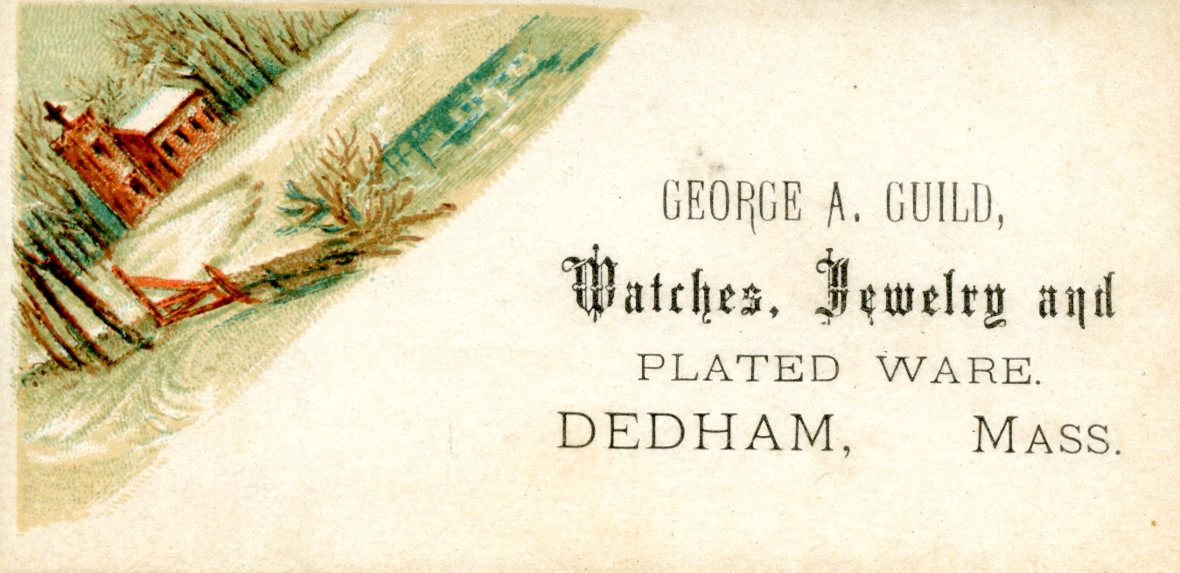
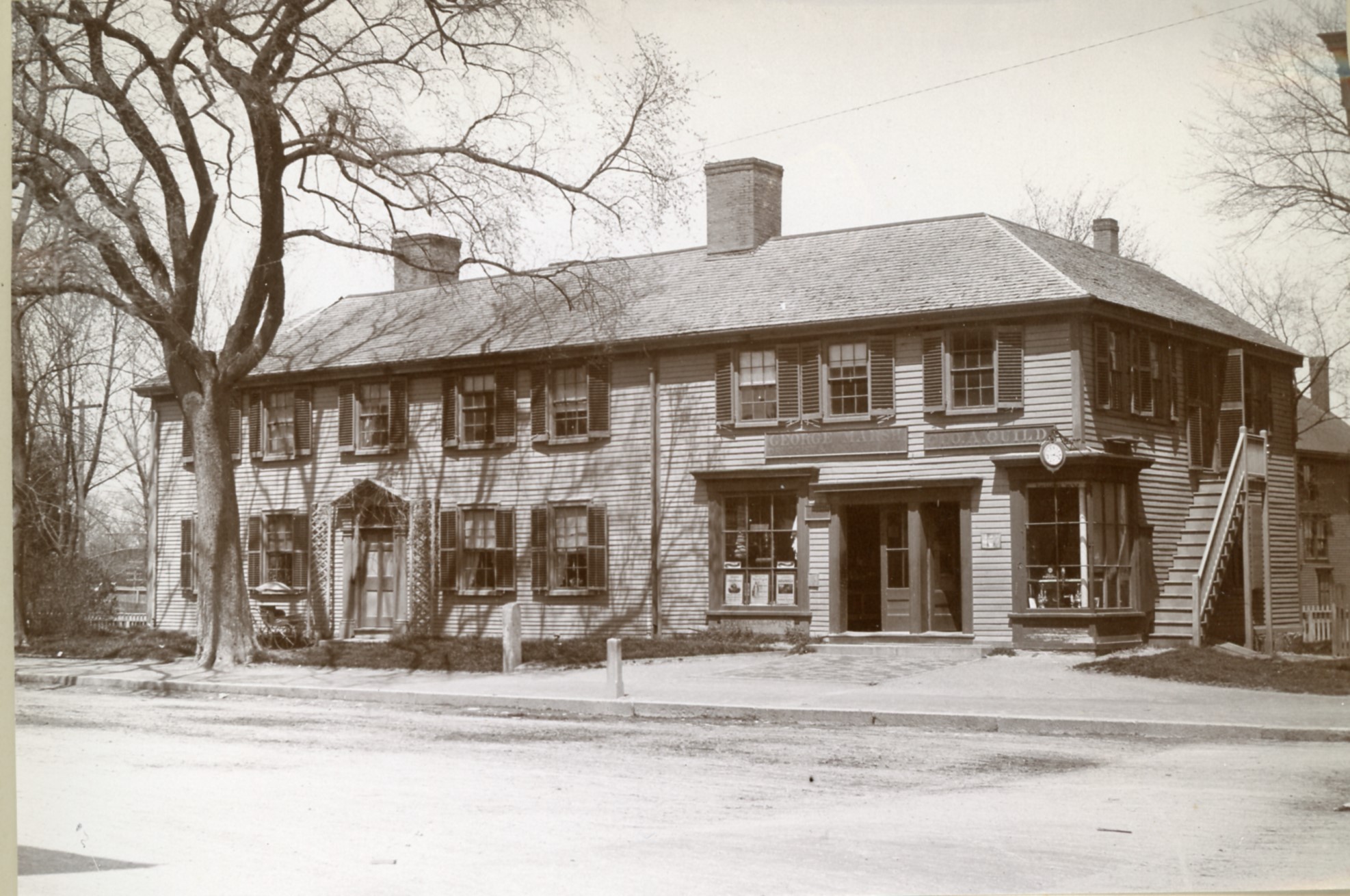
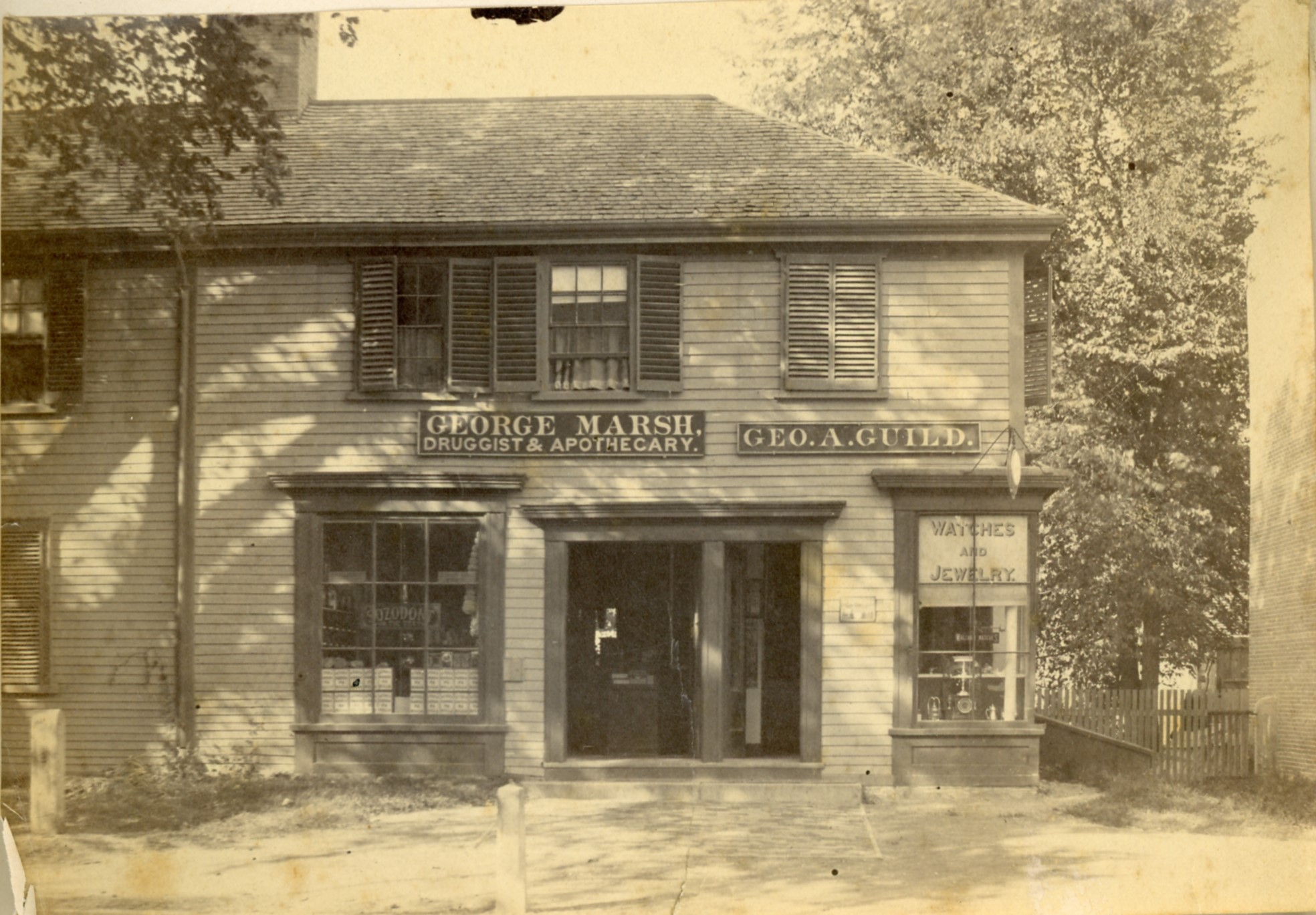
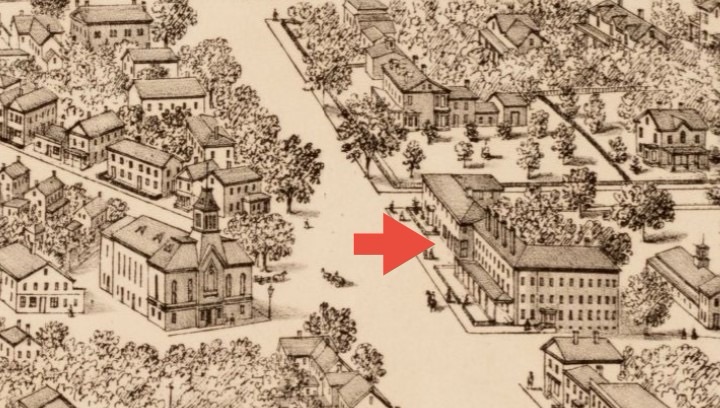
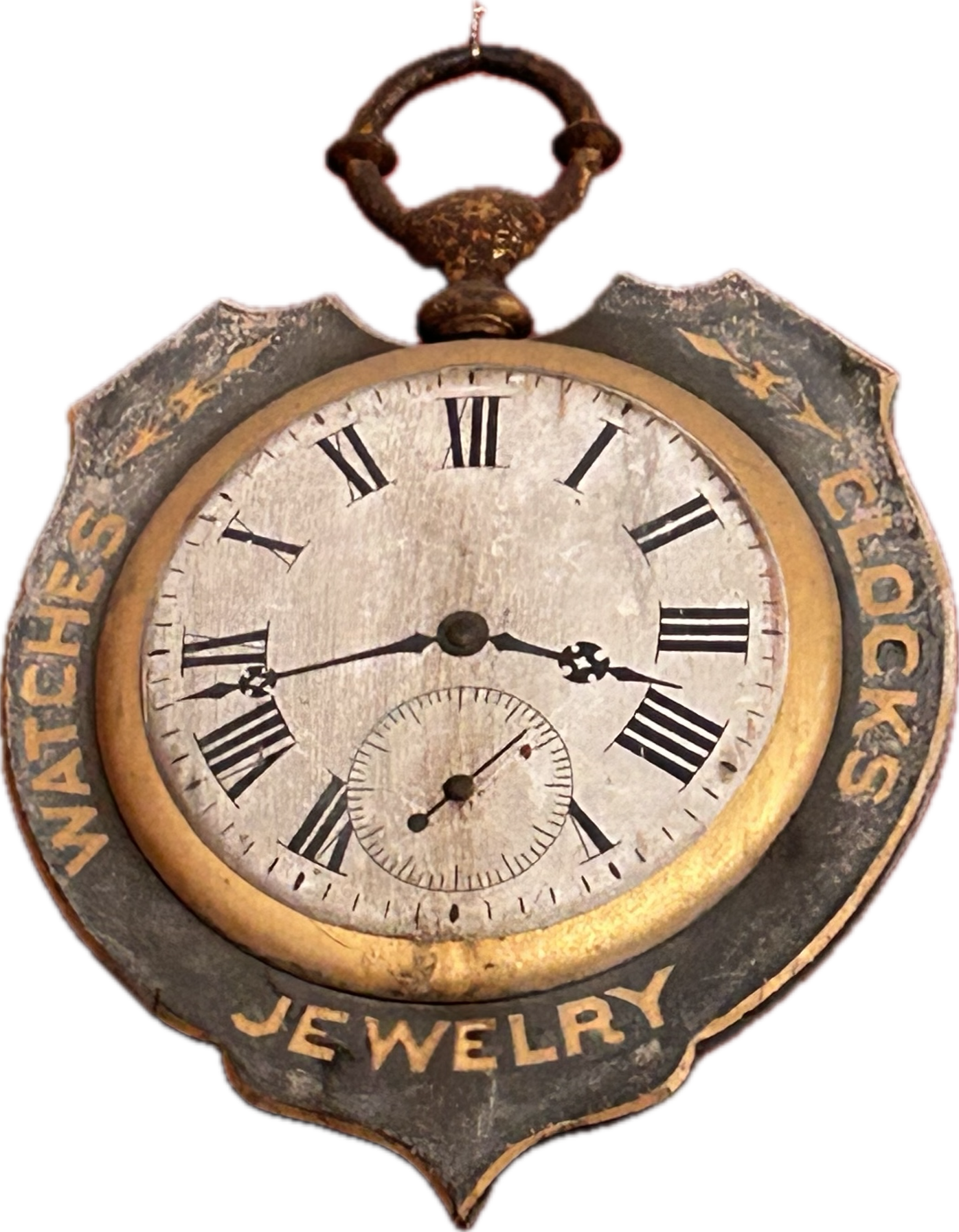
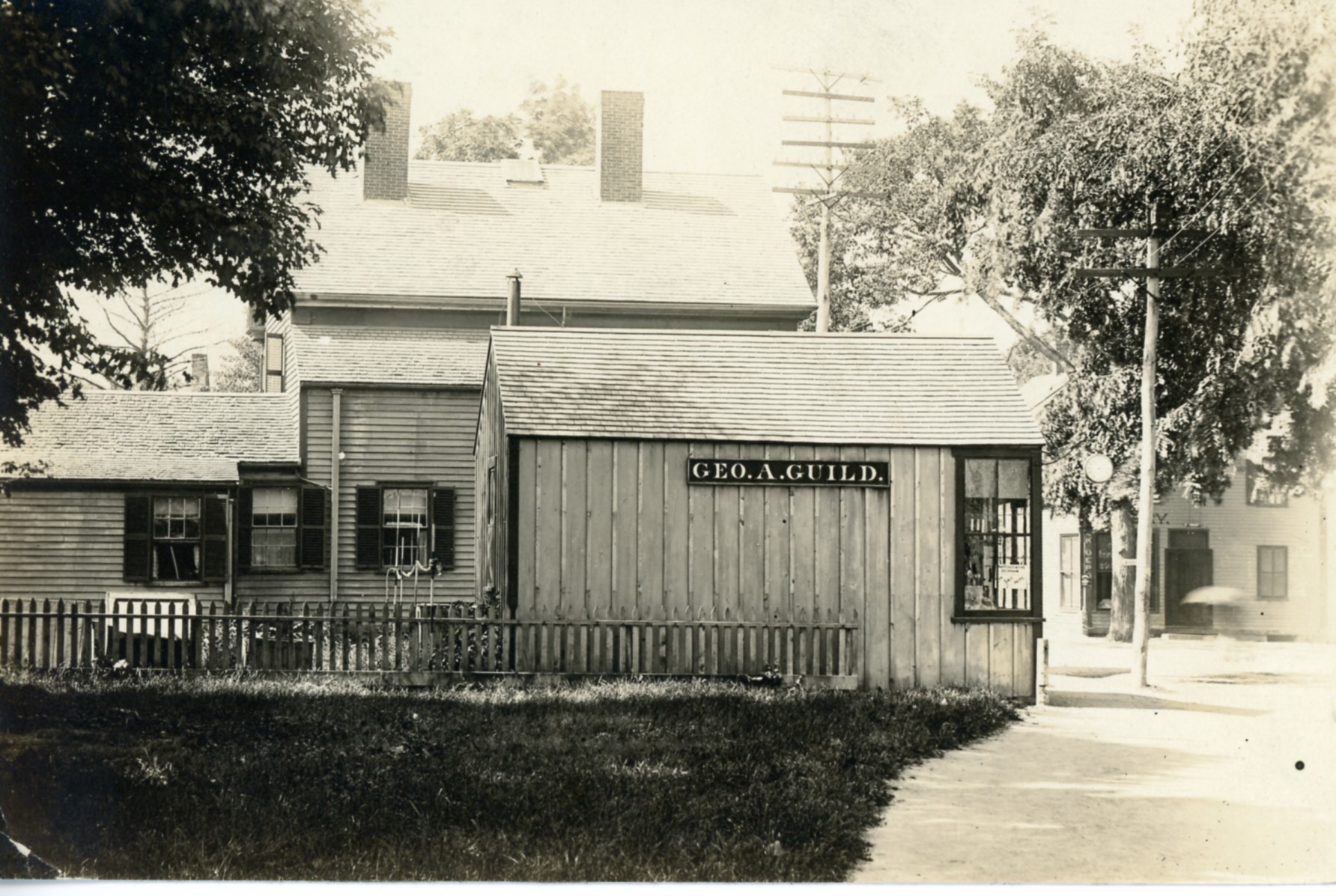
At the young age of twenty-three, Guild opened his business as a jeweler and watch seller in the old Dixon House, which stood on High Street across from Memorial Hall. The wooden watch sign that hung high above his shop window became one of the most recognizable landmarks in the Square. Guild operated at this location from 1859-1891, when he was forced to relocate to Washington Street as the Dixon building was being torn down to make way for the new Dedham Institution for Savings.
The wooden watch sign can be seen in these two photos of Guild’s shop on High StreetThe Dixon Building with George Guild’s shop as seen in this 1876 birds-eye view map by E. Whitfield. Next to it on the corner of High and Washington Streets is the Phoenix Hotel (current Knights of Columbus Building), which burned to the ground in 1880. Memorial Hall stands on the western corner of High and Washington.
The wooden watch sign adorned Guild’s tiny shop for another ten years until declining health caused him to close his shop after forty-one years in business. At the time of his retirement in June,1901, Guild had been the longest serving tradesman in town.
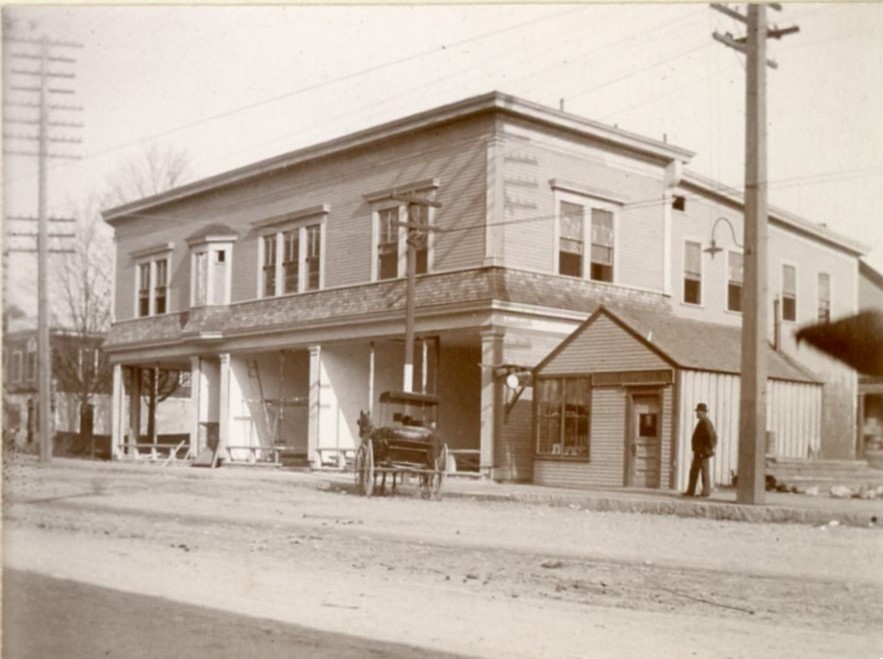
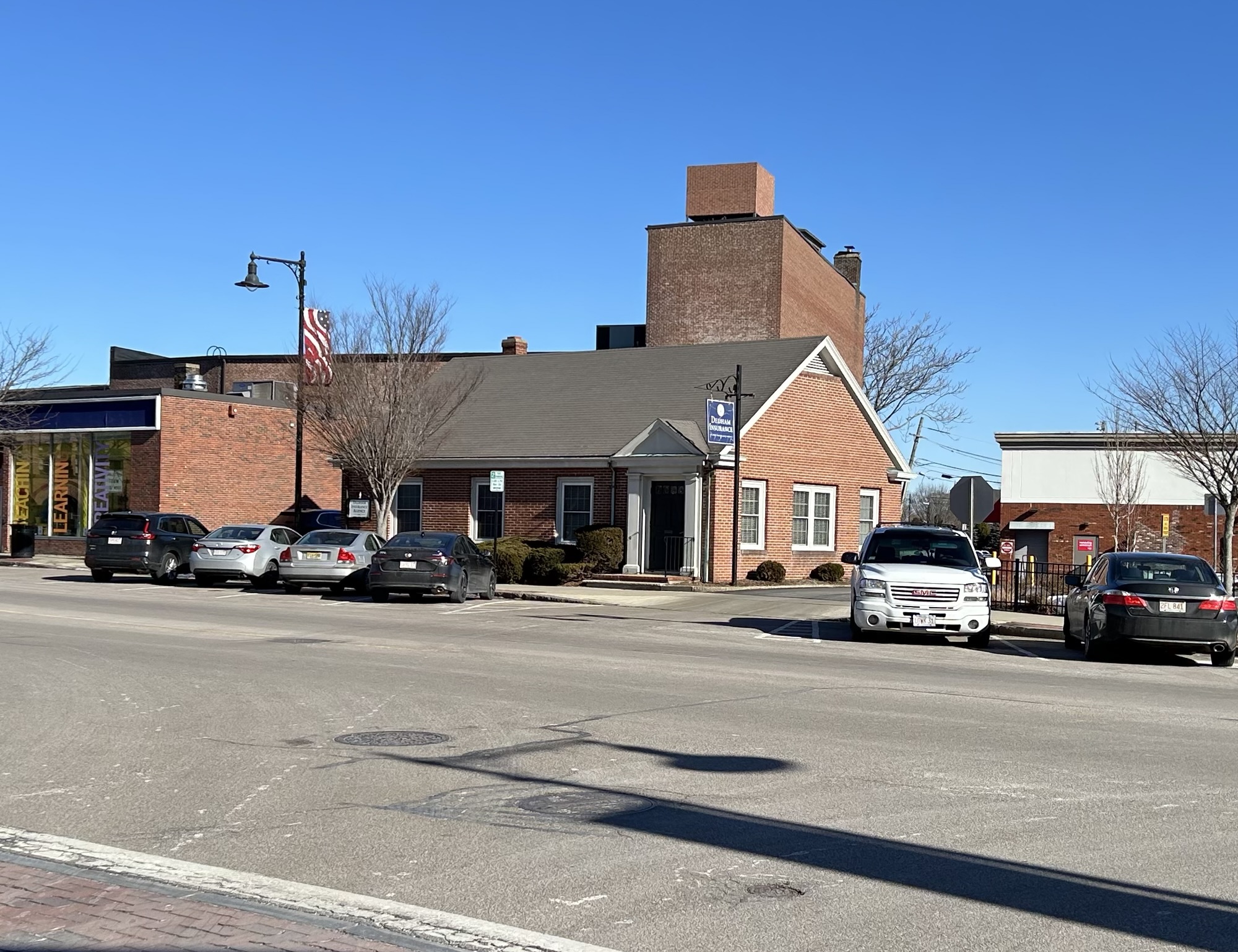
Two views of Guild’s second shop on Washington Street, across from School StreetSame view as above in 2025
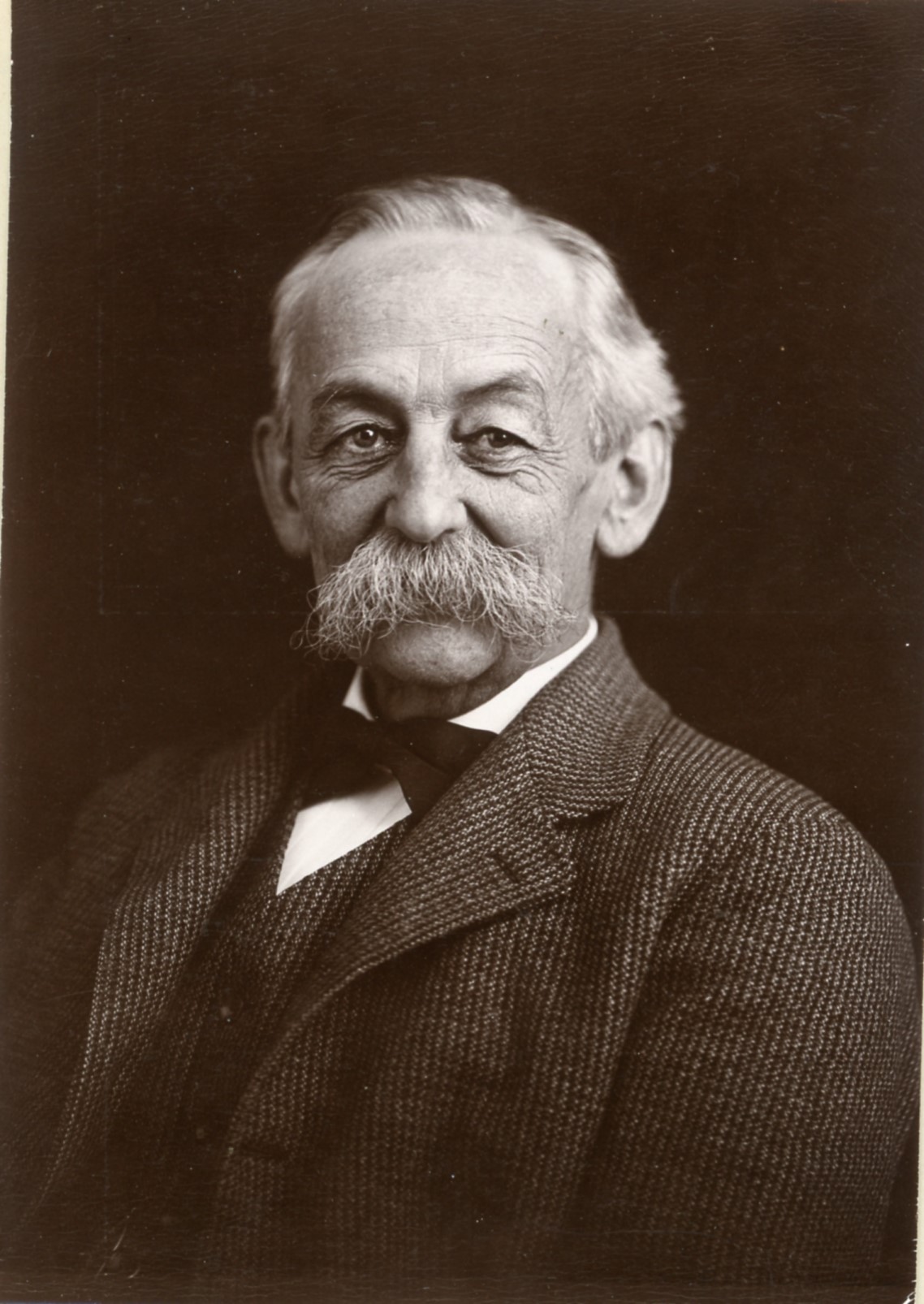
George made his home at 41 School Street where he and his wife Abby raised their three children. Jonathan, the youngest, became a successful Dedham businessman himself, after opening a photography studio on High Street in 1891. On October 26, 1901, the 65-year old George made the short walk to the studio and posed for his son one final time. He passed away at his home just a few weeks later on November 18. The following week an obituary in the Transcript praised him as a “man of sterling traits of character, an honest citizen, a steadfast and true friend, an excellent neighbor, a firm believer in religion, temperance and morality, a good husband, a kind and loving father…”
Guild’s final portrait taken by son Jonathan
The wooden advertising watch is on display at the Dedham Museum and Archive, 612 High Street. You can learn more about the Hero Engine Company and early firefighting in the current exhibit on the history of the Dedham Fire and Police Departments. Museum hours are Tuesday-Friday (11:00-5:00) and Saturdays (2nd & 4th of each month) 11:00-2:00. All historical images used with permission of the Dedham Museum and Archive.
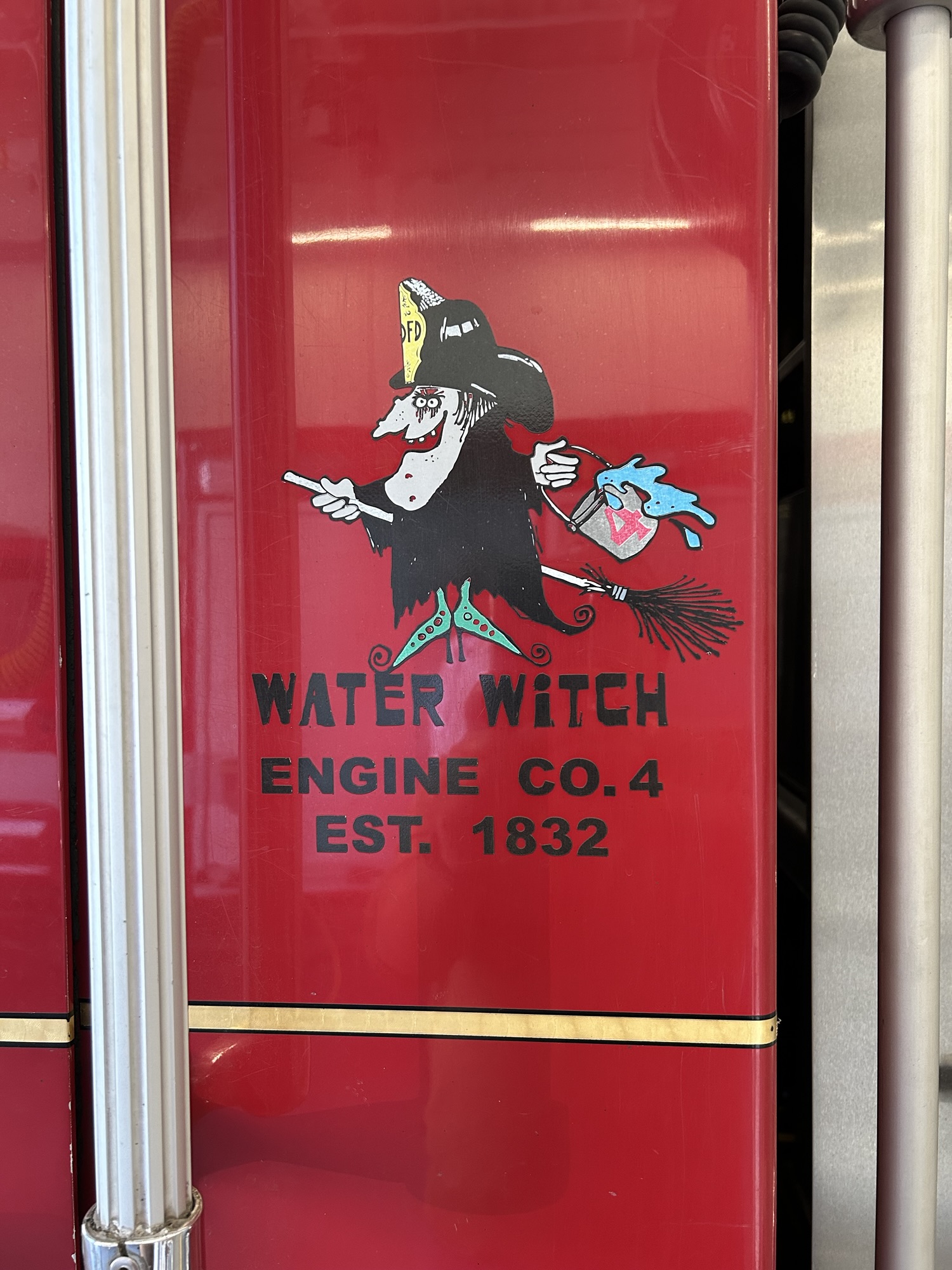
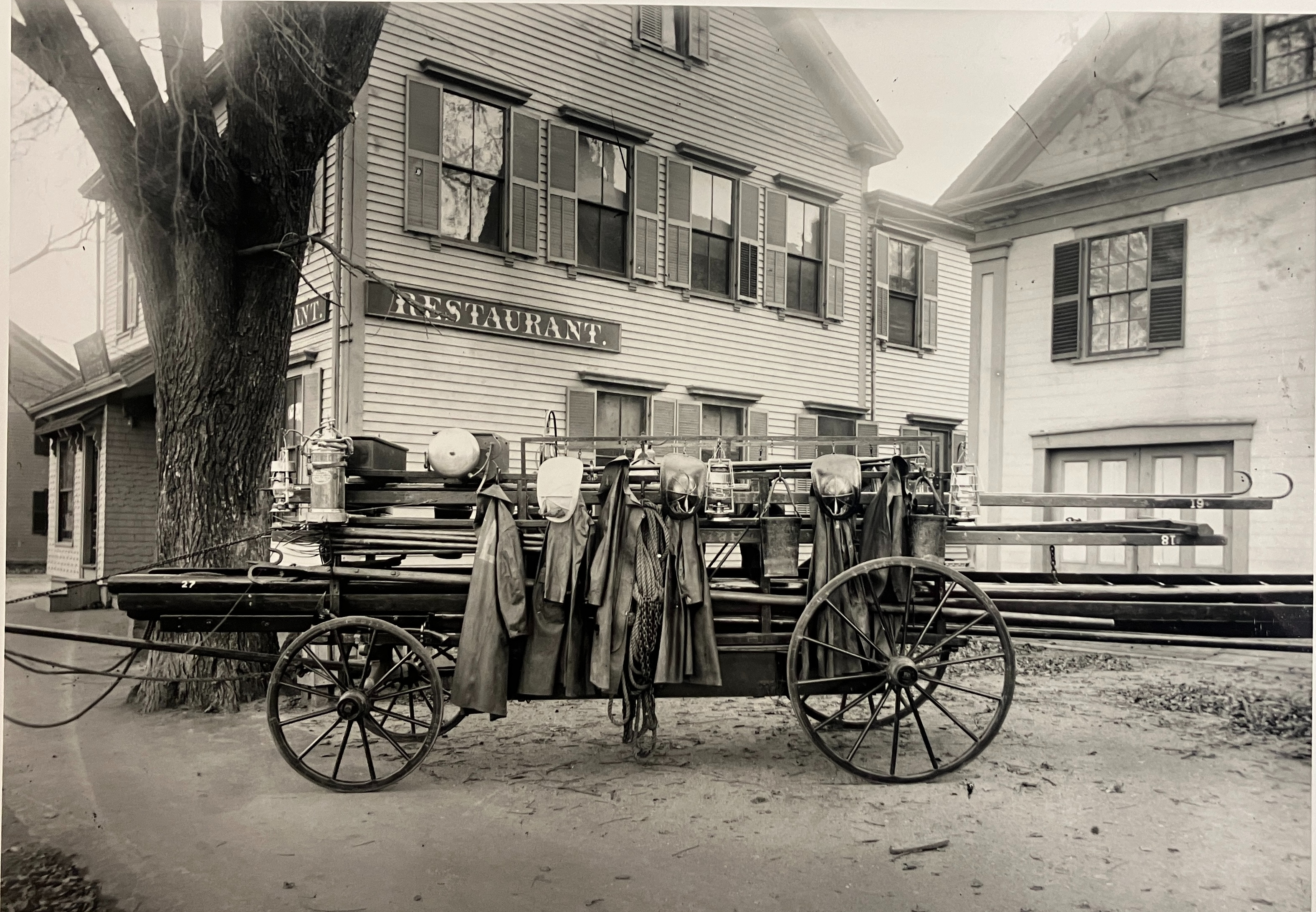
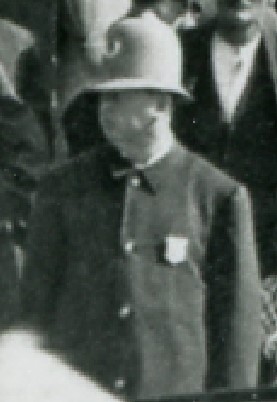
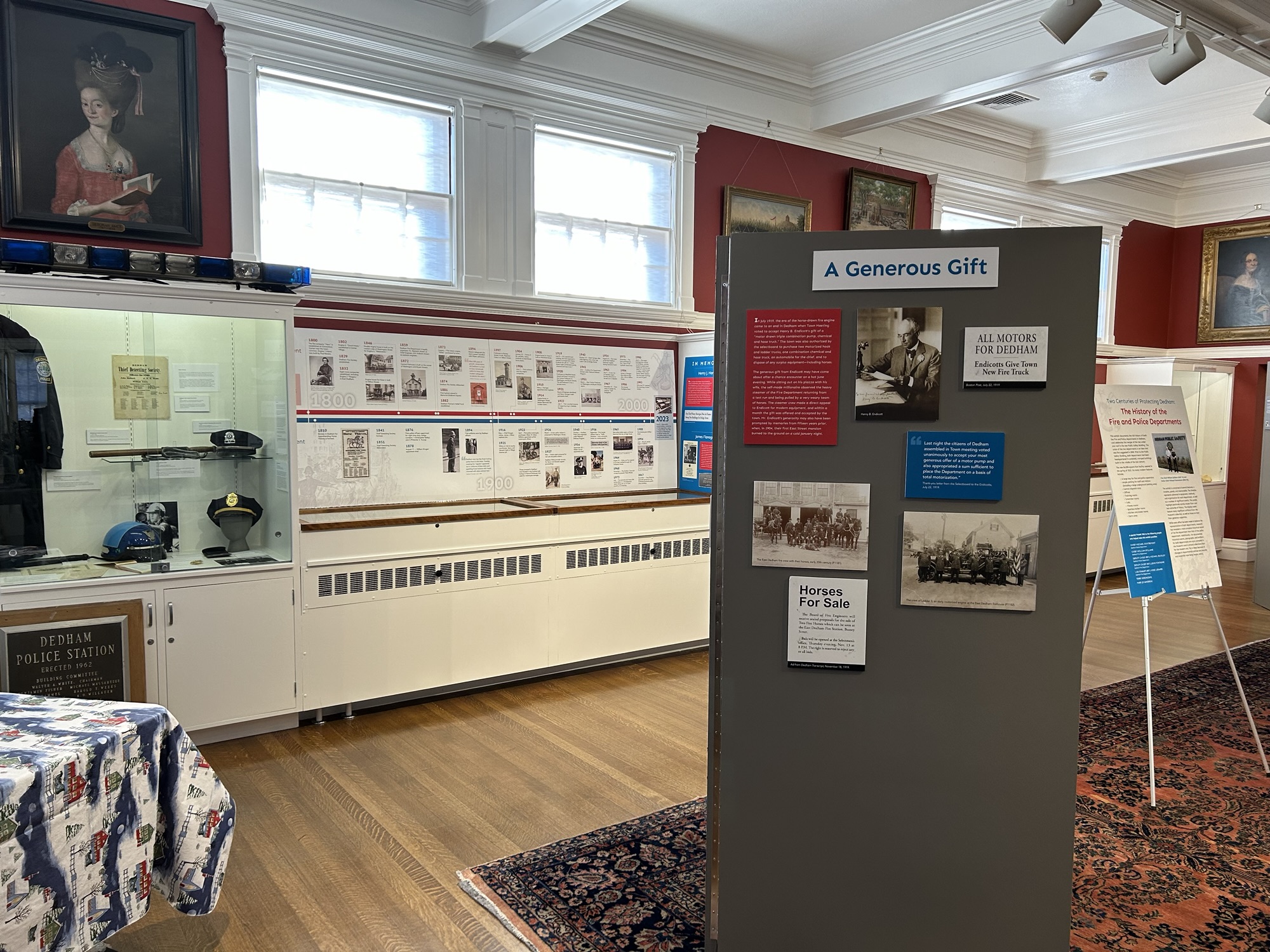
Did you know that the Dedham Fire Department’s Engine 4 is named the Waterwitch, and that it gets its name from a horse drawn engine that was housed on Washington Street in 1832? Or that the town’s first motorized fire engine was a gift from Henry Endicott and his wife? You probably never heard the story of Philander Young (Police Badge #2) and his daring arrest in 1876 of a nefarious East Dedham criminal for clogging on the Sabbath!
Engine 4 with its Water Witch logoThe original Water Witch and its engine house which stood on Washington Street near School Street (Courtesy of Dedham Museum and Archive)
A Dedham police officer on duty in the late 19th century
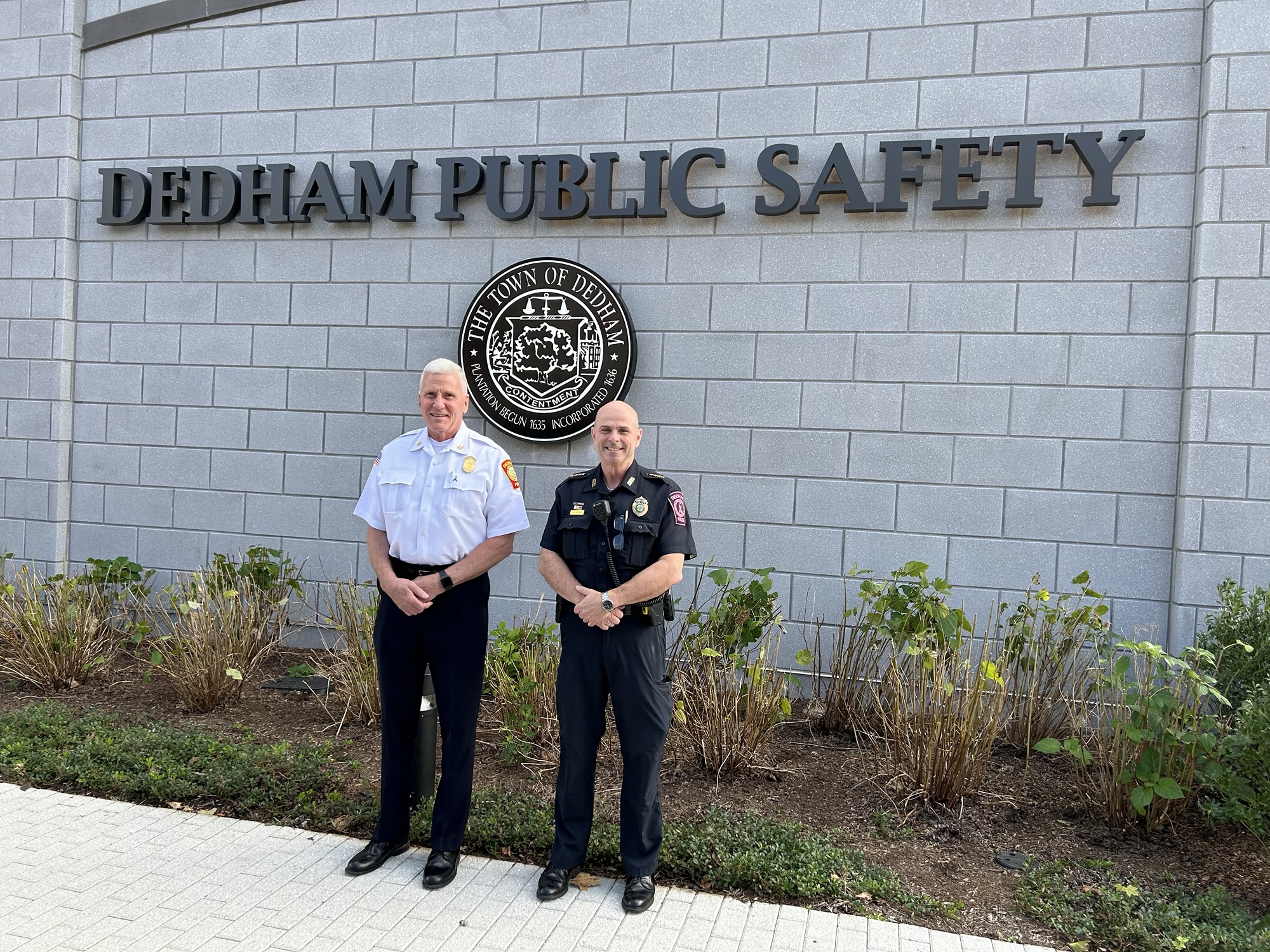
These are just a few of the fascinating facts you will learn when you visit the Dedham Museum and Archive’s newest exhibit, Two Centuries of Protecting Dedham: The History of the Fire & Police Departments. This exhibit features a timeline of department milestones, dozens of artifacts from both the museum archive and private collections, and many remarkable photographs of Dedham’s dedicated public servants on the job. This is the first project I have worked on in my new role as part-time educator at the museum, and it has been quite an adventure searching through the museum’s extensive archives and finding so many incredible stories of innovation, perseverance and bravery. The exhibit celebrates the new Public Safety Building which opened on Bryant Street in 2023. This up-to-date facility brings the police and fire departments under one roof- an idea that was first proposed in 1894!
Fire Chief William Spillane and Police Chief Michael d’Entremont outside the Public Safety Building, 2024
The Museum is open Tuesday-Thursday 11-5 and Friday 11-4. While you’re there you can do some holiday shopping and find the perfect Dedham-themed gift for you favorite Shiretowner! For more information, visit the Museum website https://www.dedhammuseum.org/
The exhibit will be open until September 2025, but why wait?
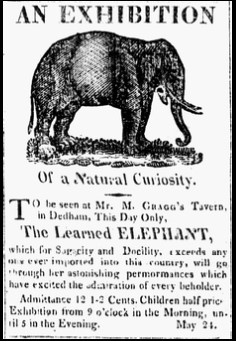
We can’t promise a Learned Elephant as Moses Gragg did in 1822, but you will find the best local craft beer, wine, distilled spirits, pub food and music at the annual TAVERN NIGHT at the Dedham Museum and Archive. This FRIDAY, October 18, from 7:00-9:00.
Breweries include Castle Island (Norwood), Jack’s Abby (Framingham), Lost Shoe Brewing and Roasting Company (Marlborough), Roundhead (Hyde Park), Wormtown (Foxboro & Worcester), non-alcoholic options, and more!
Spirits and Wine from Privateer Rum, M.S. Walker, and Total Wine & More.
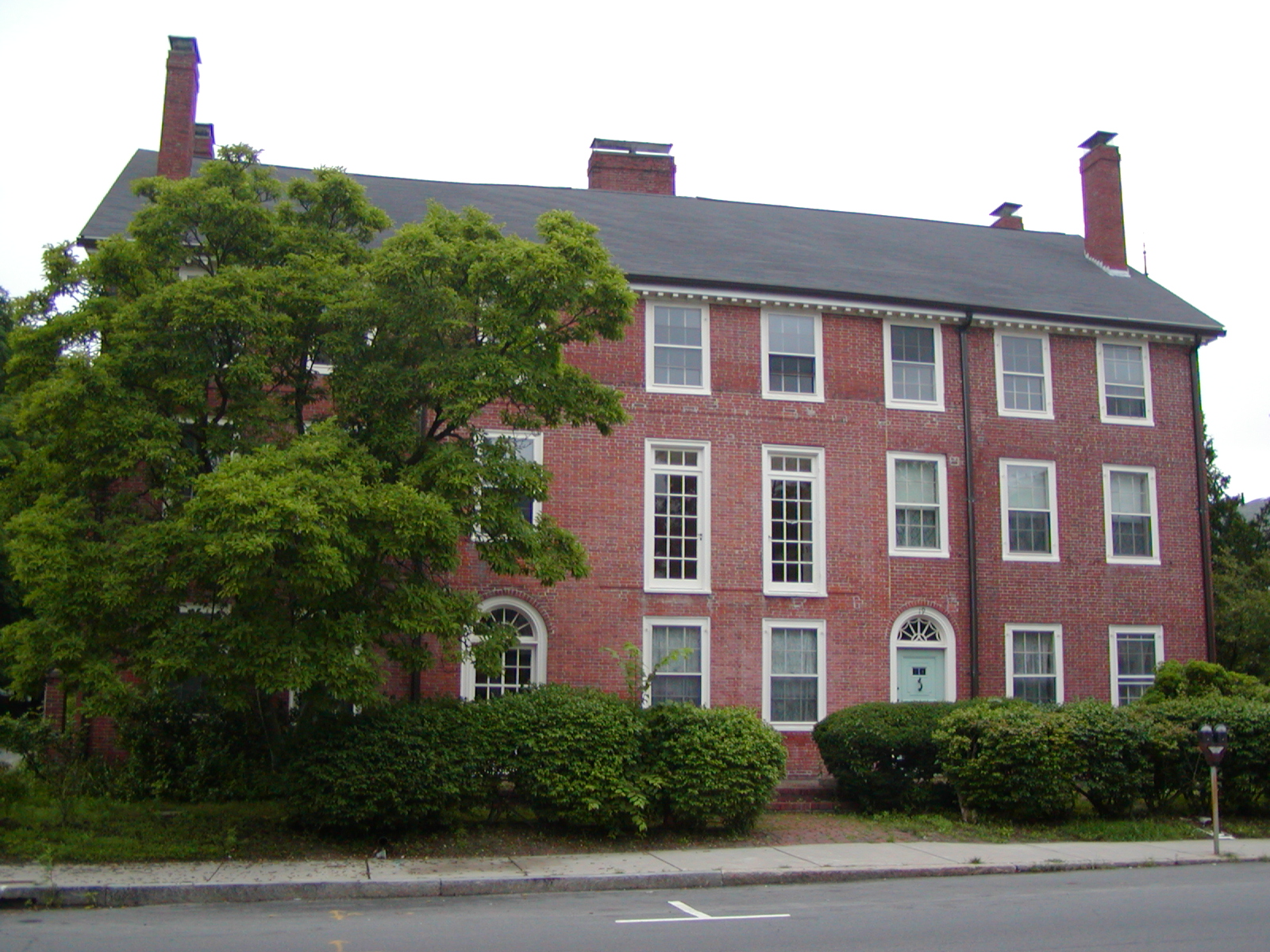
Music by the Zip Finn Band. This event takes place at the Dedham Museum, 612 High Street, which is right around the corner from Moses Gragg’s Tavern, which still stands on Court Street! Get your tickets here:
https://www.dedhammuseum.org/programs-events/special-events/: Dedham Museum Tavern Night- This Friday!Built in 1801, this building was known at various times as Marsh’s Tavern, Gragg’s Tavern, the Norfolk Inn, and Norfolk Hotel. Besides the Learned Elephant, other notable visitors include Andrew Jackson and the Marquis de Lafayette!
Come to the Haunted Walking Tour sponsored by the Dedham Museum and Archive-October 19 and 26. This 50 minute tour features a script written by yours truly and features the best stories and legends from Shiretown’s haunted past!
Ames was a prominenent Dedham citizen and renowned almanac publisher who died in 1764. In the fall of 1775, during the siege of Boston, a young Colonial Army lieutenant named Jabez Fitch visited the grave on one of his many excursions into graveyards and tombs in the Boston area. The following diary entry describing Fitch’s visit should help get you in the Halloween mood:
About 12 O’clock…went into the burying yard, where we found Doctor Ames’ tomb open … We several of us went down into the tomb, opened the old doctor’s coffin and see his corpse. The under jaw was all fallen in, the other part of the bone of the head retained their proper shape, the teeth were whole in the upper jaw, but the whole back and rest of the body, as far as we could see, was covered with a black film or skin, which I suppose to be the winding sheet in which the corpse was buried, being blended with the moisture of the body.
I also observed one of the arms to have fallen off from the body and the bones laying by the side of the coffin. While I was thus in a sort conversing with the dead and viewing those melancholy curiosities, I could not help reflecting that nothing of the philosophy and astronomy which once adorned the mind of that person and made him appear great among his contemporaries, was now to be seen in this state of humiliation and contempt… After sufficiently gratifying our curiosity, we moved on…
The Millen Brothers/Abraham Faber case is the second most frequently used search term that leads people to this blog (the Sacco and Vanzetti case being #1).
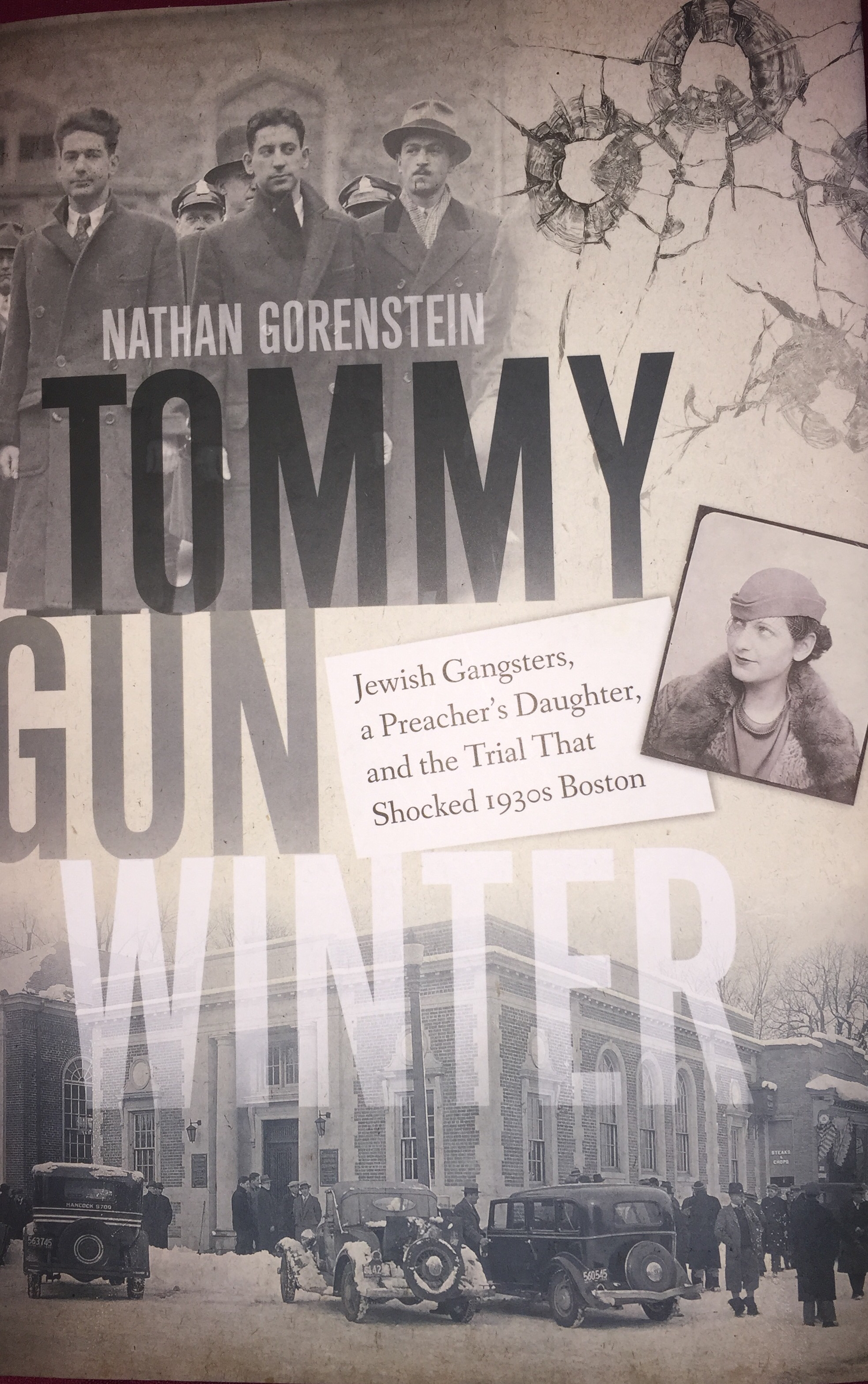
The Millen brothers Murton and Irving, along with pal Abraham Faber robbed the Needham Trust Company in February, 1934 in dramatic fashion, complete with sub-machine gun fire and a daring getaway through town with hostage bank employees standing on the getaway car’s running boards and hanging on for dear life. The gang murdered two Needham policemen, Francis Haddock and Forbes McLeod and escaped with $14,000 in cash.
A new book on this sad chapter in Norfolk County history was released last week, and it is the definitive work on a topic that continues to fascinate locals some 80 years on. Tommy Gun Winter, written by Nathan Gorenstein and published by ForeEdge is a must read.
Gorenstein, who is related to the Millen brothers (he is the great-grandson of William Millen, brother of the Millens’ father Joseph), has written a carefully researched and extremely readable account of the events leading to the robbery, the crime itself, the trial, and the aftermath. The central character in this drama is Murton Millen, who masterminded the short but destructive crime spree of the “gang” and was the actual shooter. Gorenstein explores the psychological and family troubles of Murton which had a profound effect on his life. The other players in the tragedy are fully revealed as well; Murton’s wife Norma, brother Irving, and friend Abe Faber each had troubles of their own, and Gorenstein expertly shows how these troubles drew them to the charismatic personality and destructive power of Murton Millen.
For a quick summary of the crime, read my previous two-part post, “75 years ago- an execution in Charlestown.” For the ultimate and only guide you’ll need to understand the events of 80 years ago in these parts, read Tommy Gun Winter.
ALSO: Author Nathan Gorenstein will be speaking at the Dedham Historical Society on April 19th, and the Framingham Barnes and Noble on April 20th!
I am James L. Parr. I grew up on Tower St. and went to St. Mary's and Dedham High (Class of 1977). I teach school in Framingham and co-wrote a book of Framingham history, which led me to write a book of weird Dedham history called Dedham: Historic and Heroic Tales from Shiretown. That book led to this blog. To order your own copy of the book, e-mail me at jameslparr@yahoo.com


 Dedham Tales