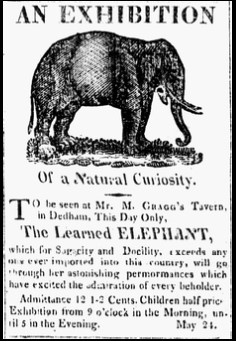
We can’t promise a Learned Elephant as Moses Gragg did in 1822, but you will find the best local craft beer, wine, distilled spirits, pub food and music at the annual TAVERN NIGHT at the Dedham Museum and Archive. This FRIDAY, October 18, from 7:00-9:00.
Breweries include Castle Island (Norwood), Jack’s Abby (Framingham), Lost Shoe Brewing and Roasting Company (Marlborough), Roundhead (Hyde Park), Wormtown (Foxboro & Worcester), non-alcoholic options, and more!
Spirits and Wine from Privateer Rum, M.S. Walker, and Total Wine & More.
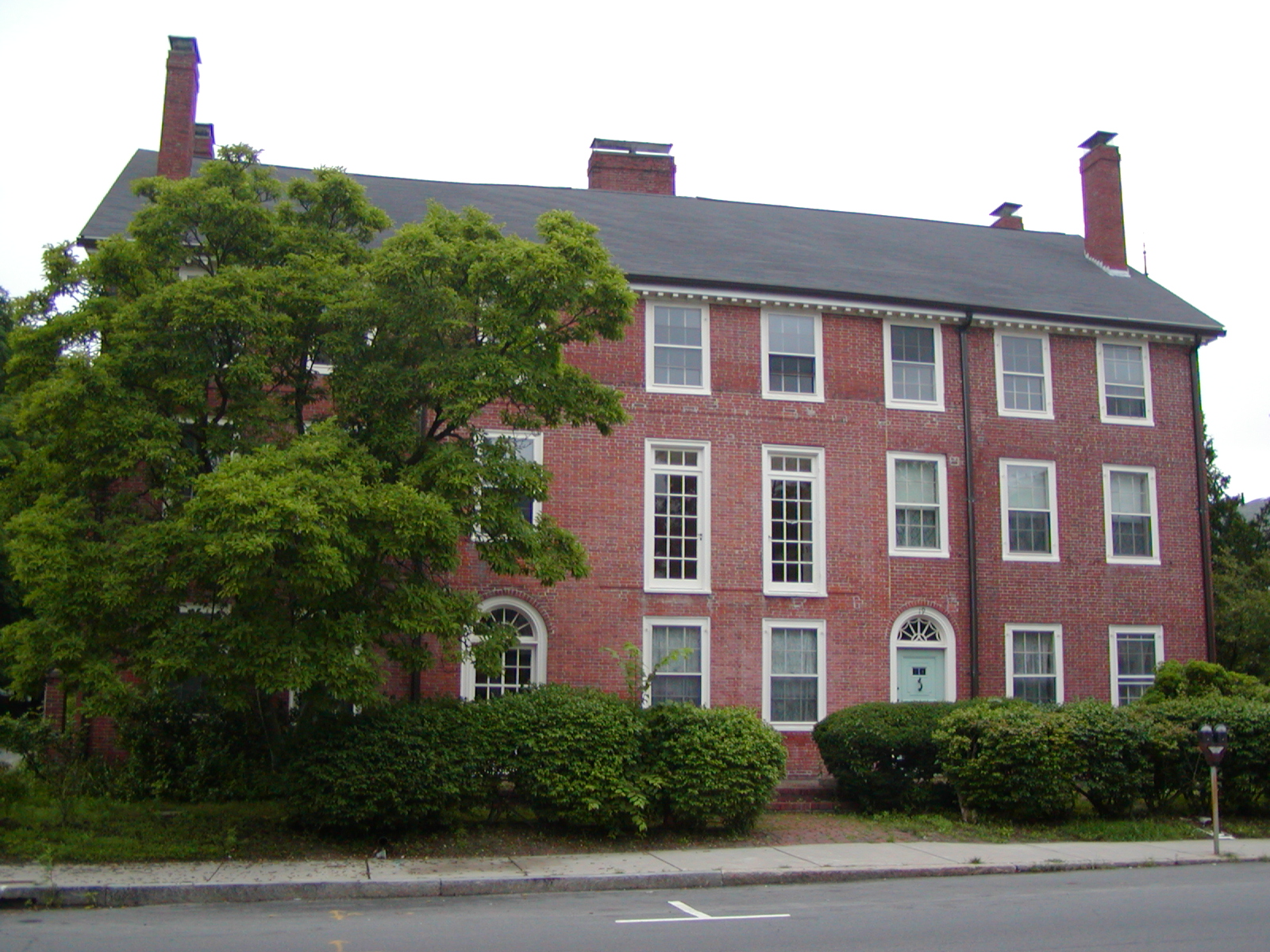
Music by the Zip Finn Band. This event takes place at the Dedham Museum, 612 High Street, which is right around the corner from Moses Gragg’s Tavern, which still stands on Court Street! Get your tickets here:
https://www.dedhammuseum.org/programs-events/special-events/: Dedham Museum Tavern Night- This Friday!Built in 1801, this building was known at various times as Marsh’s Tavern, Gragg’s Tavern, the Norfolk Inn, and Norfolk Hotel. Besides the Learned Elephant, other notable visitors include Andrew Jackson and the Marquis de Lafayette!
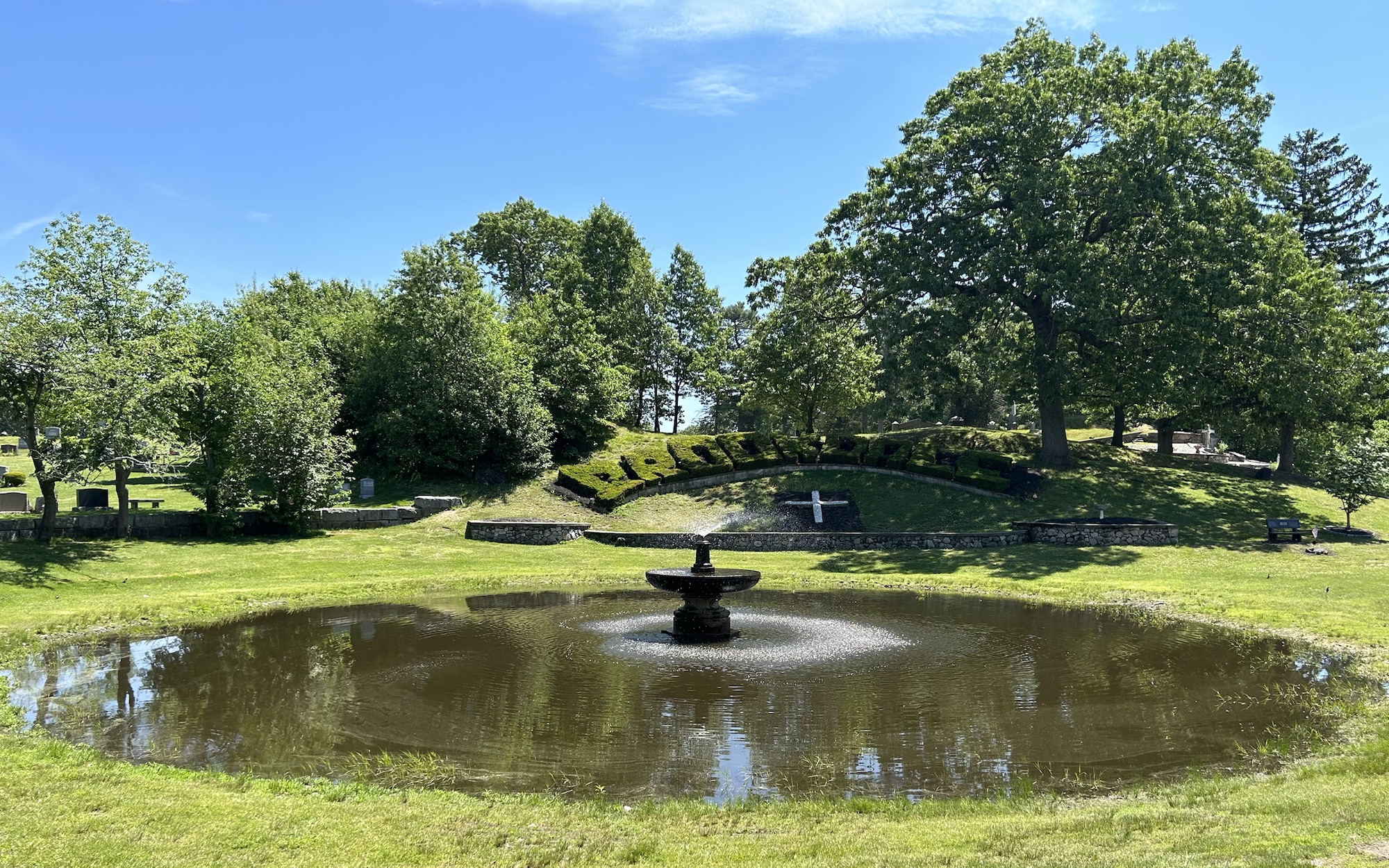
This plaque can be found at the base of the fountain inside Brookdale Cemetery. The memorial fountain was dedicated in May, 1953 four years after Mrs. Marietta Paul passed away. Ebenezer Paul served on the Board of Assessors for many years and owned a large farm off of Cedar Street that was developed as the Farview subdivision beginning in the 1920s. This farm stood where the present Dresser and Taylor (Marietta Paul’s maiden name) Avenues, Beech Street and Kimball Road are located. The Paul family also owned the land where Paul Park was created and named for them in 1952.
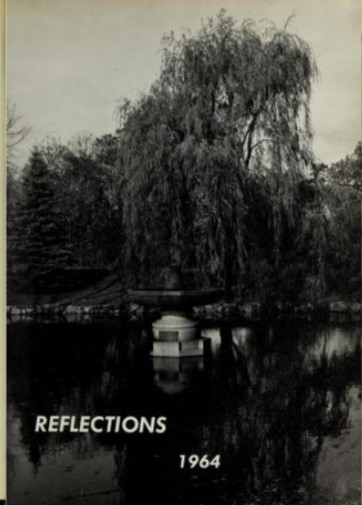
The fountain and its reflection in the pond were popular subjects for DHS yearbook title pages, for obvious reasons.
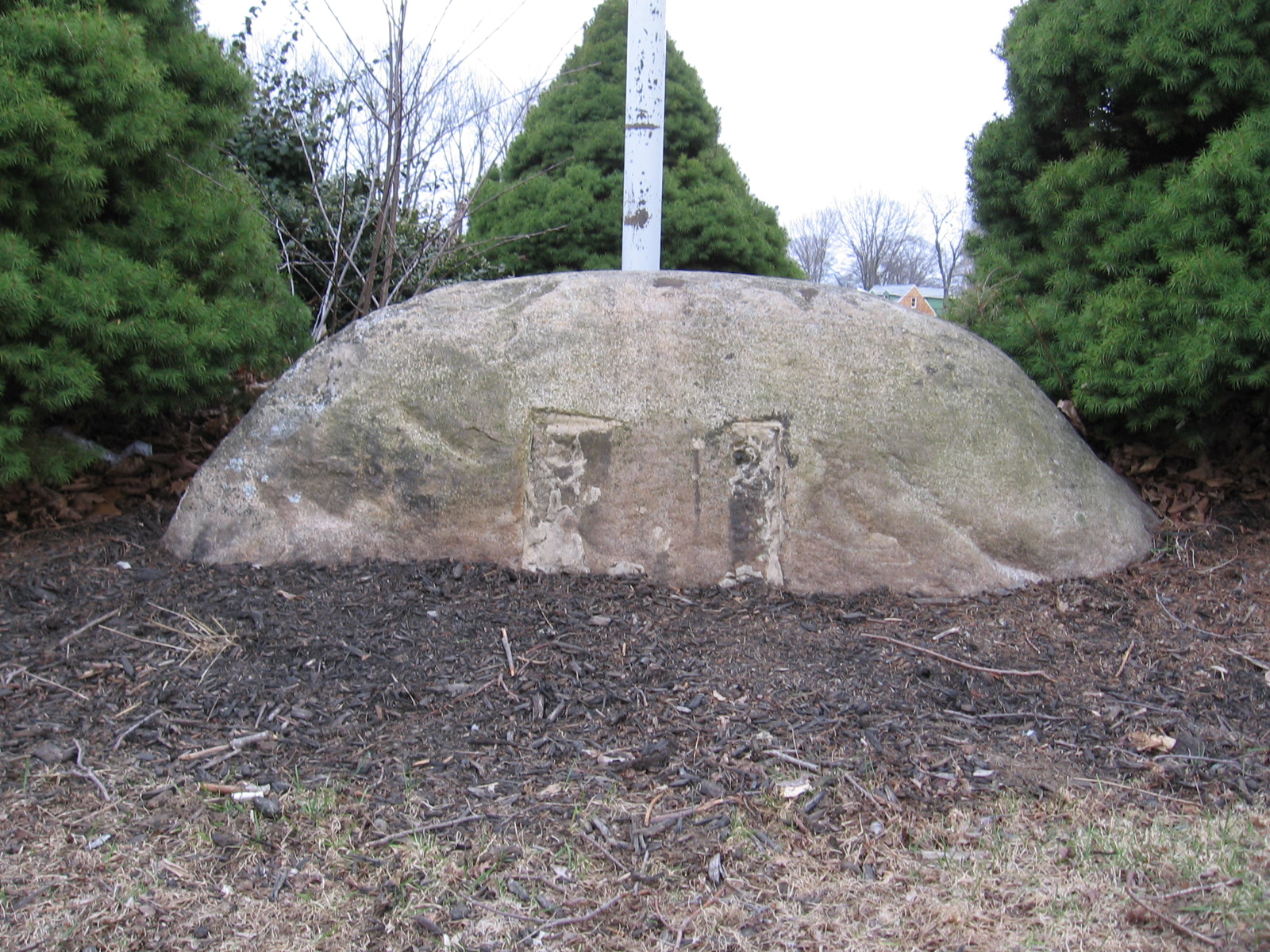
Several people guessed Paul Park, and while there was a plaque honoring the Pauls affixed to a large boulder and dedicated in 1952, that plaque has been missing for many, many years.
One of my favorite things to do is to find remnants of the past around town and then research the history of that location. Old stone pillars and walls that seem at odds with nearby more modern dwellings are usually signs of a lost building and an interesting tale. This is the first in a series of posts about several Dedham sites with a hidden past.
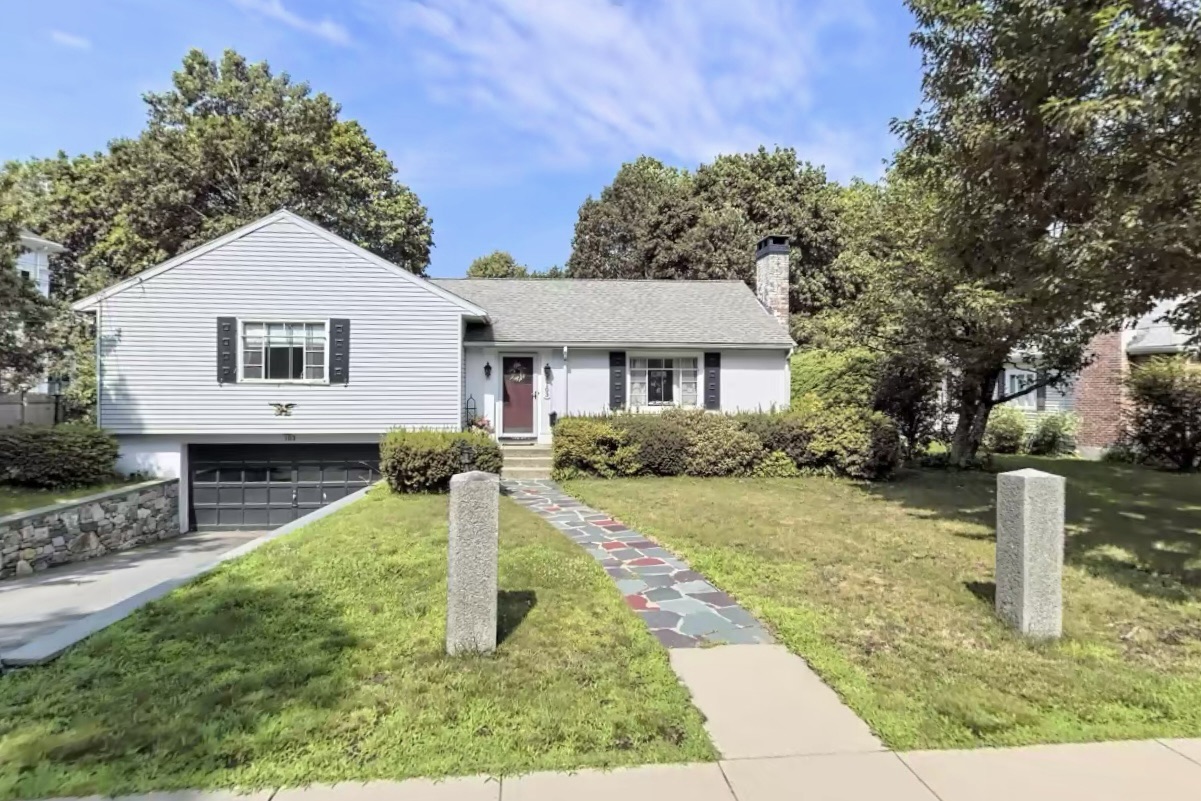
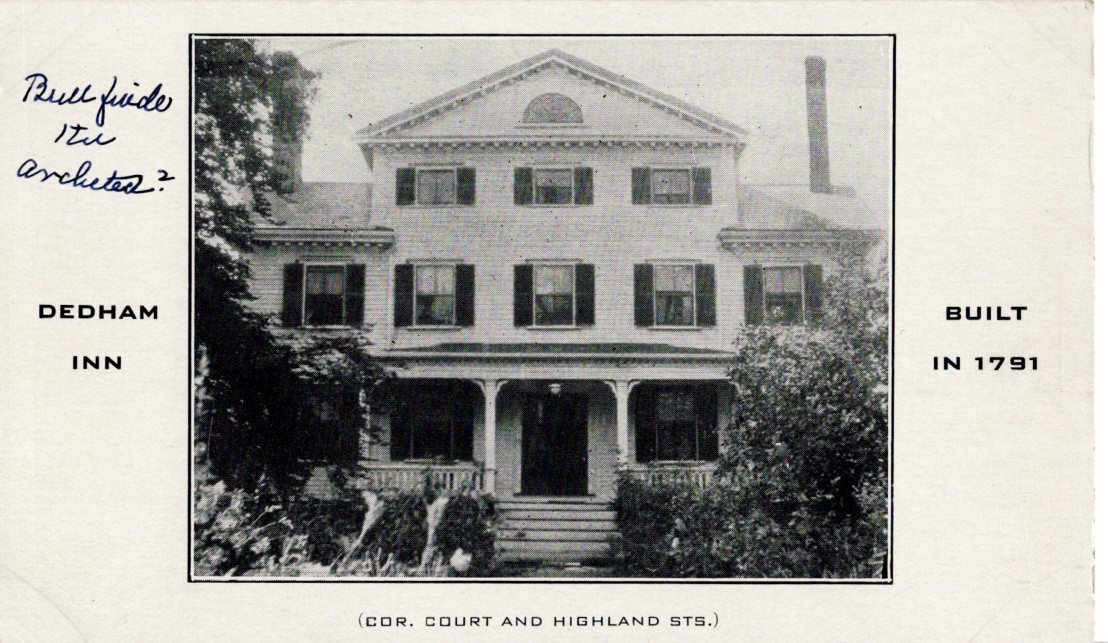
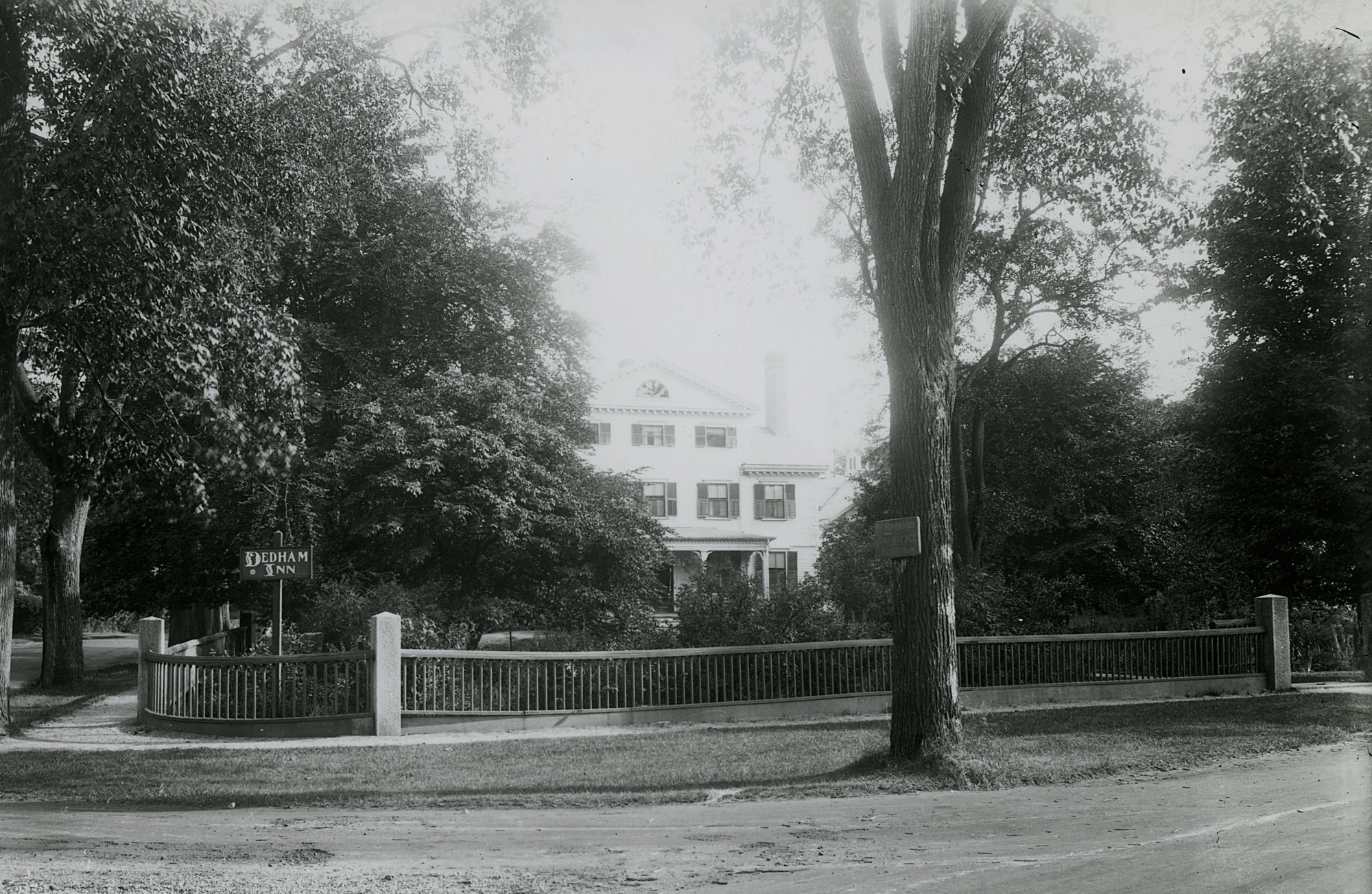
On the western side of Court Street near Highland Street stand three homes built in the early 1950s. The split-level/ranch design is typical of the time period, but the granite posts that stand on the lawns of these homes are from a much earlier period and indicate that something grand once stood here. Fortunately, the history of the previous structure is well documented and with some help from the staff at the Dedham Museum and Archive and a little sleuthing in the digital newspaper archives I am able to present the story of the Richards House, also known as the Dedham Inn.
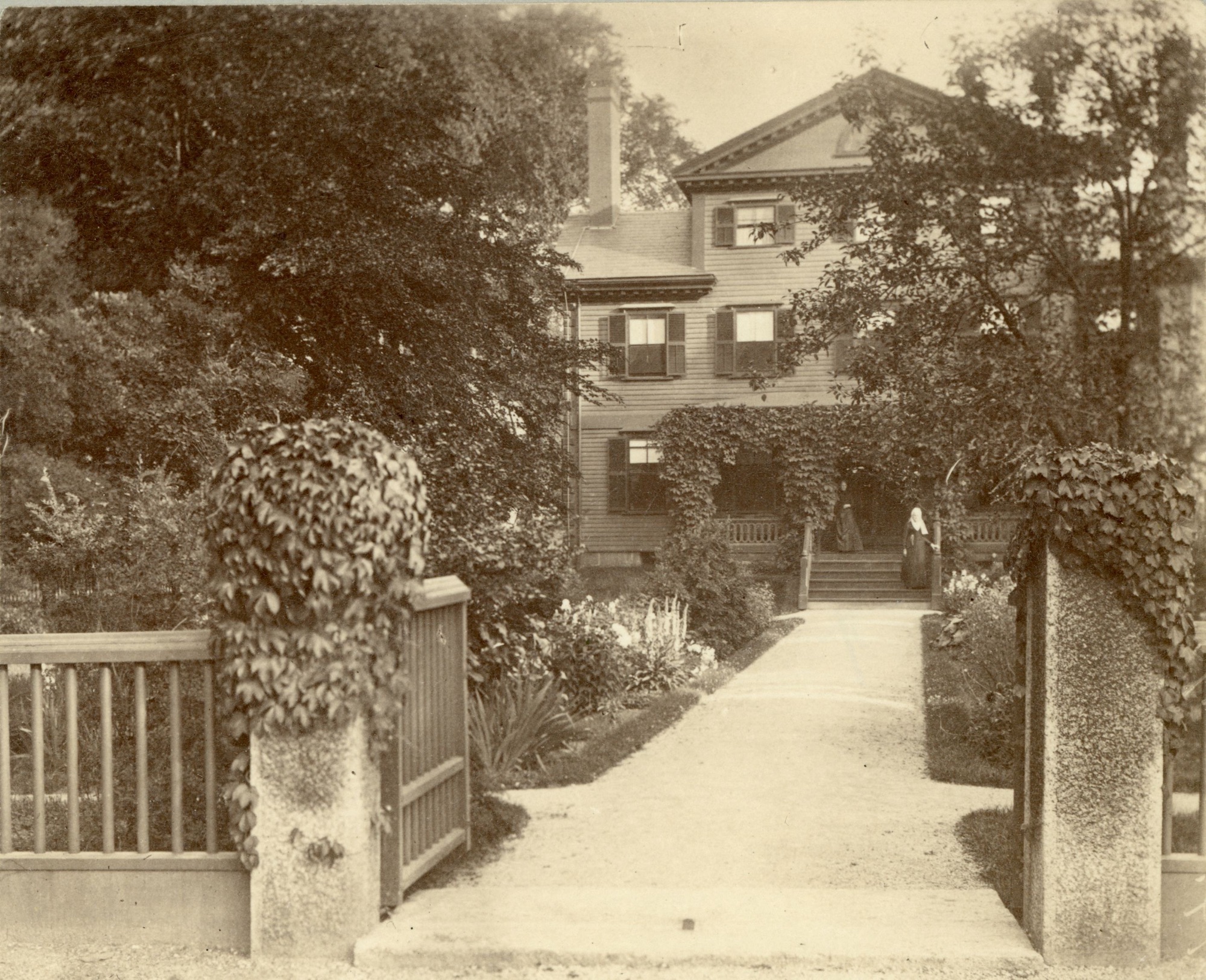
Richards House in the late nineteenth century (Courtesy of Dedham Museum and Archive)
The house was built in 1791, and was purportedly designed by famed architect Charles Bullfinch, designer of the nearby Haven House (Dedham Community House), Massachusetts State House, as well as many other historic buildings. Ownership passed through several families before Boston hardware merchant Samuel Richards purchased the house and acreage in 1802. It would remain in the Richards family for over 100 years before being sold, enlarged and converted into an inn in 1915.
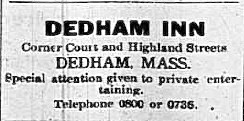
1923 ad for the InnPostcard from the Inn with handwritten question “Bullfinch architect?” The Bullfinch attribution was family lore and not actually documented elsewhere.
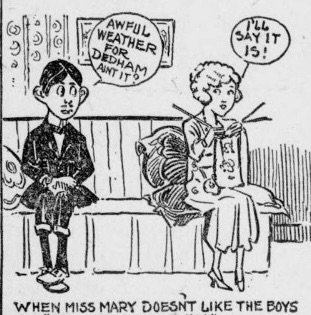
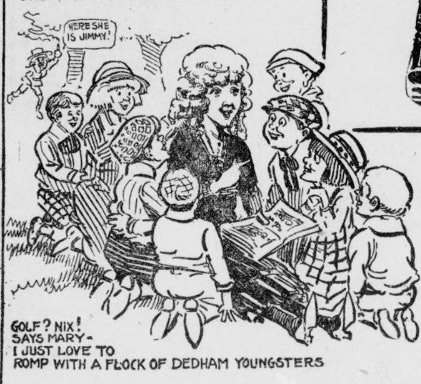
The newly established Dedham Inn quickly became a popular venue for social gatherings such as anniversary parties and wedding showers. An early guest was 17 year-old Hollywood starlet Mary Miles Minter and her mother/manager Charlotte Shelby who arrived in August 1919 to film a silent version of the book Anne of Green Gables. Earlier that summer, a scouting team from RealArt Pictures had chosen Dedham for location filming, with the landmark Fairbanks House serving as the farmhouse where orphan Anne Shirley lived with Matthew and Marilla Cuthbert. Also staying at the Inn was the film’s 49-year old director William Desmond Taylor. During their stay at the Inn, despite their age difference, Mary developed a serious (one-sided) crush on the dashing British director. Taylor would be murdered in his Hollywood bungalow in February 1922, and the ensuing investigation would reveal correspondence from the young actress that provoked a scandal that eventually ended Minter’s career and most likely caused copies of the film to be destroyed, making it one of thousands of missing silent films. The murder of Taylor remains unsolved to this day. The complete story of this 1919 filming is featured in my book Dedham: Historic and Heroic Tales from Shiretown.
Cartoons in the Boston Post published at the time of the filming of Anne of Green Gables
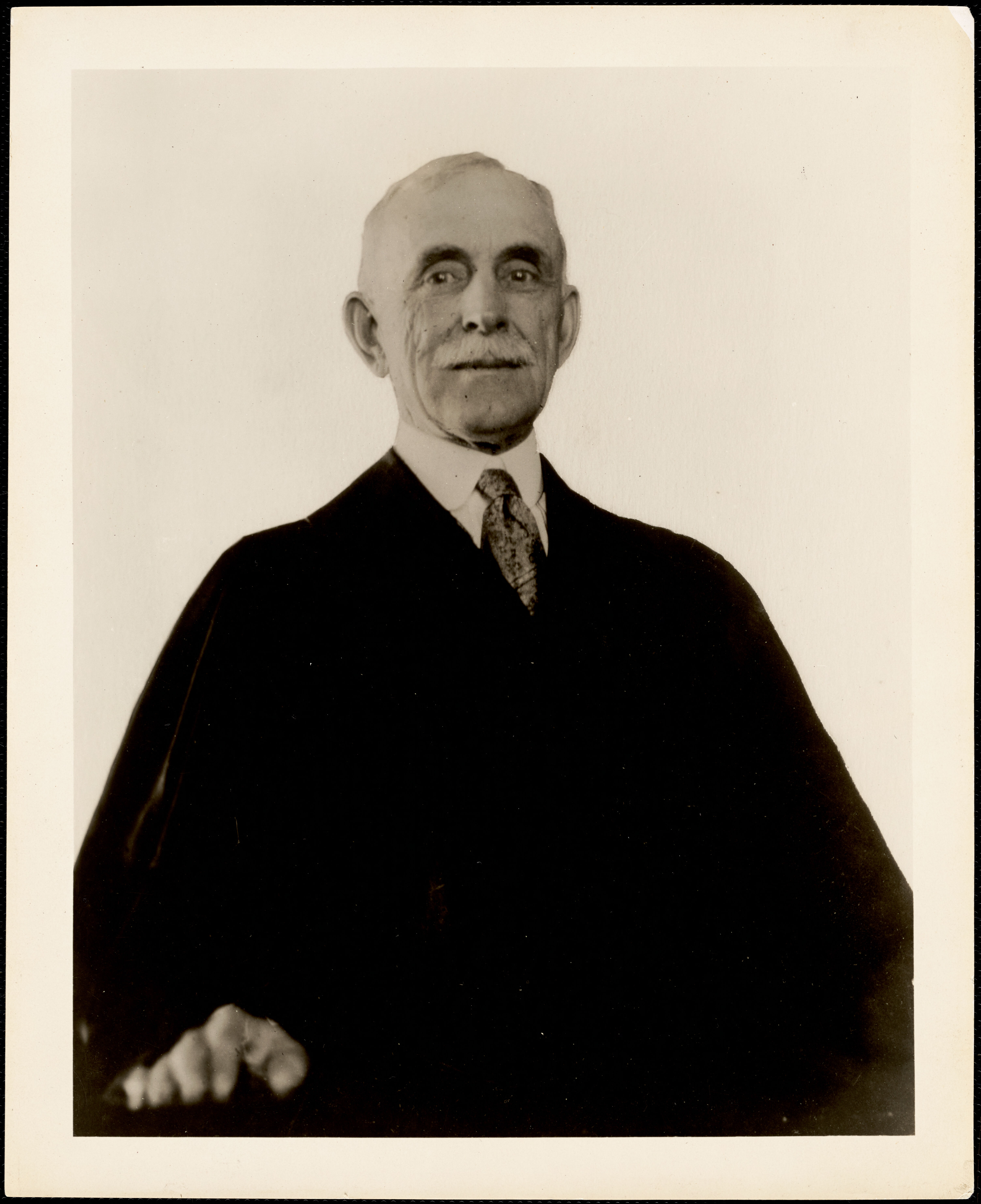
Its close proximity to the courthouse made the Inn a gathering place for anyone with court business including attorneys, jury members and judges. Throughout the famed 1921 murder trial of Nicola Sacco and Bartolomeo Vanzetti, jurors were housed overnight in the grand jury room of the Superior Courthouse and took their meals at the Dedham Inn. During the appeals process for the convicted men, it was reported that trial judge Webster Thayer had made numerous prejudicial statements outside of the courtroom throughout the trial; many of these statements were made to reporters during lunch breaks at the Inn. In a clemency request to Governor Alvan Fuller in May 1927, affidavits were filed by several reporters who had heard the judge’s remarks firsthand. Globe reporter Frank Sibley wrote that Judge Thayer would often discuss the case with reporters while gathered in the Inn’s private dining room, and several witnesses, including Sibley, recalled how on one walk back to the courthouse, the judge angrily denounced defense attorney Fred Moore by stating “I’ll show them that no long-haired anarchist from California can run this court!” All appeals on behalf of the accused failed and Sacco and Vanzetti were executed on August 23, 1927.
Judge Webster ThayerThe Inn in the 1920s (Courtesy Dedham Museum and Archive)
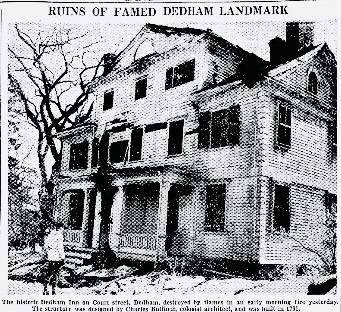
In the early morning hours of February 6, 1939, the Dedham Fire Department responded to a call from inn owner George Thorley. The entire department, under the direction of Chief Henry Harrigan, fought the flames for five hours, battling slippery conditions and icy equipment in a vain effort to save the landmark. While Thorley, his wife and daughters and three guests all managed to escape, Josephine the family’s cocker spaniel, was unable to get out. The beloved pet was credited with saving the occupants of the Inn by waking them with her barking before the fire got out of control. On the morning after the fire the walls of the historic inn still stood, but fire had gutted the interior and the building was razed. A faulty furnace was cited as the likely cause of the fire. The property was subdivided and the three single family homes that stand there now were built between 1950-1951. Today, four granite fence posts are all that remain of this once elegant and well-known property. Those posts, along with this post, remind us of the Dedham that used to be.
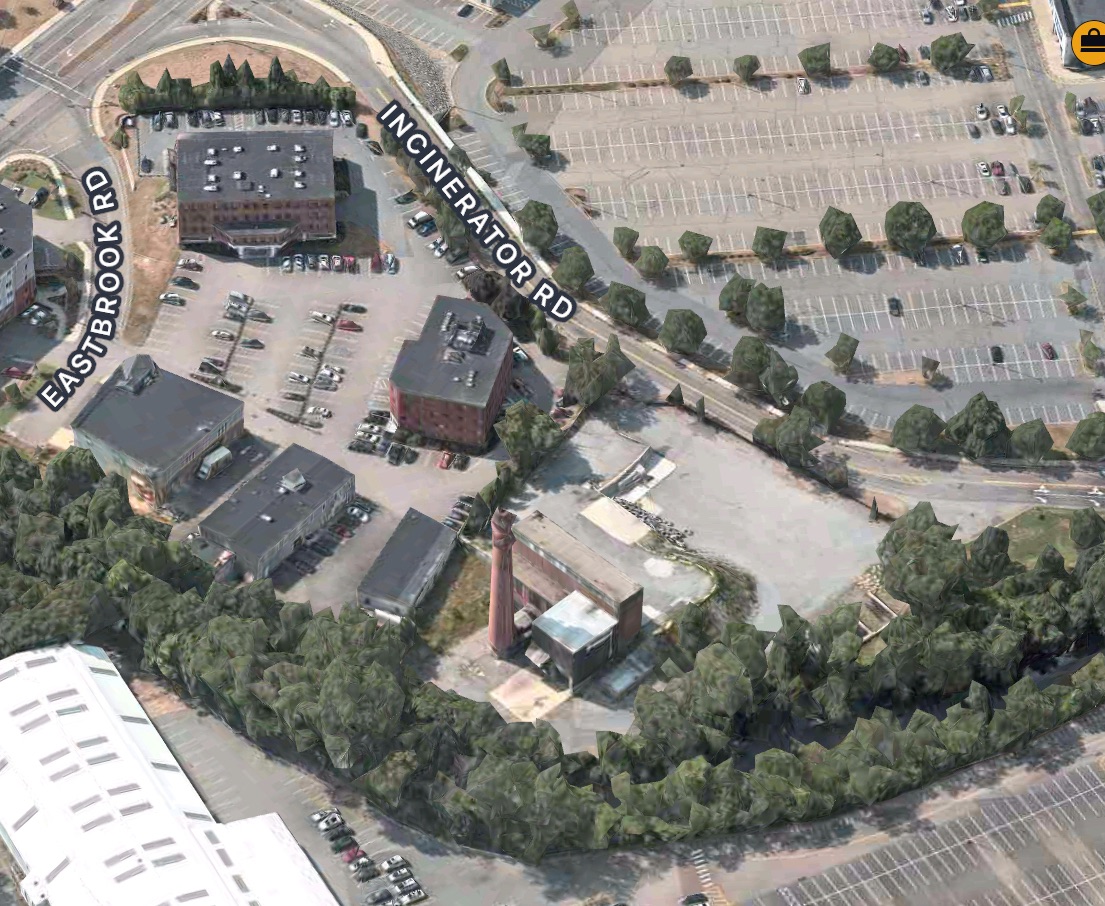
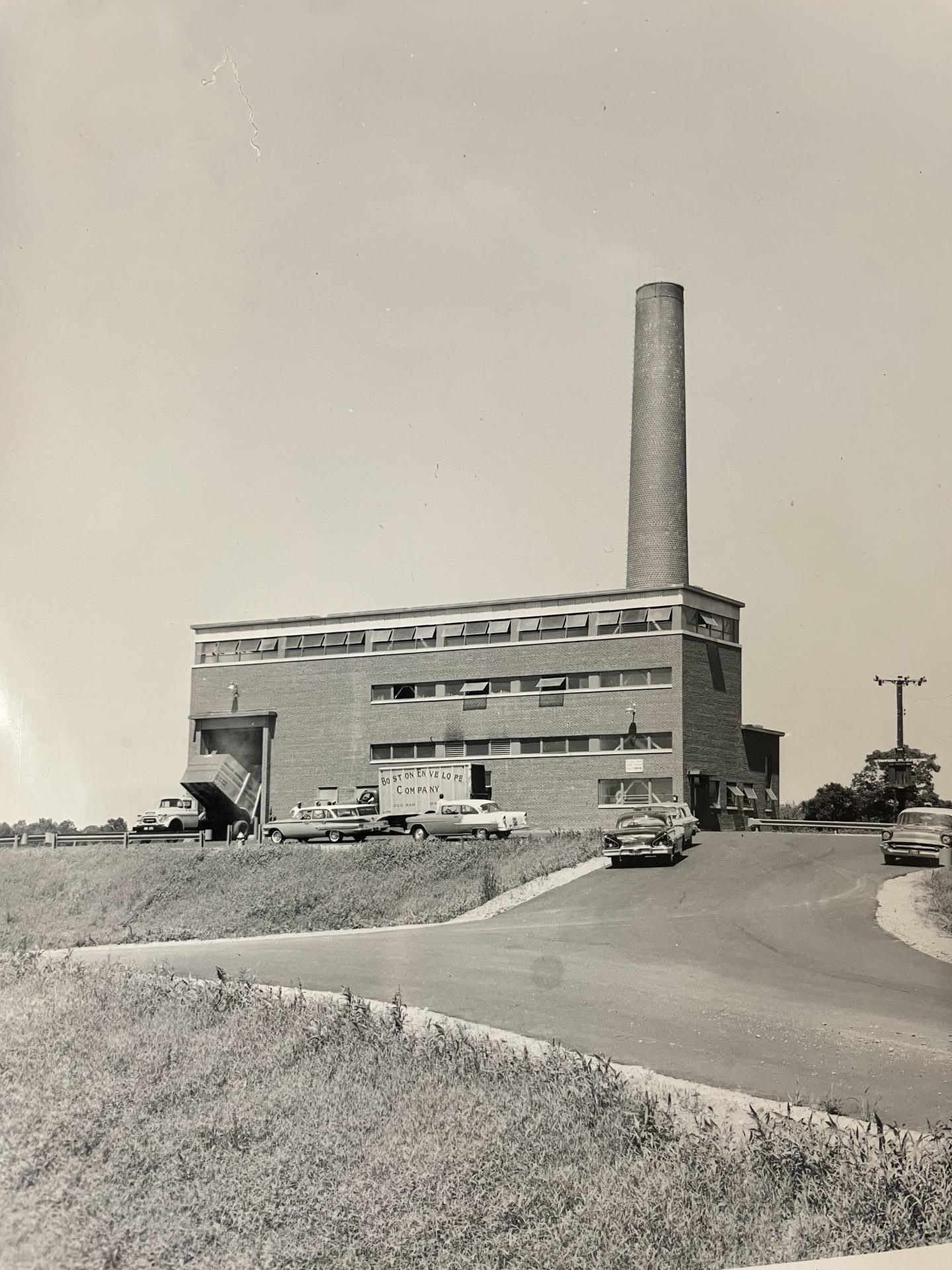
The Town of Dedham is currently conducting a survey of residents to gather ideas for the future use of the transfer station site off Washington Street. Built as an incinerator in 1961, the facility was closed in 2019 and currently serves as DPW storage. But did you know it was built on land that once served a much different purpose?
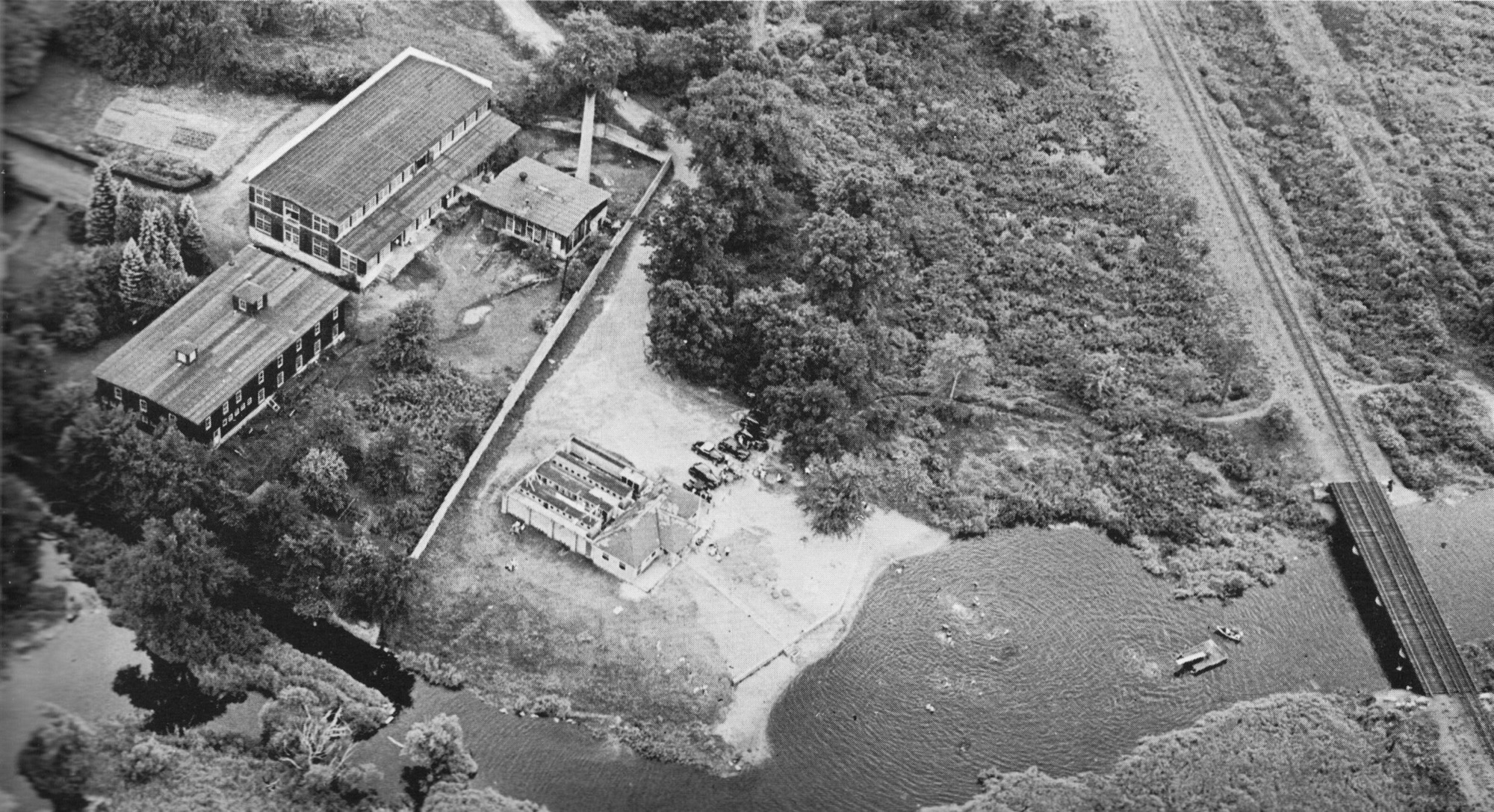
2024 View1947 View from Town of Dedham Master Plan Report
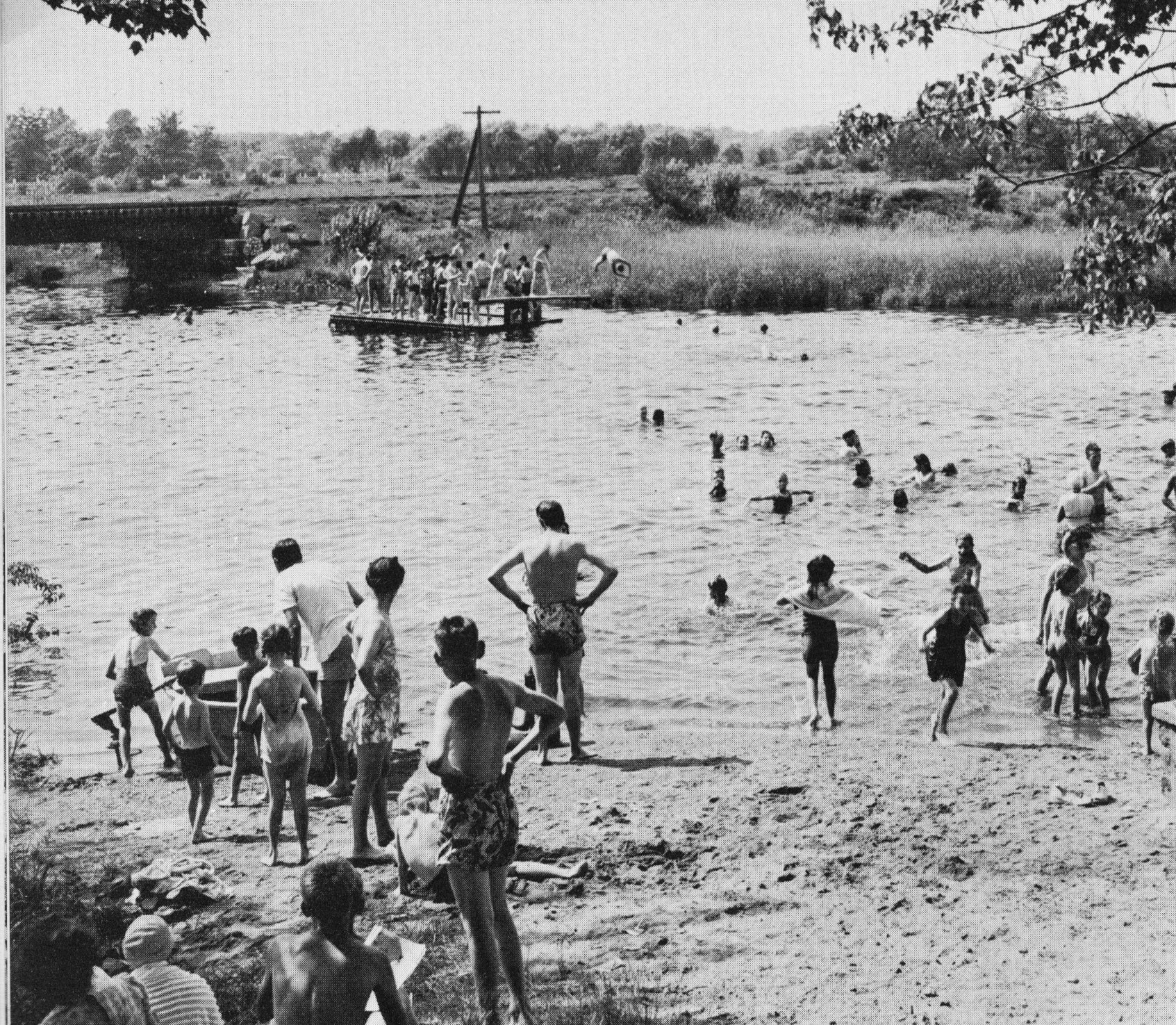
As you can see, a bath house once stood on the site and Dedhamites flocked there for over half a century to cool off in the waters of Mother Brook. The 1947 view shows the bath house built in 1925 after the original one from 1898 burned down two years earlier. The popular spot was staffed with lifeguards and swim instructors, and swim meets and games capped the season at summer’s end. The swimming area was occasionally dredged to create a real old- fashioned swimming hole, and the beach area was regularly maintained. The NY, NH & H railroad tracks ran northwesterly from Dedham Square under Washington Street across what is now the Dedham Mall parking lot. Brave (also reckless) swimmers would sometimes dive off the railroad bridge, despite the diving platform supplied by the town (see below).
“One of the most popular places in Dedham during the recent hot spells is the bath house at Mother Brook where hundreds of boys and girls have been enjoying themselves daily.” Transcript/July, 1941
Rumors began circulating in the late 40s that the water had become polluted, and the beach and bath house closed for good after the summer of 1952. The town sold a portion of the land in 1955, and the incinerator was approved in April 1960, with construction beginning the following year. While the days of swimming in local waterways are well past, it was a cherished summer activity until the mid-twentieth century, best summed up in this transcript column from July, 1925:
“Every normal child just naturally seeks the water, and swimming is the art that should be acquired by all…And just as long as we support our bath house and just as long as we see these young people sporting in the water, we are sure we have done something, locally, that childhood may be made happy.“
The incinerator at the time of its opening/Courtesy of Dedham Museum and Archive
If you are a Dedham resident, you have until Friday March 15 to take the survey. Here is the link:
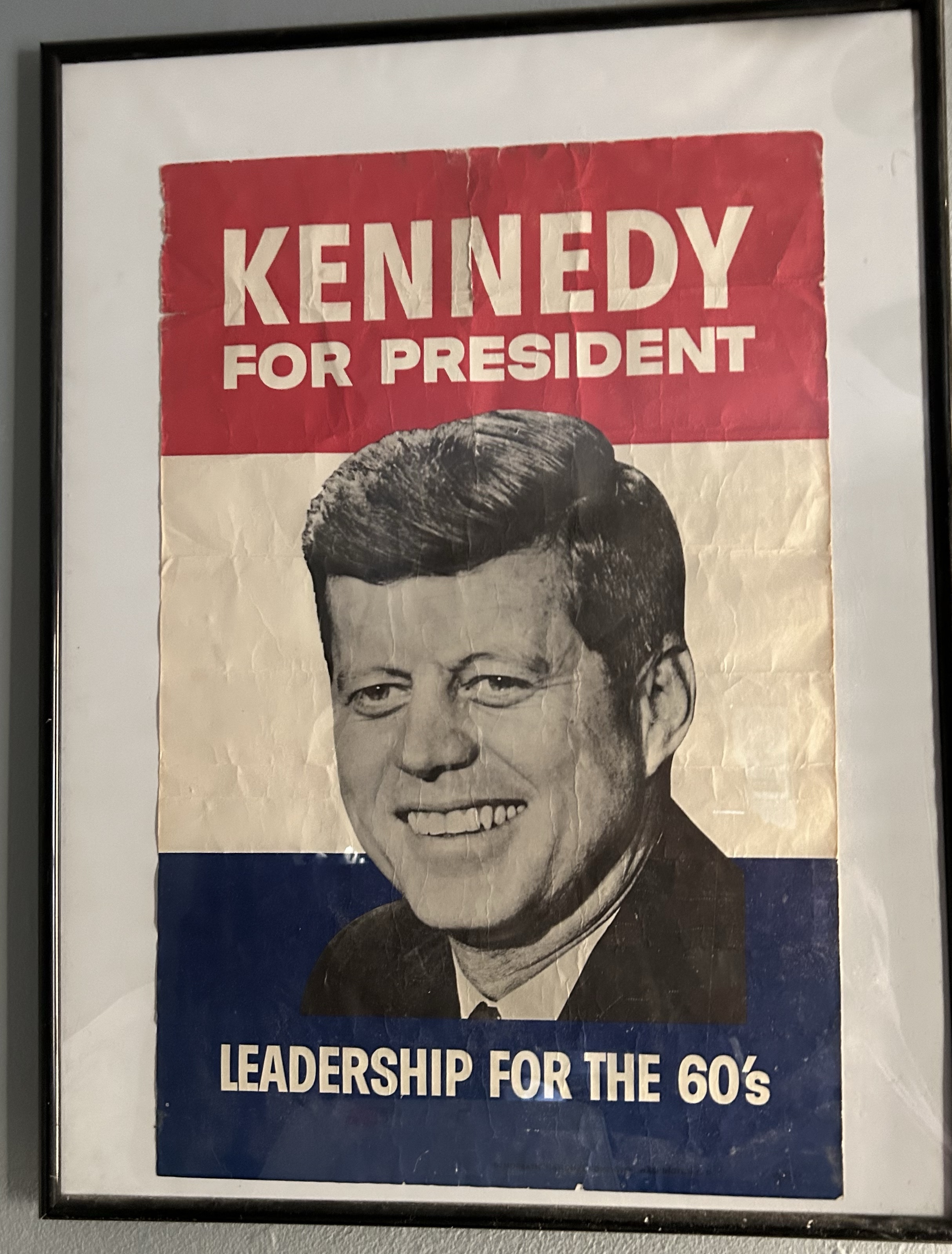
November 22 marks the 60th anniversary of the assassination of President John F. Kennedy. For those who are old enough to remember, it was a time of overwhelming shock, grief and uncertainty. I recall watching the funeral at four years old with my mother and being fascinated by the riderless horse with the backwards facing boots in the stirrups. For residents of Massachusetts, the loss of President Kennedy hit especially hard; he was one of “ours.” He was also a hero to Irish Catholic families like mine- the only political items I ever saw in my house were from Kennedy’s 1960 presidential campaign.
Kennedy campaign poster- it was a popular show and tell item for me and my siblings, hence the many wrinkles.
The response in Dedham to Kennedy’s death was much like that in cities and towns across the state and country. Flags were flown at half-staff, public buildings were closed and draped in black bunting. On Monday November 25, the nation observed a National Day of Mourning, and Dedham’s memorial service began at noon just as the president’s funeral was commencing in Washington. Starting at Memorial Park, town leaders and veteran’s groups marched to the square accompanied by a solemn drumbeat provided by members of the DHS band. Other groups in the procession included the Knights of Columbus, police and fire departments, and the Women’s Auxiliary. The procession ended in front of the police station on High Street where clergy from local churches gave brief remarks. A traditional volley of gunfire was followed by the singing of “America” and the national anthem. The ceremony ended with a bugler playing “Taps.”
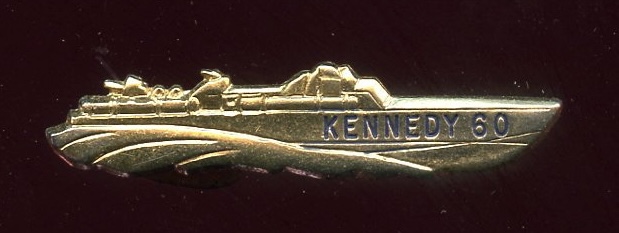
This PT-109 tie clip belonged to my grandfather.
With the Thanksgiving and Christmas holidays occurring so soon after this national tragedy, residents tried to carry on as best they could, but clearly there was an underlying sadness present in all of the festivities. Out of respect for the president’s memory, the 5th annual torchlight parade and football rally which was to be held the night before Thanksgiving was canceled, but the traditional game against Norwood continued, with the Marauders crushing the Mustangs at home, 30-0. On Friday the 29th, a busy Santa arrived by helicopter at the Dedham Plaza in the morning, then flew over to Mal’s Department Store in Norwood for an afternoon visit. On December 10, at the 153rd annual meeting of the Society in Dedham for Apprehending Horse Thieves, a moment of silence was observed for Kennedy, who had become a member following his election (it is the custom of the Society to bestow membership on presidents and other politicians). Newly sworn-in President Lyndon B. Johnson was then accepted for membership.
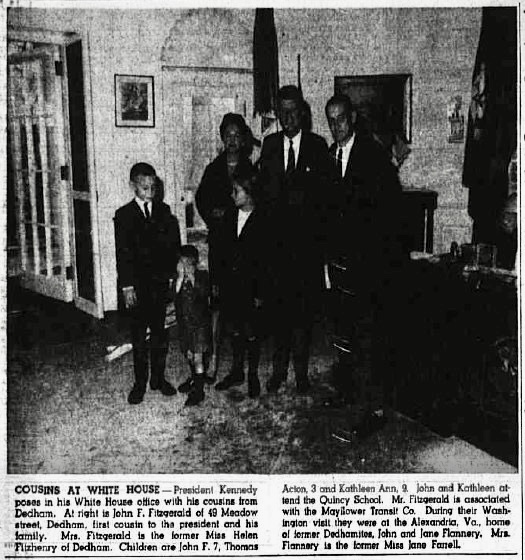
The president had a direct connection to Dedham through his cousin John Fitzgerald, who lived on Meadow Street with his wife Helen and their three children. Kennedy had also visited the town on several occasions during his senatorial campaigns.
This photo of Kennedy’s cousin John Fitzgerald and his family appeared on the front page of the Transcript on November 7, just two weeks before the president’s assassination.
JFK first came to Dedham in 1952 as the Democratic candidate for the senate, appearing at a reception and campaign rally at the Ames Junior High in September and at the Oakdale School in October. In November he would defeat the incumbent republican Henry Cabot Lodge Jr for the senate seat. In 1953 the senator was the featured speaker at the annual meeting of St. Mary’s Holy Name Society, addressing a crowd of 800 in the school hall. Kennedy’s final visit to Dedham was another campaign stop in October 1958, when he and Jackie attended a dinner in their honor at the Hotel 128, followed by a reception at the old Dedham High on Whiting Ave. On November 4, Kennedy won reelection with a whopping 73% of the vote over Republican attorney Vincent Celeste.
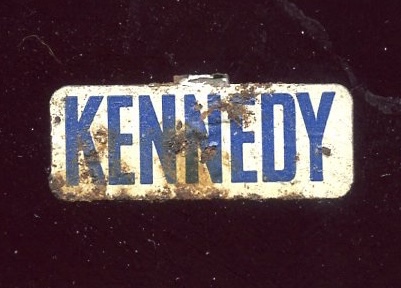
A clip-on campaign pin from my grandfather’s collection
In the weeks following the assassination, town leaders began discussing the best way to memorialize the president. Originally selectmen considered erecting a standing memorial somewhere on town property, but that idea was abandoned in favor of something that would, according to the Transcript “embody some of the warmth of the late president for people, some of his love for athletics and his interest in literature.” In the end it was decided that a scholarship in the president’s name would be established at Dedham High. The scholarship was given every year at least through 1973, but does not appear on the list of scholarships awarded to the Class of 2021.
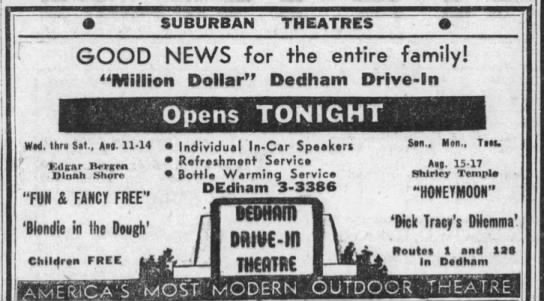
It’s the summer of 1948. Athletes from around the world are gathering in London for the first Olympics in 12 years. In the White House, Harry Truman is gearing up for a presidential run in the fall. The Boston Braves are a few months away from their first National League pennant, (and just a few years away from abandoning the city for Milwaukee). Here in Dedham kids are beating the heat at Mother Brook, East Dedham’s Mill Pond, Cox’s Cove on the Charles or down the river at the new day camp at Noble and Greenough School (still going strong after 76 summers!). Midget auto racing is featured at Norwood Arena which just opened on Rte. 1. You can get a new Motorola television set for $49.95 at Henry’s Radio and Electronics (but you’ll only have programming from WBZ-TV, which commenced broadcasting in early June). Movies and quiz contests are being offered at the 21-year-old Community Theater in the square, and, starting on August 11, movie fans will have a second option for viewing as the Dedham Drive-in opens just off the Providence Pike.
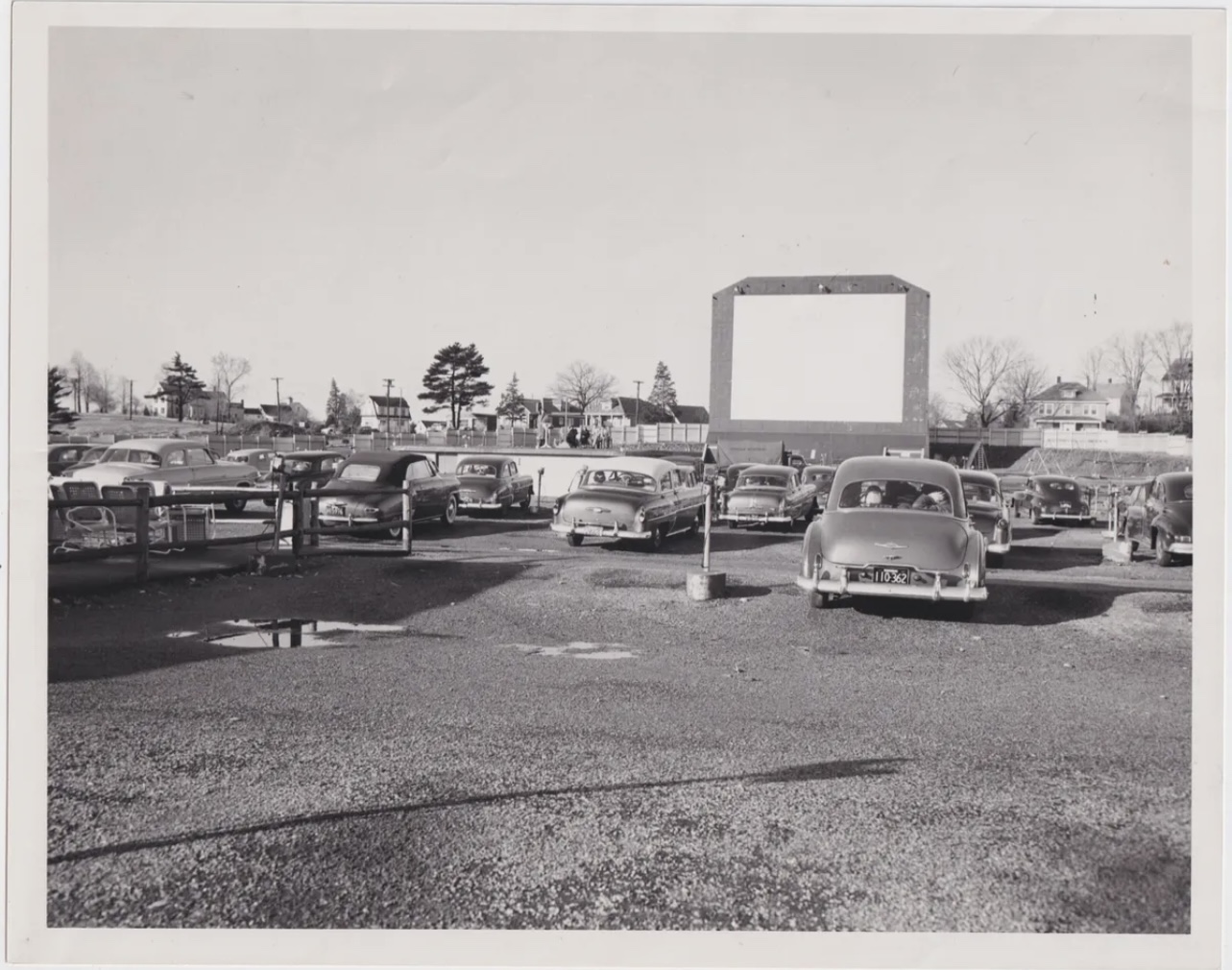
Hundreds of cars are lined up along Elm St as selectmen and local business leaders gather with owner and operator Michael Redstone to cut the ceremonial length of movie film stretched across the drive-in’s entrance. Tonight, a double feature of Disney’s Fun and Fancy Free along with the comedy Blondie in the Dough are shown on the “million dollar” drive-in’s 60′ x 42′ screen.
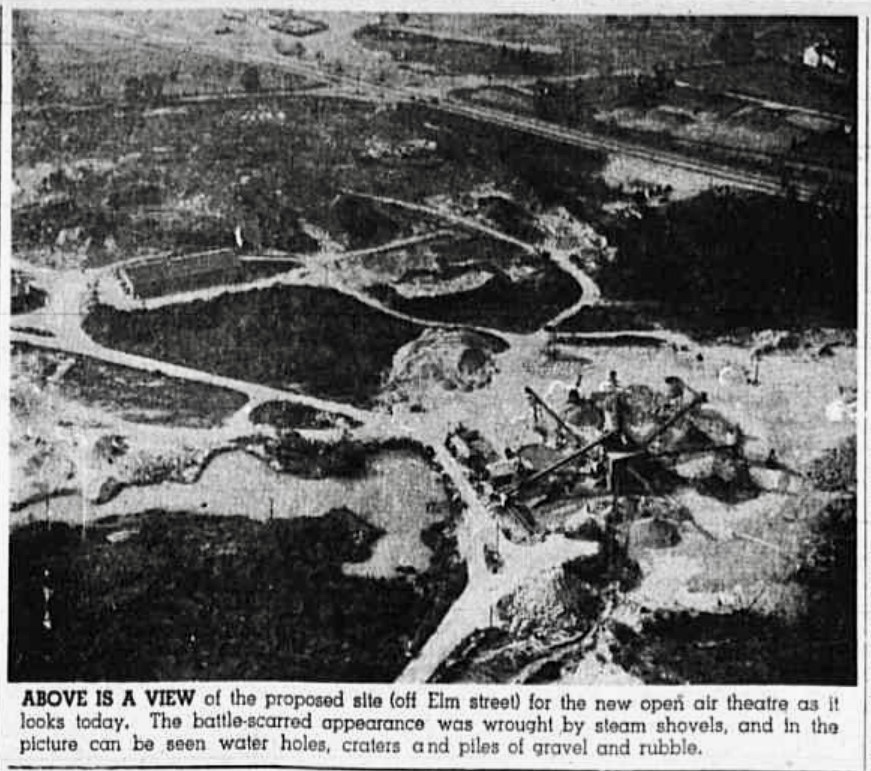
In the fall of 1947, the Board of Selectmen granted Michael Redstone a permit to build an “open air theatre” on 23 acres of land that had at one time been the site of Farquhar’s Nursery, but in recent years had become an eyesore, after gravel and loam was repeatedly removed, creating an unattractive and unsafe moonscape. Redstone, a Boston native, had been successfully operating an outdoor theater on Long Island for ten years, and the Dedham location would be an exact copy.
The drive-in concept was introduced to the world in Camden, New Jersey in 1933 by entrepreneur Richard Hollingshead. Since then, some 800 theaters had been built across the country with the first Massachusetts location opening in Weymouth in 1936. Dedham was about the 20th drive-in theater to be built in the state.
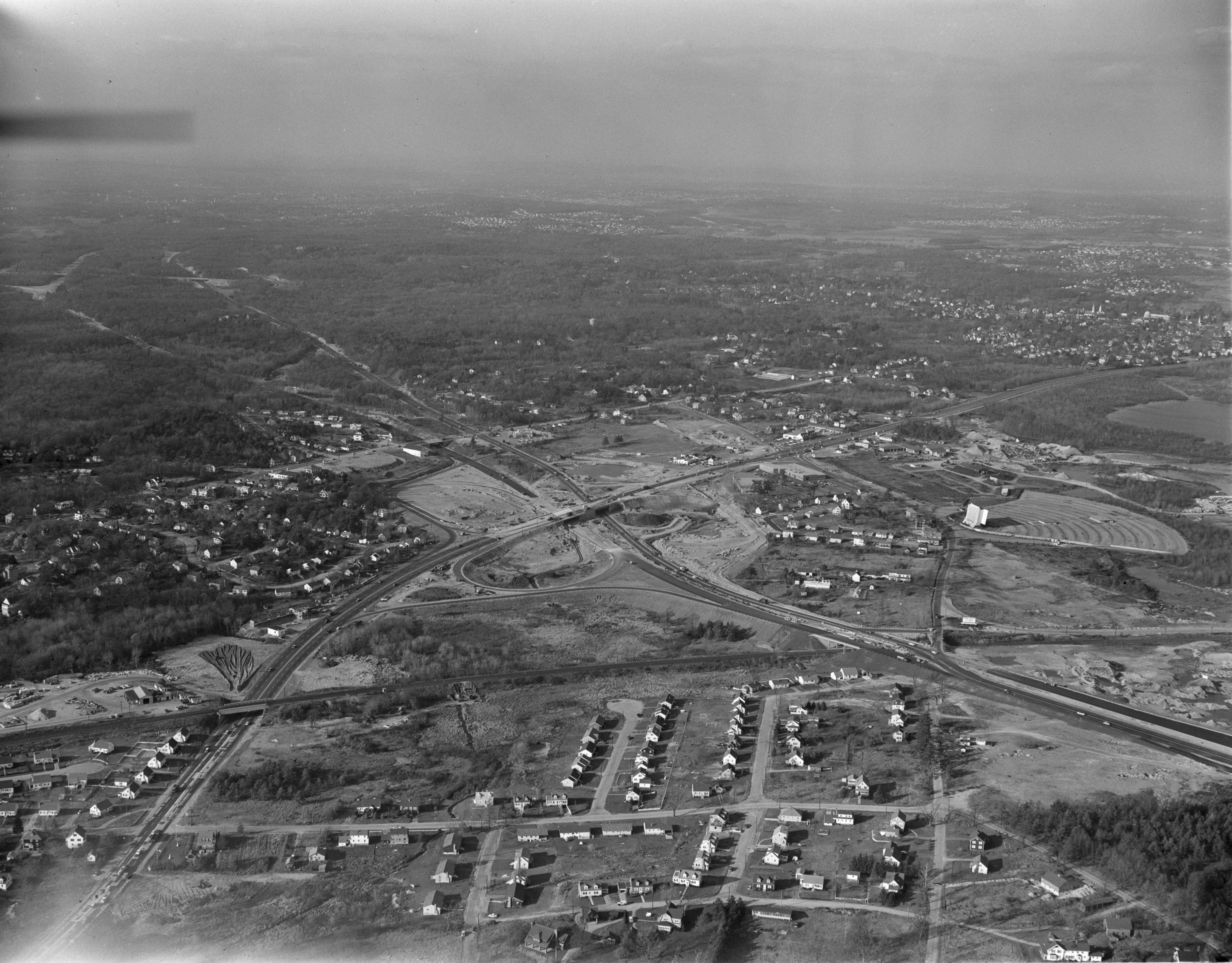
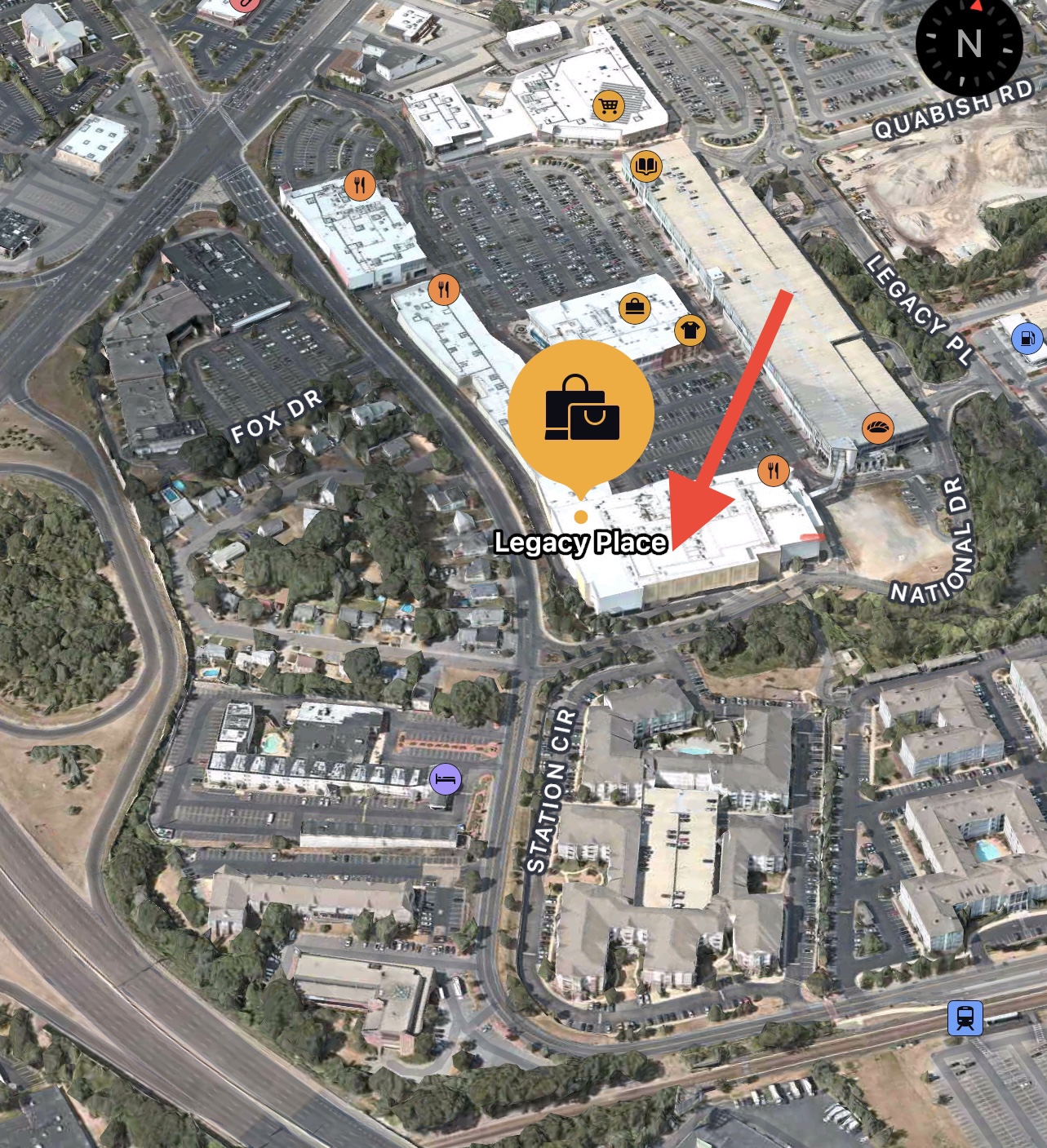
The Drive-in, as seen in this mid-fifties view, was located on Elm Street, the screen standing in nearly the exact same location where the Showcase Cinema de Luxe at Legacy Place now stands.
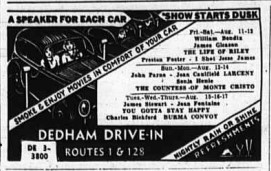
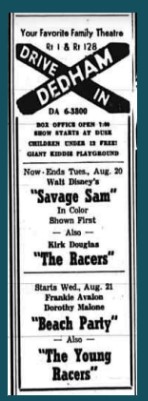
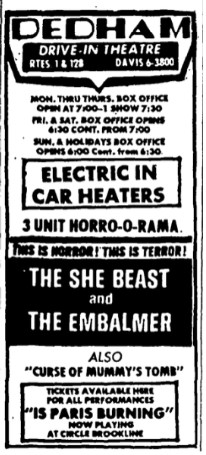
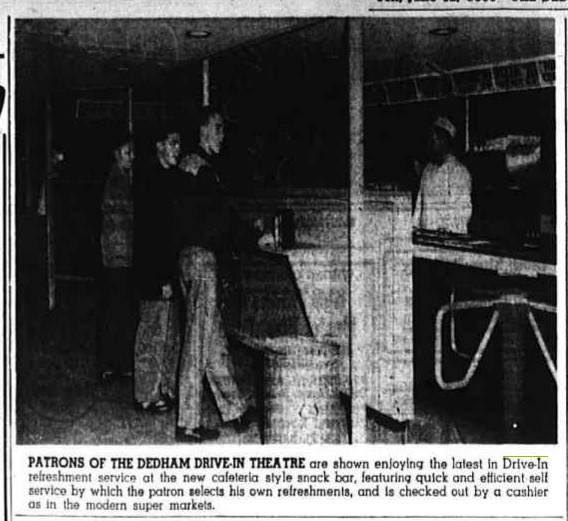
Initially, the drive-in was marketed as a family-friendly place you could take the kids in their pajamas to watch a movie, eat a meal, play on the playground, and enjoy a smoke. Over time, first run movies were replaced by “B” movies that were popular with teens, who probably didn’t really care what movie was playing. Throughout its history, Dedham offered a mix of wholesome entertainment and schlocky horror/beach flicks, as evidenced by the ads below:
19501963January 1967- there were some years that the drive-in was open year-round!
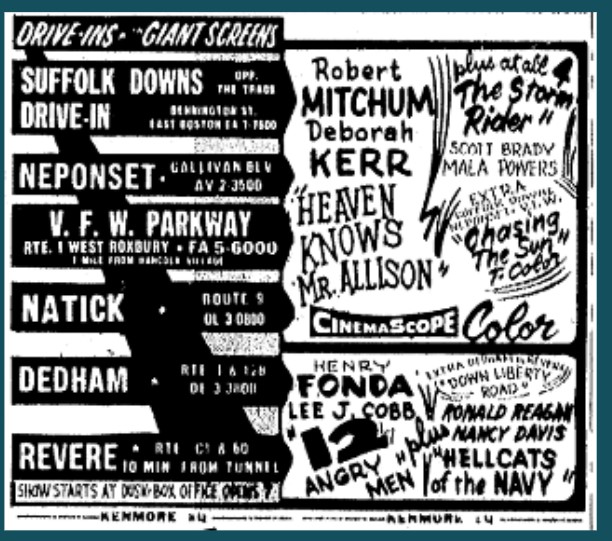
The Dedham Drive-in was the first theater in Redstone’s Massachusetts Drive-in empire. The Revere location opened 2 weeks later, followed by Neponset Circle, VFW in West Roxbury, Suffolk Downs, and Natick (a joint venture with another company). Redstone’s sons Edward and Sumner eventually took over management of the company, and Sumner Redstone transformed it from a regional theater operation to a multi-billion-dollar company when he purchased Viacom, Inc. (CBS, Paramount, Nickelodeon, MTV) in the 1980s. Today National Amusements is headquartered in Norwood and operates about 1,500 theaters across the US and Canada. Sumner Redstone passed away on this date in 2020 at the age of 97 leaving an estimated $2.6 billion estate.
The Redstone Drive-in Empire in 1957
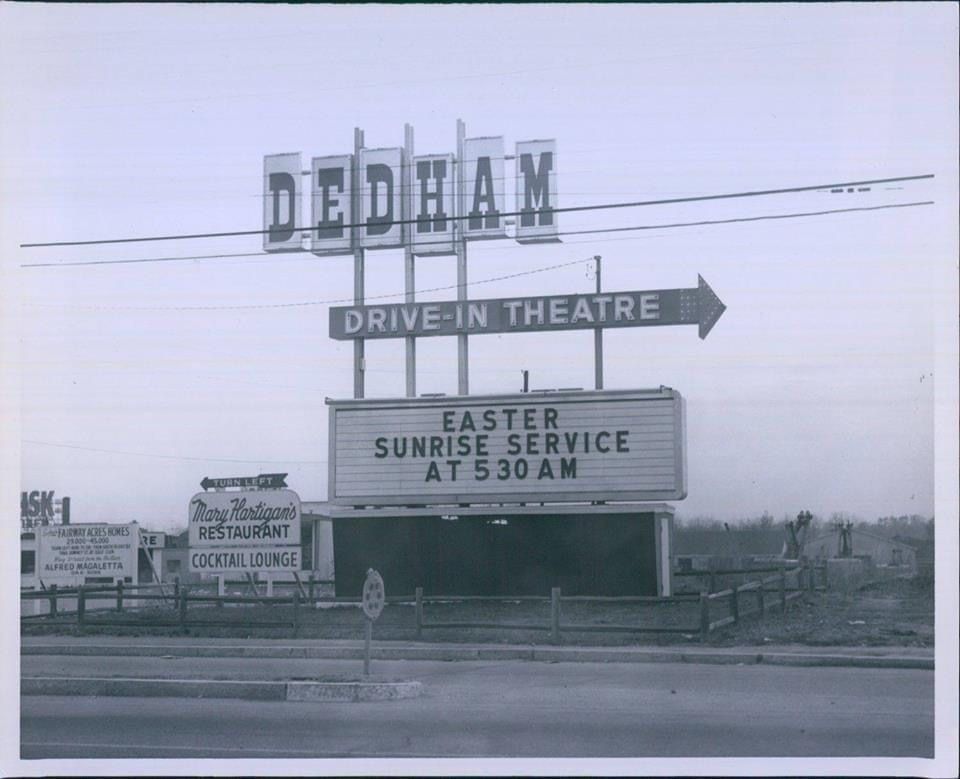
One of the traditions at the theater was the annual sunrise Easter service, which began in 1954. The first service was sponsored by the United Christian Youth Movement with 500 in attendance. St. Luke’s Church on East St. began hosting the services in 1961 and continued to do so through at least 1977.
Easter Sunday, April 18, 1954. Note the large cross to the left of the screen on the roof of the projection booth. The screen was enlarged at some time before the fall of 1955. Photo by Frank Van Pelt/Parkway Photo Service
The drive-in was in operation until about 1979; although some sources state it closed in 1982. The Showcase Cinema 1-3 (a Redstone operation) opened next door in 1973. In part 2 of this tale, I will share the one and only time I went to the Dedham drive-in, as well as the controversy that nearly cost the theater its license in 1970. Here are a few more images. Please feel free to share your stories in the comments section!
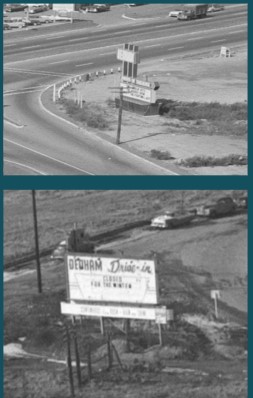
Mid-fifties signs at Rte 1 and Elm Street (top) and Elm St facing 128 (bottom)
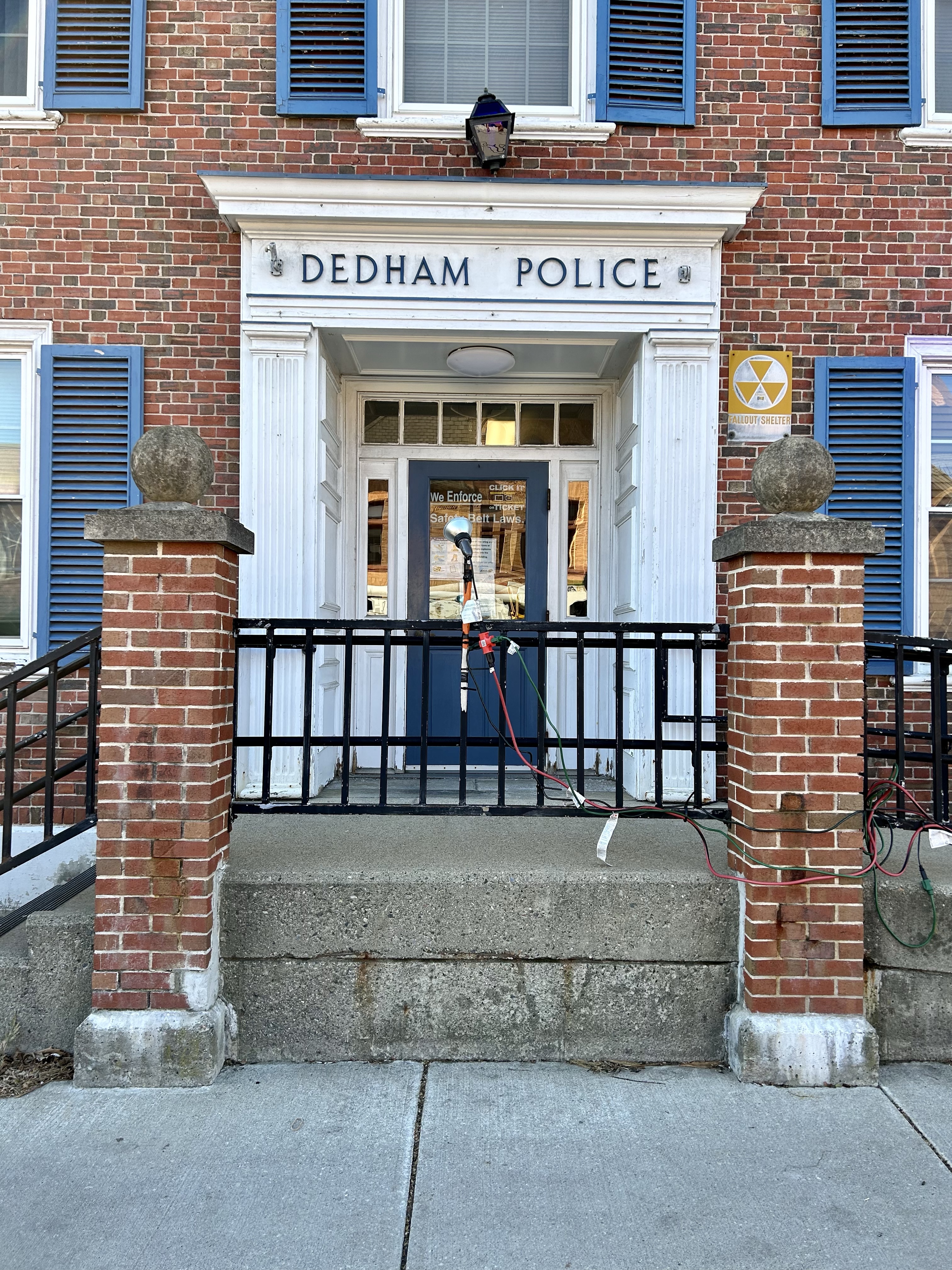
The fallout shelter sign has been hanging in this spot since the building was dedicated 60 years ago. The fallout shelter was located in the basement behind 6-inch walls of reinforced concrete and housed the Civil Defense Communication Center. A lead shield was available to be placed over the window for protection from radioactive fallout.
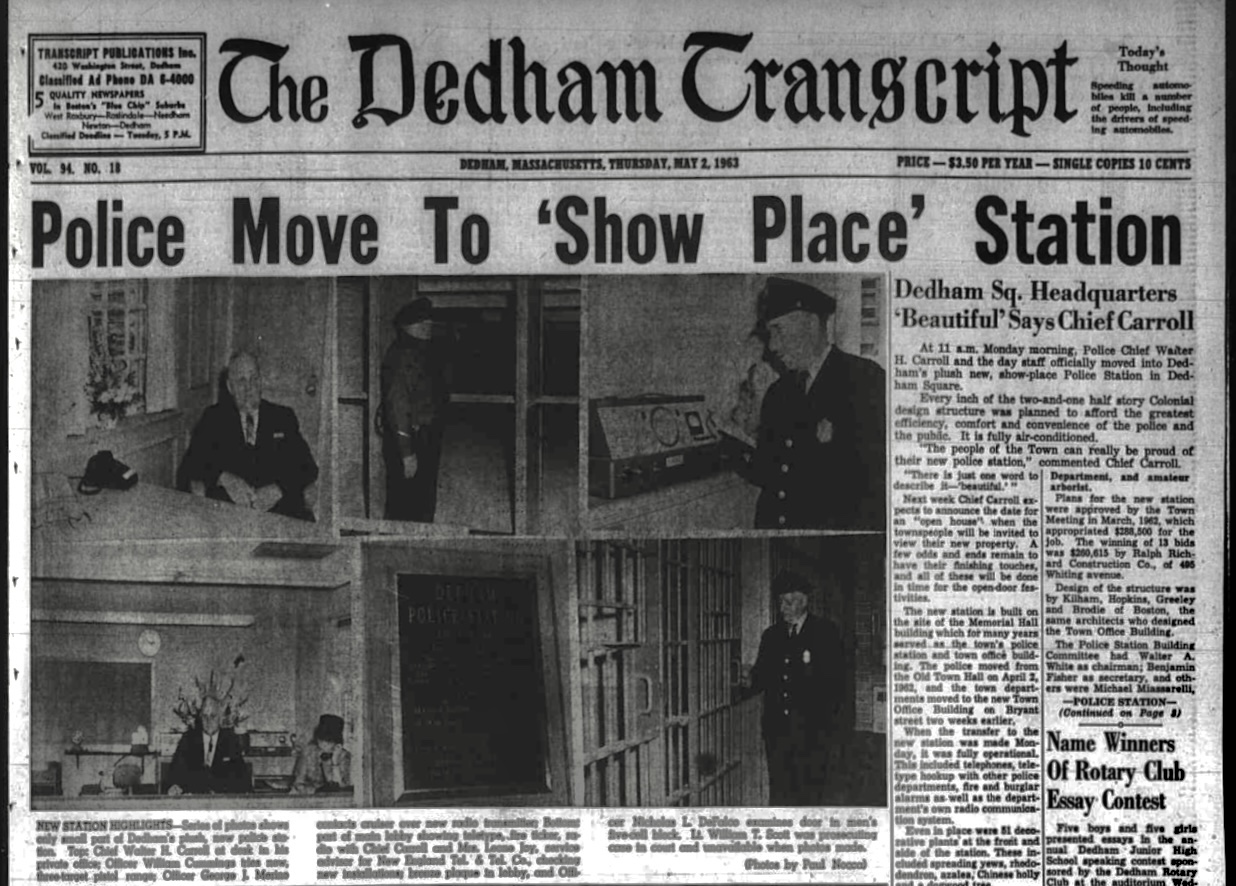
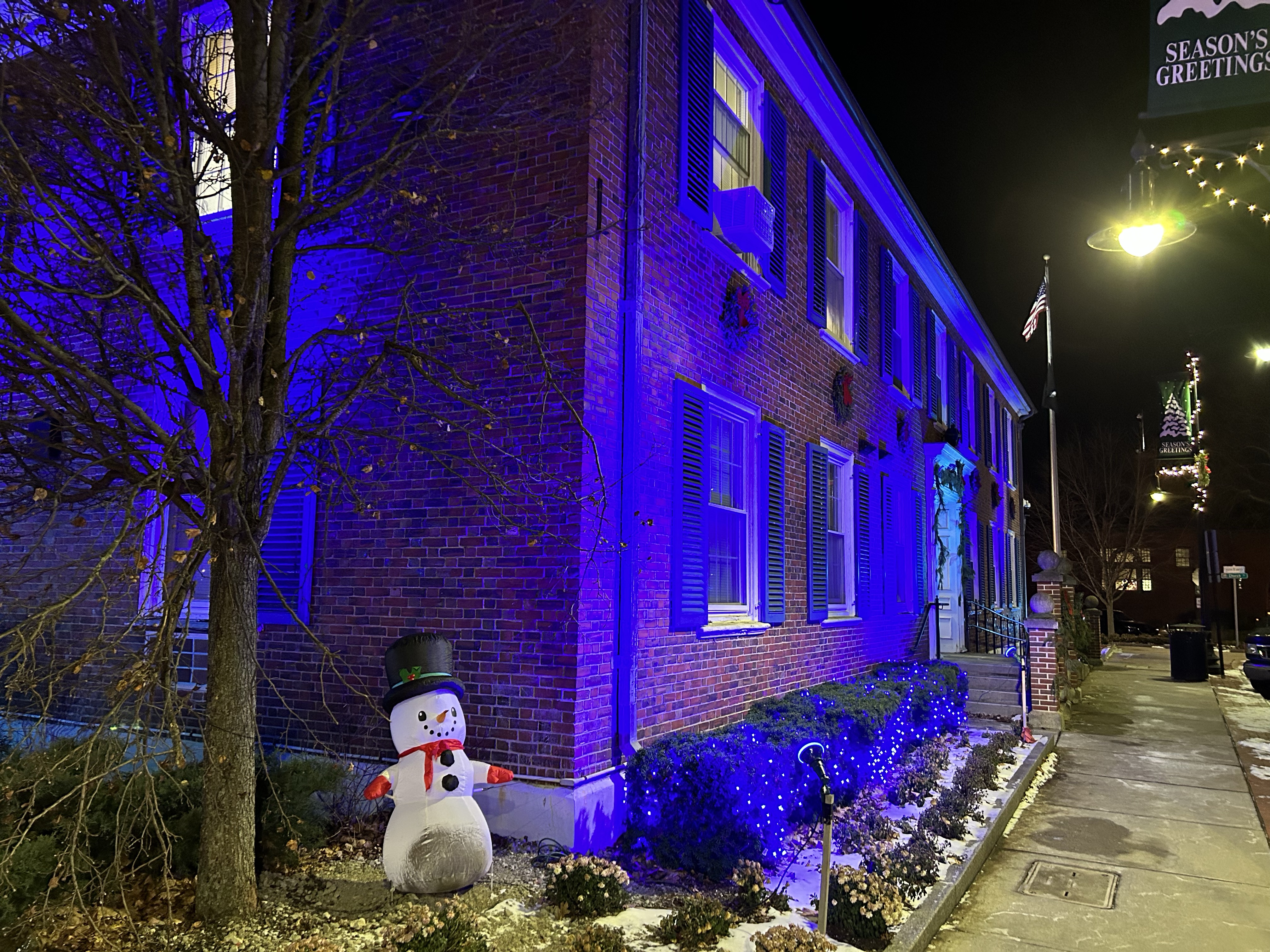
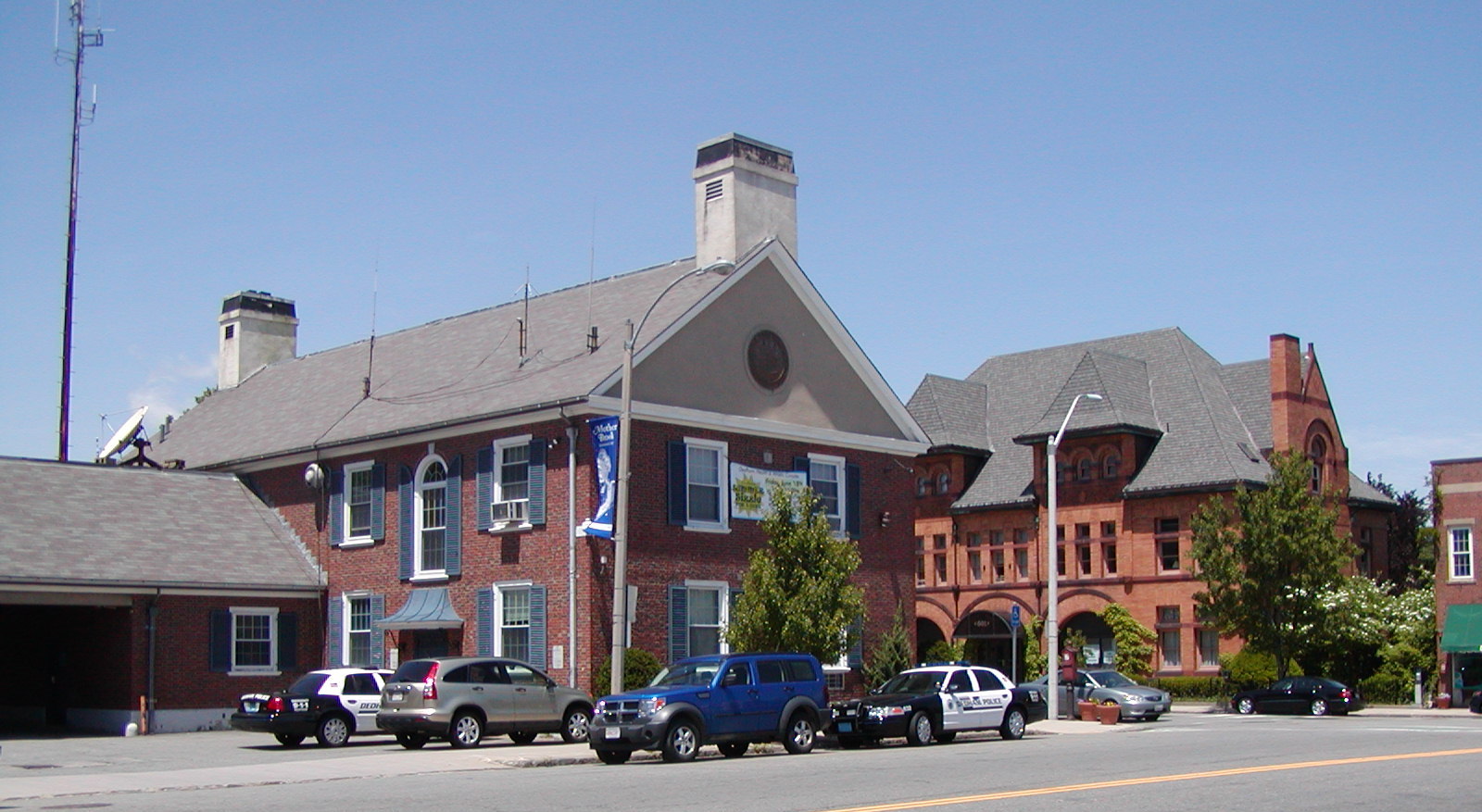
The Dedham Police Department moved into their new headquarters on April 29, 1963, almost 60 years ago. The department had been in temporary headquarters at the new town hall on Bryant Street after vacating their original home in Memorial Hall which was torn down the year before.
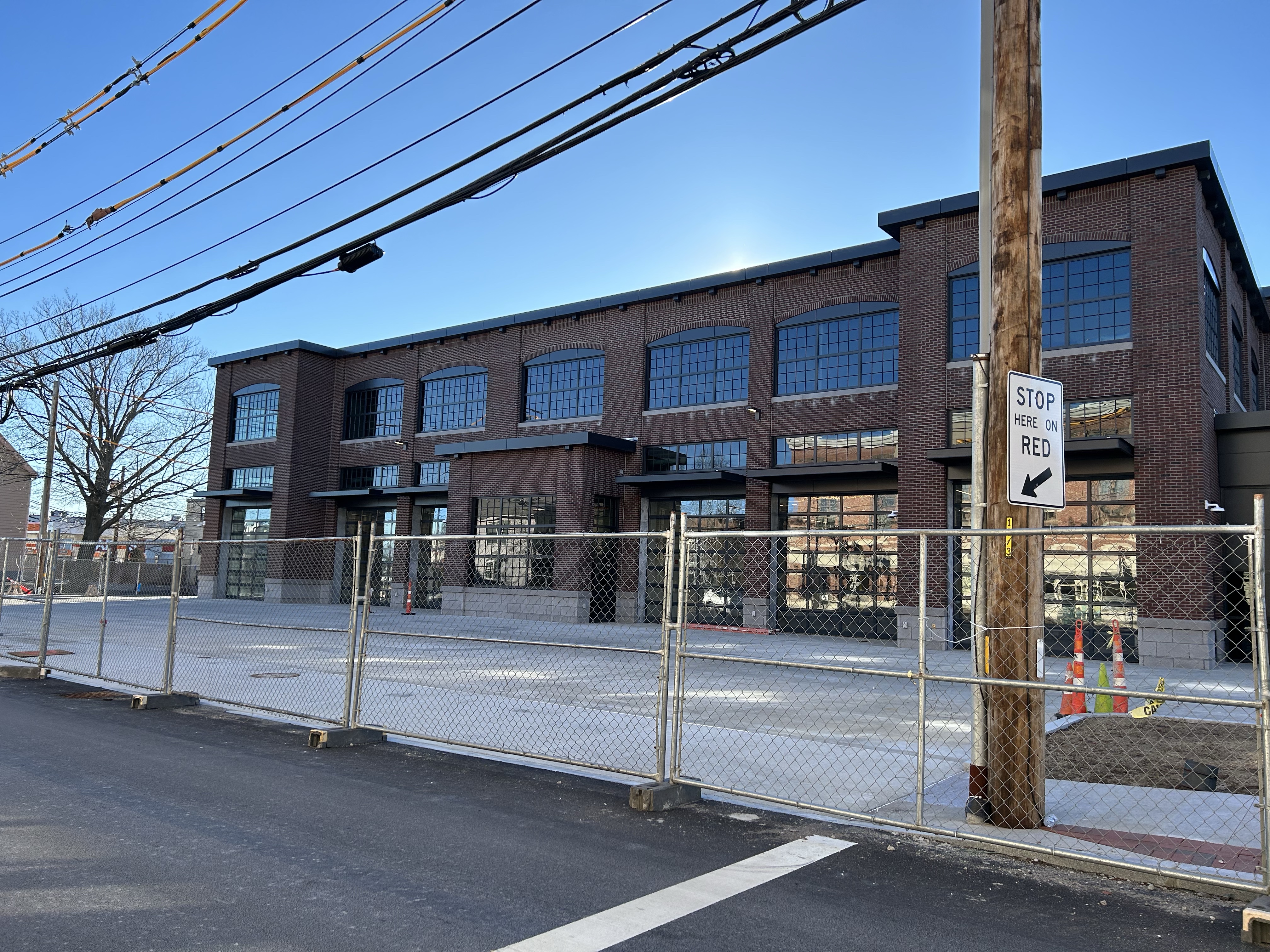
This was the first and only building built exclusively as a police station in Dedham. Tomorrow, the new public safety building on Bryant Street will be dedicated at a ribbon cutting ceremony at 1:00. Guests are invited to attend the ceremony and tour the new police/fire facility.
The new building at 26 Bryant Street. The combined fire/police facility will also replace the 1930 Central Fire Sation on Washington Street. The Dedham Square Planning Committe recommended in December 2021 that the former police station be demolished, and the site be developed as green space.
I’ve been inside the police station exactly two times. The first time was as an eighth grader doing a report on police work. Some officers showed me around and gave me a blank fingerprint card as a souvenir. About 20 years ago my car was rammed by another one in the Dedham Plaza parking lot and I went to the police station to file an accident report. Feel free to share stories of any time you’ve spent in the Dedham Police Station!
Congratulations to Mary Fontaine who was the first to correctly identify the location!
I am James L. Parr. I grew up on Tower St. and went to St. Mary's and Dedham High (Class of 1977). I teach school in Framingham and co-wrote a book of Framingham history, which led me to write a book of weird Dedham history called Dedham: Historic and Heroic Tales from Shiretown. That book led to this blog. To order your own copy of the book, e-mail me at jameslparr@yahoo.com


 Jim Parr
 Dedham Tales