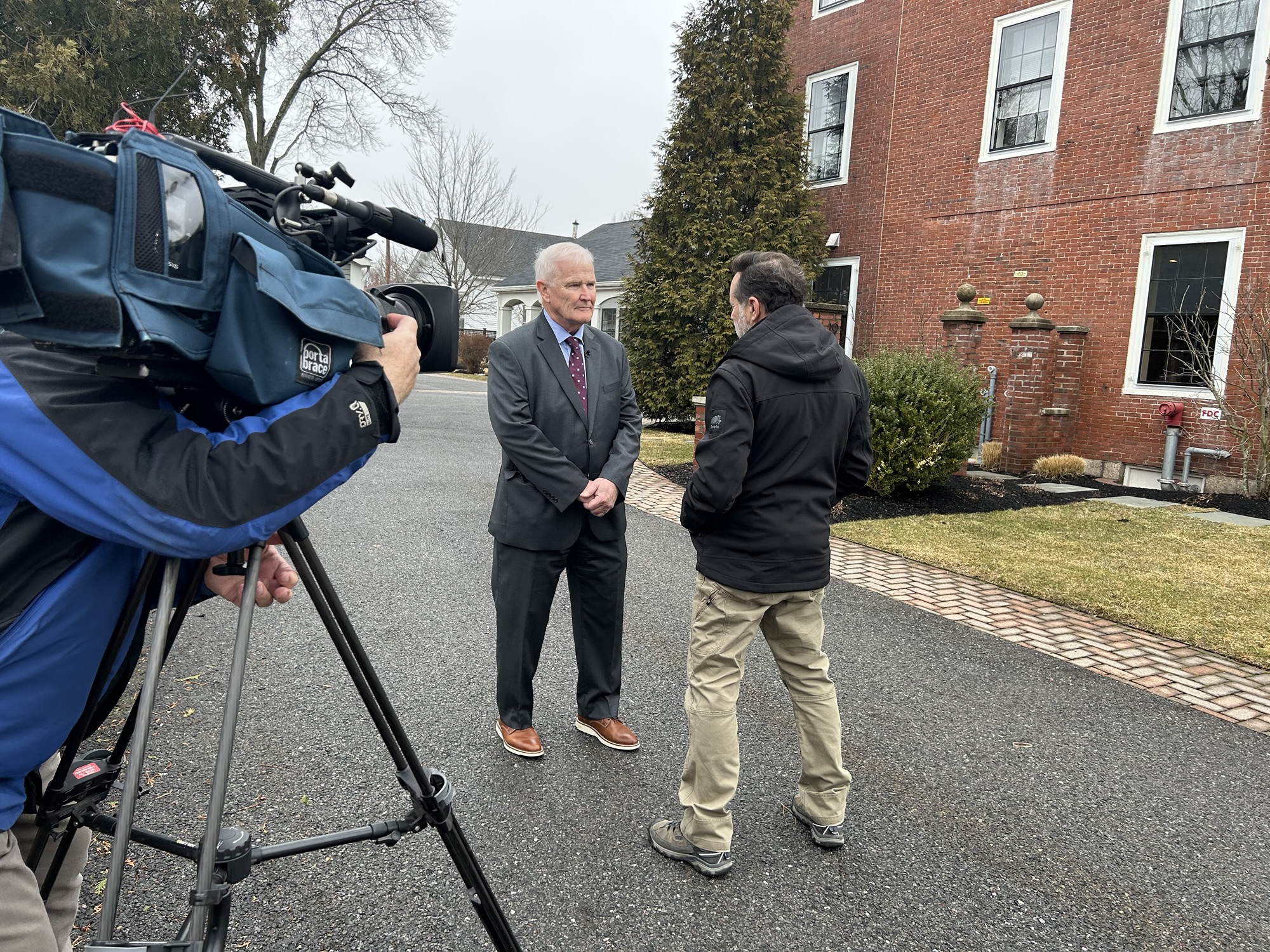
Kevin Hampe, clerk-treasurer of the Society in Dedham for Apprehending Horse Thieves, talks to Chronicle’s Ted Reinstein outside the old Norfolk Hotel on Court Street, where the society was founded in 1810.
Monday June 9, 7:30 on Channel 5 (WCVB)- I will be on Chronicle talking to Ted Reinstein about Dedham’s Town Forest as part of his “Who Knew?” series. Also on the segment will be the Fairbanks House, Society in Dedham for Apprehending Horse Thieves and the Dedham Museum and Archive. Here’s a link to the promo; be sure to watch!
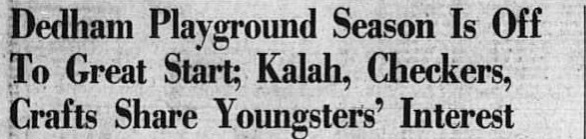
While researching various subjects in the Dedham Transcript archives for this blog, I frequently come across the Dedham Playground write-ups published every week in the summer. These summaries were written by the high school and college students who worked at the various playgrounds around town and would include the names of all the neighborhood kids who had attended that week and a description of the activities they were involved in. I found many mentions of my own name and that of my sister and all the kids in my Tower Street neighborhood who used to frequent Paul Park in the late 60s-early 70s. Along with volleyball, baseball, pot holder making and plaster of Paris, one regularly mentioned activity was Kalah. I have fond memories of playing this game for hours on end, and when I became an elementary school teacher I introduced it to my students as Mancala, which it is commonly known and sold as today. At first I thought that Kalah was a nickname the Paul Park kids made up, but then I found this Transcript headline from 1958 and I knew I needed to do some more research.
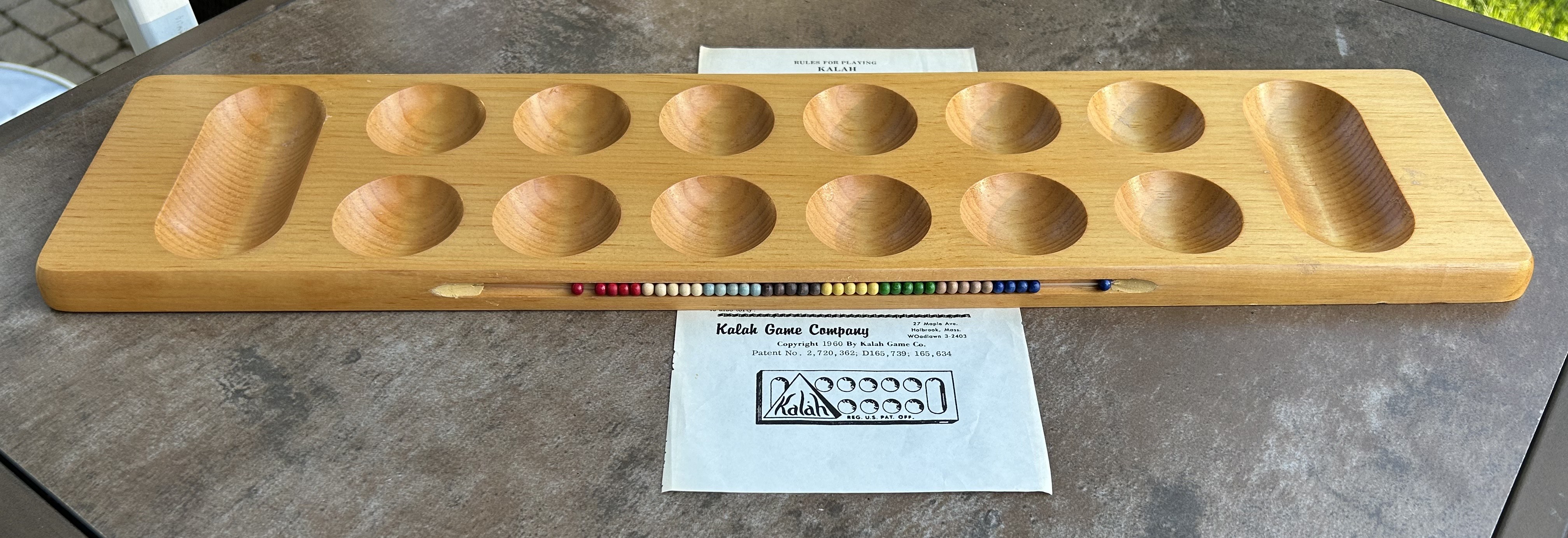
As it turns out, Kalah was a brand name for the mancala-type game invented here in Boston in 1940 by Yale Graduate William Julius Champion, Jr. It is believed that Champion adapted an ancient bean counting game from either Asia or Africa to create a 20th century version. Champion founded the Kalah Game Corporation in 1958 and the wooden boards were manufactured in various places, including Holbrook, Massachusetts, until the 1970s. Beginning in the late 1950s, recreation departments in towns across the country were sponsoring tournaments at playgrounds and community centers, and Kalah had taken its place among such timeless pastimes as checkers, chess and horseshoes.
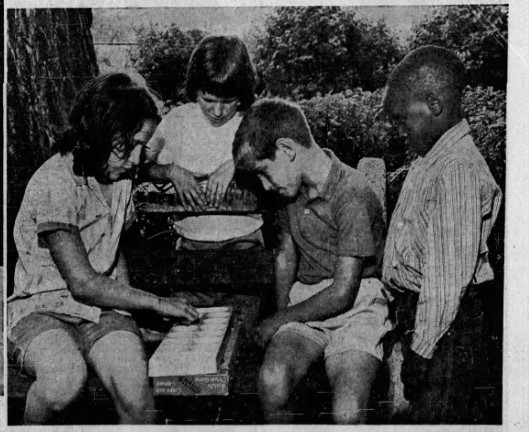
Kids in Chicago playing Kalah in 1960 at the height of its popularity
I’m sure many of you have fond memories of scooping those dried beans from pod to pod while sitting on a splintery bench in a Dedham playground. Here’s to that highly addictive game and here’s to all the college and high school teens who worked at those playgrounds. They kept us safe, entertained, and out of our mother’s hair on those hot summer days.
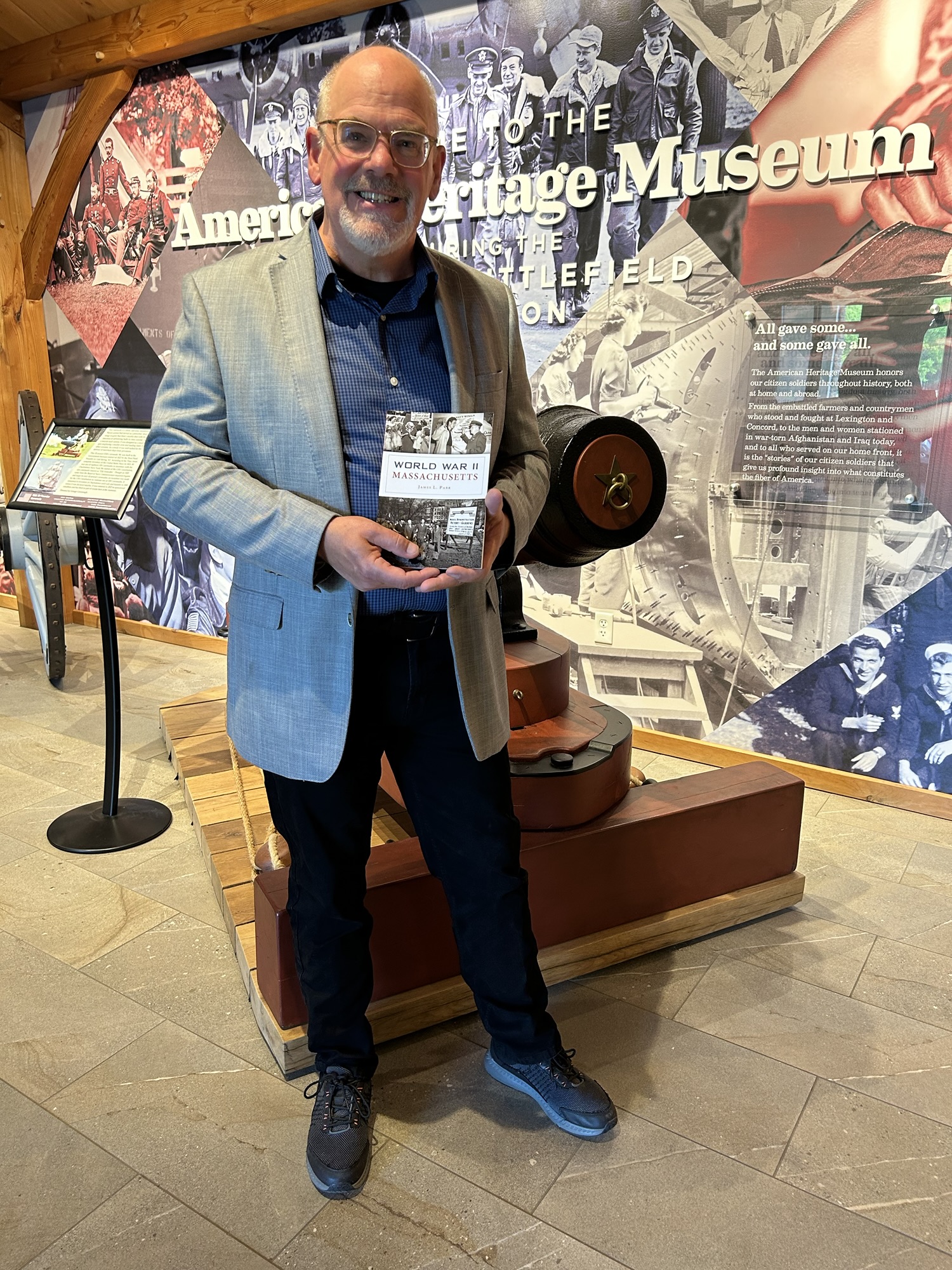
On Sunday, May 18, I will be giving a talk and signing copies of my book World War II Massachusetts at the Battleship Cove Museum in Fall River. This exceptional historic site is home to the battleship USS Massachusetts, which saw plenty of action in the war after being launched in Quincy in 1941.
Since the book’s publication in March 2024, I have traveled across the state sharing stories of the Massachusetts home front, meeting dozens of interested folks, including many senior citizens who lived through and remember many of the events described in my book. One of my most unique and memorable experiences was presenting at the American Heritage Museum in Hudson, just steps away from World War II-era armored carriers, tanks and planes.
Recently, the events of 1941-1945 are once again making headlines, with the observation of the 80th anniversary of Victory Europe (V-E) Day occurring this week, and the anniversary of the end of the war (V-J Day) coming in August. What better time to learn about this incredible period of our country’s history? Below is a link to the Museum’s website which contains details about my appearance. Both Battleship Cove and the American Heritage Museum are worth a trip any time of the year, but it’s always a boost to see friendly faces in the crowd when I speak. Don’t forgot, you can get copies of my book at any book retailer including the Blue Bunny in Dedham Square, where I can be found working behind the counter during the week.
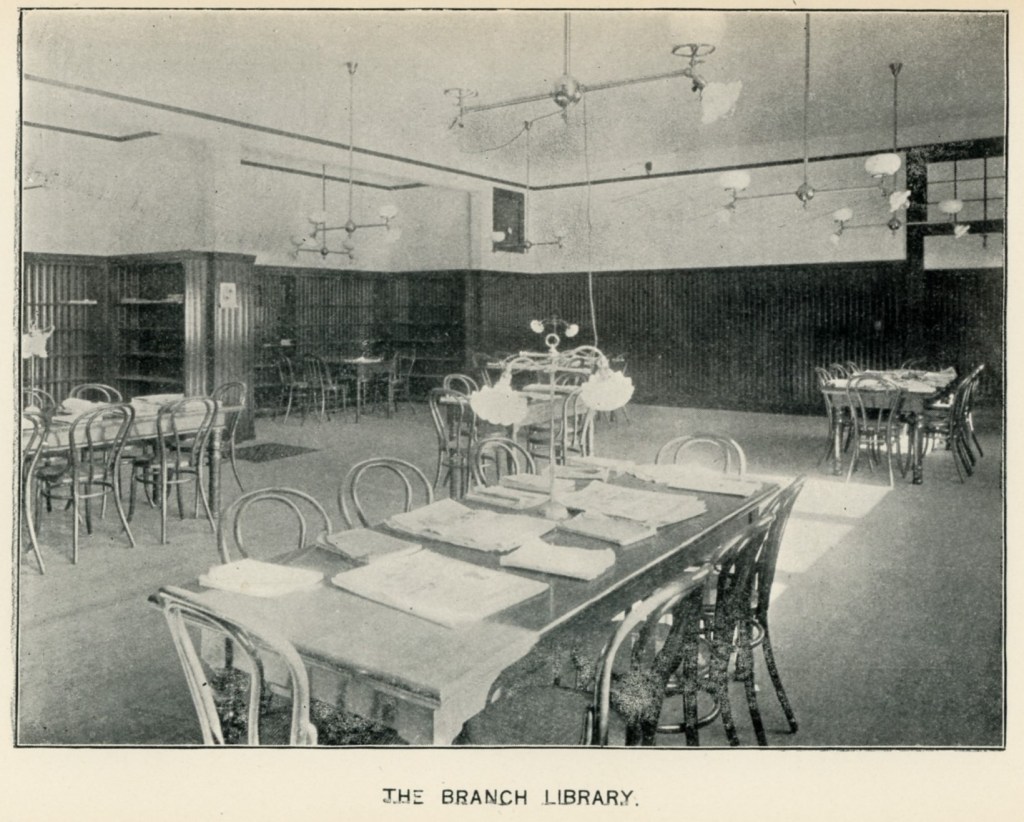
Many locals remember this building as the East Dedham Branch Library, which was in operation for an incredible 77 years from 1896-1973! This is what the library looked like when it first opened:
The branch Library opened on January 30, 1896. The library’s annual report at Town Meeting that year stated: “The warm interest already shown in the Library is proof that its advantage to the people of East Dedham will be deeply appreciated.” And it was, for the next 77 years!
Others will recall Gates Pharmacy, which relocated here after several moves and closed for good in 1995. Others remember going to the office of Dr. Glickstein the dentist who kept his office here for decades.
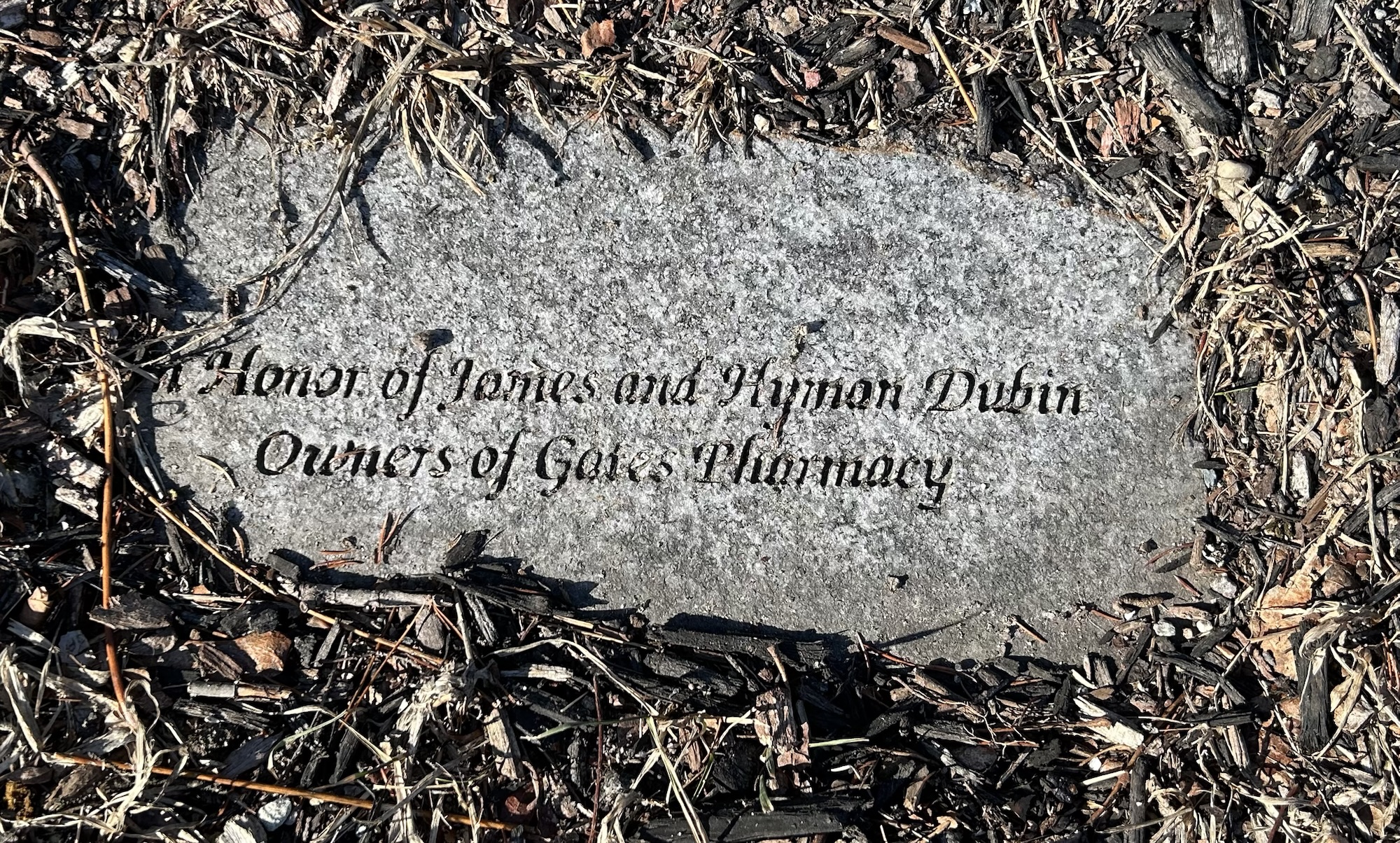
Gates Pharmacy opened for business at its original High Street location on May 13, 1952, and closed exactly 43 years later on May 13, 1995. This stone honoring the original owners, brothers James (Jimmy) and Hyman Dubin is located in the park next to 25 Milton Street.
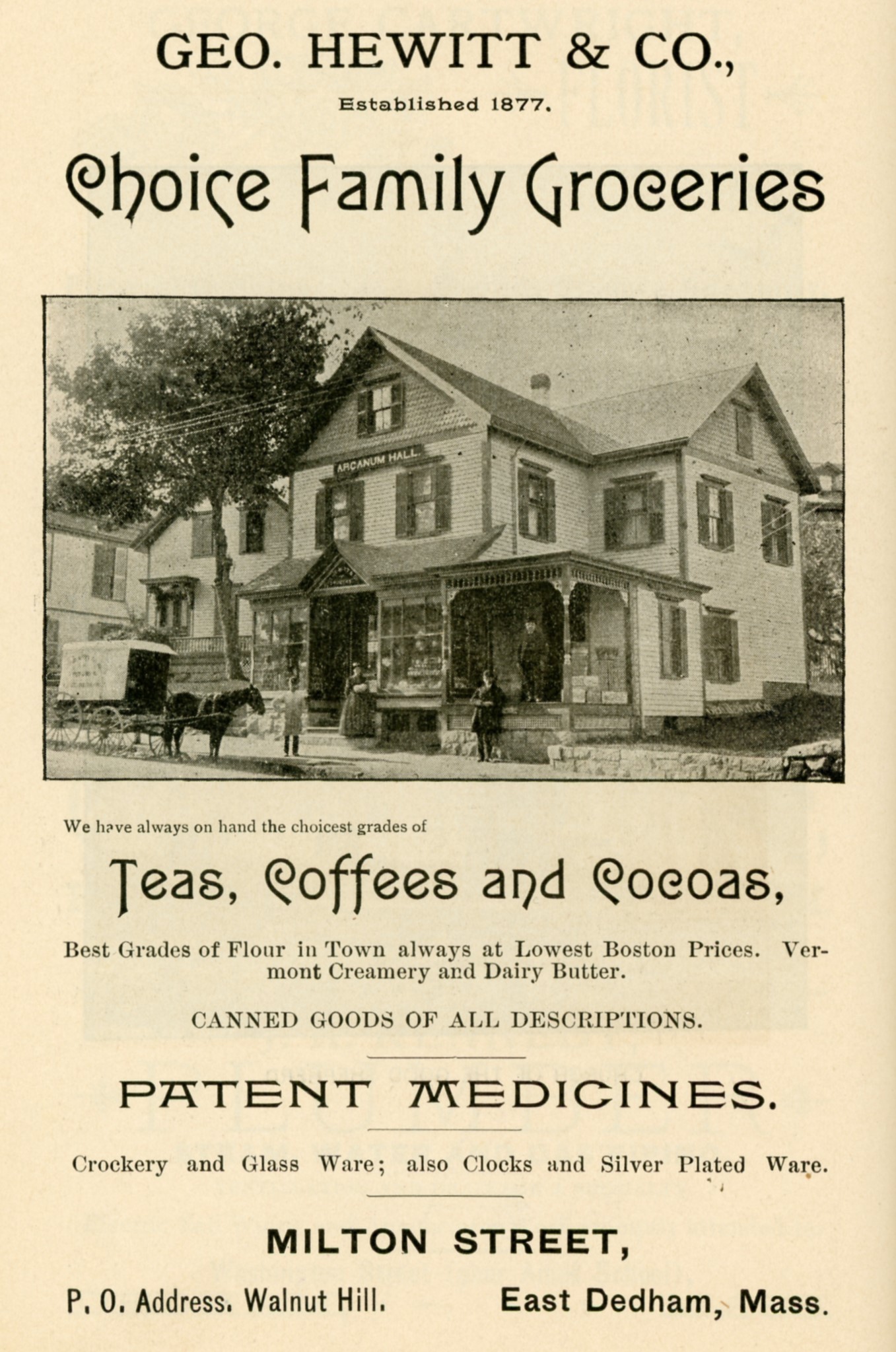
There are few, if any, who are old enough to recall the building’s earlier past. Here is the same building in an advertisement for George Hewitt’s grocery store from the 1893 Dedham Directory:
According to the 1895 publication Boston’s Picturesque Southern Suburbs, “there is no room to doubt that so far as East Dedham is concerned the store par excellence, to patronize, is the family grocery house of Messrs. Geo. Hewitt & Co., on Milton Street…” Hewitt’s shop carried a full line of groceries and meats, as well as clocks, silverware, stoves and ranges.
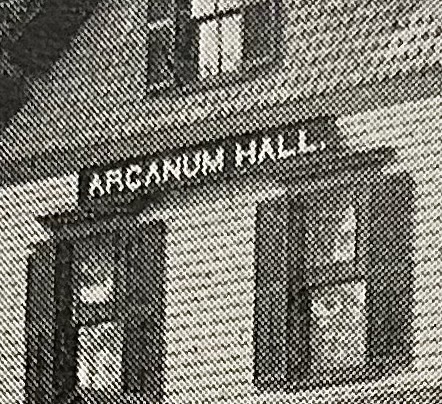
George Hewitt was an English immigrant who supervised the weaving operation at the Merchant’s Woolen Mills before opening the grocery in 1877. Until his death in March 1902 Hewitt, lived above the store with his wife and nephew Sam, who helped run the business. Tragically, 26-year-old Sam contracted meningitis and died just a few months after his uncle. The property and business were then taken over by Benjamin Rose. Both Rose and Hewitt were members of a fraternal benefit society known as the Royal Arcanum, which explains the sign hanging above the windows.
When Hyde Park merchant and Russian immigrant Moses Guber purchased the property after Rose’s death in 1912, the sign was repurposed.
Moses, wife Annie and daughters Ida and Martha lived above the store, which was operated into the 1940s. Guber purchased several other properties in East Dedham Square, most of which were taken by the town and demolished during the “urban renewal” of the mid-1960s. Moses died in 1955, Annie in 1968. His daughters continued to live together in Dedham until the early 2000s. Ida was one of the first female graduates of the Massachusetts Pharmacy School and worked as a pharmacist at the Faulkner Hospital for 35 years. She passed away in 2004 at the age of 92.
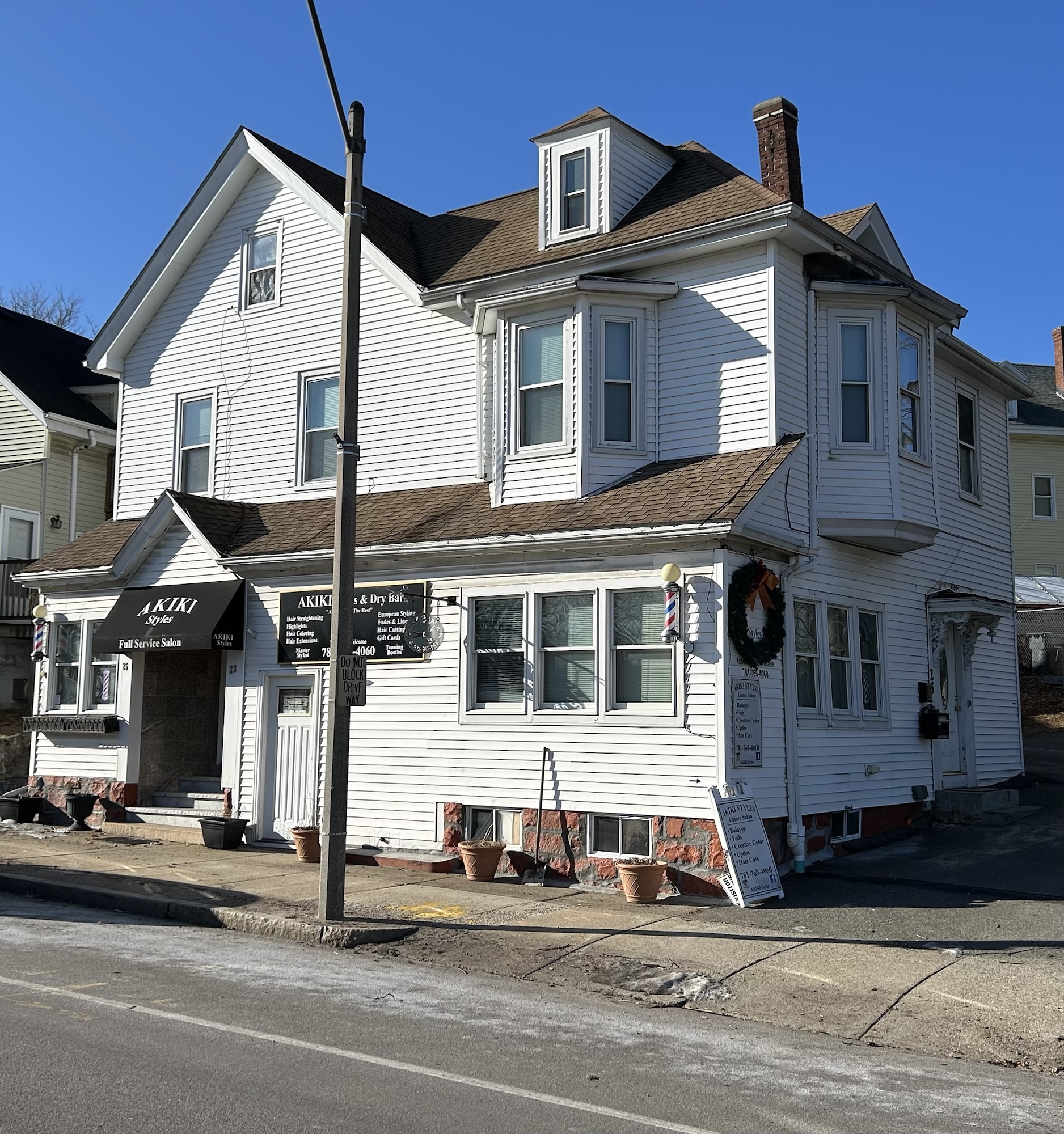
Today, the building houses Akiki’s Styles and Dry Bar, continuing a tradition of business at this location for almost 150 years!
Come to the Dedham Museum and Archive and see the M. Guber sign that sparked this deep dive down the rabbit hole of East Dedham history. If you look closely, you will see faint traces of the original lettering for Arcanum Hall! All historic photos courtesy of the Dedham Museum and Archive.
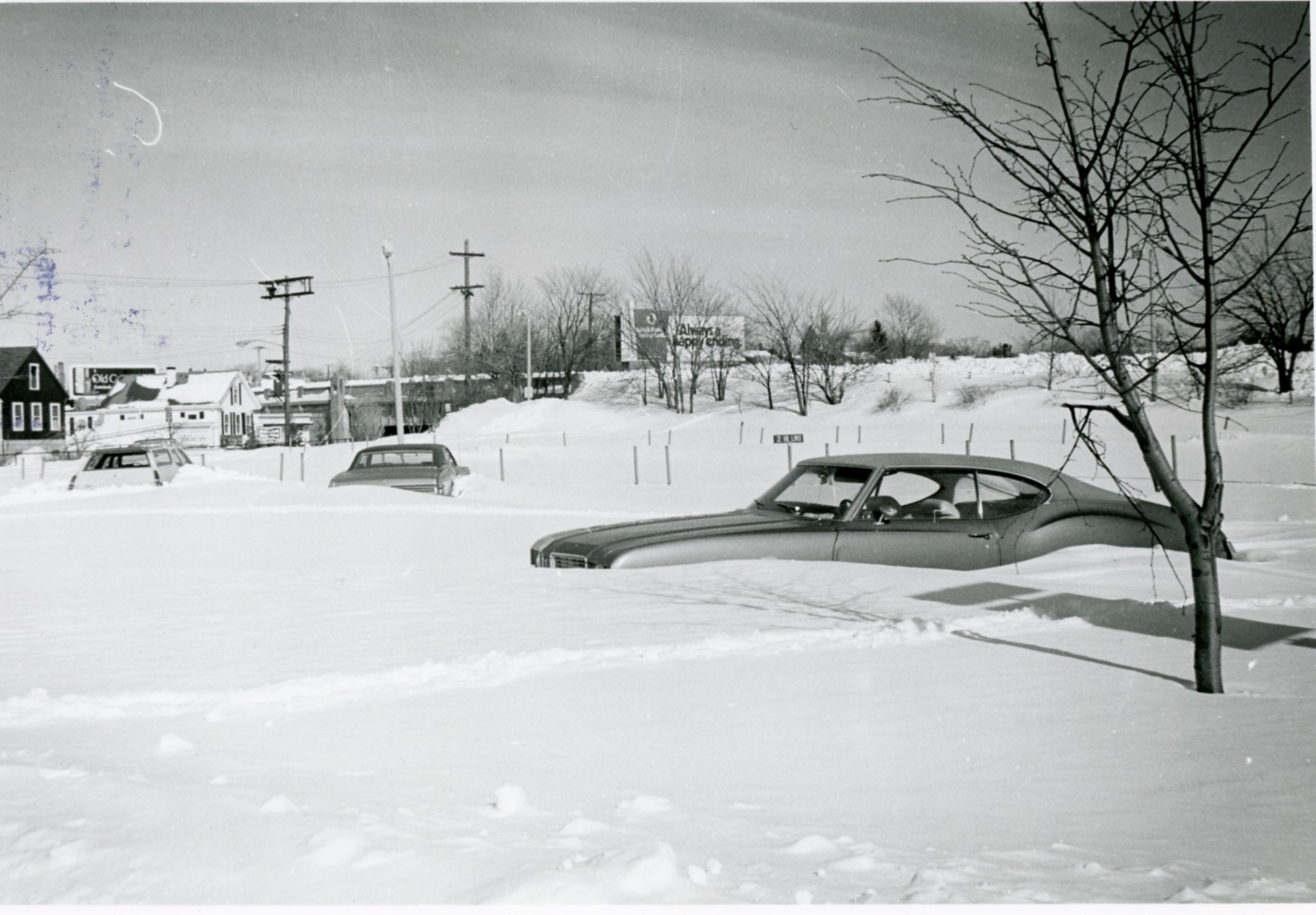
This is the Town parking lot on Eastern Ave., a few days after the historic storm that hit Dedham on this day in 1978. My car is currently parked in that same lot, and even though it is snowing and Dedham schools have a Snow Day, I don’t think I’ll see anything like this when I return to it in a few hours. For more Blizzard pictures, check out the Facebook post of the Dedham Museum and Archive : https://www.facebook.com/share/p/1Kbtmhdked/
You can also search on this blog and read my Blizzard posts from 2011. It certainly was a storm to remember!
Today’s firefighters live and work in a time in which they can devote their full energy to the demands of the challenging profession they’ve chosen. From the earliest days of organized firefighting until the mid-twentieth century, however, firefighters often held down several jobs in addition to their departmental duties. One such firefighter, George Austin Guild, was not only the chief engineer of the Dedham Fire Department, but also ran a successful business in town for over forty years.
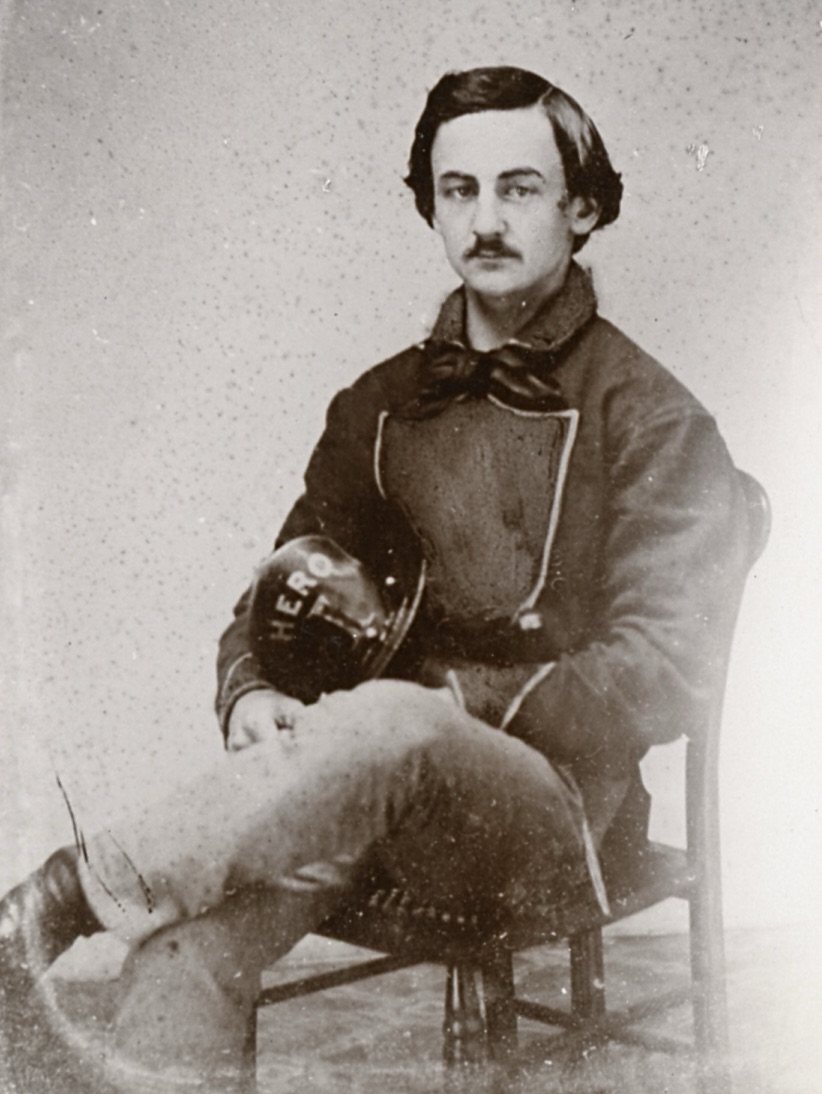
Guild as a member of the Hero Company. Early firefighters used colorful names to designate both their engines and companies.
George Guild was born in 1836, 200 years after the first Guild, John, came to Dedham as one of the original proprietors. In 1853, at the age of 17 he joined the Hero Engine Company One, headquartered at Connecticut Corner near the Town Common. He served as the department’s chief engineer from 1877-1892, when he retired. He was a popular chief and upon his retirement was feted at the central firehouse and presented with “an elegant easy chair, and handsome, as well as valuable writing desk” according to the Boston Herald.
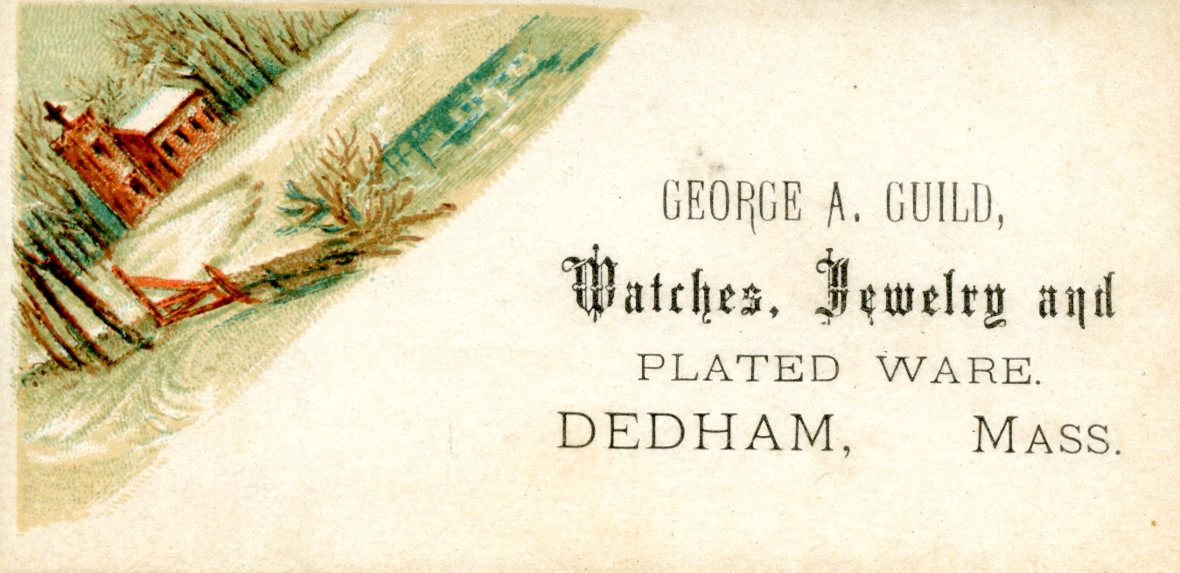
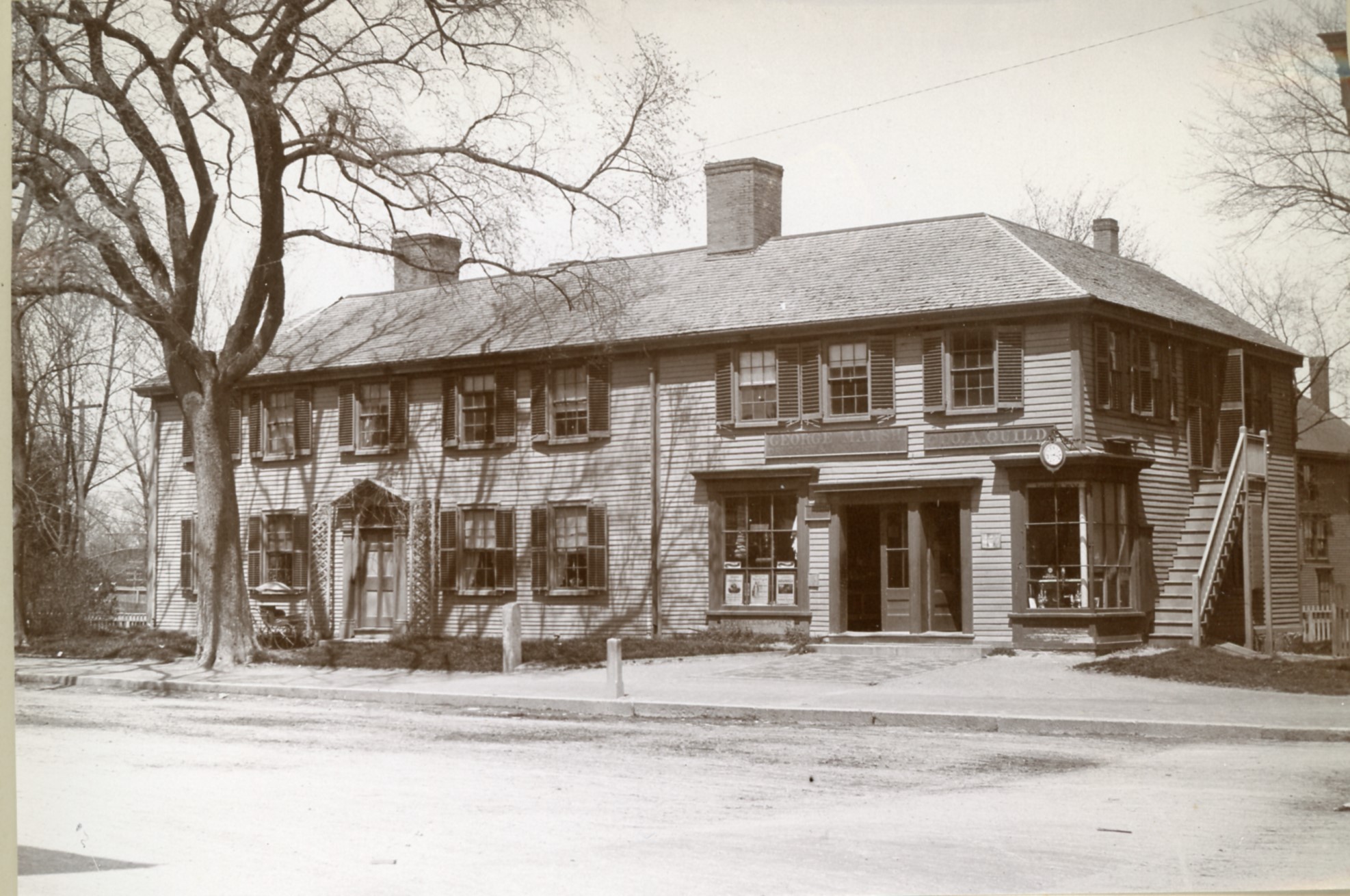
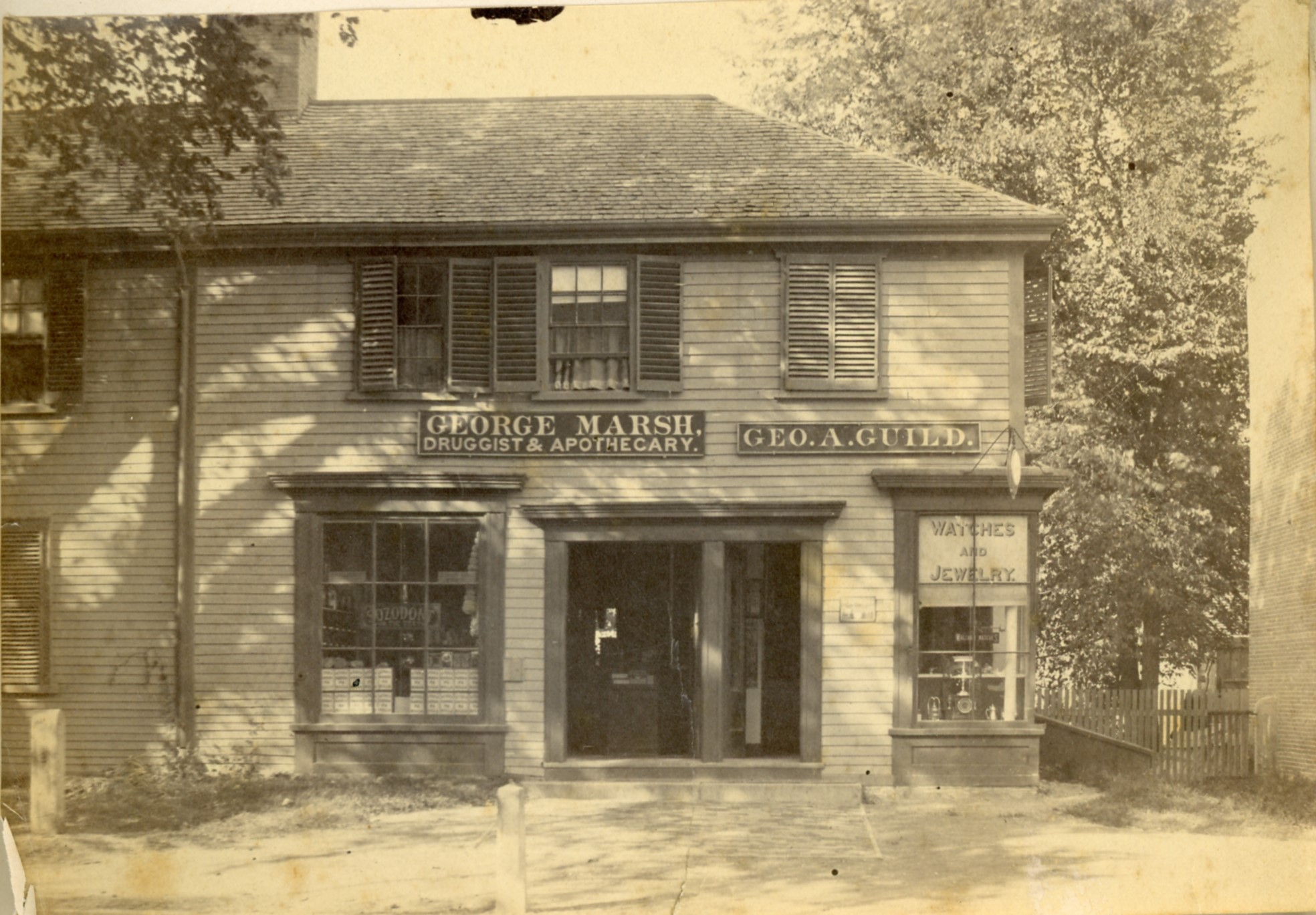
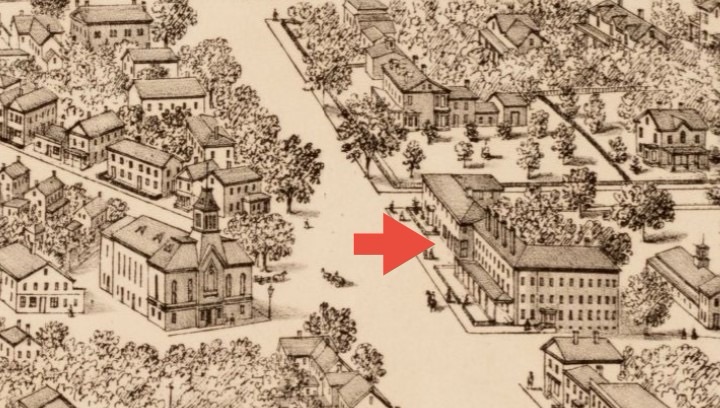
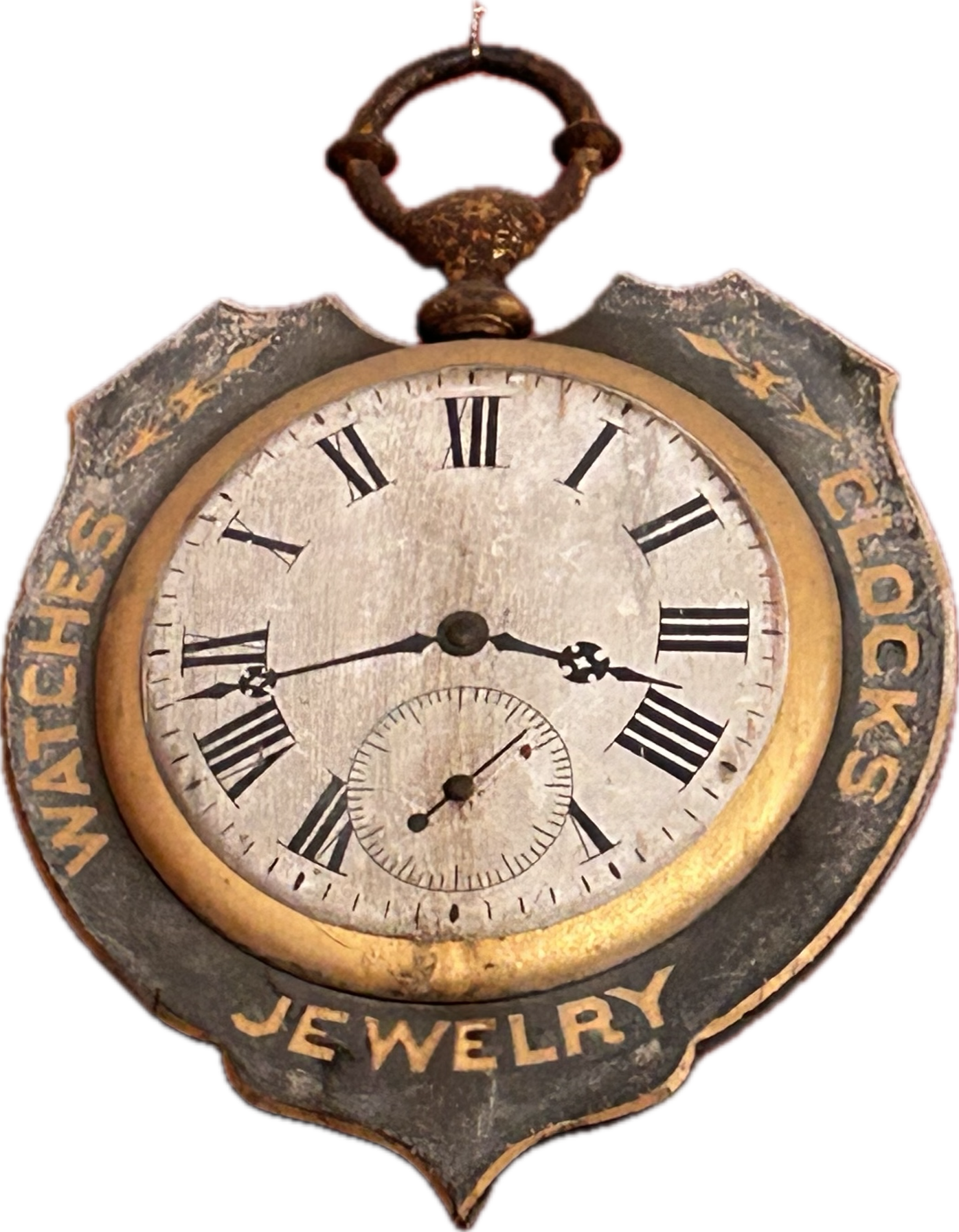
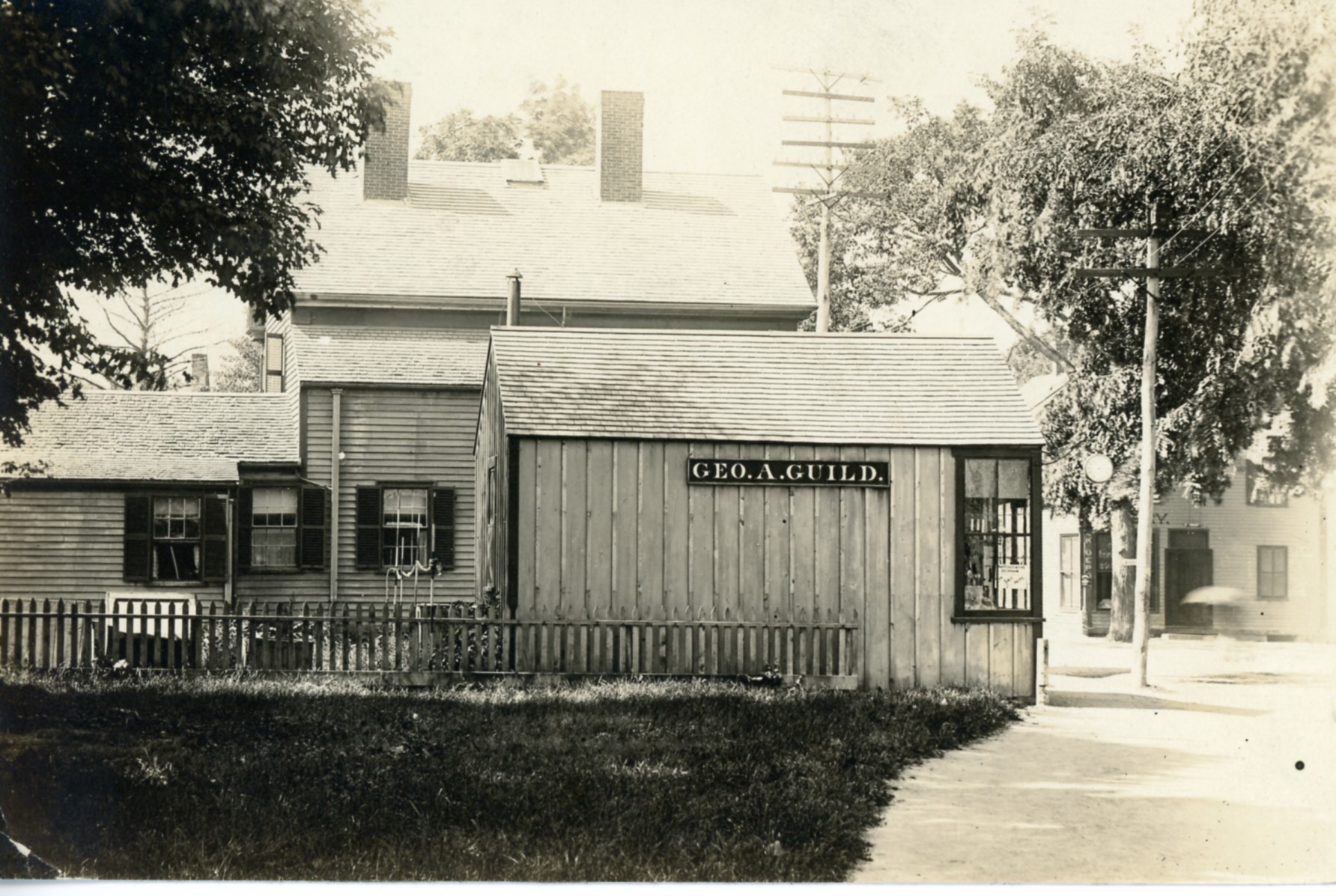
At the young age of twenty-three, Guild opened his business as a jeweler and watch seller in the old Dixon House, which stood on High Street across from Memorial Hall. The wooden watch sign that hung high above his shop window became one of the most recognizable landmarks in the Square. Guild operated at this location from 1859-1891, when he was forced to relocate to Washington Street as the Dixon building was being torn down to make way for the new Dedham Institution for Savings.
The wooden watch sign can be seen in these two photos of Guild’s shop on High StreetThe Dixon Building with George Guild’s shop as seen in this 1876 birds-eye view map by E. Whitfield. Next to it on the corner of High and Washington Streets is the Phoenix Hotel (current Knights of Columbus Building), which burned to the ground in 1880. Memorial Hall stands on the western corner of High and Washington.
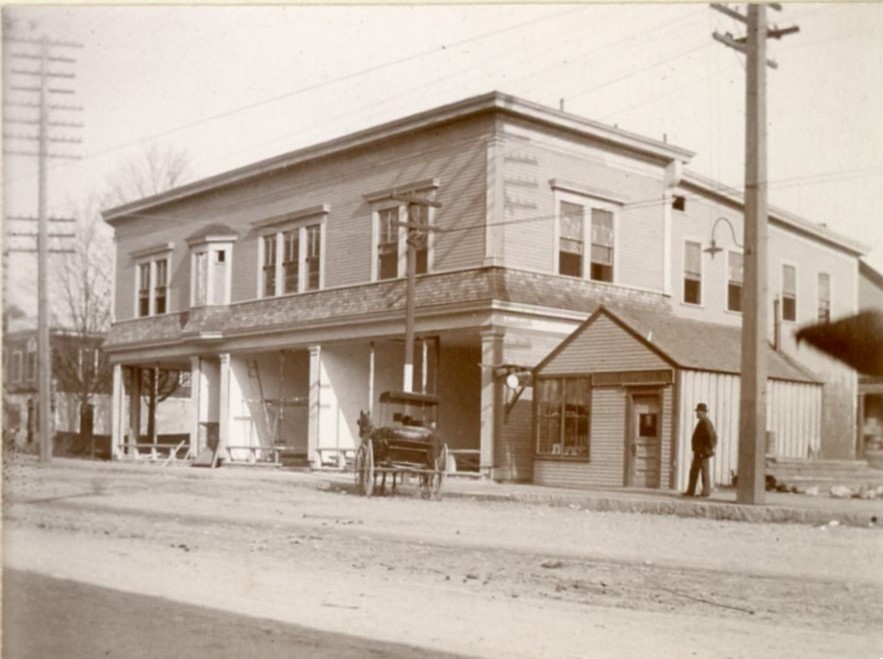
The wooden watch sign adorned Guild’s tiny shop for another ten years until declining health caused him to close his shop after forty-one years in business. At the time of his retirement in June,1901, Guild had been the longest serving tradesman in town.
Two views of Guild’s second shop on Washington Street, across from School StreetSame view as above in 2025
George made his home at 41 School Street where he and his wife Abby raised their three children. Jonathan, the youngest, became a successful Dedham businessman himself, after opening a photography studio on High Street in 1891. On October 26, 1901, the 65-year old George made the short walk to the studio and posed for his son one final time. He passed away at his home just a few weeks later on November 18. The following week an obituary in the Transcript praised him as a “man of sterling traits of character, an honest citizen, a steadfast and true friend, an excellent neighbor, a firm believer in religion, temperance and morality, a good husband, a kind and loving father…”
Guild’s final portrait taken by son Jonathan
The wooden advertising watch is on display at the Dedham Museum and Archive, 612 High Street. You can learn more about the Hero Engine Company and early firefighting in the current exhibit on the history of the Dedham Fire and Police Departments. Museum hours are Tuesday-Friday (11:00-5:00) and Saturdays (2nd & 4th of each month) 11:00-2:00. All historical images used with permission of the Dedham Museum and Archive.
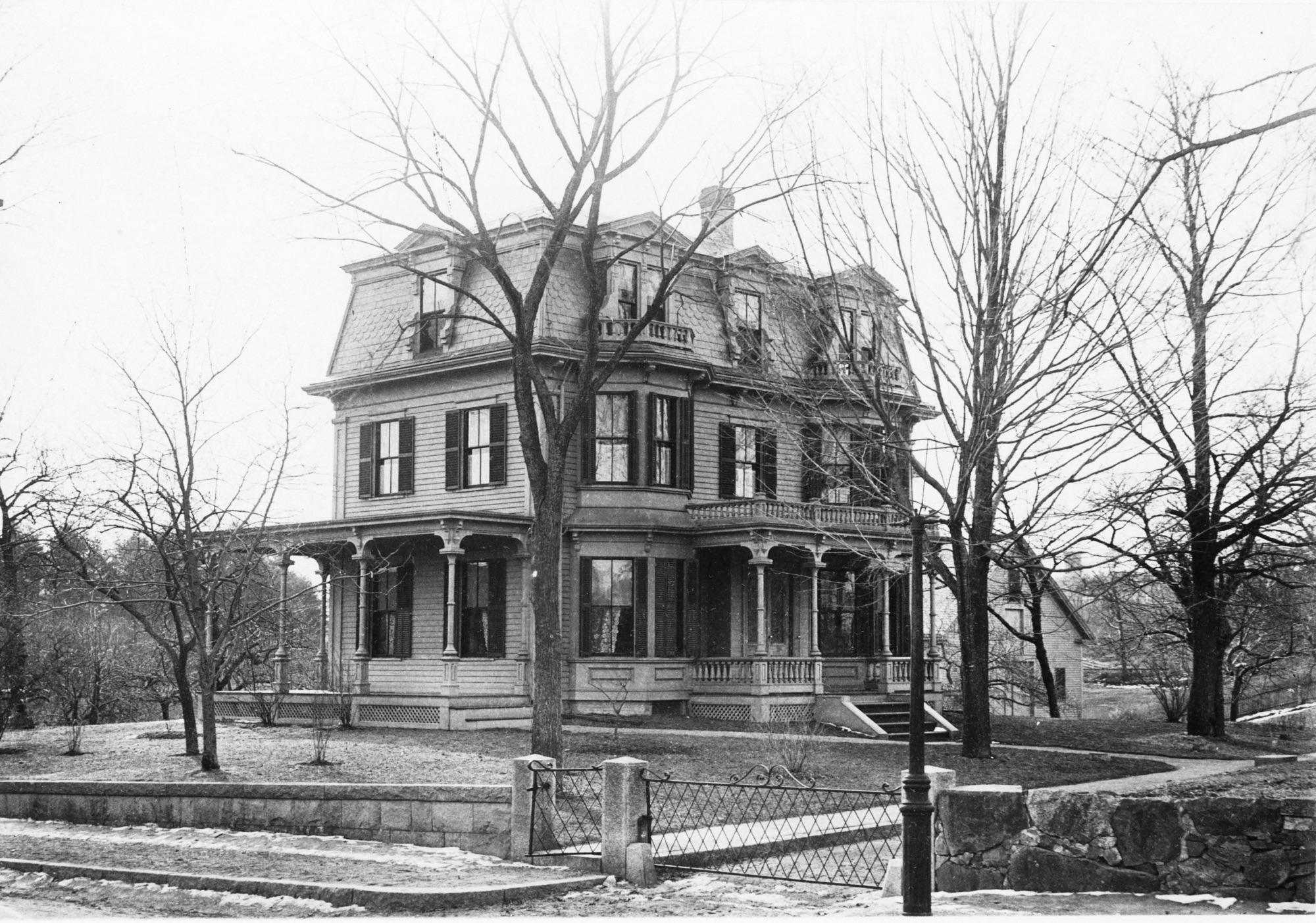
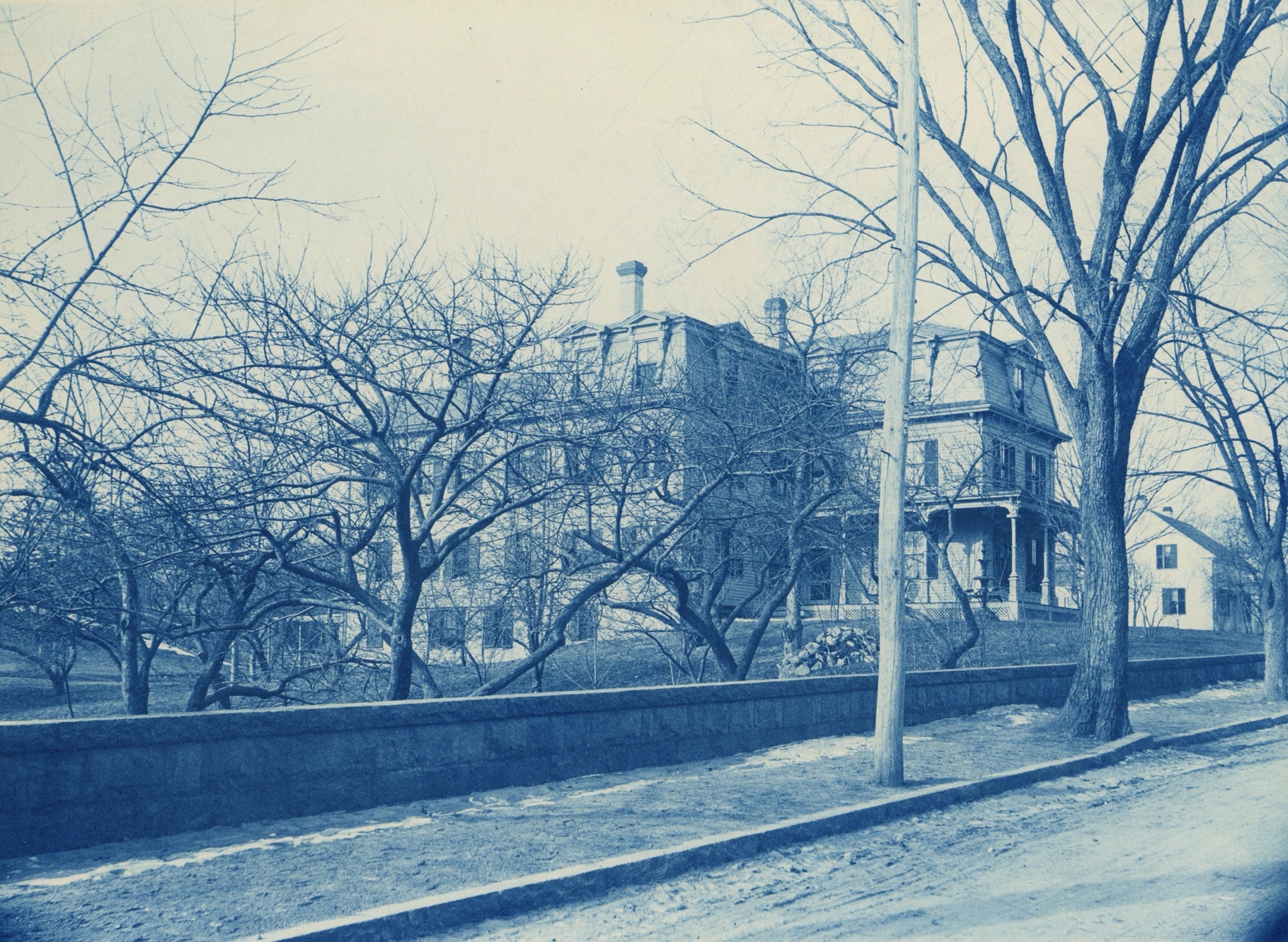
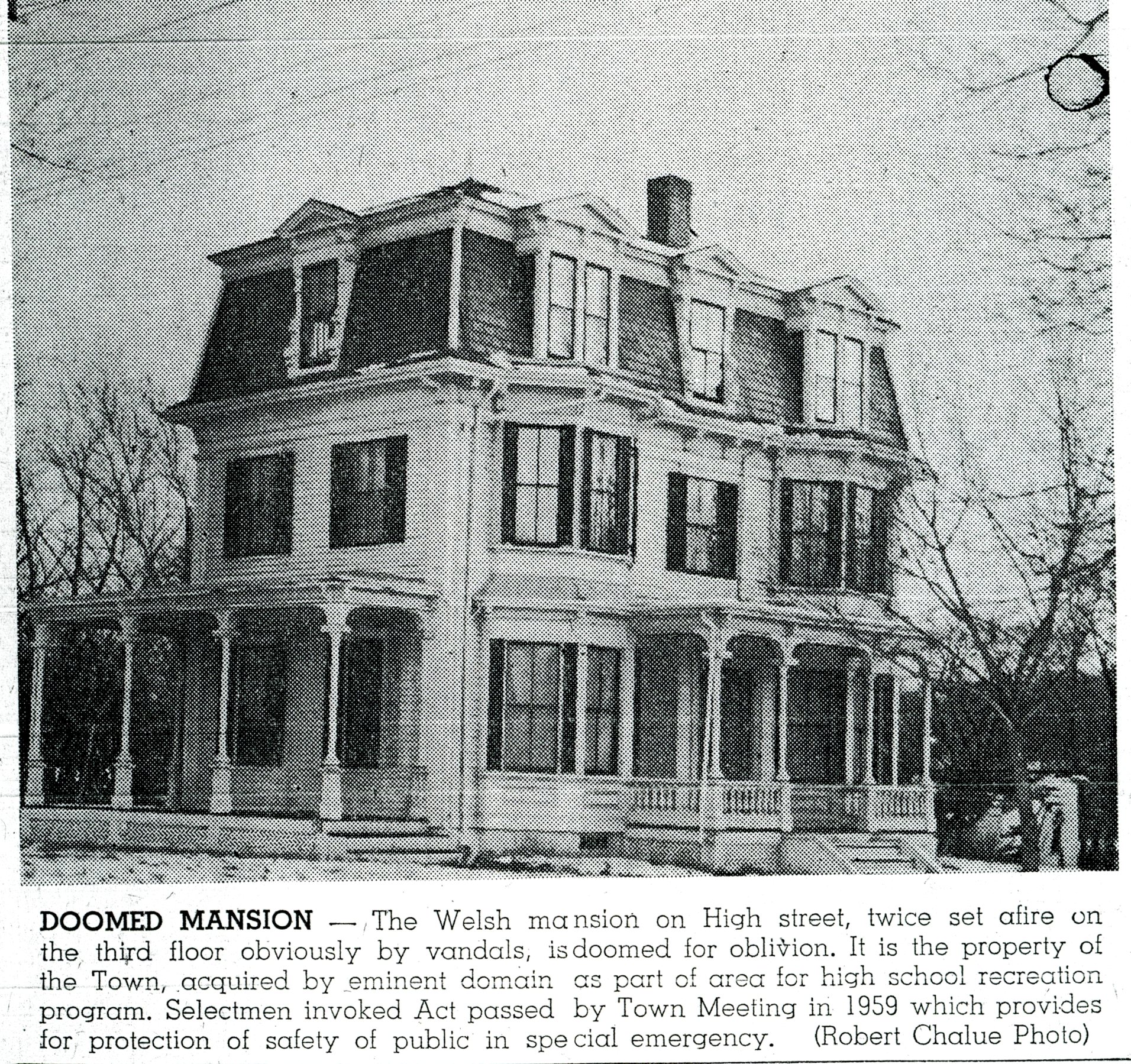
This is the third lost Dedham house featured in my Stone Secrets series, and, it is the only one that was still standing during my lifetime. Although I was only six years old when it was torn down, I do have a memory of it, perhaps because of its resemblance to the Addams Family house from a favorite TV show of the time. The Storrs/Welch house, constructed by local contractor Otis Withington c. 1870, stood south of High Street and east of Mt. Vernon, diagonally across from the Thomas Barrows estate (St. Mary’s parking lot) featured in the last Stone Series post. The large house with its Mansard roof, pedimented windows and decorative porch features is a good example of the Second Empire style, popular in the mid-to-late nineteenth century. The first occupants of the house were Royal Otis (R.O.) Storrs, his wife Lora, and three children.
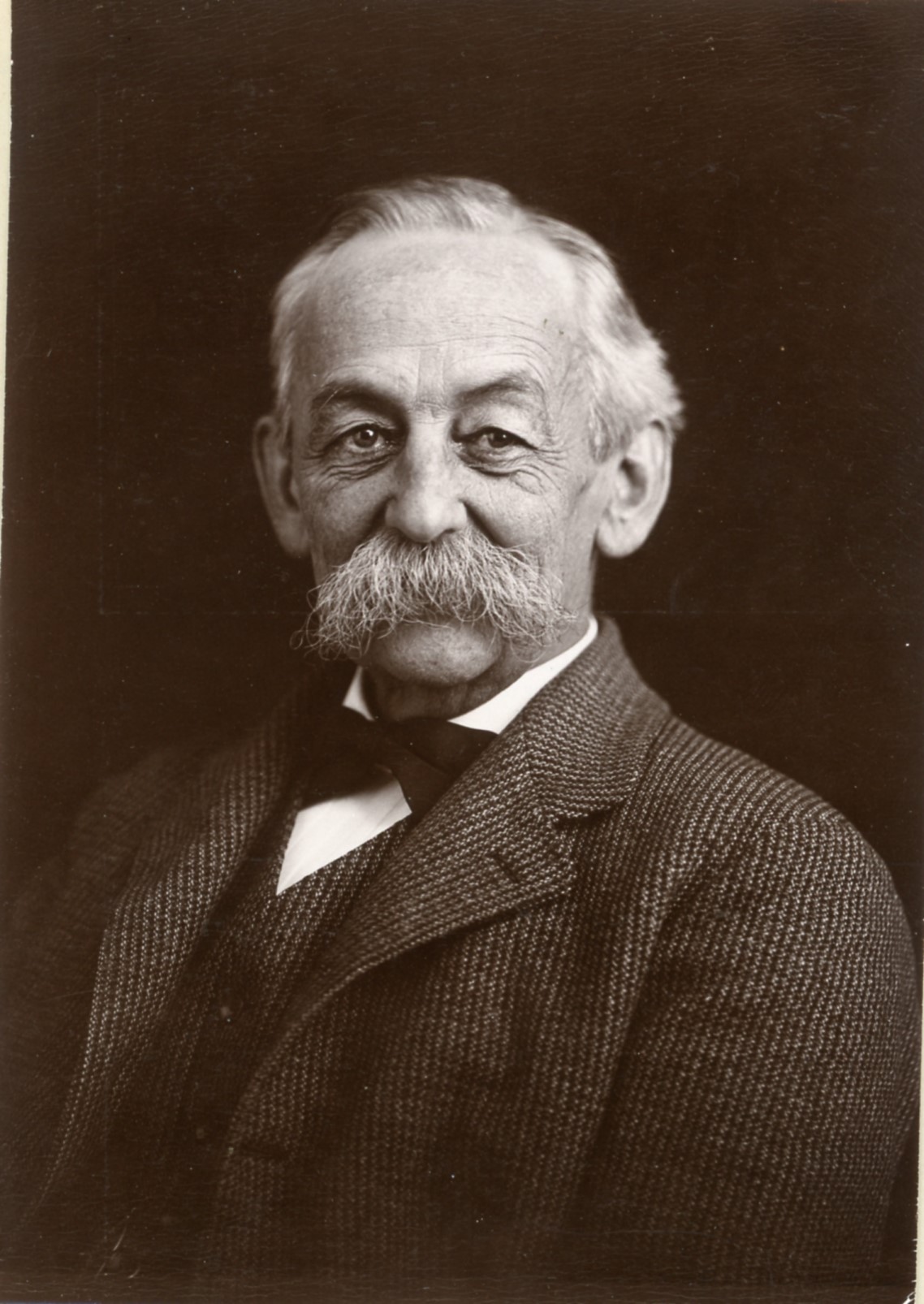
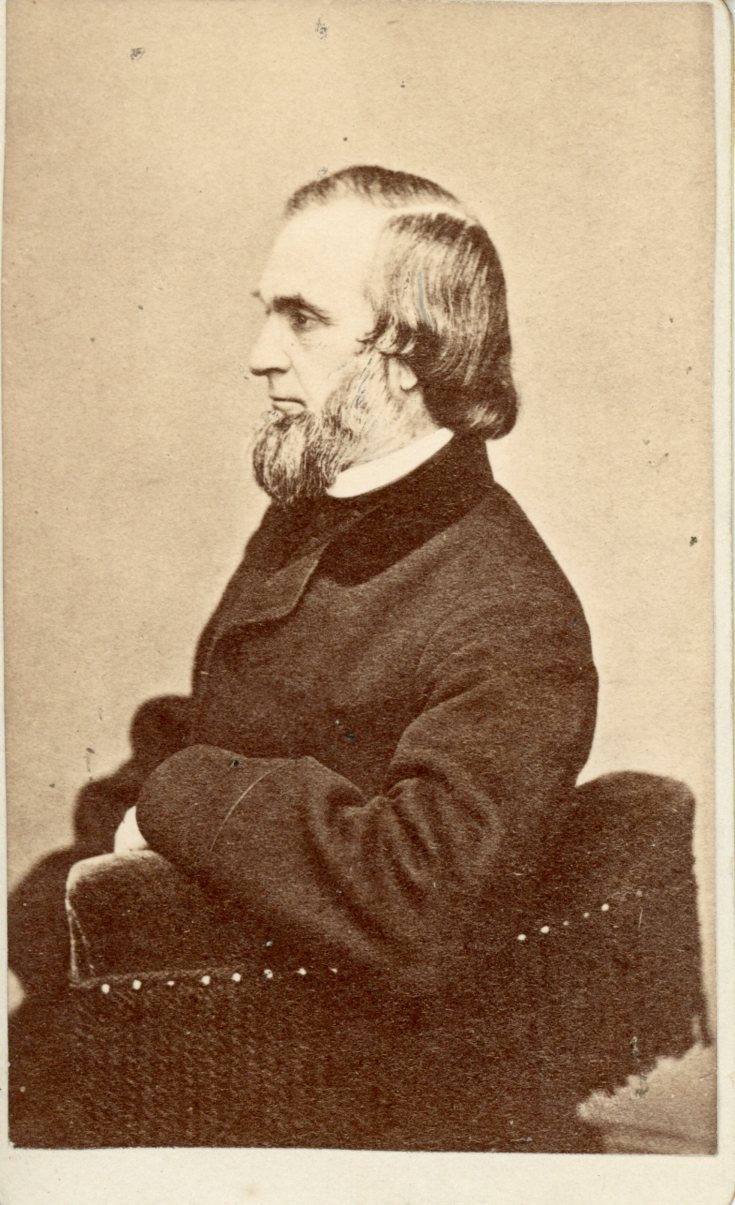
Royal Otis (R.O.) Storrs
A Connecticut native (his younger brothers Charles and Augustus founded the University of Connecticut), Royal Storrs came to Dedham in 1868 and leased the Merchant’s Woolen Mill on Mother Brook, before purchasing the Stone Mill on Milton Street, which he ran with his son Frederick. Storrs quickly immersed himself in Dedham town affairs, serving on the school committee, select board, and library committee, among many other boards and committees. Financial misdeeds, however, resulted in Storrs running up a half million dollar debt to his creditors, forcing him in 1882 to declare bankruptcy and sell the mill. He died on May 25, 1888 at the age of 73, and a few years later his widow put the estate up for sale.
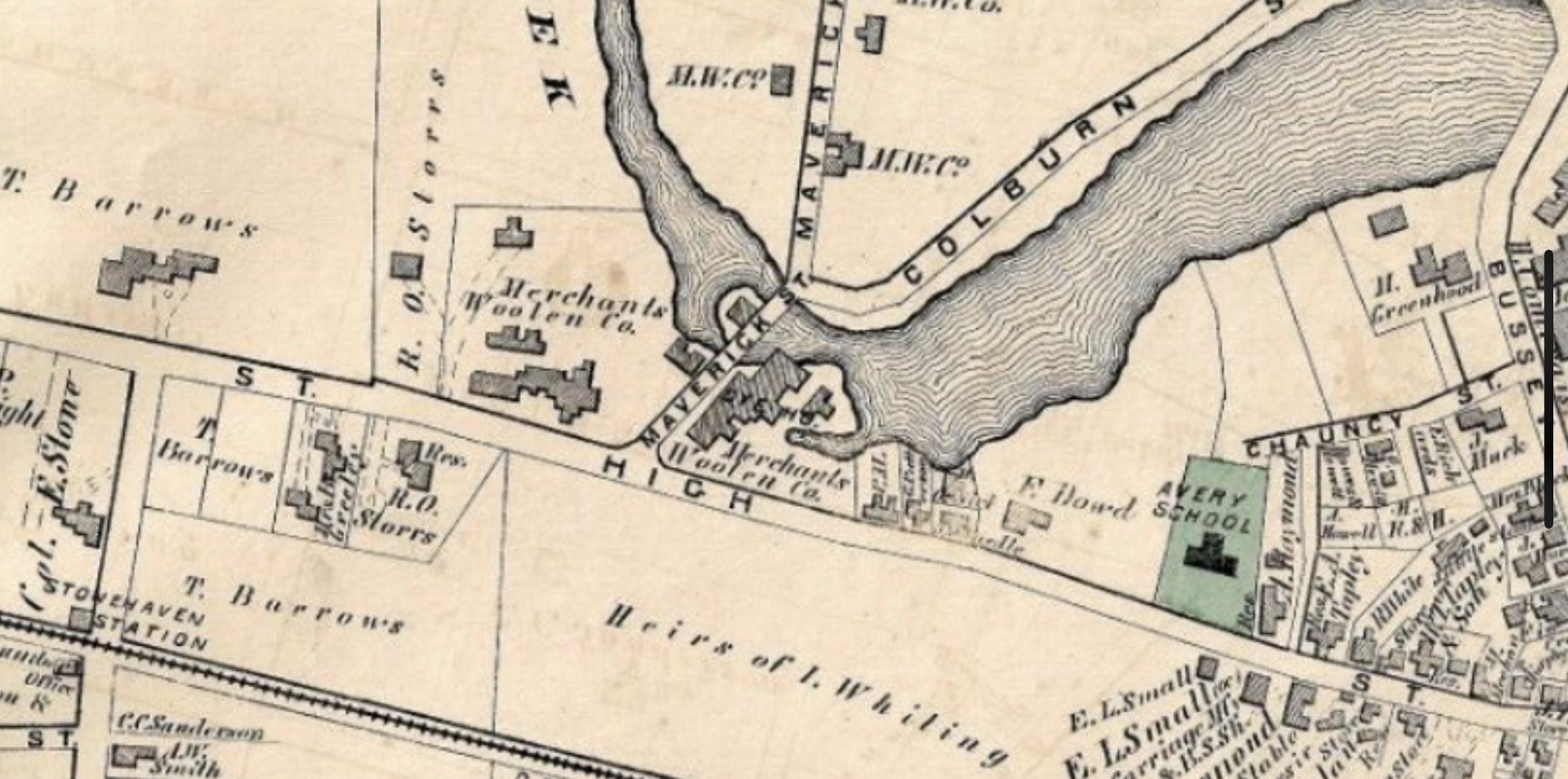
The Storrs property as seen on an 1876 map. Interestingly, Storrs lived across the street from Thomas Barrows, a previous owner of the Stone Milland the subject of the previous Stone Secrets post.
The property was purchased in 1892 by Boston contractor Stephen Tarbell, who only resided there a short time before passing away on January 18, 1894 at the age of 69.
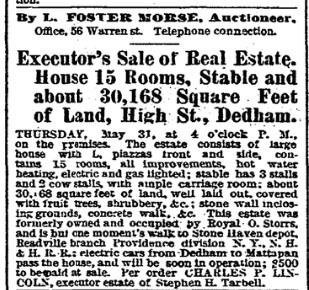
Boston Herald, May 27, 1894- the house has grown to 15 rooms after a large addition was built on the back
The next owners, David and Isabel Greenhood, also occupied the home for a short time, before it was sold to wool merchant James H. Welch.
Welch was an Irish immigrant working as the wool broker for the Merchant’s Woolen Mills. He and his wife Ellen moved into the large house with their six children and Irish servant in 1897. Welch died in 1909, but for the next five decades the house would be occupied by several of his children and their families. As the twentieth century rolled on, the Welch family witnessed the changes that modernization brought to Dedham and the country. Neighborhoods grew where farms once stood, railroads were replaced by paved roads and highways, obsolete buildings replaced by up-to date ones.
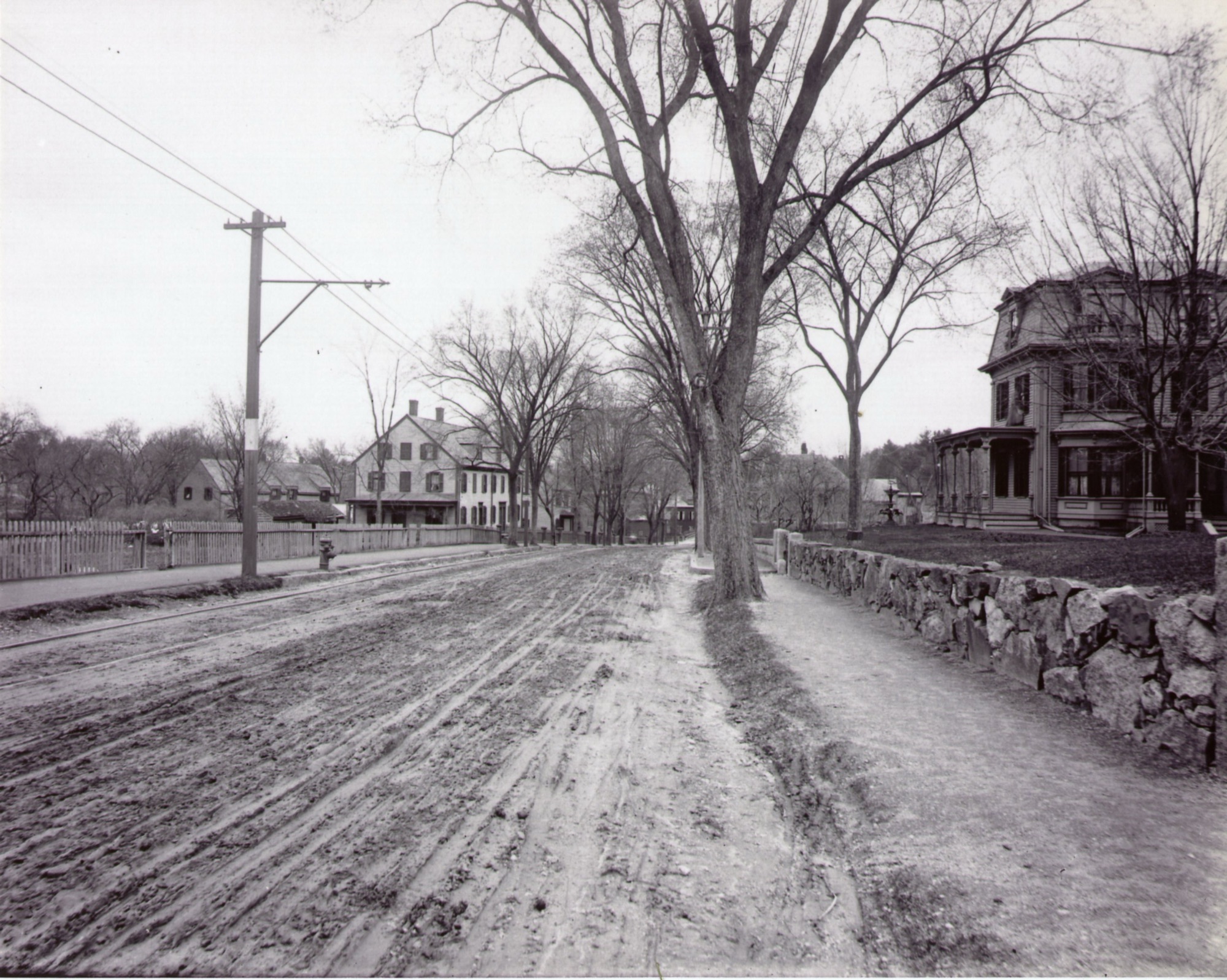
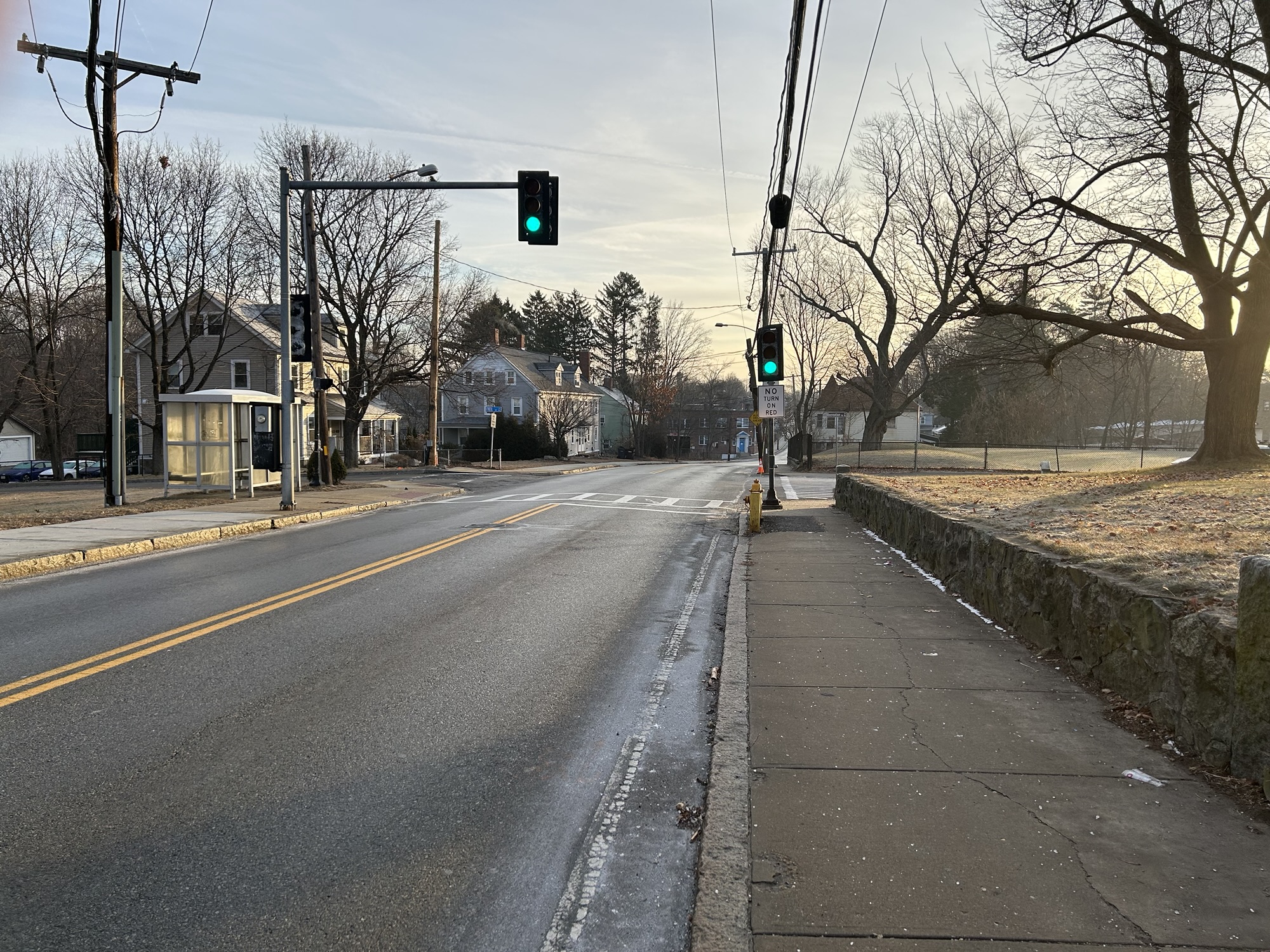
A view down High Street in 1895 and in 2025. The large building with dormers on the north side of High Street, visible in both images, served as housing for employees of the woolen mills.
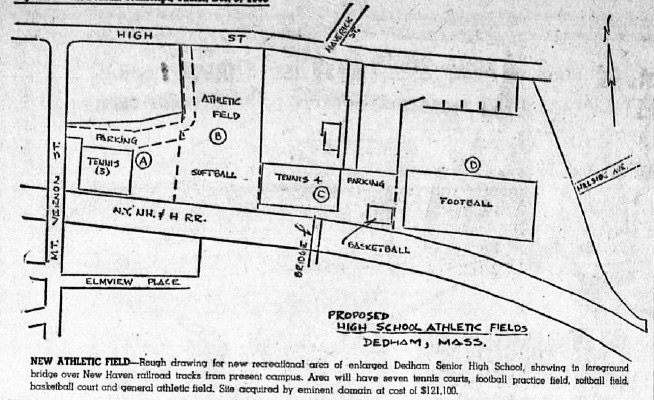
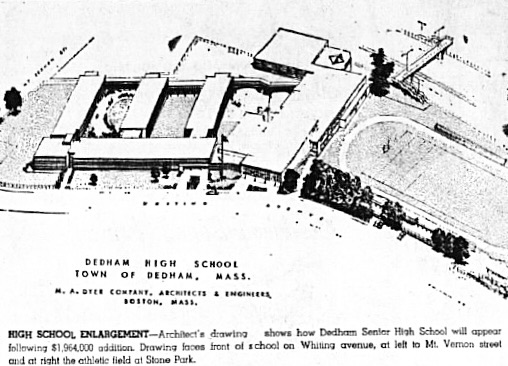
One of those buildings was the high school on Bryant Ave, which the Welch children had all attended. That school was replaced in 1915 by a large four story brick building on Whiting Ave., which, in turn was replaced by the current high school complex in 1959. Despite the sprawling size of the new facility, and its two million dollar price tag, town officials were aware before the doors even opened that it was not adequate for the growing student population. In early 1965, the town approved an addition that would include twenty-eight new classrooms, a small gym, practice athletic fields and tennis courts. Situated on the other side of the New Haven Railroad tracks, it would seem as if the Welch home was safe from the proposed expansion, but the architect’s plans included the construction of a pedestrian bridge, making the land along High Street the perfect location for the fields and tennis courts. In August, the town voted to take by eminent domain several properties on Elmview Place and High street, including the Welch property.
From the Transcript December 9. 1965. The Welch House stood on Site B where a new athletic field would be built. The driveway would become Recreation Road.The addition would also include a new wing of classrooms facing Mt. Vernon Street.
The house was unoccupied at the time of the taking, and town officials were concerned about vandalism after a copper weathervane was stolen from the barn. The barn burned down in a suspicious fire the following summer, and by September the house had been razed and construction begun.
Transcript/January 6, 1966
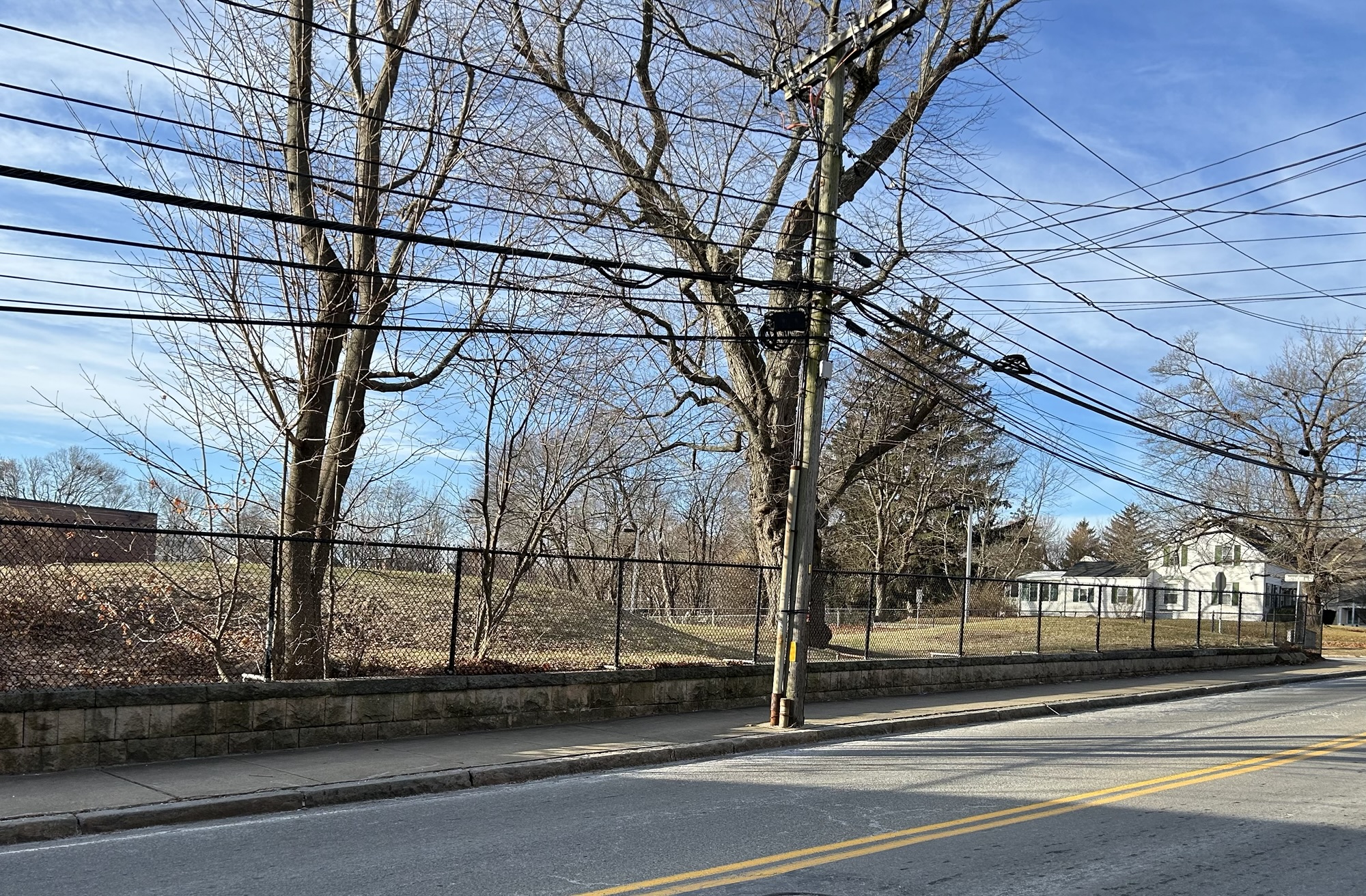
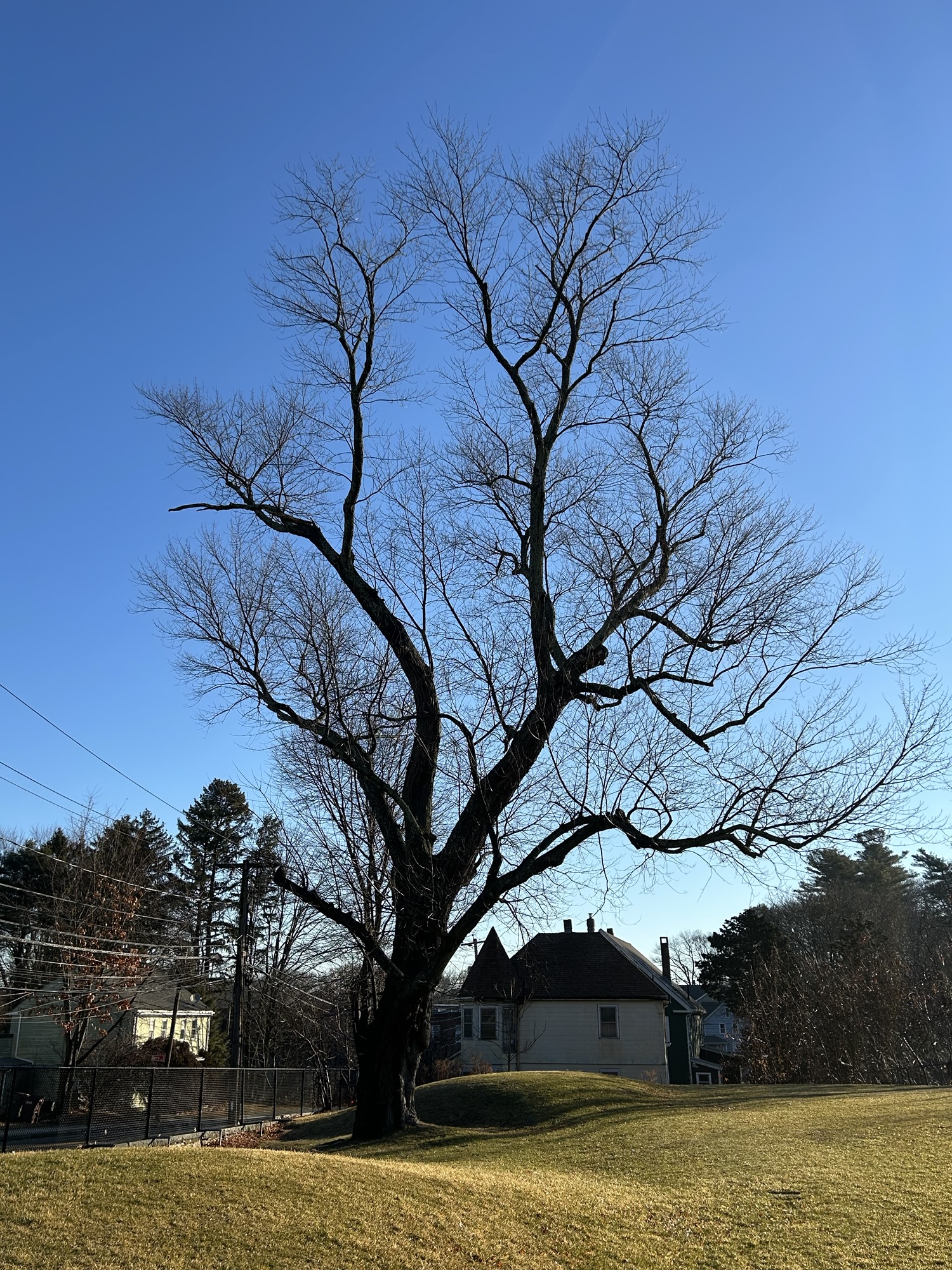
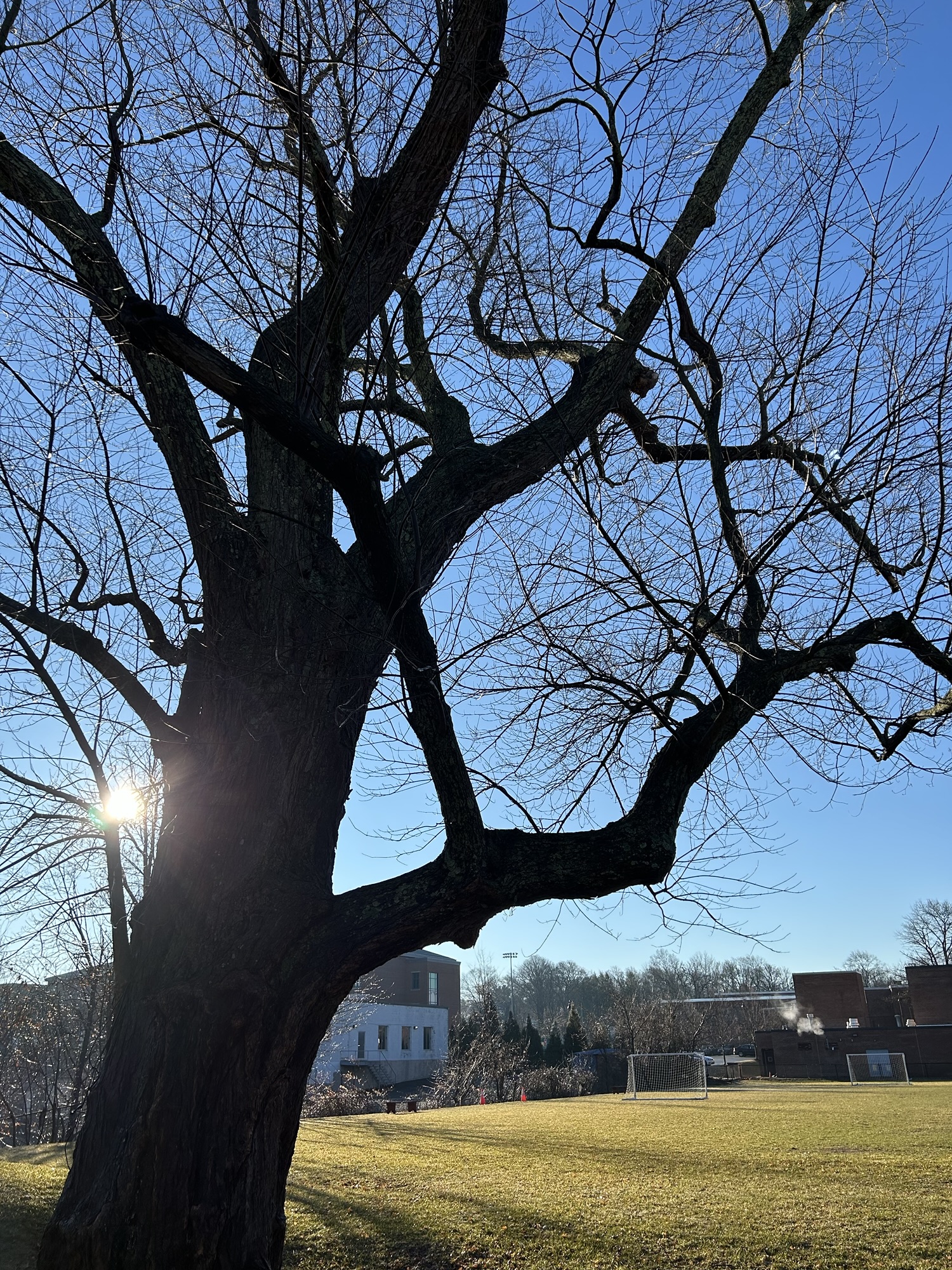
During negotiations with the town at the time of the taking, Mrs. Ella Welch, wife of youngest Welch son William, petitioned the town to save some of the “beautiful shrubbery” and the “two fine spruce trees” on the property, but town officials denied her request. Amazingly, several gnarled oak trees along High Street were spared, and today, along with the stone wall, are the only reminders of a once majestic house and the families who lived and died there.
All historic images courtesy of the Dedham Museum and Archive. 19th century photos of the house were taken by Jonathan F. Guild, a well-known photographer who had a studio in Dedham Square for many years.
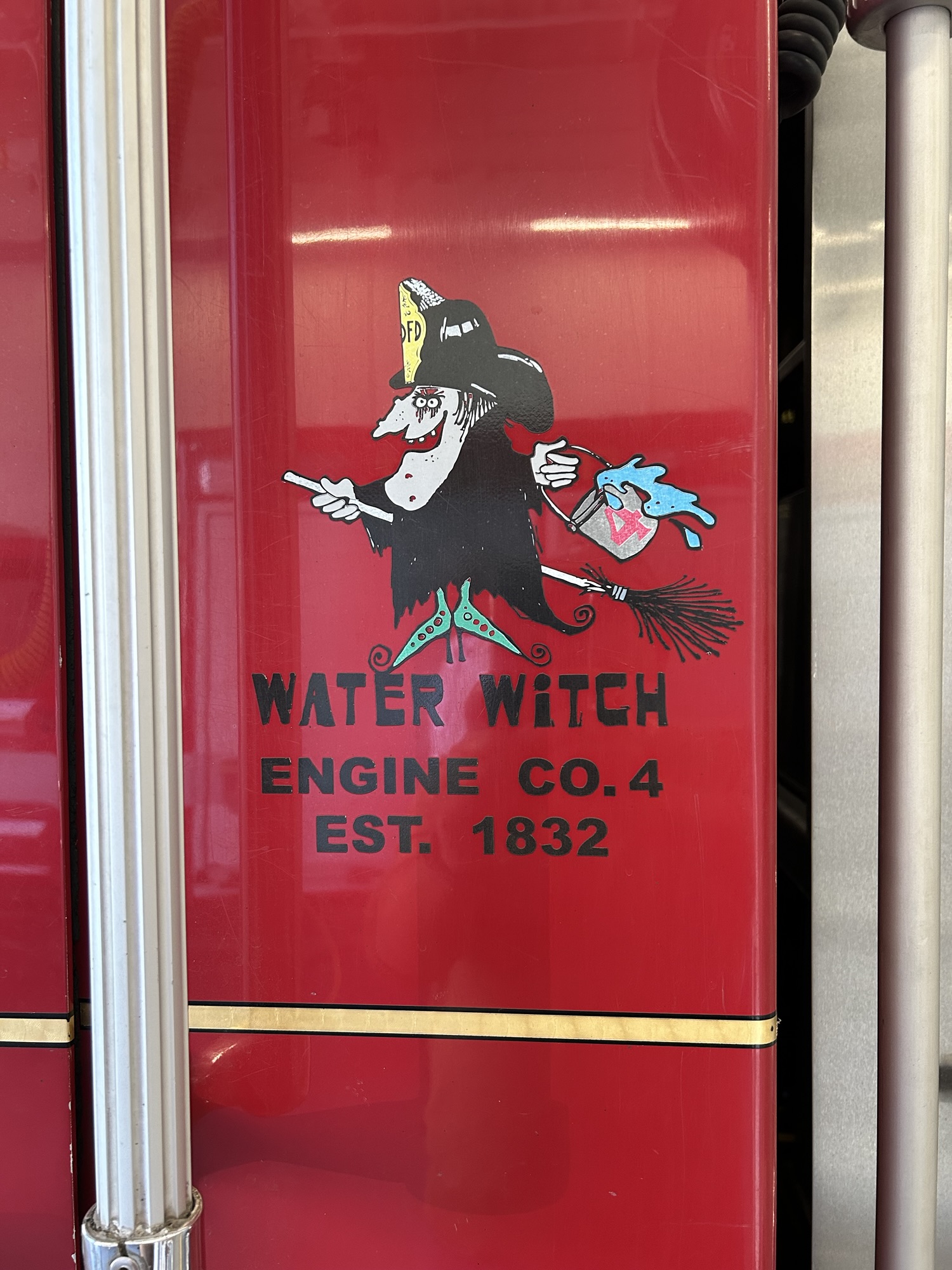
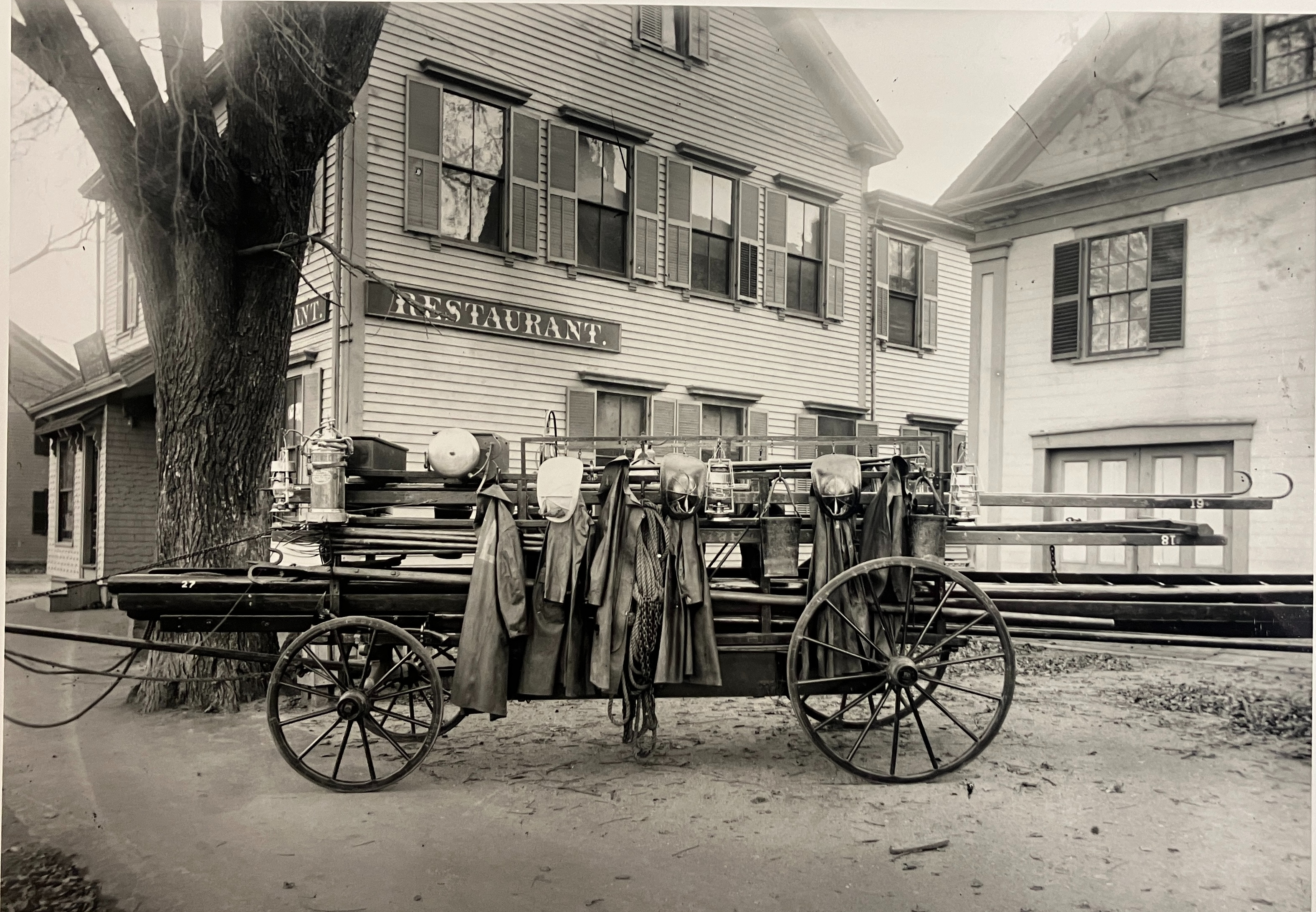
Did you know that the Dedham Fire Department’s Engine 4 is named the Waterwitch, and that it gets its name from a horse drawn engine that was housed on Washington Street in 1832? Or that the town’s first motorized fire engine was a gift from Henry Endicott and his wife? You probably never heard the story of Philander Young (Police Badge #2) and his daring arrest in 1876 of a nefarious East Dedham criminal for clogging on the Sabbath!
Engine 4 with its Water Witch logoThe original Water Witch and its engine house which stood on Washington Street near School Street (Courtesy of Dedham Museum and Archive)
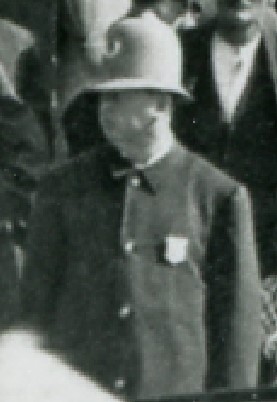
A Dedham police officer on duty in the late 19th century
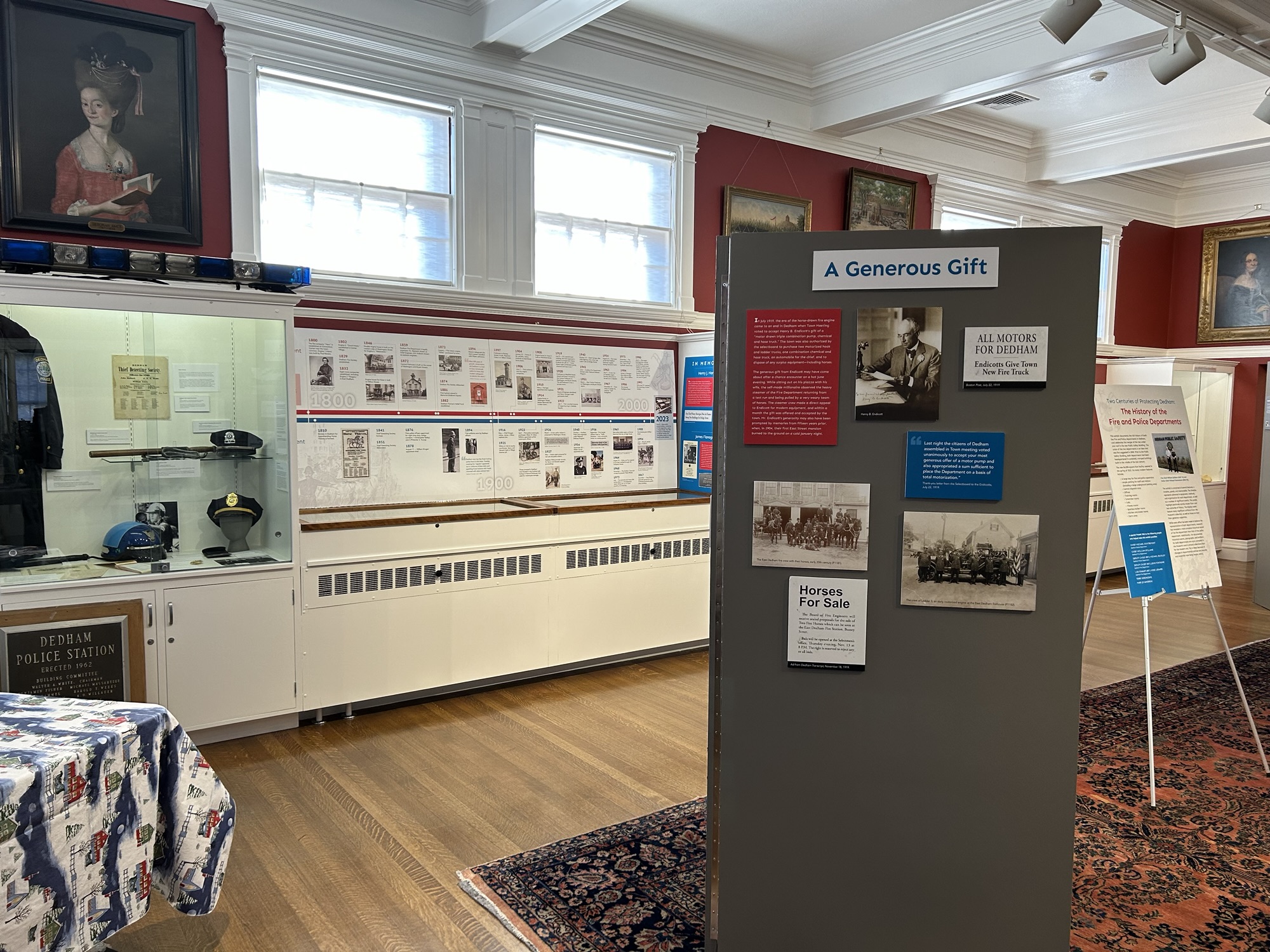
These are just a few of the fascinating facts you will learn when you visit the Dedham Museum and Archive’s newest exhibit, Two Centuries of Protecting Dedham: The History of the Fire & Police Departments. This exhibit features a timeline of department milestones, dozens of artifacts from both the museum archive and private collections, and many remarkable photographs of Dedham’s dedicated public servants on the job. This is the first project I have worked on in my new role as part-time educator at the museum, and it has been quite an adventure searching through the museum’s extensive archives and finding so many incredible stories of innovation, perseverance and bravery. The exhibit celebrates the new Public Safety Building which opened on Bryant Street in 2023. This up-to-date facility brings the police and fire departments under one roof- an idea that was first proposed in 1894!
Fire Chief William Spillane and Police Chief Michael d’Entremont outside the Public Safety Building, 2024
The Museum is open Tuesday-Thursday 11-5 and Friday 11-4. While you’re there you can do some holiday shopping and find the perfect Dedham-themed gift for you favorite Shiretowner! For more information, visit the Museum website https://www.dedhammuseum.org/
The exhibit will be open until September 2025, but why wait?
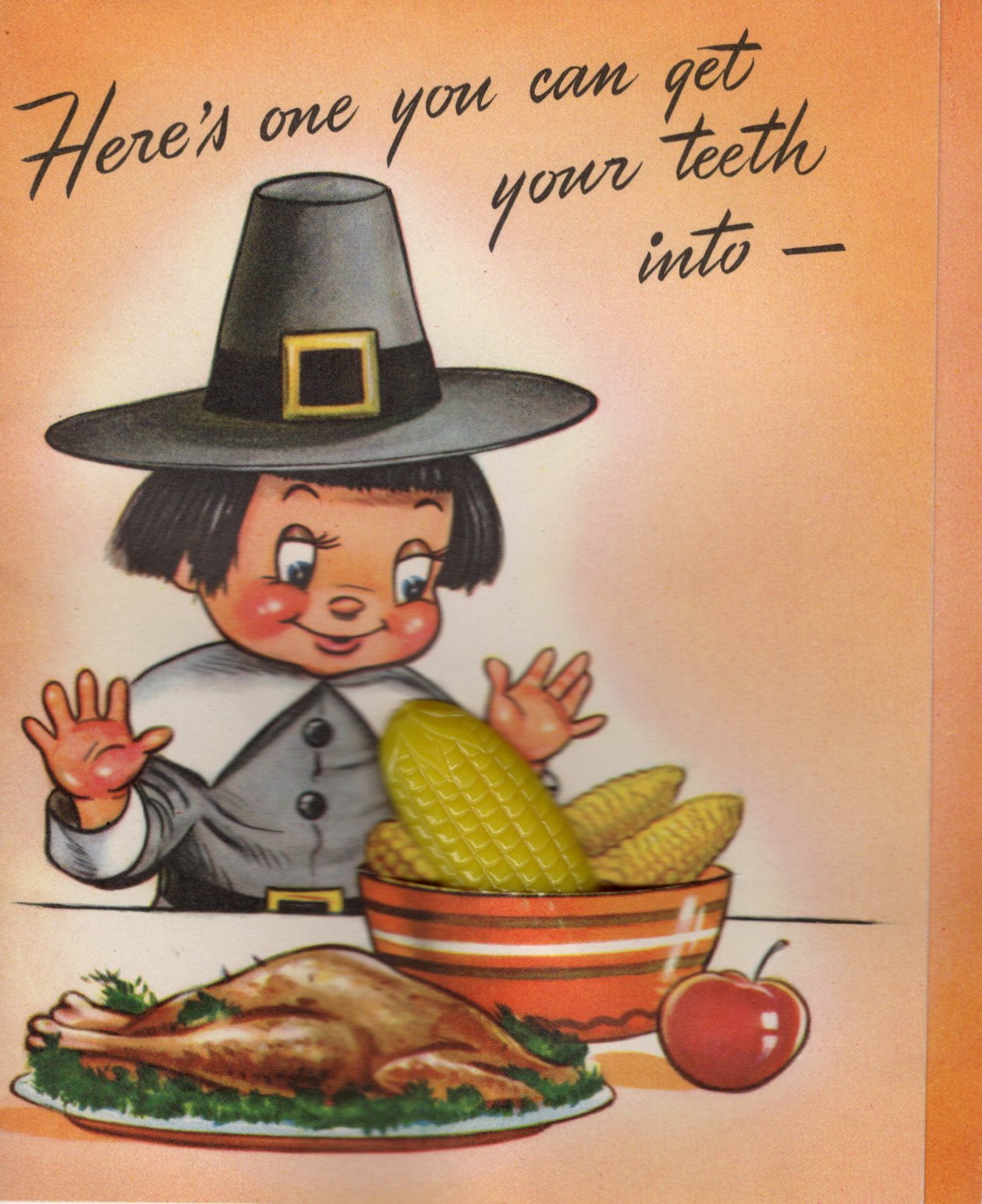
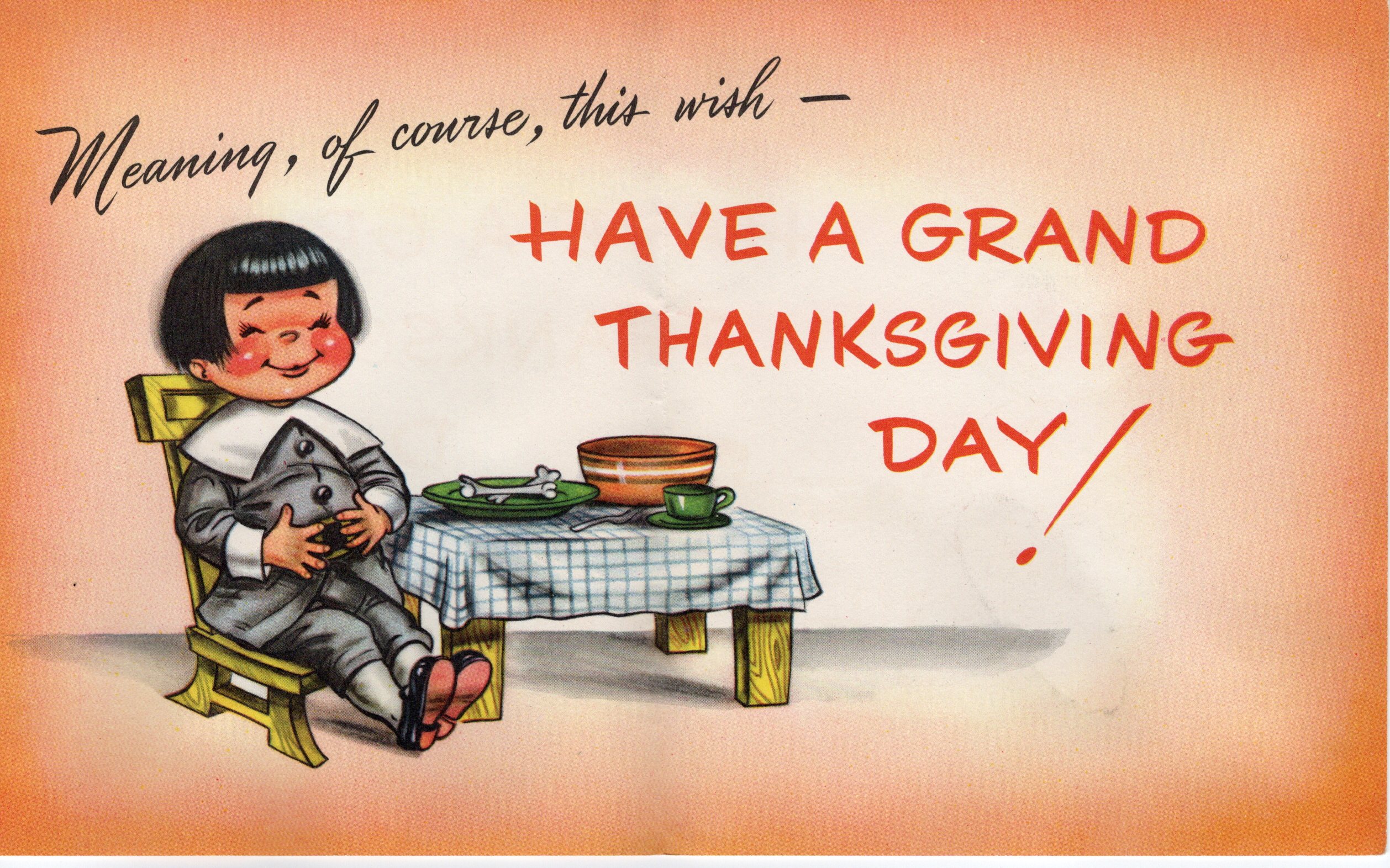
Continuing my tradition of celebrating with Rust Craft holiday cards, here is a Thanksgiving offering from the 1950s. Yes, that is a plastic ear of corn on the front of the card. Rust Craft was known for its clever cards featuring 3D elements, pop-ups and whimsical artwork. The company’s later creations were not nearly as interesting. I hope you enjoyed this holiday greeting from Dedham’s past; have a GRAND Thanksgiving Day!
I am James L. Parr. I grew up on Tower St. and went to St. Mary's and Dedham High (Class of 1977). I teach school in Framingham and co-wrote a book of Framingham history, which led me to write a book of weird Dedham history called Dedham: Historic and Heroic Tales from Shiretown. That book led to this blog. To order your own copy of the book, e-mail me at jameslparr@yahoo.com





 Jim Parr
 Dedham Tales