
Sign up now for the 2:00 talk at the Dedham Public Library! Learn all about the home front during the war- signed copies of my book available.
Sign up now for the 2:00 talk at the Dedham Public Library! Learn all about the home front during the war- signed copies of my book available.

I will be doing a talk on my newest book World War II Massachusetts at the Dedham Public Library on Saturday, May 18 at 2:00. If you enjoy the stories I’ve featured in my Dedham book and on this blog, you don’t want to miss this presentation, where I reveal some of the hidden history and amazing tales from this unique time in our country’s history. Copies of my book will be available to purchase. I hope to see you there!
Admission is free but please register by using the link below.
There has been quite a favorable response to my last post about the wooden street signposts that remain in Dedham. During my search for more of these, I discovered (with the help of Google maps street view) that one had disappeared from the corner of Mt. Vernon Street and Woodleigh Road some time after April, 2022.
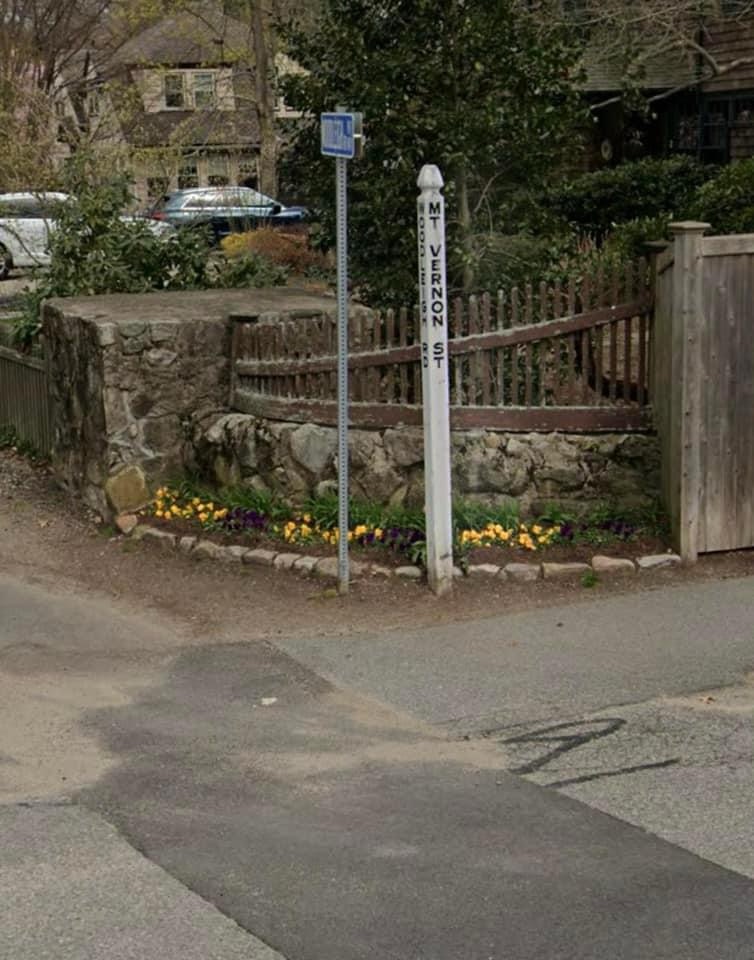
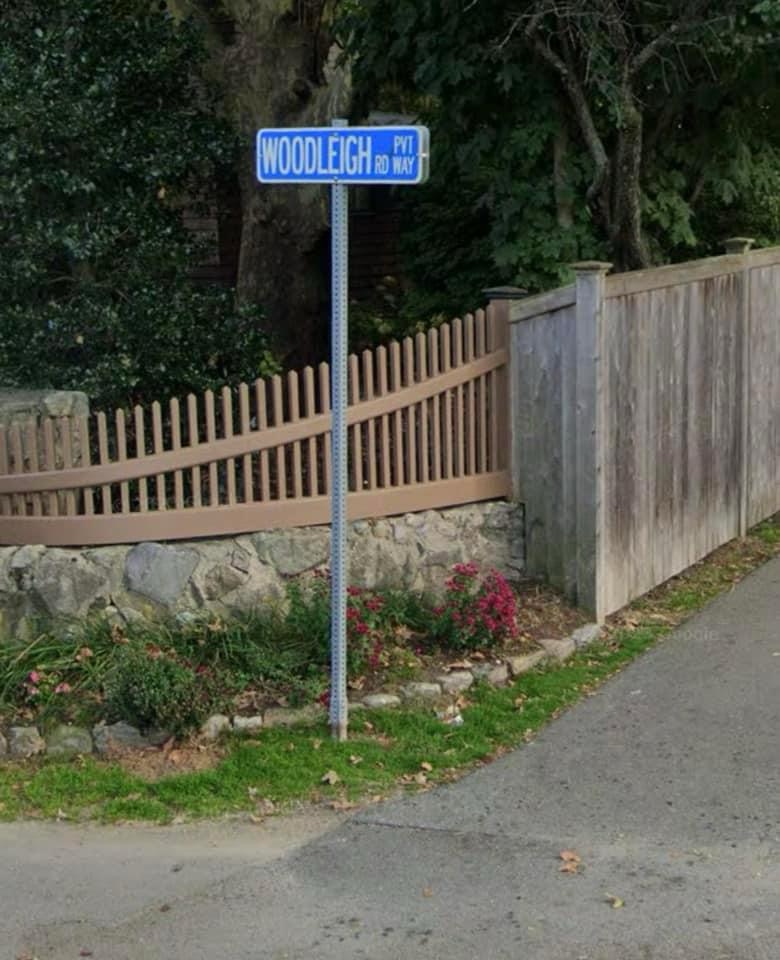
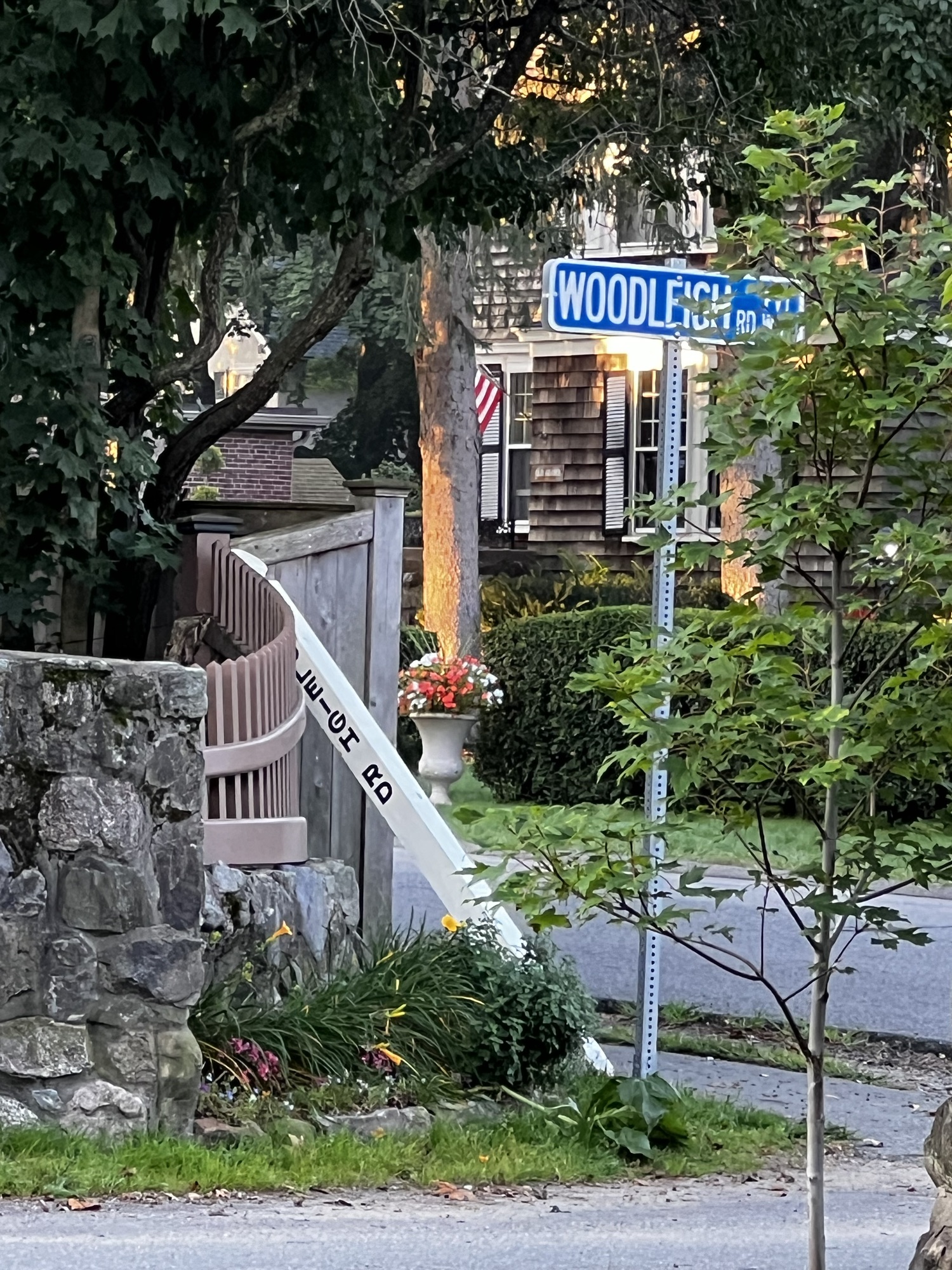
Turns out, rather than an example of some nefarious act of vandalism or theft, the missing signpost is an inspiring story of civic pride. For years, this particular signpost has been maintained (including hand painting the faded street names) by nearby resident Paul Reynolds, Fablevision CEO, Blue Bunny mainstay, and long time supporter of Dedham cultural and charitable organizations. After noticing the tipped over post last fall, Paul discovered the bottom had rotted out and could not be fixed.
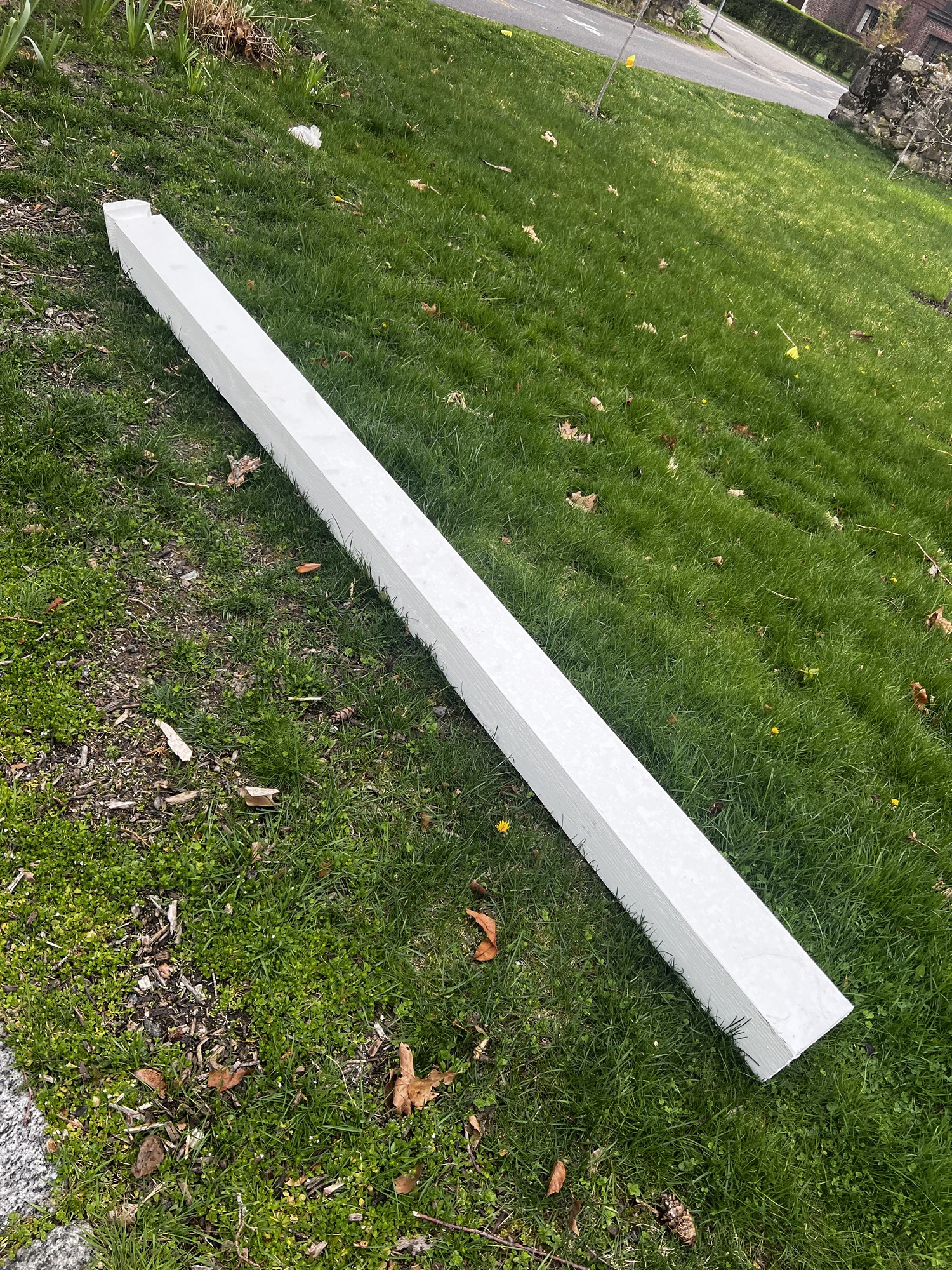
Not to worry! Through the generous cooperation of the town DPW, a new post has been crafted, delivered and awaits the addition of street names before being placed in its usual corner.
While these signposts are not very practical (hard to read, in need of constant maintenance) and were eventually replaced for those reasons, they clearly stir strong feelings of nostalgia and stand out as something uniquely Dedham. That’s why they should be preserved, and perhaps restored as Paul Reynolds has done, so they can be appreciated for years to come.
Who remembers when these wooden street signs were found all over Dedham? These have to be at least 50-60 years old; I remember one at Sycamore and Tower when I was a kid. These are just a few I found in a short drive around town- maybe you’ve seen more in other locations?
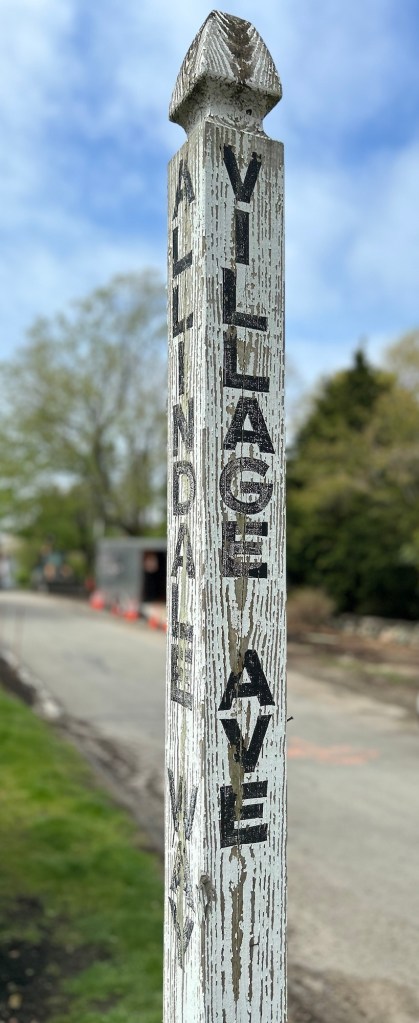
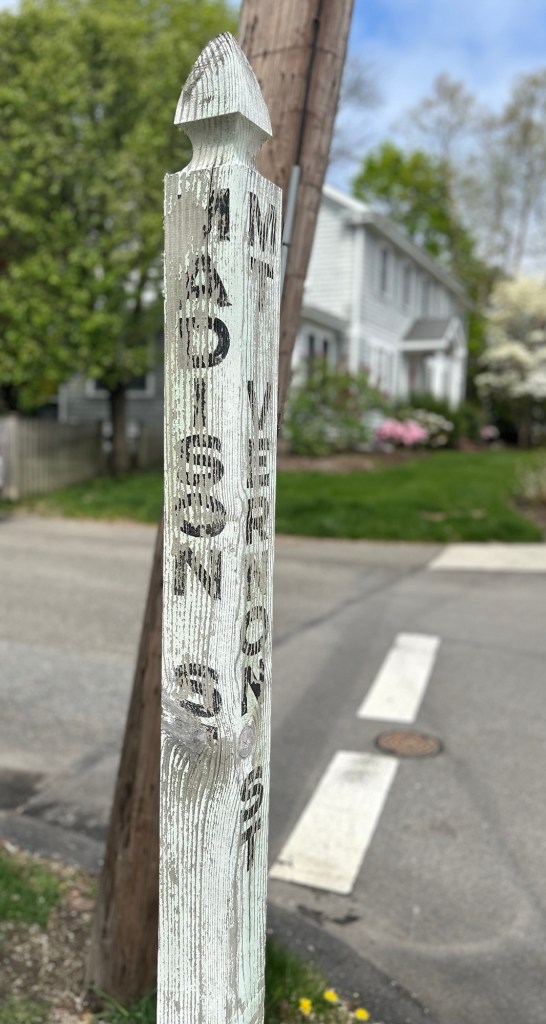
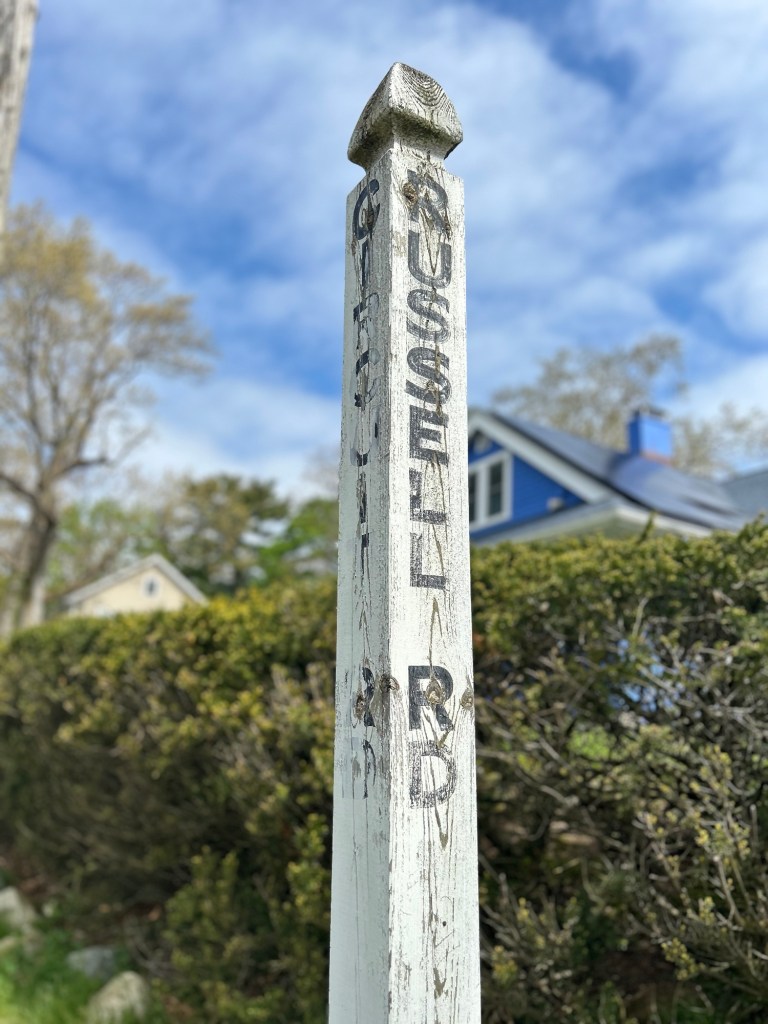
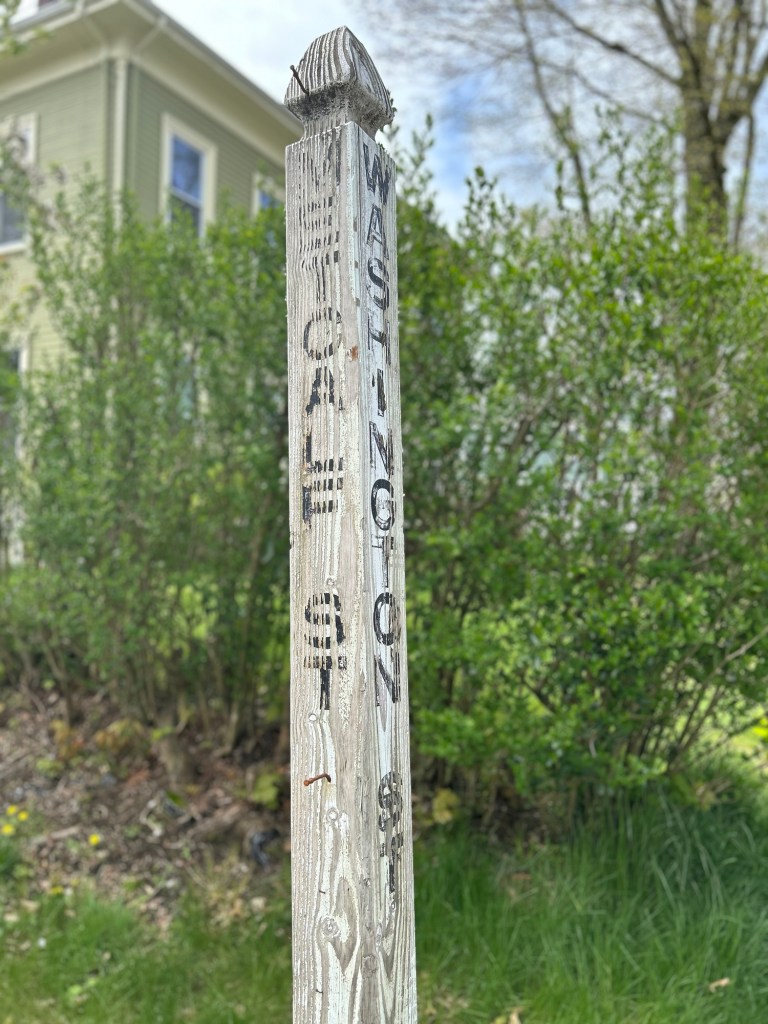
One of my favorite things to do is to find remnants of the past around town and then research the history of that location. Old stone pillars and walls that seem at odds with nearby more modern dwellings are usually signs of a lost building and an interesting tale. This is the first in a series of posts about several Dedham sites with a hidden past.
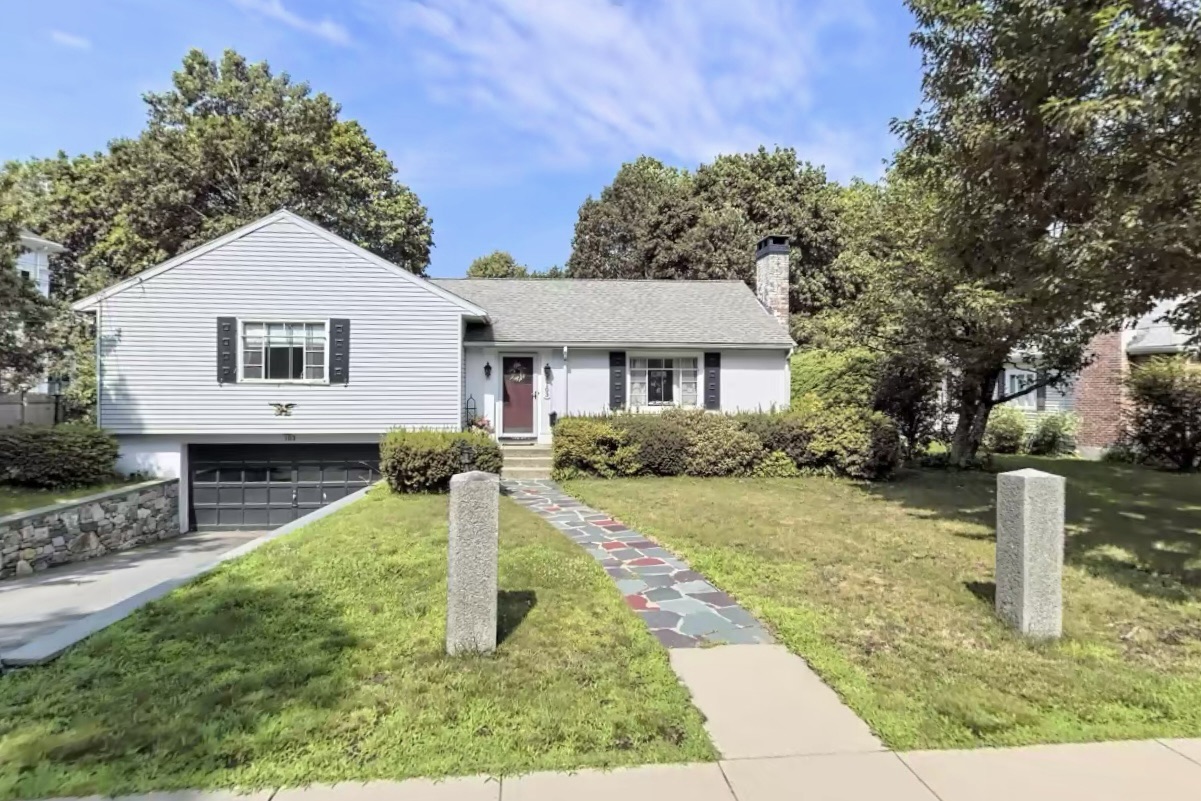
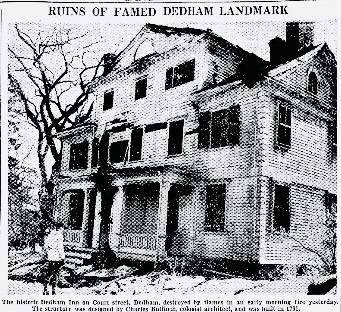
On the western side of Court Street near Highland Street stand three homes built in the early 1950s. The split-level/ranch design is typical of the time period, but the granite posts that stand on the lawns of these homes are from a much earlier period and indicate that something grand once stood here. Fortunately, the history of the previous structure is well documented and with some help from the staff at the Dedham Museum and Archive and a little sleuthing in the digital newspaper archives I am able to present the story of the Richards House, also known as the Dedham Inn.
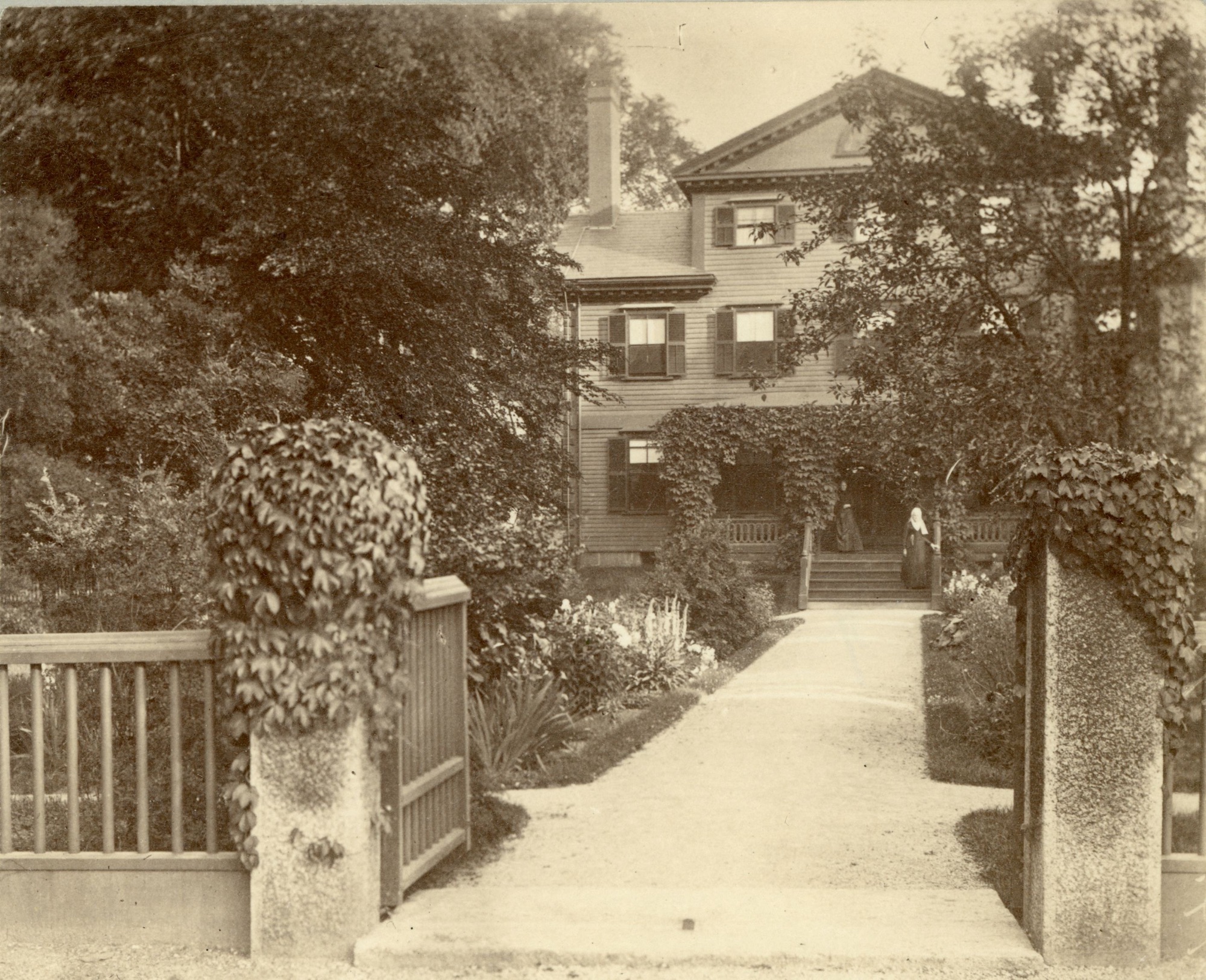
The house was built in 1791, and was purportedly designed by famed architect Charles Bullfinch, designer of the nearby Haven House (Dedham Community House), Massachusetts State House, as well as many other historic buildings. Ownership passed through several families before Boston hardware merchant Samuel Richards purchased the house and acreage in 1802. It would remain in the Richards family for over 100 years before being sold, enlarged and converted into an inn in 1915.
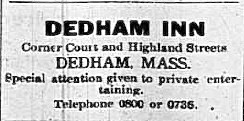
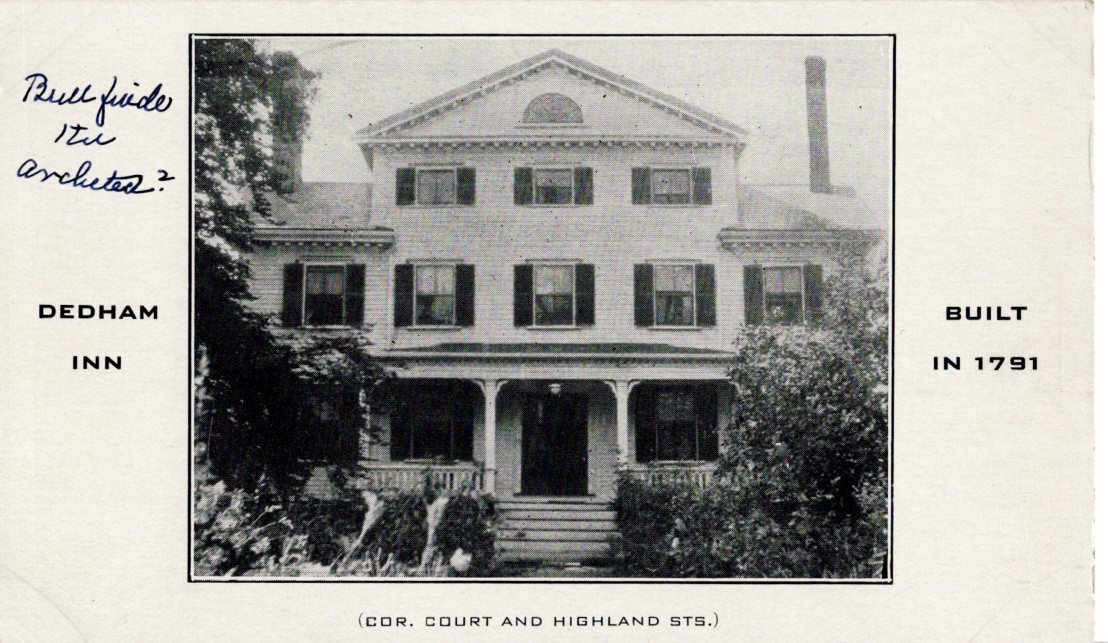
The newly established Dedham Inn quickly became a popular venue for social gatherings such as anniversary parties and wedding showers. An early guest was 17 year-old Hollywood starlet Mary Miles Minter and her mother/manager Charlotte Shelby who arrived in August 1919 to film a silent version of the book Anne of Green Gables. Earlier that summer, a scouting team from RealArt Pictures had chosen Dedham for location filming, with the landmark Fairbanks House serving as the farmhouse where orphan Anne Shirley lived with Matthew and Marilla Cuthbert. Also staying at the Inn was the film’s 49-year old director William Desmond Taylor. During their stay at the Inn, despite their age difference, Mary developed a serious (one-sided) crush on the dashing British director. Taylor would be murdered in his Hollywood bungalow in February 1922, and the ensuing investigation would reveal correspondence from the young actress that provoked a scandal that eventually ended Minter’s career and most likely caused copies of the film to be destroyed, making it one of thousands of missing silent films. The murder of Taylor remains unsolved to this day. The complete story of this 1919 filming is featured in my book Dedham: Historic and Heroic Tales from Shiretown.
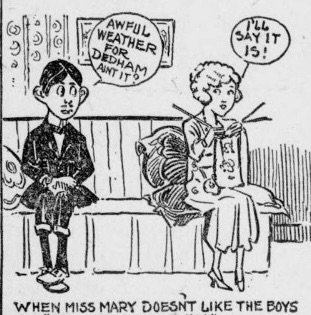
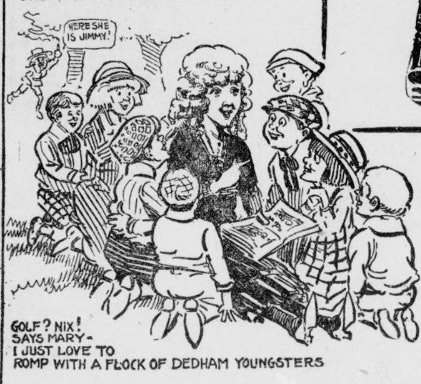
Its close proximity to the courthouse made the Inn a gathering place for anyone with court business including attorneys, jury members and judges. Throughout the famed 1921 murder trial of Nicola Sacco and Bartolomeo Vanzetti, jurors were housed overnight in the grand jury room of the Superior Courthouse and took their meals at the Dedham Inn. During the appeals process for the convicted men, it was reported that trial judge Webster Thayer had made numerous prejudicial statements outside of the courtroom throughout the trial; many of these statements were made to reporters during lunch breaks at the Inn. In a clemency request to Governor Alvan Fuller in May 1927, affidavits were filed by several reporters who had heard the judge’s remarks firsthand. Globe reporter Frank Sibley wrote that Judge Thayer would often discuss the case with reporters while gathered in the Inn’s private dining room, and several witnesses, including Sibley, recalled how on one walk back to the courthouse, the judge angrily denounced defense attorney Fred Moore by stating “I’ll show them that no long-haired anarchist from California can run this court!” All appeals on behalf of the accused failed and Sacco and Vanzetti were executed on August 23, 1927.
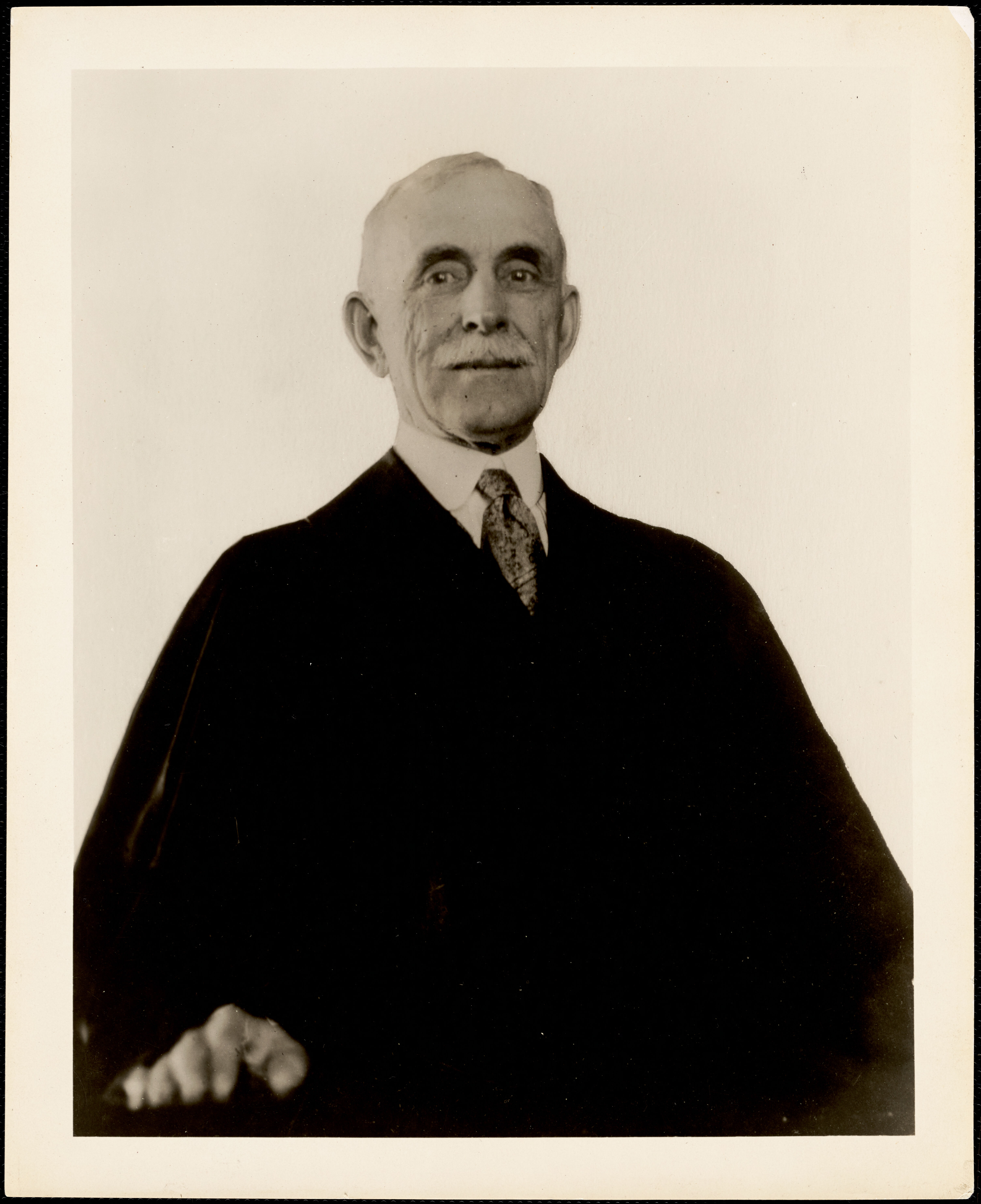
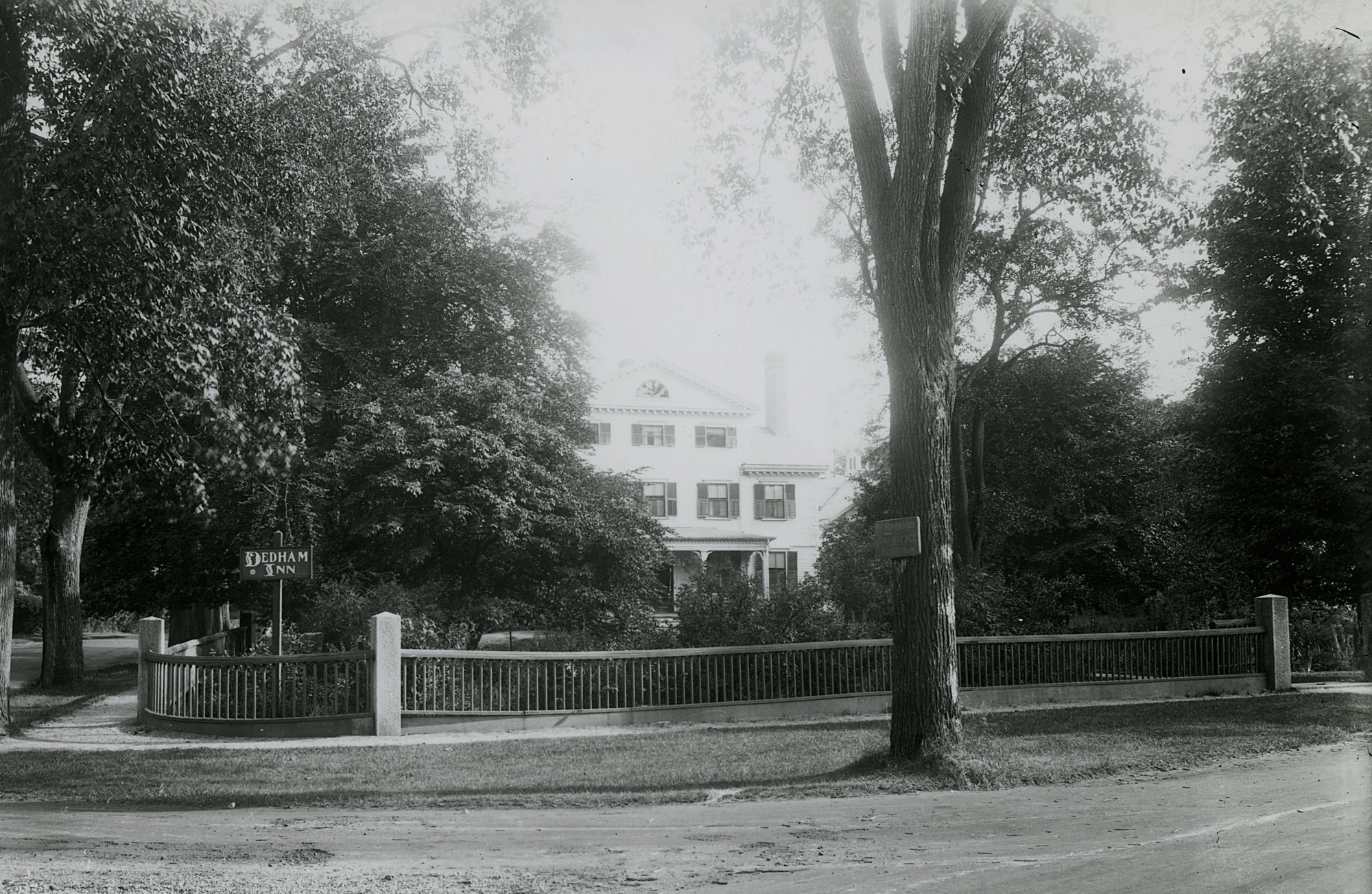
In the early morning hours of February 6, 1939, the Dedham Fire Department responded to a call from inn owner George Thorley. The entire department, under the direction of Chief Henry Harrigan, fought the flames for five hours, battling slippery conditions and icy equipment in a vain effort to save the landmark. While Thorley, his wife and daughters and three guests all managed to escape, Josephine the family’s cocker spaniel, was unable to get out. The beloved pet was credited with saving the occupants of the Inn by waking them with her barking before the fire got out of control. On the morning after the fire the walls of the historic inn still stood, but fire had gutted the interior and the building was razed. A faulty furnace was cited as the likely cause of the fire. The property was subdivided and the three single family homes that stand there now were built between 1950-1951. Today, four granite fence posts are all that remain of this once elegant and well-known property. Those posts, along with this post, remind us of the Dedham that used to be.
 Dedham Tales